Thury Castle: A Medieval Frontier Fortress in Hungary
Site at a Glance
- Rating
- 4.7
- Popularity
- Medium
- Country
- Hungary
- Primary era
- Medieval
- External website
- Open
- Eras represented
- Medieval, Early Modern
- Civilizations
- Habsburg, Hungarian
- Site type
- Military
- Remains
- Castle
On this page12 sections
History
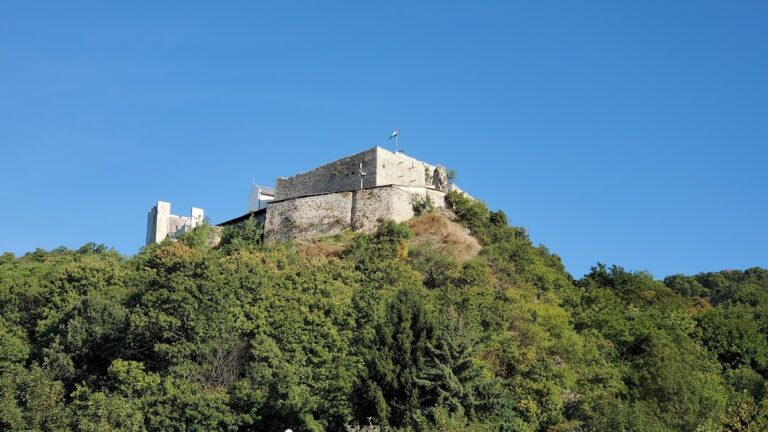
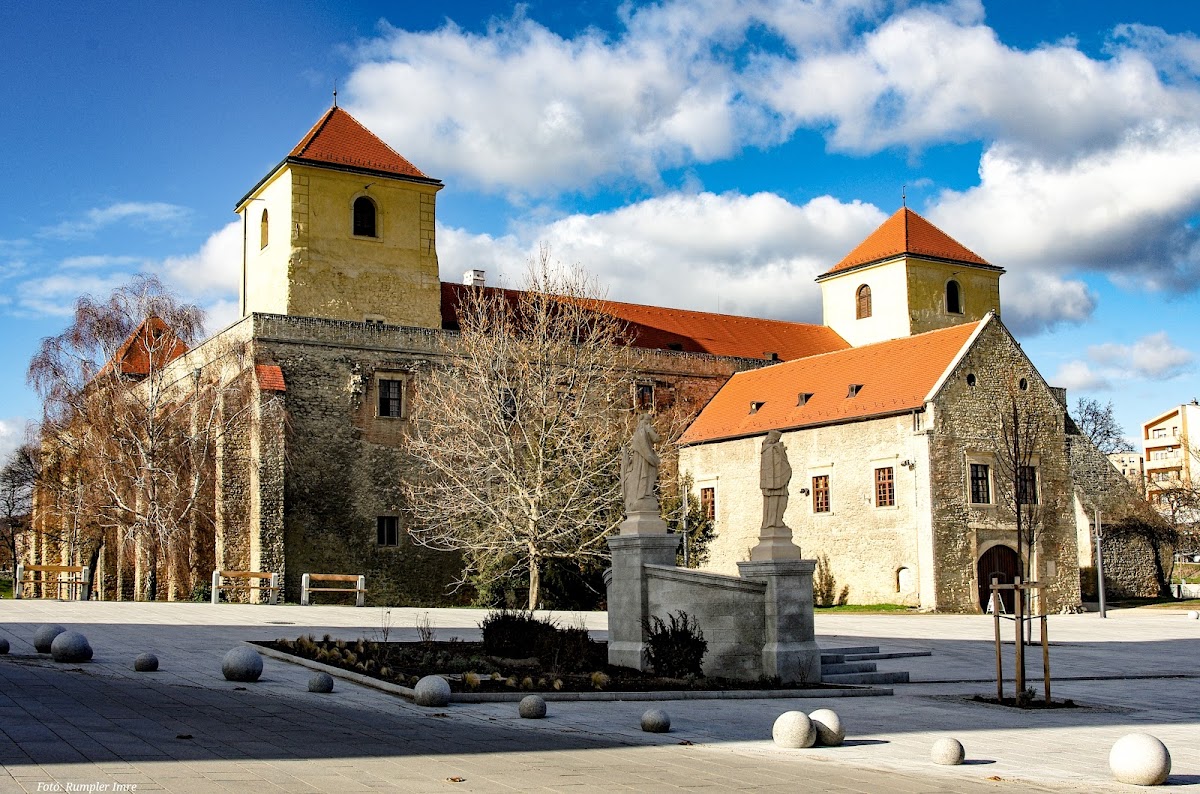
Thury Castle is a medieval fortress-residence in Várpalota, Hungary, developed by the Újlaki family during the second half of the fourteenth century near the medieval route between Székesfehérvár and Veszprém. Later expanded and fortified, it became an Ottoman frontier fortress, a stronghold positioned along the military boundary between the Habsburg-ruled Kingdom of Hungary and the Ottoman Empire. Its association with the sixteenth-century commander György Thury gave the castle its present name.
From Bátorkő to Palota
A small castle stood on a summit in the Bakony during the thirteenth century. Fourteenth-century charters called it Bátorkő. The surrounding area was regarded as marshland in the Middle Ages, while the summit itself offered limited room for expansion. The Újlaki family, one of medieval Hungary’s major aristocratic landholding families, therefore established a larger and more comfortable residence nearby during the second half of the fourteenth century.
The new residence was known as Palota by 1397. It was larger than a manor house but less heavily fortified than a conventional castle. Before 1445, Miklós Újlaki strengthened it with an additional tower, a separate gate defence, and a detached round tower at the northwestern corner. A law passed by the Hungarian Diet in 1445 ordered the destruction of castles built without royal permission during the preceding political disorder. Palota was one of five castles exempted because of its defensive value against the Ottomans.
The Móré siege and the Podmaniczky inheritance
The Újlaki family retained control until 1524, when its male line became extinct. After Lőrinc Újlaki’s widow married László Móré, Móré used Palota as a base for raids, killings, and plunder in the surrounding area. King John Zápolya sent an army against him in 1533. The attacking force included Ottoman troops allied with Zápolya and miners from Mecenzéf who were experienced in siege mining, the practice of digging beneath walls to weaken their foundations.
During the siege, the castle commander was killed by a cannonball. The miners drove a passage beneath the walls, causing part of the fortification to collapse. Móré escaped by rope into the Bakony forest, but he was later captured with his children. He died in captivity in the Seven Towers, or Yedikule, in Istanbul, together with Bálint Török and István Maylád.
Palota then passed to the Podmaniczky family, whose members shifted their allegiance between King Ferdinand I and King John Zápolya. Ottoman forces attacked unsuccessfully in 1543 and again in 1549. After the Ottoman capture of Veszprém in 1552, Palota became one of the most important frontier fortresses in Transdanubia.
György Thury and the frontier wars
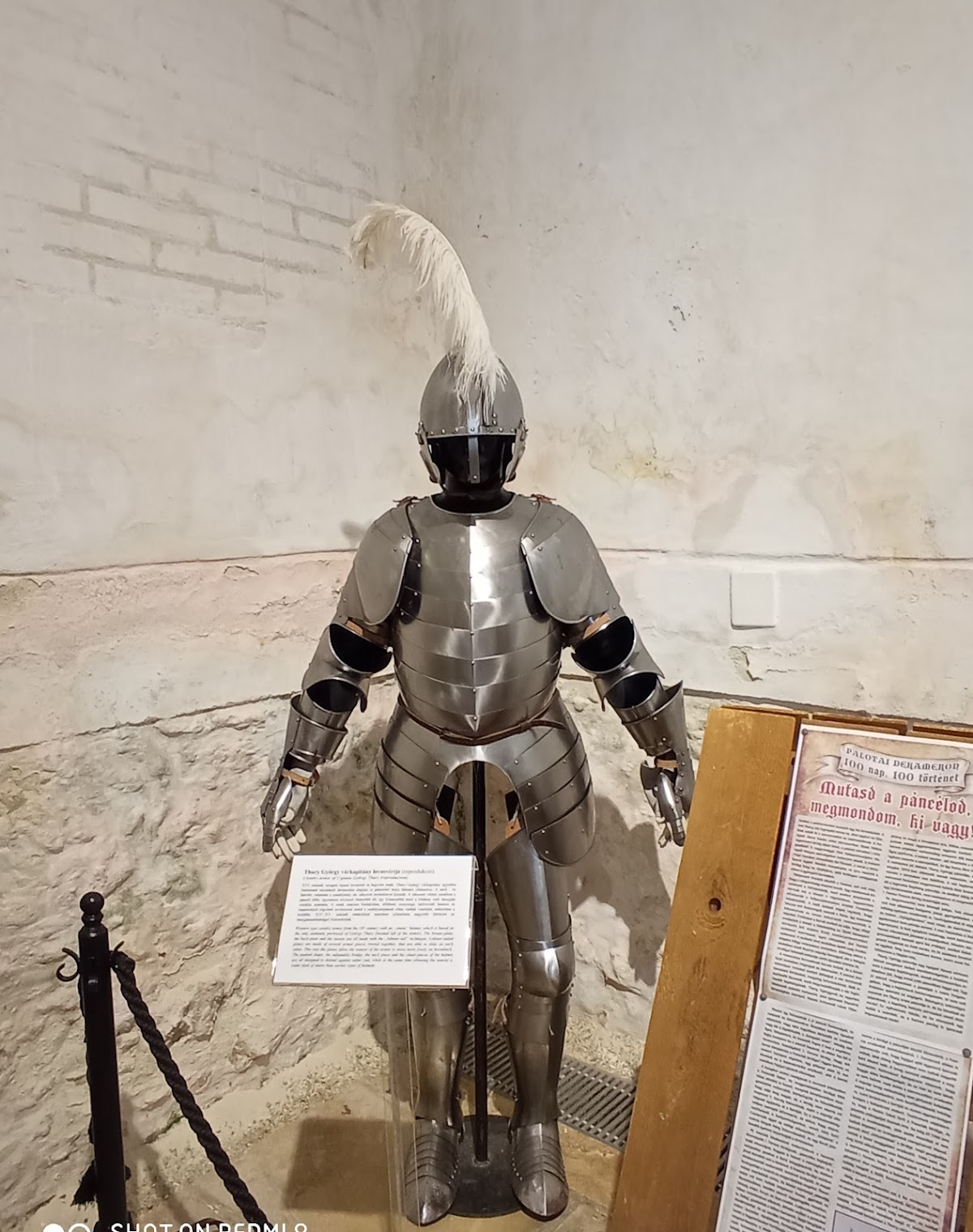
An Ottoman surprise attack in 1554 briefly penetrated the hussar fortification and carried away one hundred horses and many tools. The defenders repelled another assault in 1555. Royal authority took control of the castle in 1558, when György Thury became its first royal captain. A frontier commander and celebrated duellist, Thury became closely associated with Palota, and his name eventually replaced the older names in common usage.
The defenders carried out successful raids against nearby Ottoman strongholds, even though their wages were low and often unpaid. In 1565, Thury and the captain of Győr planned to recapture Székesfehérvár. The court in Vienna imposed conditions that prevented the operation from going ahead.
Arslan Pasha of Buda brought an Ottoman army against Palota on 5 June 1566. Ottoman artillery damaged a large section of the eastern wall beside the chapel. The expected assault did not follow because misleading information about the castle’s inner defences reached Arslan. After ten days, Thury sent for a relief army. Arslan withdrew when his soldiers mutinied, and the relief force arrived three days later. Sultan Suleiman subsequently ordered Arslan Pasha’s execution for the failed siege.
György Thury left the captaincy after the siege, and his brother Benedek succeeded him. Ottoman forces attempted another siege in 1567 but failed again. Tamás Pálffy of Erdőd became captain in 1573, after which rebuilding began. The garrison continued to launch successful raids despite repeated Ottoman attacks. On one occasion, only thirty defenders held the castle against the assault.
Occupation, recapture, and the Rákóczi uprising
Palota finally fell to the Ottomans in 1593 after a defence led by Captain Péter Ormándy. Its walls had been reduced to ruins, and the defenders surrendered by negotiation. Most of those who withdrew were nevertheless massacred despite assurances of safe conduct. Péter Huszár, captain of Pápa, later attacked the Ottoman garrison, but the assault did not end the occupation.
Control changed repeatedly during the remaining century of Ottoman rule. Pálffy Miklós and Adolf von Schwarzenberg recaptured the castle in 1598. It returned to Ottoman control in 1608 and was taken again in 1614. Ottoman forces held it from 1628 to 1660 and once more from 1669 to 1687. Its final liberation came in November 1687. Despite inadequate equipment, manpower, and finances, and despite its tactically difficult position, Palota had remained in Hungarian hands for fifty years and supported locally important raids. The planned recapture of Székesfehérvár was its major unrealized military objective.
In 1702, Emperor Leopold I ordered the fortress demolished because it was considered unnecessary. The order was not carried out because of the Rákóczi uprising, an anti-Habsburg rebellion led by Francis II Rákóczi. The castle was then held by the Kuruc, insurgents who fought against Habsburg rule. It resisted General Heister’s unsuccessful assault in 1704, and women also participated in its defence during the siege of 1707.
Baroque residence and modern preservation
The Zichy family, landowners of Palota from 1650, converted the fortress into a Baroque residence during the eighteenth century. The Baroque was a major European artistic and architectural style of the seventeenth and eighteenth centuries, known for elaborate forms and ornament. After the Rákóczi uprising failed, General Rabutin had two of the four corner towers reduced to roof level, further changing the appearance of the former fortress.
By the middle of the twentieth century, the castle had become ruinous. Decades of restoration were accompanied by preventive archaeological excavation, which investigates buried remains before or during construction so they can be recorded and protected. Restoration and modernization in the early 2010s adapted the complex for cultural use, with the visitor-oriented transformation completed in 2014–2015. Further renovation has continued under the National Castle Programme.
Today the complex serves as the headquarters of Thury-Vár Nonprofit Kft. It houses the Hungarian Museum of the Chemical Industry and the Mining History Collection, renamed the Count Antal Sztáray Mining Museum in 2007. The castle also functions as a centre for cultural and civic events.
Traditions associated with the castle
Tradition holds that King Matthias Corvinus visited Palota as a guest of the Újlaki family, helping preserve the older name Újlaki Castle. Another tradition says that Beatrix prepared at Palota on 11 December 1476 for her marriage to Matthias and her coronation at Székesfehérvár the following day.
A further tradition links the castle to the transfer of the Hungarian crown and coronation regalia from Buda Castle to Palota to prevent the coronation of Vladislaus. Beatrix sent the Black Army, the professional royal force created under Matthias Corvinus, to recover them. John Corvinus, unwilling to become king through bloodshed, surrendered the crown and renounced the throne.
Remains
Castle layout and defensive works
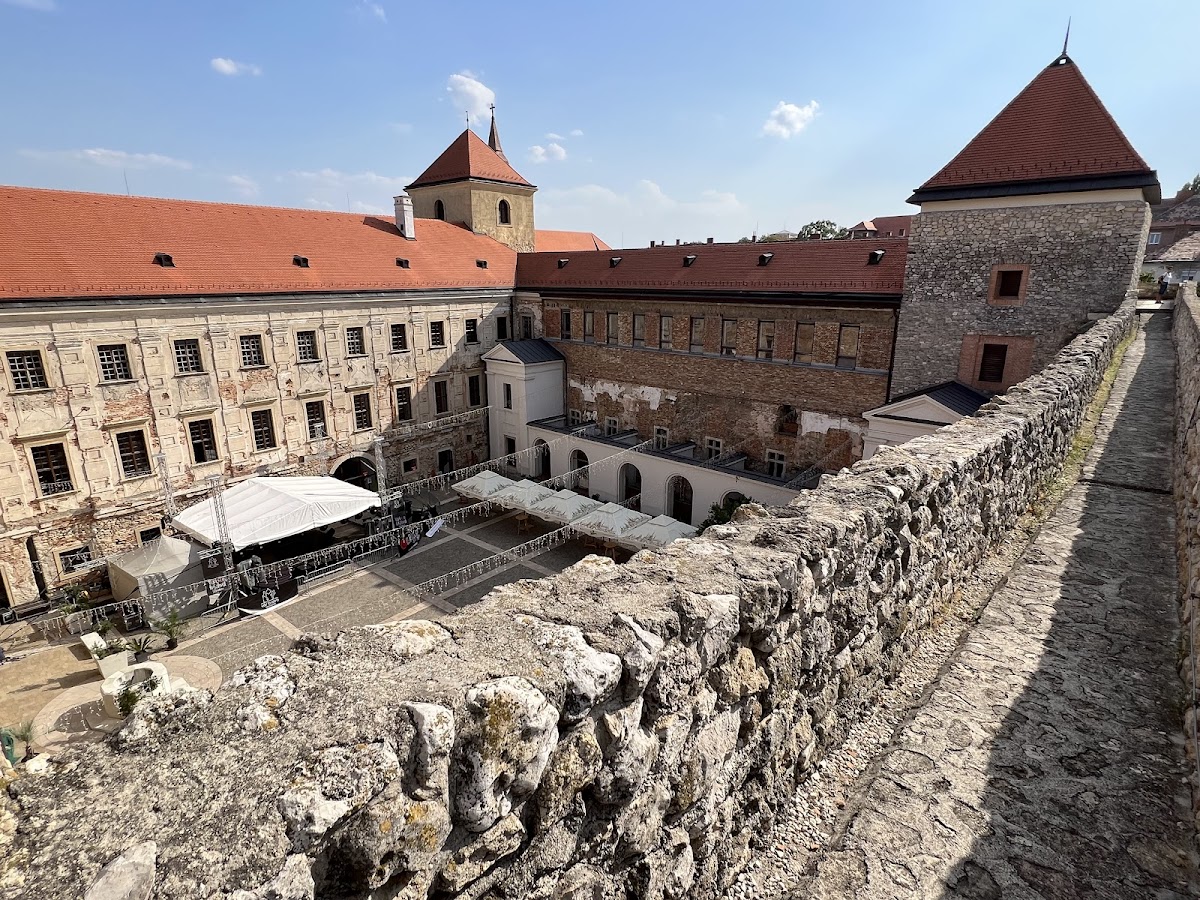
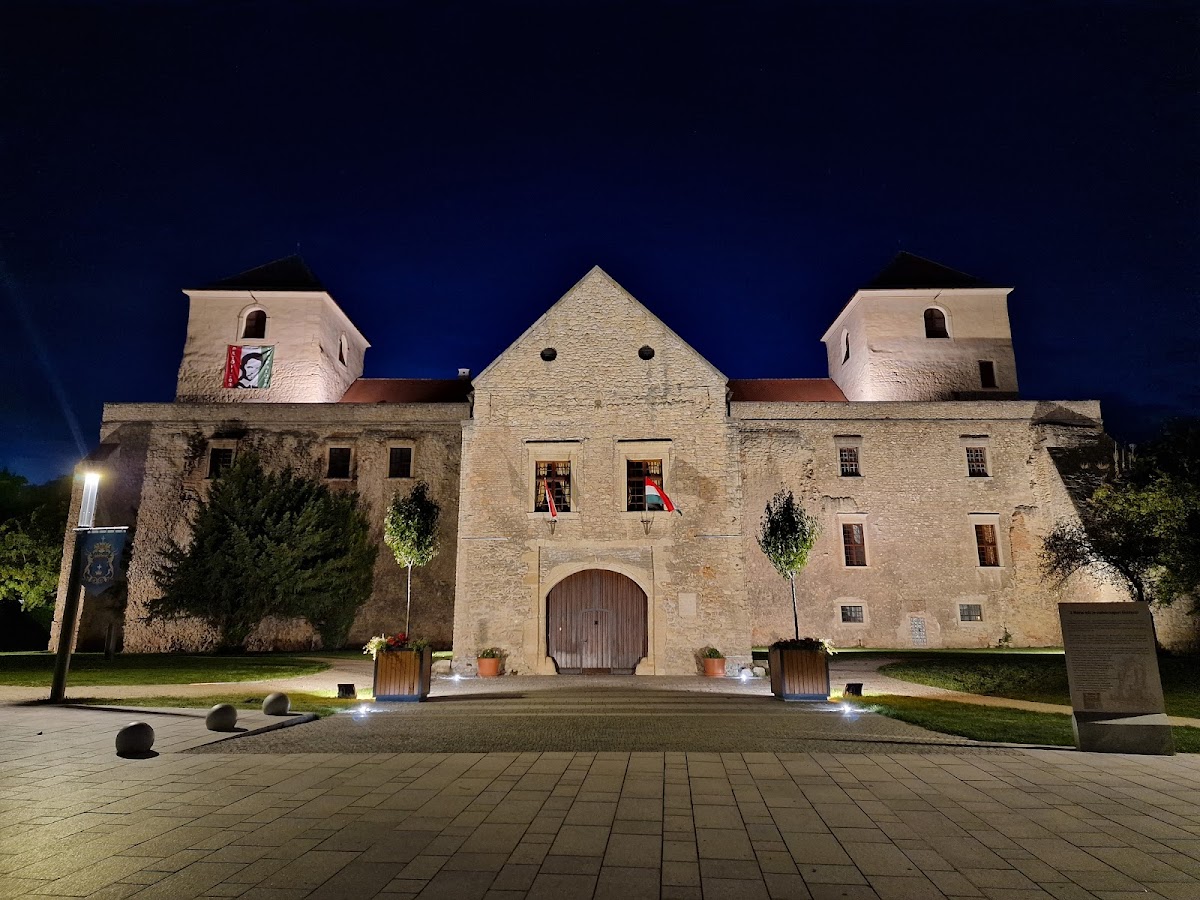
Thury Castle is arranged as a regular quadrangular castle-residence with four corner towers. Its earliest form consisted of a U-shaped residential block, a tower at the northeastern corner, and a wall closing the courtyard. The complex acquired an additional tower, a separate gate defence, and a detached round tower at the northwestern corner before 1445, reflecting its transformation from an aristocratic residence into a more capable fortified seat.
Residential core
The residential core preserves the basic relationship between the U-shaped living quarters and the enclosed courtyard. This arrangement belonged to the late-medieval residence known as Palota, which was more substantial than a manor house but initially less heavily fortified than a conventional castle. Later alterations reshaped the complex without removing the quadrangular plan.
Outer walls and bastions
By 1566, an outer defensive wall surrounded the castle. Small corner bastions, projecting fortifications that allowed defenders to cover the walls with flanking fire, strengthened this enclosure. A large semicircular bastion reinforced the eastern side, while a circular large bastion protected the south. An earthwork rampart, a defensive embankment made mainly from packed soil, further encircled the fortress.
The position was tactically difficult because hills to the north and east overlooked the castle. These elevated positions allowed artillery to fire into the fortress, and Ottoman guns used them during the 1566 siege to damage the eastern wall beside the chapel. The earlier mining attack of 1533 also left part of the wall collapsed after attackers excavated beneath it.
Baroque transformation and present features
The eighteenth-century conversion altered the appearance of the towered fortress by adapting it to residential use. Only the two southern corner towers continued above the roofline, while the other two were reduced to roof level after the Rákóczi uprising. The restored complex now contains the Castle and Local History Museum, an exhibition of torture instruments, a folk-costume collection, and an exhibition on the history of uniforms, alongside the Hungarian Museum of the Chemical Industry and the Count Antal Sztáray Mining Museum.