Zirc Abbey: A Cistercian Monastery in Hungary
Site at a Glance
- Rating
- 4.7
- Popularity
- Medium
- Country
- Hungary
- Primary era
- Early Modern
- External website
- Open
- Eras represented
- Medieval, Early Modern, Modern
- Civilizations
- Habsburg, Hungarian
- Site type
- Religious
- Remains
- Monastery
On this page11 sections
History
Zirc Abbey is a Cistercian monastery in Zirc, Hungary, founded in 1182, probably by King Béla III on former royal land. The Cistercians are a Catholic monastic order founded in the late eleventh century that emphasizes communal religious life, disciplined worship, and manual or intellectual work. The present abbey church belongs to the late Baroque period with Classical elements, while the monastery’s history extends from the medieval kingdom of Hungary through Ottoman warfare, eighteenth-century reconstruction, modern educational work, and the restoration of monastic life after 1989.
Medieval foundation and expansion
The first monks came from Clairvaux Abbey in France, one of the most influential houses of the Cistercian Order, and Zirc was established as its daughter house. The early monastery was founded on extensive estates and received privileges and donations. It was initially known as Bakony, while the name Zirc appears by 1199. Earlier documents also use the name Boccon, although it remains uncertain whether Boccon and Zirc referred to separate abbeys.
The monastery was dedicated to the Virgin Mary. In 1232, monks from Zirc founded Kutjevo Abbey, now in Croatia, extending the institution’s religious network beyond the Hungarian foundation. The first abbey may have stood in an earlier valley location in the Bakony Mountains before becoming associated with Zirc. A papal bull issued by Pope Innocent III in 1198 instructed King Imre, or Emeric, to support the monastery’s transfer, providing an important indication of this possible change of site.
Decline and destruction
Zirc declined during the later Middle Ages. A visitation in 1357 found only an abbot and six monks, and by the appointment of Miklós Maglódy as abbot in 1511, the monastery was already in ruins and occupied by only a few religious. Its estates were taken over and the monastery was looted during the 1530s. By about 1538 the abbey had been abandoned.
After Ottoman forces captured Veszprém in 1552, the deserted monastery suffered further looting and destruction. The Ottoman Empire was the major imperial power whose conquest of central Hungarian territories disrupted many monastic institutions. Zirc remained uninhabited for roughly 150 years, and its first historical period is generally considered to have ended in the sixteenth century.
Restoration and eighteenth-century rebuilding
Cistercian restoration began in 1659, when the abbot of Lilienfeld, a Cistercian abbey in Austria, received the title and remaining estates of Zirc. Márton Újfalusy became abbot in 1660 but lived at Pápa because no habitable buildings remained at Zirc. He was killed in 1678, after which responsibility passed from Lilienfeld to the Silesian Cistercian abbey of Heinrichau. Heinrich Kahlert became abbot of Zirc in 1700.
The first monks sent from Heinrichau initially lived at Pápa and moved to Zirc in 1726. Reconstruction and the recovery of the abbey’s estates proceeded under Heinrichau’s direction and at its expense. The new church was consecrated on 4 June 1752 by Márton Padányi Biró, bishop of Veszprém. Work on the monastery continued after the consecration and into the eighteenth century. The medieval buildings were almost entirely removed during this rebuilding, so the later complex was created as a new ensemble rather than as a restoration of the earlier structures.
Independent abbey and educational center
In 1798 the community consisted of 28 monks, 11 of them born in Hungary, and its priests served parishes in the surrounding area. Heinrichau retained legal control for several years, but its suppression in 1810 and the death of its last abbot, Konstantin Gloger, changed Zirc’s position. The monastery became an independent abbey in 1814, and Antal Dréta was appointed its first independent abbot.
From 1814, Zirc assumed responsibility for schools that had formerly been served by the Jesuits. These included gymnasia in Székesfehérvár and Pécs and the combined gymnasia of Eger and Pásztó. Under Ferdinánd Villax and his successors, the abbey expanded its educational and institutional work. By the early twentieth century it also supported Cistercian schools in Buda and Baja.
Under Abbot Remig Békefi, who led Zirc from 1911, the abbey became the effective center and novitiate of the Hungarian Cistercians. Pope Pius XI established the Congregation of Zirc in 1923, and Pope Pius XII approved its constitution in 1941. Before the Second World War, the Cistercian schools associated with the congregation educated about 2,500 pupils.
Suppression, exile, and renewal
After 1945, the Hungarian state expropriated the abbey’s estates, and its schools were nationalized in 1948. The monastery was dissolved in 1950. Its monks were expelled, imprisoned, or deported, while Abbot Vendel Endrédy, who had led Zirc since 1939, was arrested, tortured, and sentenced to fourteen years in prison. He was released in 1956 after six years. The abbey church continued to serve as a parish church during the suppression of monastic life.
From 1946, Hungarian monks were sent to the United States. They contributed to Cistercian foundations including Spring Bank in Wisconsin and Our Lady of Dallas in Texas, which became part of the dispersed continuation of the Hungarian Cistercian community. Monastic life was permitted again in Hungary from 1989, and the Congregation of Zirc was restored that year. Monks returned to Zirc at the beginning of 1990 and re-established the abbey.
Zirc is now the center of the Hungarian Cistercians and belongs to the Congregation of Zirc, whose stated members also include Dallas Abbey and Kismaros Abbey. Its abbot serves as president abbot of the congregation. On the eight-hundredth anniversary of the foundation in 1982, the church received the papal rank of minor basilica, an honor granted to churches of particular religious or historical importance. The abbey remains a protected historic monument and an active Cistercian institution.
The abbey’s recent leadership has included Vendel Endrédy, Károly Kerekes, Polikárp Zakar, Sixtus Dékány, and Bernát Bérczi. Since 15 May 2023, Mauro-Giuseppe Lepori has directed the abbey as papal commissioner, assisted by appointed co-commissioners responsible for its institutions, finances, and monastic community. Zirc’s brewing tradition is recorded from 29 October 1735, when beer made at the monastery was first tasted. Brewing later ceased and resumed in 2015 with modern equipment and reference to the older tradition.
Remains
The surviving complex combines archaeological traces of the medieval foundation with an eighteenth-century church and monastery built in late Baroque and Classical forms. The standing church and later convent buildings occupy the principal abbey complex at Zirc, while the adjoining arboretum extends southeast of the monastery. The medieval church is represented mainly by a surviving column and archaeological remains, whereas the present church belongs to the rebuilding carried out between 1732 and 1752.
Medieval foundation
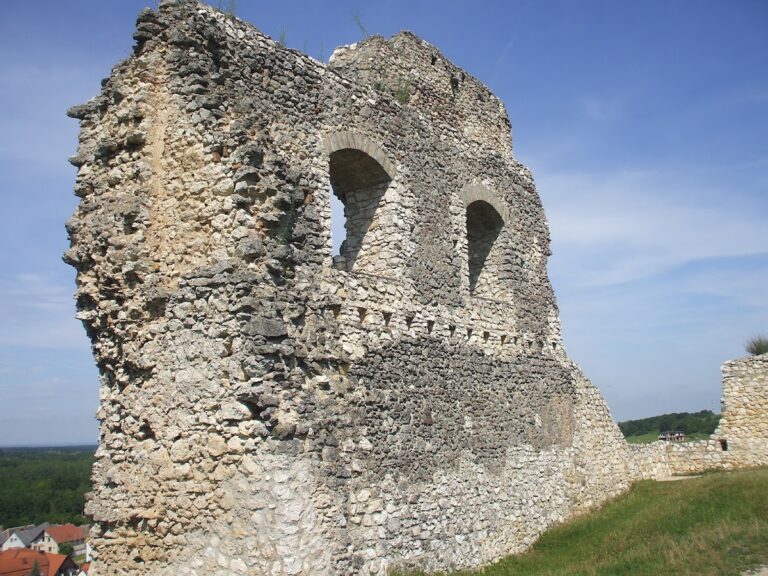
Only one column of the first abbey church is reported to survive. The medieval church followed a Cistercian plan with a flat-ended sanctuary and two chapels opening from each side of the transept, and it was approximately 56 metres long. The later rebuilding removed almost all of the medieval buildings, leaving the column and archaeological remains as the principal physical evidence of the first monastery.
Abbey church
The Church of the Assumption of the Blessed Virgin Mary is a large, two-towered building constructed chiefly between 1732 and 1752. Its interior finishing continued until about 1770. The design is late Baroque with Classical elements, and the facade combines arched decoration around the central towers with side pediments and lower Doric columns. The towers carry Baroque details, including a toothed roofline and spiral forms beneath the upper statues.
Above the central window, an emblem is surrounded by vines and leaves and accompanied by two torch-, lamp-, or urn-like forms, a crown, the letters forming the name of Mary, and two olive branches representing peace. A lower emblem refers to the Cistercian order through a Maltese cross, the letters of the word “MORS,” a crane holding a stone, two pastoral staffs, and a bishop’s headdress associated with the abbey’s rank.
The interior contains carved choir stalls, a pulpit, a choir, and frescoes by Wagenmeister. Its original 1745 altarpiece by Franz Maulbertsch depicts the Assumption of the Virgin Mary. Other religious paintings include another representation of the Assumption and images of saints. Some paintings were repeatedly overpainted as they deteriorated. Figures were once modeled on monks who had lived at the abbey, and their haloes were removed because living people could not receive them. A later repainting restored the haloes and changed facial and hair details. Conservation between 1995 and 2005 removed later repair layers and exposed the earlier painted layer.
Monastery buildings and collections
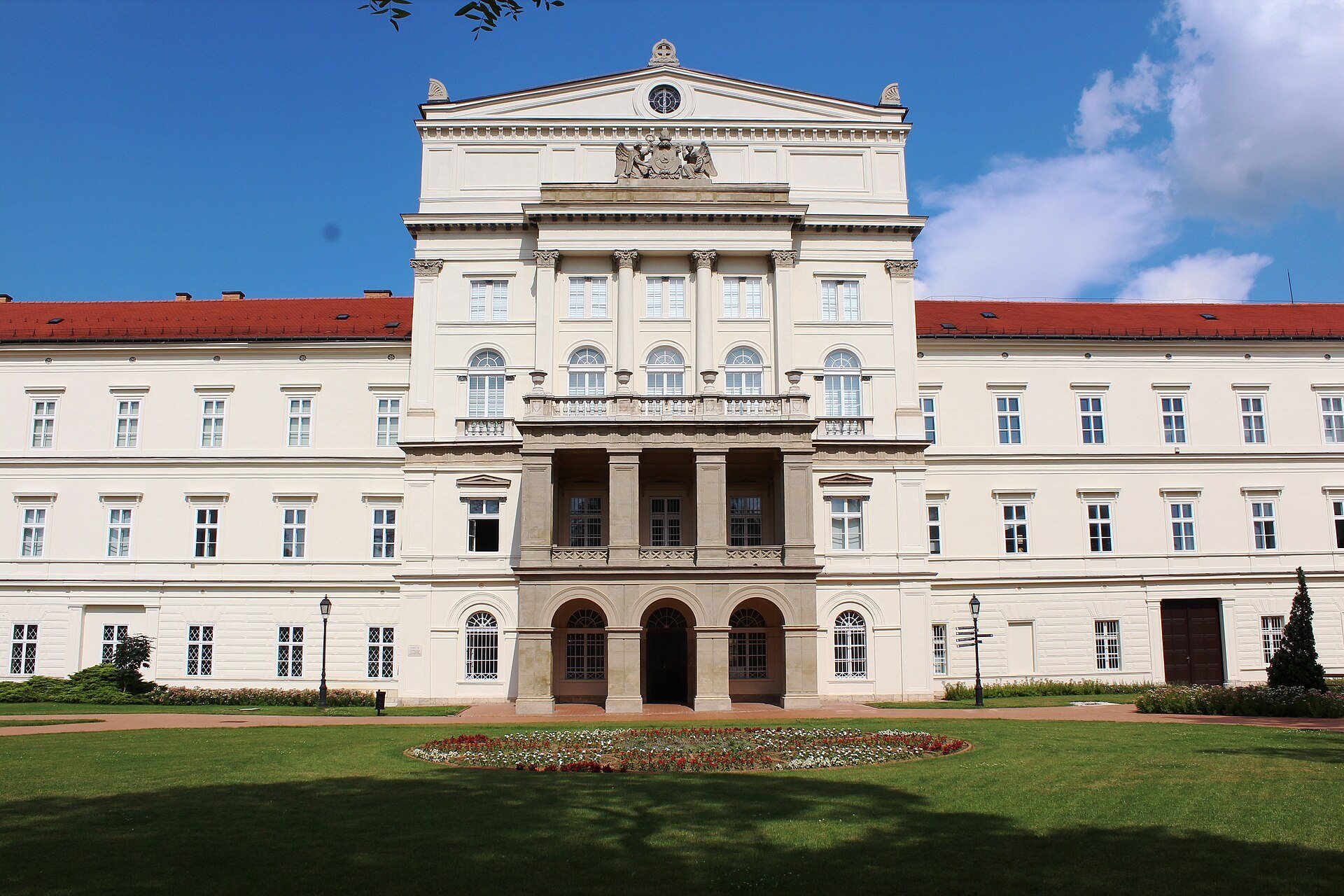
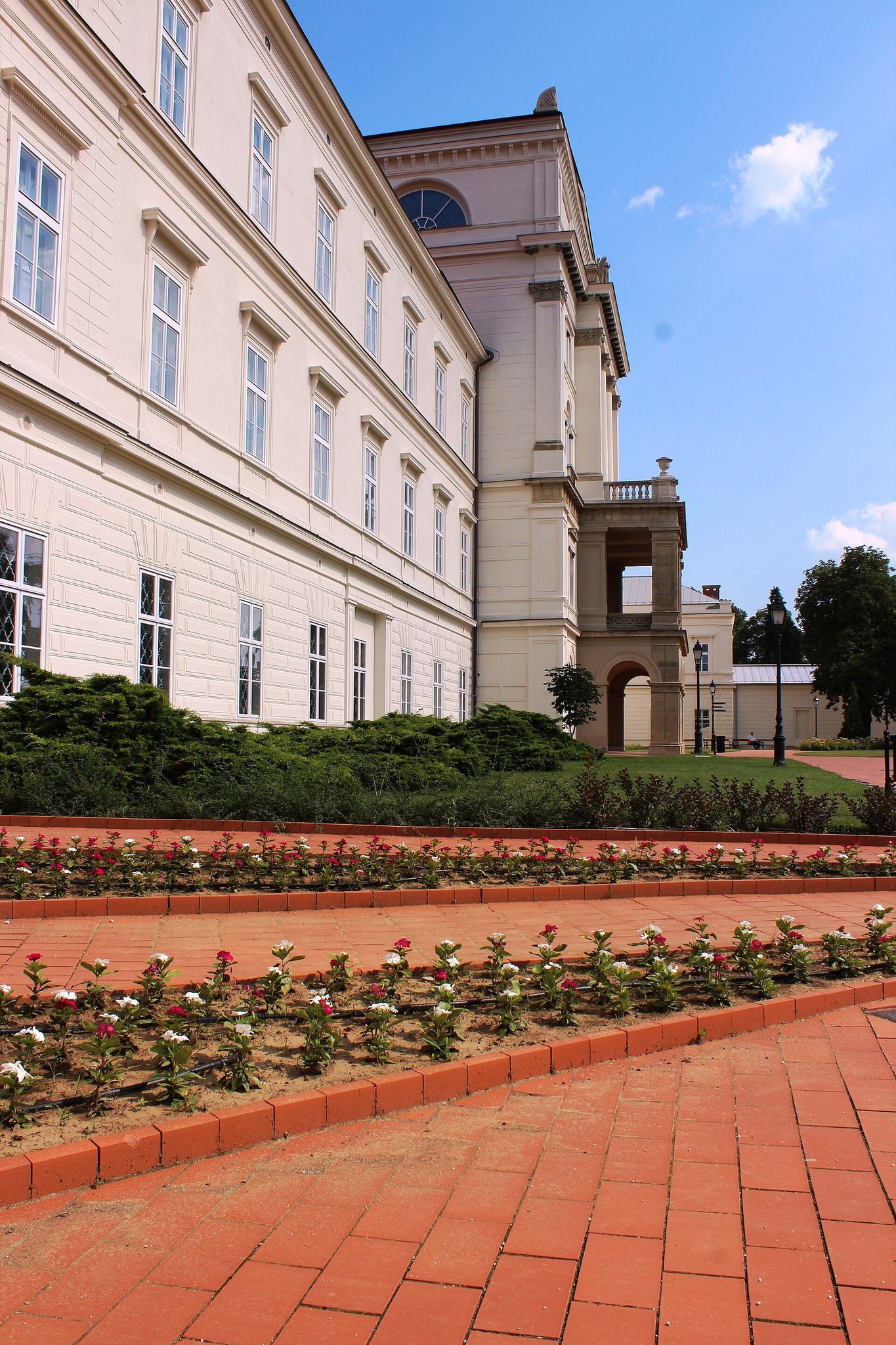
The monastery buildings include a Classical-style expansion with a pediment, Corinthian columns, a coat of arms held by two angels, and torch-shaped ornamental planters along the balcony cornice. A second storey and a west wing were added during the nineteenth-century expansion. The west wing now contains the Reguly Antal Memorial Library, whose hall holds approximately 60,000 valuable volumes, including incunabula, rare books, and rare periodicals. An incunabulum is a book printed in Europe before 1501, during the earliest period of printing with movable type. The collection has been preserved, repaired, and conserved over centuries.
The Bakony Natural History Museum occupies another part of the complex. Its displays include bark samples, descriptions, and photographs of local tree species, as well as geological material and a permanent mineral collection from the Carpathian Basin. The complex also contains the Zirc Gallery and commemorative displays connected with notable people from Zirc and researchers of the Bakony region.
Arboretum and park features
The abbey arboretum lies southeast of and adjoining the monastery and covers 18 hectares. It contains distinctive and old trees, including firs, larches, yews, and arborvitae. The Forest House within the arboretum contains exhibitions on the arboretum, nature conservation, and forestry. Stone bridges cross the Cuha stream, and ruins of an old Cistercian church stand in one corner of the park.