Van Fortress: Urartian Citadel Overlooking Tushpa


Site at a Glance
- Rating
- 4.5
- Popularity
- Medium
- Country
- Turkey
- Primary era
- Iron Age
- External website
- Open
- Eras represented
- Iron Age, Classical
- Civilizations
- Achaemenid, Urartian
- Site type
- Military
- Remains
- Citadel
On this page7 sections
History
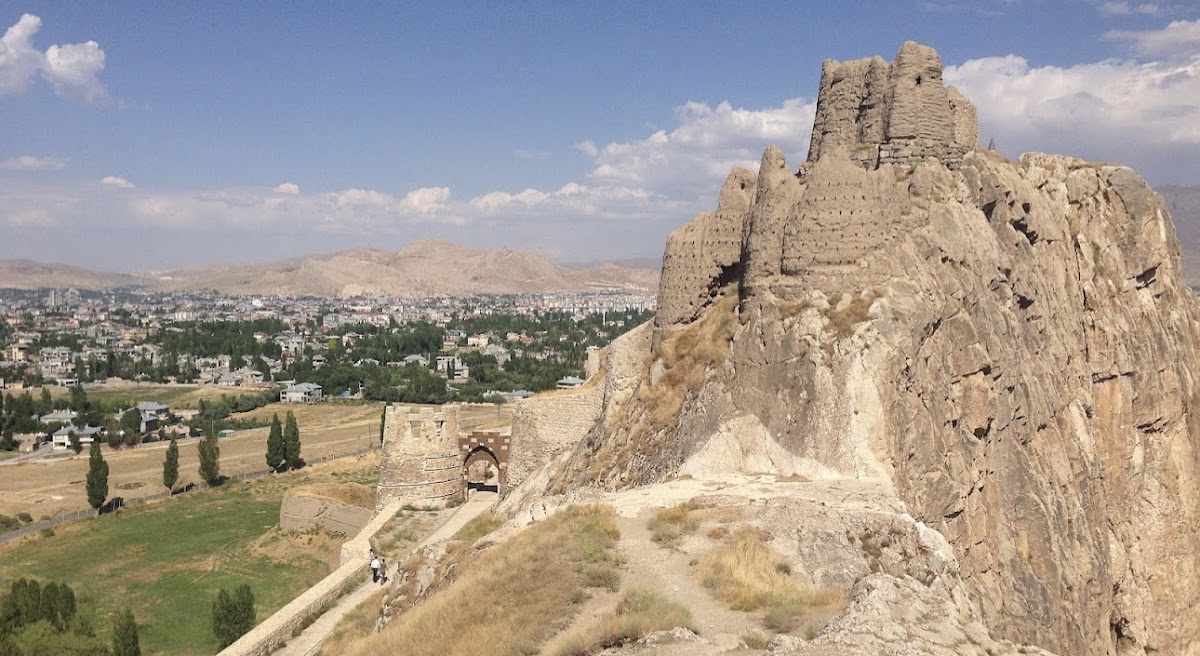
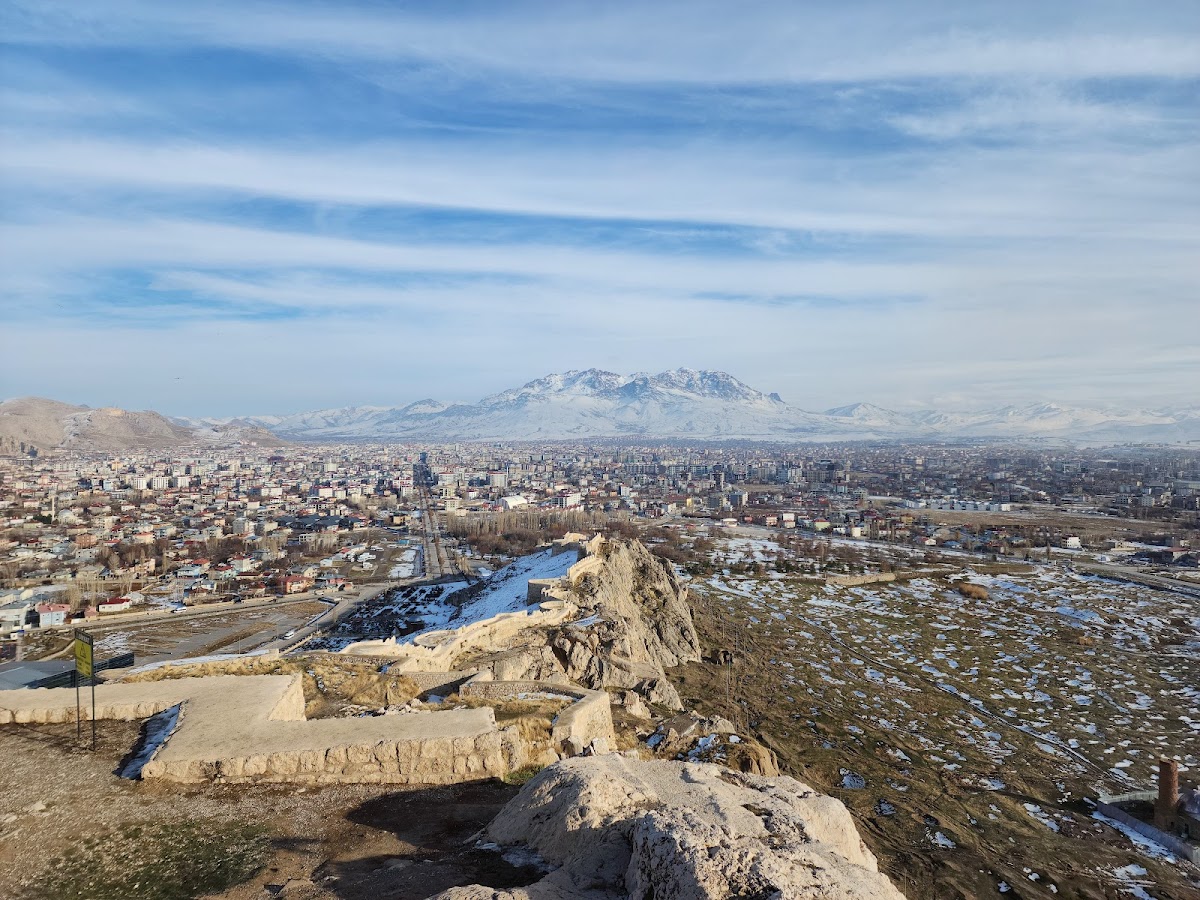
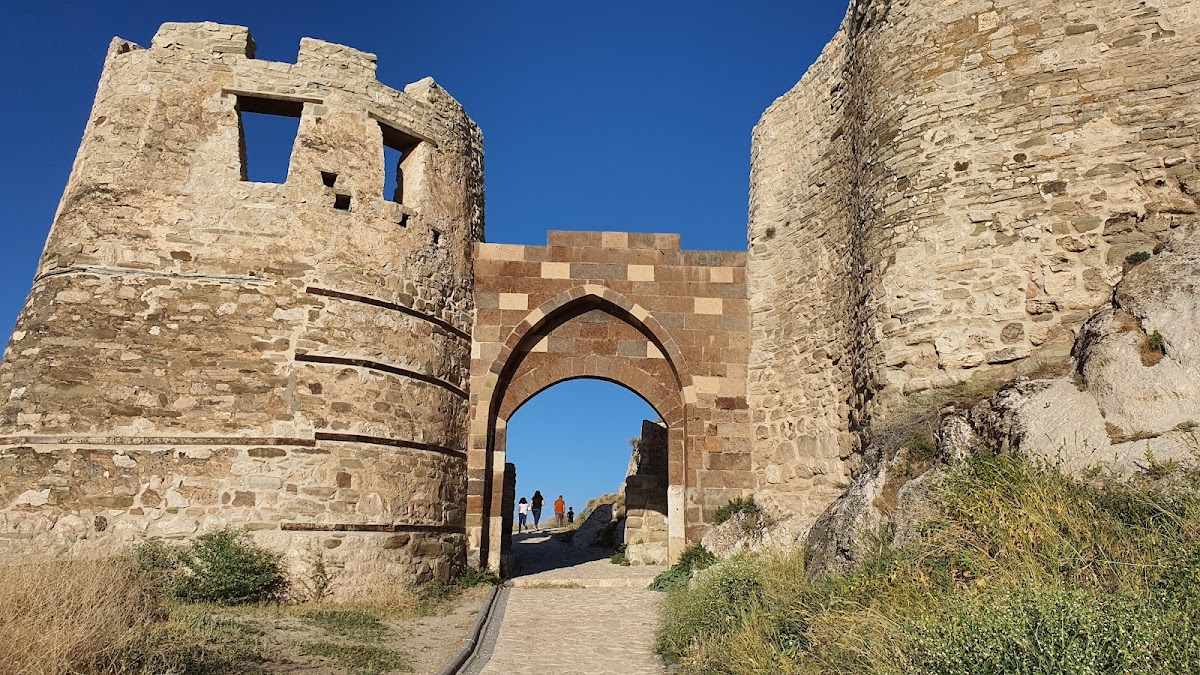
Van Fortress, also known as the Van Citadel, is a massive stone fortification in Türkiye, built by the Urartians between the ninth and seventh centuries BCE above Tushpa, the royal capital of the Iron Age kingdom of Urartu. Rising west of modern Van, the fortress controlled the surrounding region and overlooked the capital below. Its historical importance also derives from the Achaemenid royal inscription carved into the rock near the citadel.
The Urartian Citadel
Urartu was centred in the Armenian Highlands, and Tushpa served as its royal capital. Van Fortress was designed primarily to control the surrounding territory rather than to withstand foreign armies. Its elevated position gave the citadel authority over the capital and its wider landscape.
Successive Rulers and Repairs
After the Urartian period, the fortress passed through the hands of the Medes, Achaemenids, Armenians, Parthians, Romans, Sasanian Persians, Byzantines, Arabs, Seljuks, Safavids, Afsharids, Ottomans, and Russians. These successive changes of control brought repeated damage, destruction, and repairs to different parts of the fortification. In the medieval period, defensive walls supported the ruins outside the modern city of Van.
Archaeology and Historical Interpretation
An American archaeological expedition led by Silva Tipple New Lake excavated the ruins from 1938 to 1940. When the ship Athena sank in 1940, most of the expedition’s finds and field records were lost. The fortress is currently operated as a museum.
The nearby royal inscription entered modern scholarship in 1836, when the French scholar and orientalist Eugène Burnouf first published it. His reading helped advance the decipherment of Old Persian cuneiform, a writing system composed of wedge-shaped signs, and contributed to the identification of an alphabet of thirty letters, most of which he deciphered correctly.
Remains
Van Fortress occupies a steep rocky escarpment west of modern Van and east of Lake Van, above the ruins of Tushpa. The citadel extends for 1,800 metres, rises 120 metres, and reaches 80 metres in width. It is a massive stone fortification, described as the largest example of its type, with large sections of its walls still standing. The lower walls use unmortared basalt, while the upper sections are made of mud brick reinforced with wooden beams or crosspieces.
Rock-Cut Royal Stable
The feature known as the Royal Stable, or Sirsini, is cut directly into the rock. It measures 20 metres in length, 9 metres in width, and 2.5 metres in height. Bulls and sheep were kept there for sacrifice to the Urartian gods, a practice identified through inscriptions found at the site.
Xerxes’ Rock Inscription
About 20 metres above the ground, a smoothed section of rock near the fortress carries a fifth-century BCE inscription attributed to Xerxes I. The niche was cut on the orders of his father, King Darius I, although its inscription panel was initially left blank. The text remains in almost perfect condition and is arranged in three columns of 27 lines, written from left to right in Old Persian, Babylonian, and Elamite.
The inscription proclaims Ahura Mazda, the supreme deity invoked in Achaemenid royal texts, as the greatest of the gods and credits him with creating the earth, sky, humanity, and human happiness. It presents Xerxes as great king, king of kings, and ruler of many peoples; identifies him as the son of Darius and an Achaemenid; and states that Darius built many works and ordered the rock niche to be cut. Xerxes claims responsibility for having the inscription made and asks Ahura Mazda to protect him, his kingdom, and his work. The text is described as the only known Achaemenid royal inscription outside Iran.