Çavuştepe: An Urartian Fortified City in Turkey
Site at a Glance
- Popularity
- Medium
- Country
- Turkey
- Primary era
- Iron Age
- Eras represented
- Iron Age
- Civilizations
- Urartian
- Site type
- Military
- Remains
- Fortified Town
On this page12 sections
History
Foundation under Sarduri II
Çavuştepe is an Urartian fortified city in the Gürpınar district of Van Province, eastern Turkey. King Sarduri II founded it during his reign, from 764 to 735 BC, when Urartu, an Iron Age kingdom centered around Lake Van, was at the height of its power. The city is identified with Sardurihinilli, a name rendered as Sardurihinili in a royal inscription.
Written in cuneiform, a system of wedge-shaped marks, the inscription says Sarduri, son of Argishti, built a temple after succeeding his father. It describes the rock as solid and previously untouched, and credits the god Khaldi with the temple and fortress. It also recounts the construction of a canal from Gugunaini (Hoşap), vineyards and cultivated fields, a new city, and monuments. The text blesses Sarduri with life, glory, rule, power, strength, and happiness, calling him king of Biainili, the Urartian name for the kingdom, and ruler of Tushpa, its principal city.
Assyrian campaign and abandonment
Çavuştepe may be the fortress of Sardurihurda mentioned in Urartian inscriptions. If so, it stood near Ulhu. Sargon II, an Assyrian king, captured Ulhu during a campaign against Urartu, while Sardurihurda apparently escaped conquest. The fortress was destroyed and abandoned in the seventh century BC, probably by the Scythians, peoples associated with the Eurasian steppe, or the Medes, an ancient Iranian people and polity. Traces indicate that the site saw occupation again in the medieval period.
Later tradition and archaeological investigation
Armenian folklore associates the fortress with Haykaberd, meaning the fortress of Hayk. In one tradition, Hayk, a legendary Armenian ancestral figure, built it near the place where he killed the invading Babylonian king Bel. An eighteenth-century Armenian geographer instead placed Hayk’s settlement there after the victory. The surrounding valley was known as Hayots Dzor.
In 1916, Nikolai Marr and Joseph Orbeli visited the site and collected artifacts. Carl Ferdinand Friedrich Lehmann-Haupt carried out the first excavations and prepared a sketch plan. C. A. Burney visited in 1956 and published a description and plan, and Afif Erzen excavated at Çavuştepe from 1961 to 1986.
Remains
Layout and fortifications
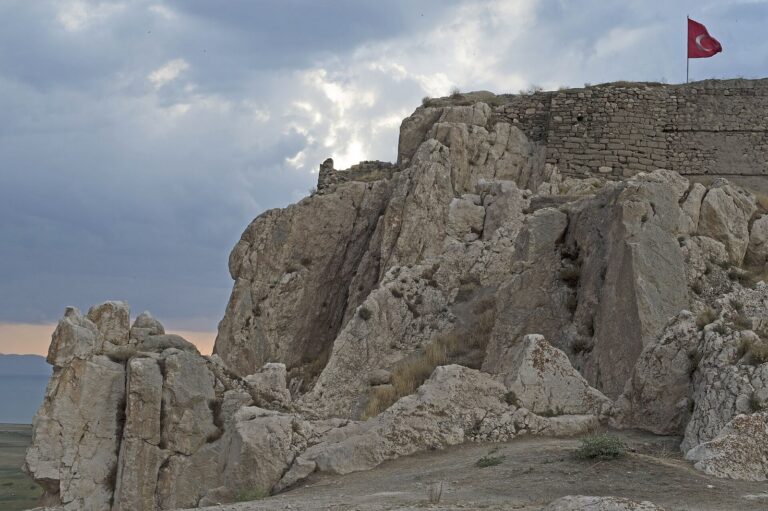
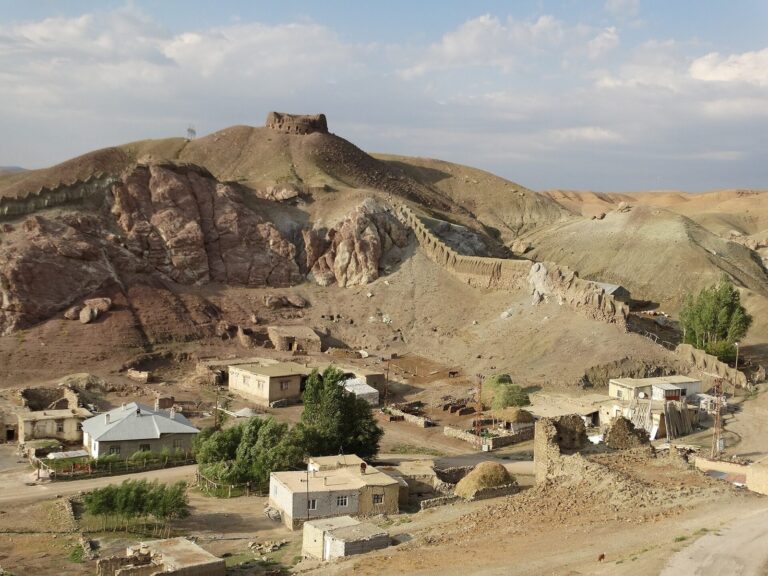
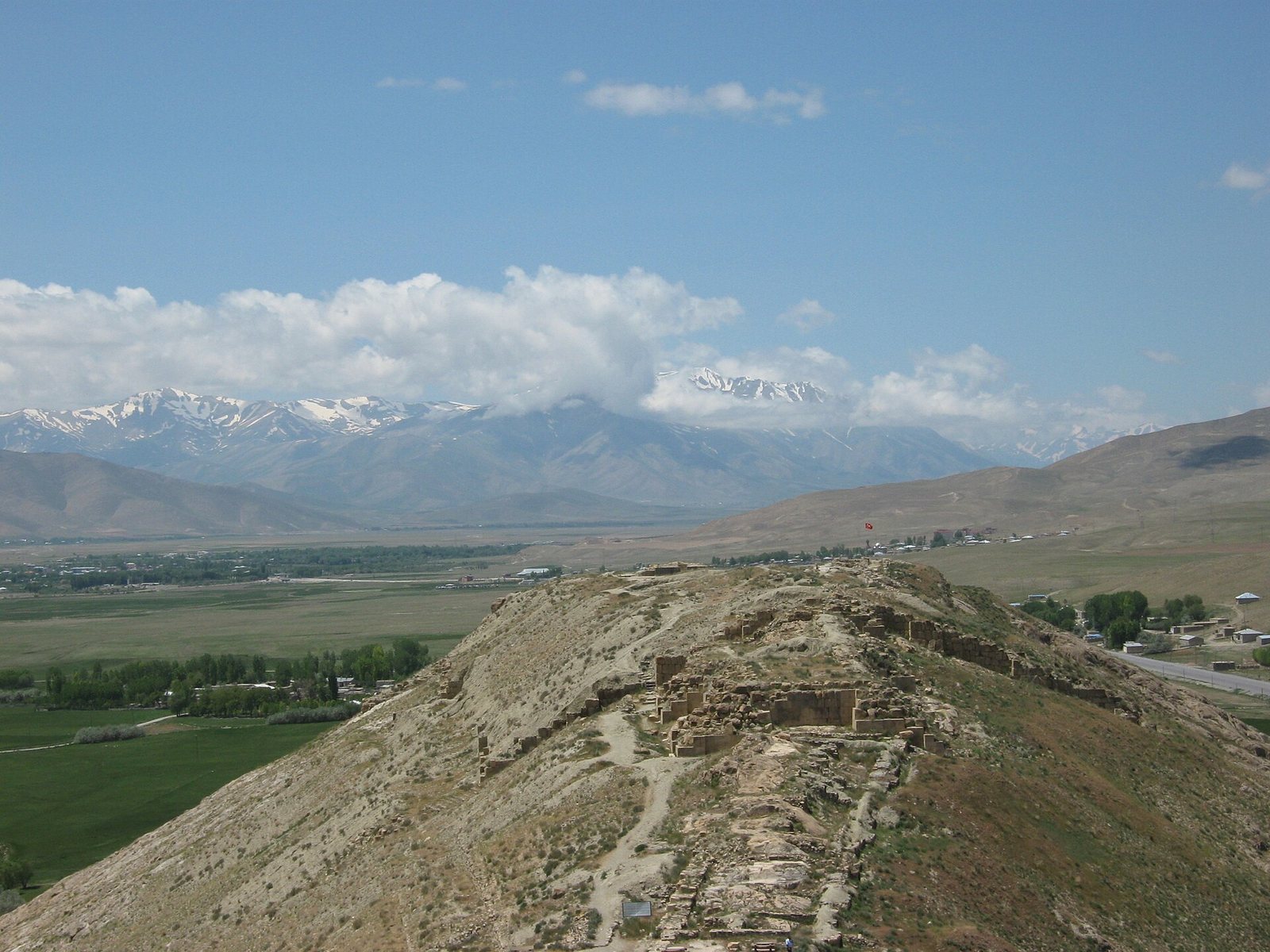
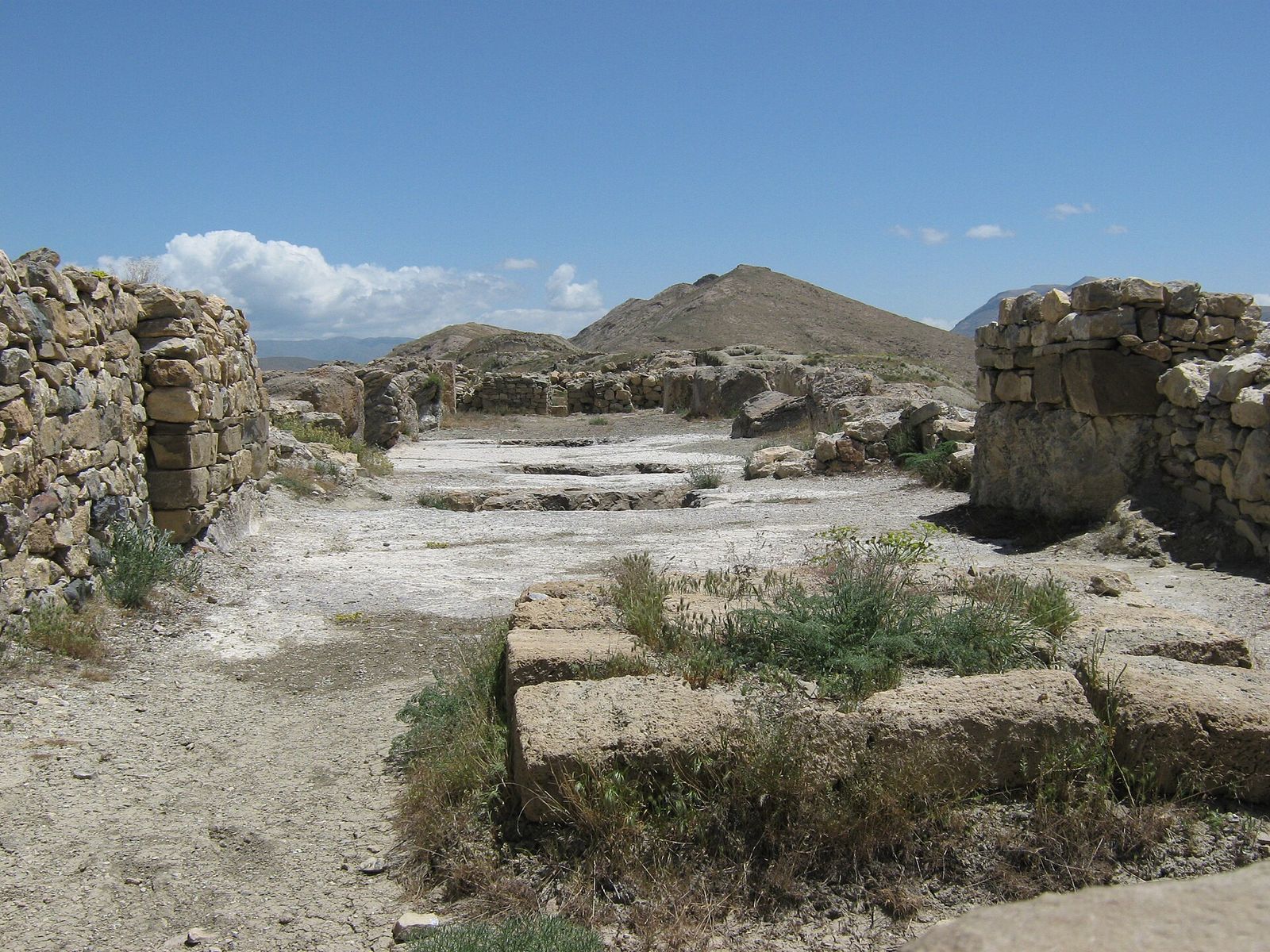
The city follows a ridge above the Gürpınar Plain, at the northeastern edge of Çavuştepe village in the historic valley of Hayots Dzor. Its long layout has an eastern upper section and a western lower one. The upper section lies at 1,862 metres above sea level and the lower at 1,849 metres. The lower section, about 50 metres above the foot of the ridge, measures approximately 430 by 75 metres.
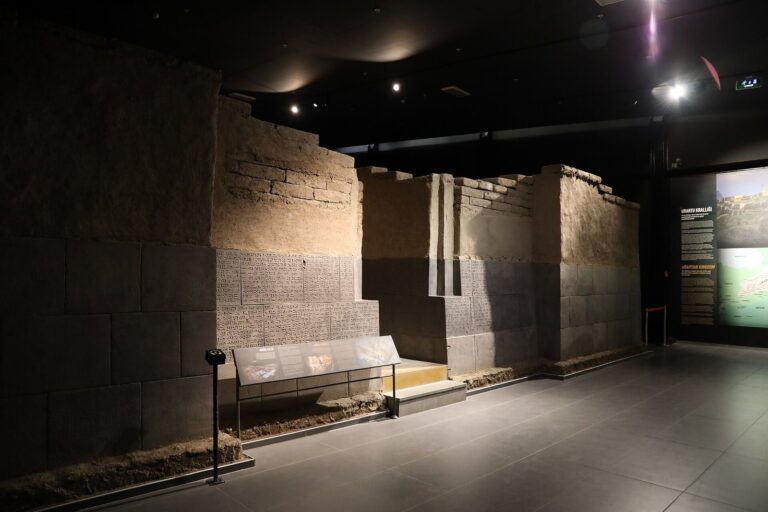
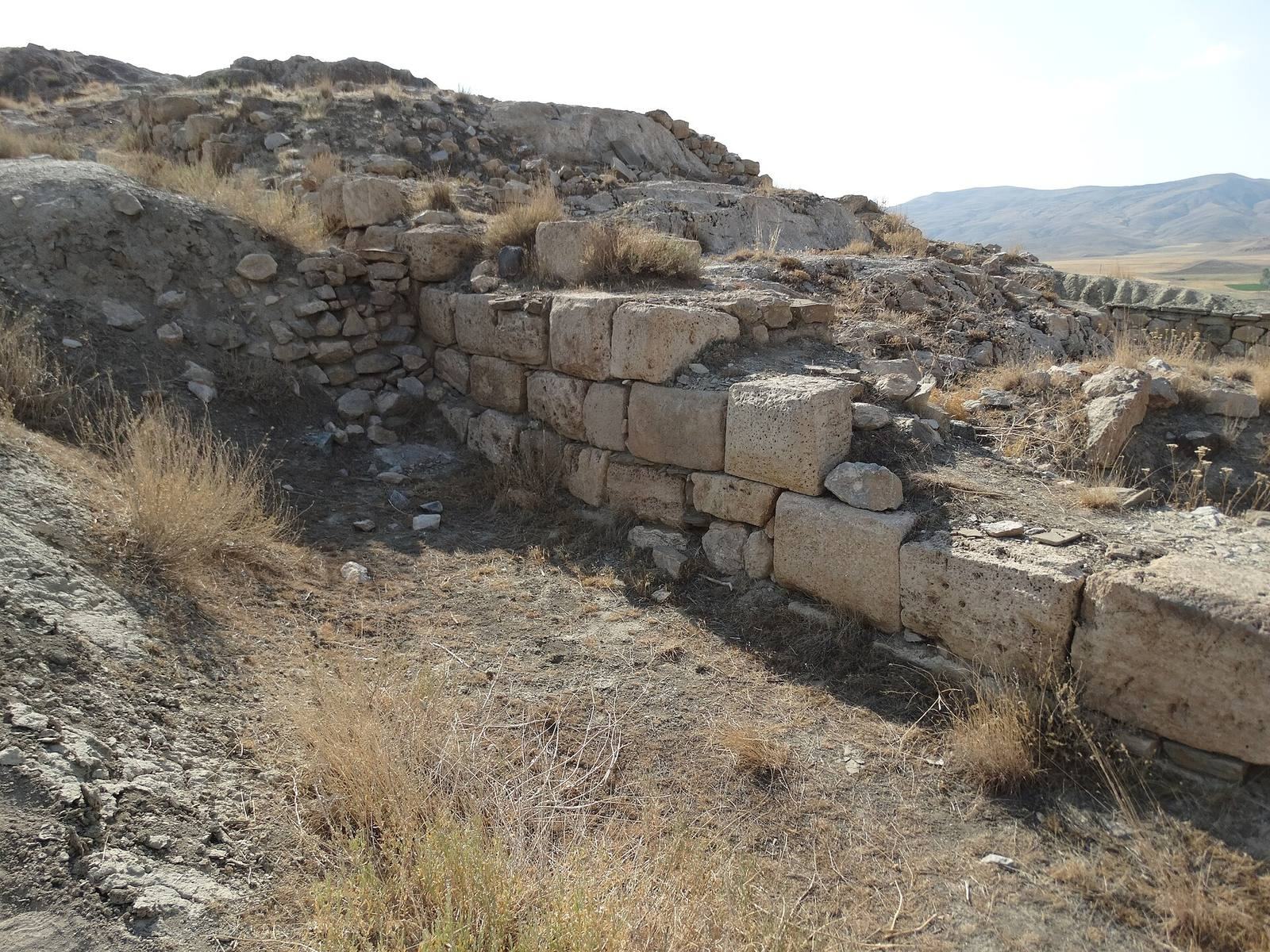
A circuit wall about one kilometre long encloses the fortress. Rectangular buttresses project from it at intervals of six to ten metres, and a gate near the middle links the upper and lower sections. A moat surrounded parts of the fortress. The masonry includes a wall built from exceptionally large stone blocks, while other blocks are smoothly finished and fitted closely without mortar. Burney regarded the quality of the stonework as evidence of a wealthy town, of which the acropolis remained.
Temples and royal buildings
Temple of Khaldi
The upper section contains the Temple of Khaldi, measuring 80 by 65 metres. It is now almost entirely destroyed, with parts of its foundations surviving.
Temple of Irmushini
Remains of a temple dedicated to Irmushini, a deity identified with medicine, lie in the lower section.
Royal palace
The complex included a royal palace dating to Sarduri II’s reign, 764–735 BC. Its remains include a throne room, a room described as a “royal” toilet, a harem, and colonnaded halls. The fortress also had citadel walls and a king’s tower.
Workshops and storage buildings
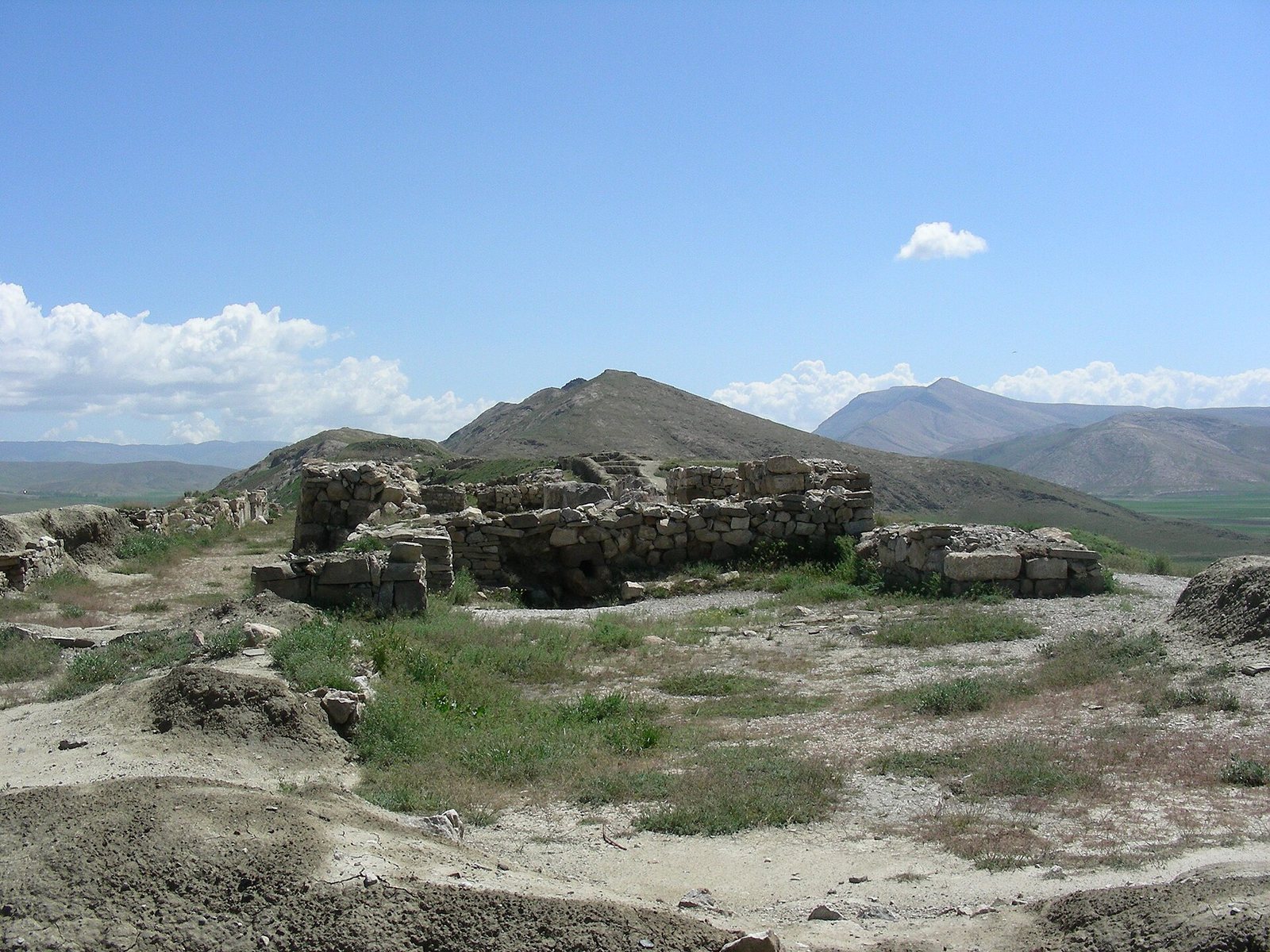
Workshops dated to the seventh century BC formed part of the complex, alongside storehouses, cisterns, and a kitchen. In the lower section, the remains of buildings extend from east to west, with some facing the main street. Rock-cut wells and a hall for storage jars also survive; the large jars in the hall were arranged in four rows.
Inscriptions and finds
Four Urartian cuneiform inscriptions were found at Çavuştepe. One was removed in 1884 and taken to Vienna, where D. H. Müller published it. Artifacts collected during Marr and Orbeli’s 1916 visit are now held at the Hermitage.