Karmravank: A 10th-Century Armenian Apostolic Monastery
Site at a Glance
- Popularity
- Low
- Country
- Turkey
- Primary era
- Medieval
- Eras represented
- Medieval
- Civilizations
- Armenian
- Site type
- Religious
- Remains
- Fortified Monastery
On this page10 sections
History
Karmravank is a 10th-century Armenian Apostolic monastery in Göründü, Türkiye. Tradition credits its foundation to Gagik I Artsruni, king of Vaspurakan, a medieval Armenian kingdom, from 908 to 943. The Armenian Apostolic Church is the historic Christian church of the Armenians within the Oriental Orthodox tradition. Karmravank means “Red Monastery,” and the site is also known in Turkish as Göründü Church.
Foundation and religious traditions
Tradition associates Karmravank with Saint Sahak the Hermit, an ascetic said to have lived at the monastery and miraculously regained his sight. Near Gandzak, a chapel was built at a place where Sahak was said to have prayed. It was enlarged in 1608 and served as a small manuscript library during the 16th and 17th centuries. Local tradition also places a mill in a grove opposite the monastery and vineyards on the lower slopes toward Lake Van.
The relic and later history
By about the mid-15th century, Karmravank was probably known as a shrine of the Holy Sign because it housed a fragment of the True Cross, an object believed to come from the cross on which Jesus was crucified. The fragment was kept in a reliquary decorated with red stones, which gave the monastery its name. The relic had earlier belonged to another monastery, was listed as part of a different monastic complex in 1461, and was held at a hermitage in 1644. It was later found in Bitlis and gave its name to a now-ruined Church of the Holy Mother of God.
By the end of the 19th century, Karmravank was among the few remaining properties of the Aghtamar Catholicosate, a church jurisdiction led by a catholicos. Kurdish raiders plundered the monastery in 1895. After the Armenian Genocide, the mass deportation and killing of Armenians in the Ottoman Empire during the First World War, Karmravank was confiscated and abandoned. The complex was used as a sheepfold in the 1970s and has since deteriorated extensively.
Remains
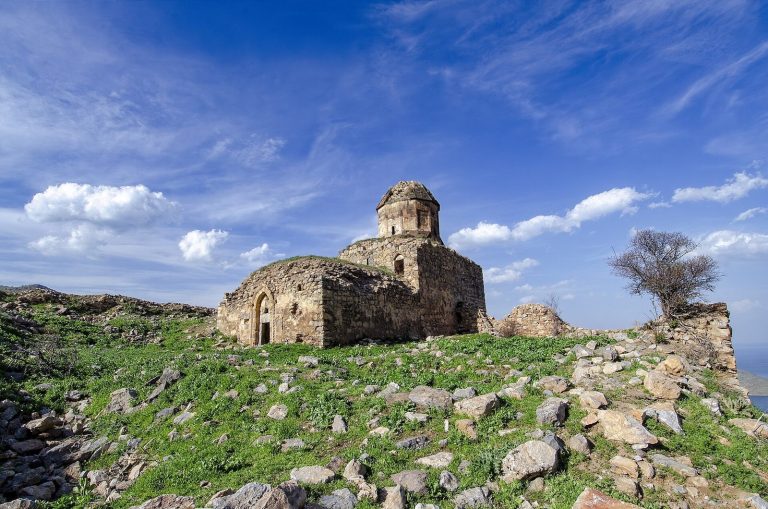
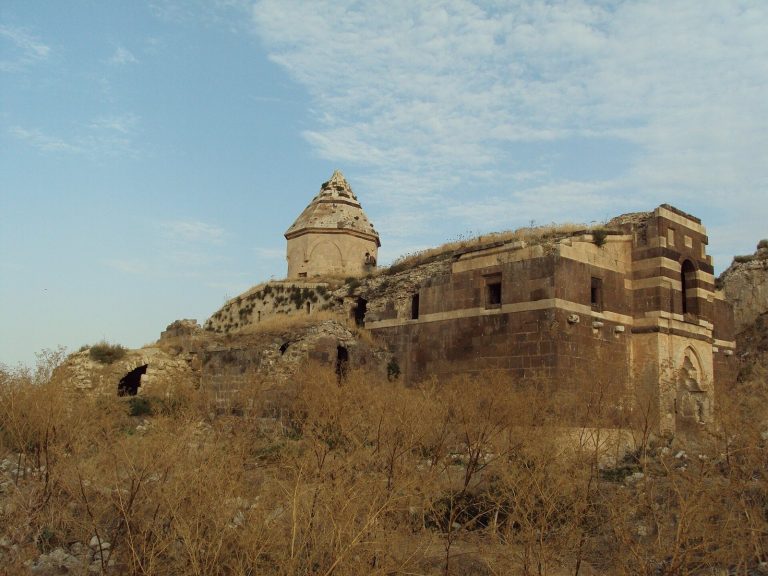
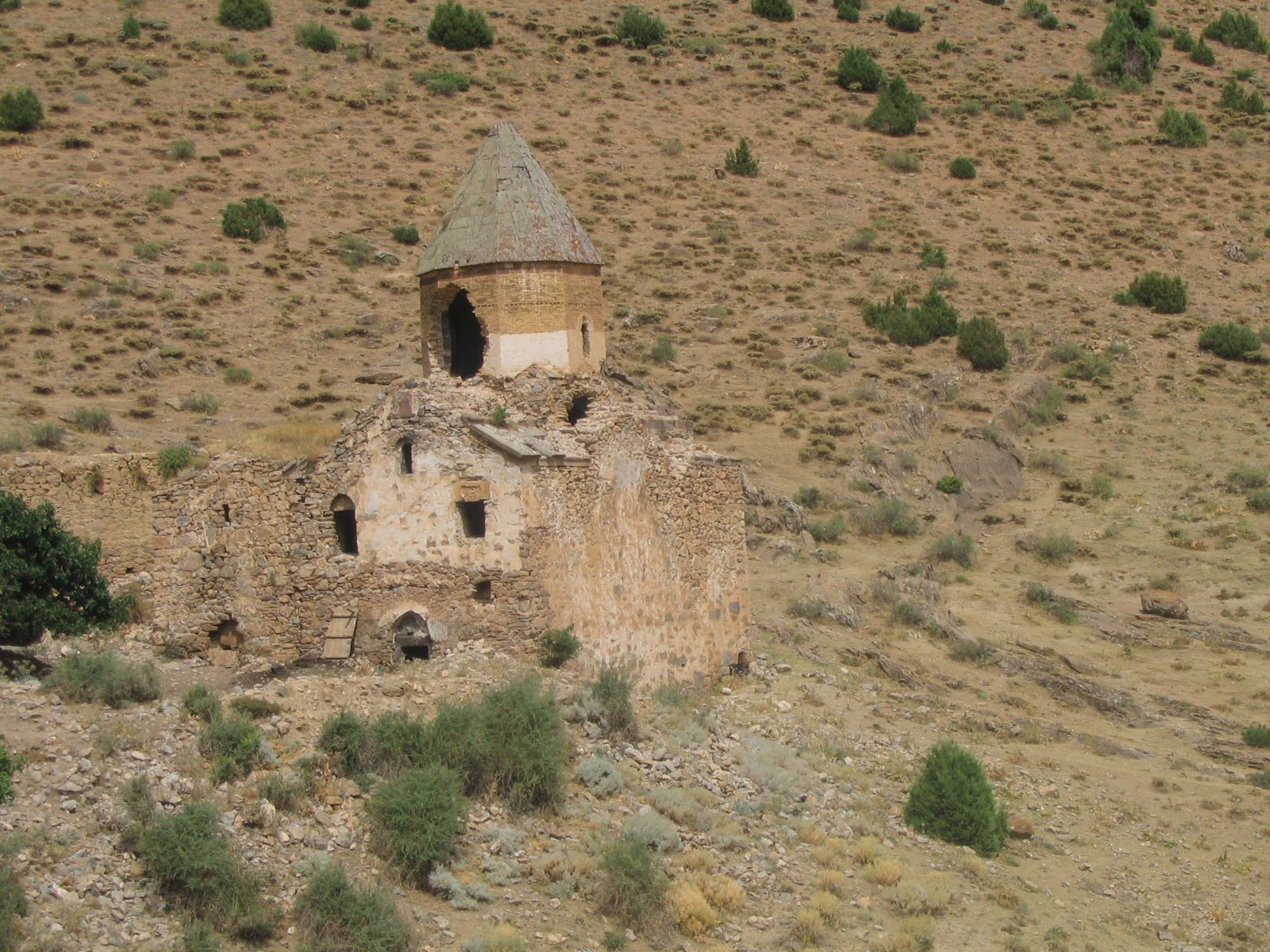
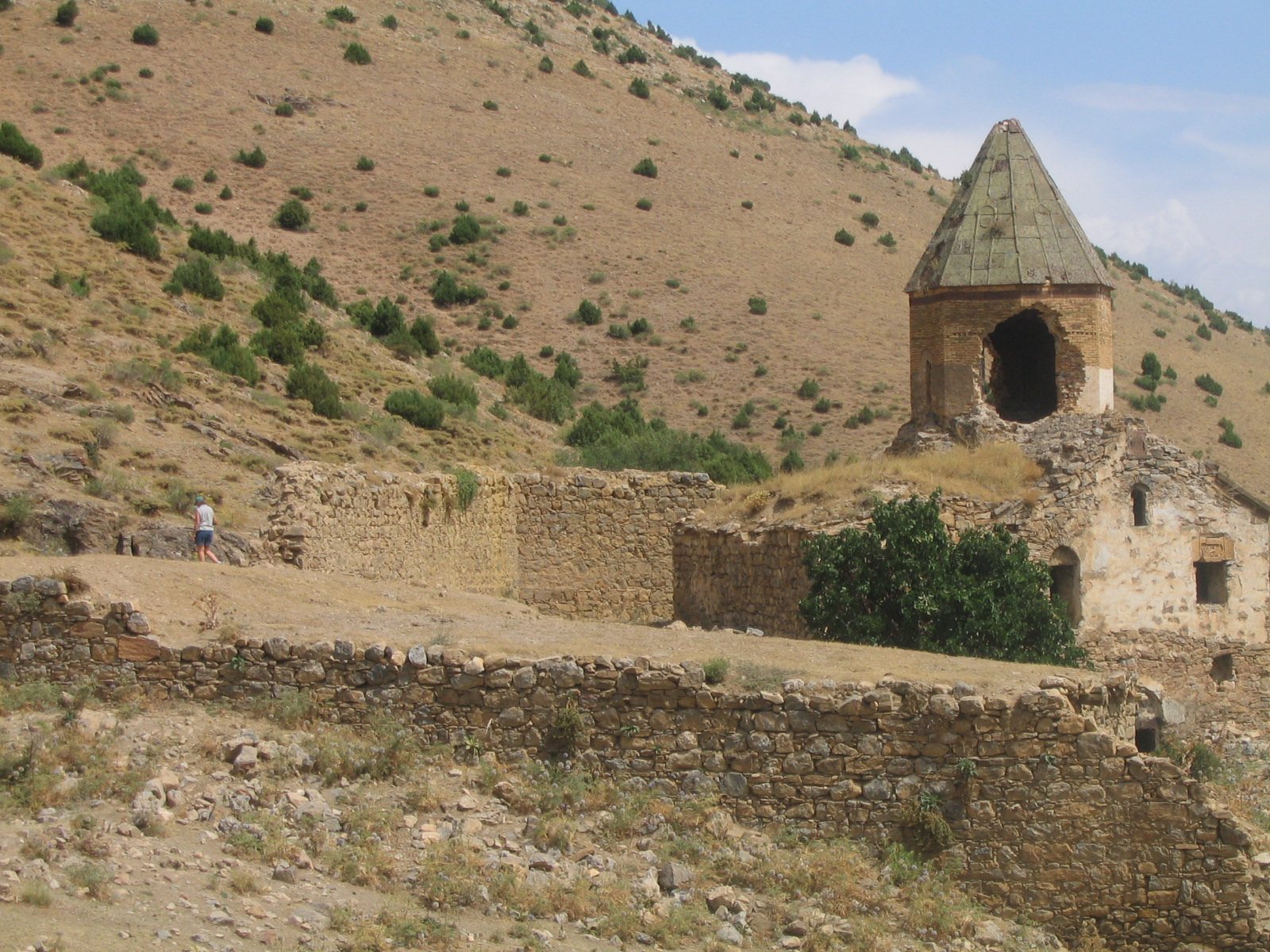
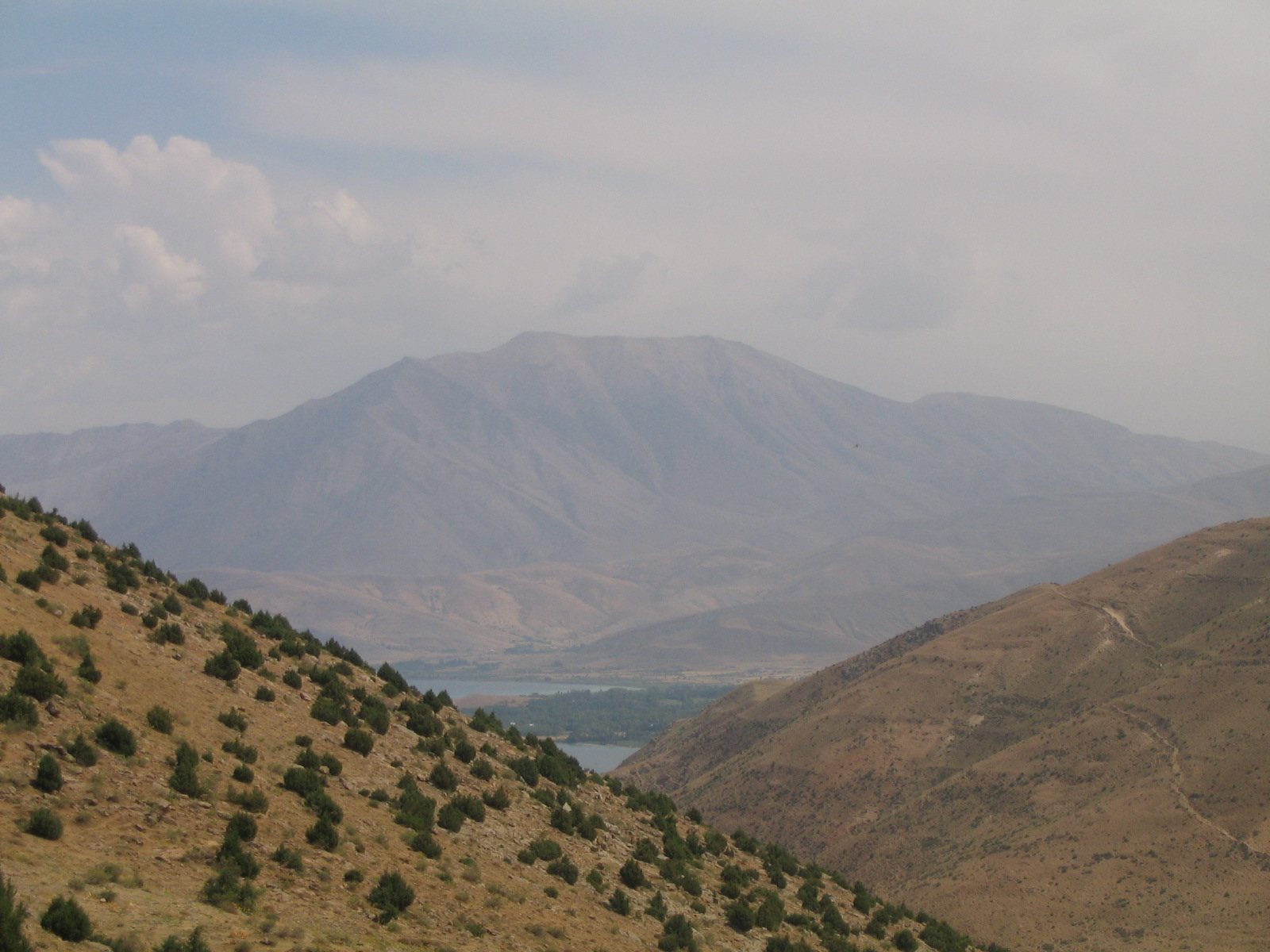
The monastery stands about 2,000 metres above sea level on the slopes of a narrow gorge opening toward Lake Van’s southern shore, northwest of the former Armenian-populated village of Mokhraberd. Mount Artos is visible from the site. The complex includes two adjoining churches built of slate blocks, an enclosing defensive wall, and a group of later buildings.
The churches
The smaller church
The smaller church stands north of the larger one and may be older, judging by its architectural form. This single-nave building measures 8.5 by 5.3 metres. Its Gothic-style vaulted roof has a curved form, and the interior includes side apses, or semicircular sanctuary spaces, and a narrow arched opening. The church’s name is unknown.
Surb Astvatsatsin
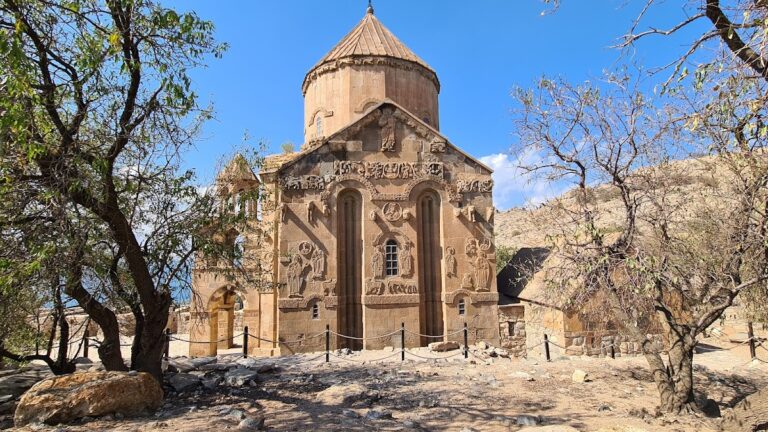
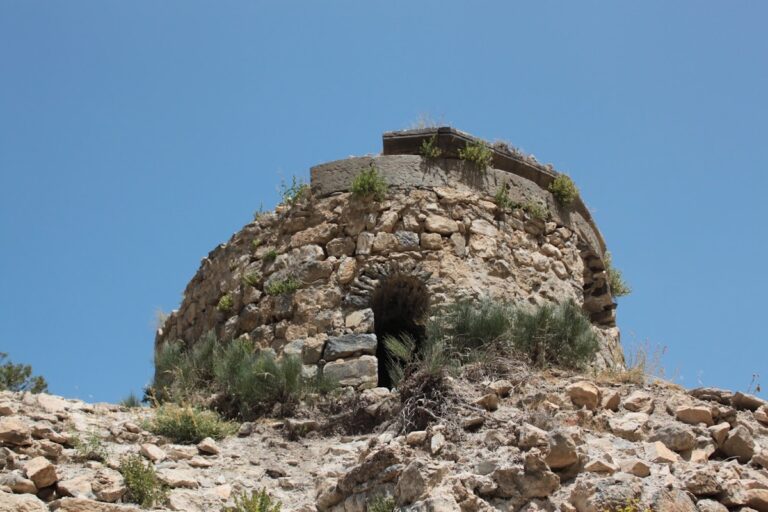
The larger church, Surb Astvatsatsin (Holy Mother of God), measures 12.9 by 7.8 metres. It was reconstructed in the 13th–14th centuries and restored in 1872. Built against the smaller church’s southern wall, it is connected to that building. Its single nave has side apses and a dome set on a high drum, a raised circular base beneath the dome. The dome is damaged, and its supporting columns remain visible.
Above a window in the larger church’s wall is a khachkar, an Armenian carved stone monument featuring a cross. The abbot Tadeos carved this example, dated 1306. Other khachkars at the monastery bear the dates 1347, 1371, 1476, and 1479.
The enclosure and later buildings
Defensive wall and monastic cells
A defensive wall enclosed the monastery, with monastic cells positioned along it, chiefly on the western side. The eastern and northern sections of the wall survive relatively intact and are 1.4 metres thick.
Northwestern buildings
A group of one-storey buildings occupies the northwestern part of the complex. Formerly used as sheep and cattle barns, the buildings are abandoned and collapsing.