Església de Santa Creu: A Gothic Parish Church in Palma, Spain
Site at a Glance
- Rating
- 4.5
- Popularity
- Medium
- Country
- Spain
- Primary era
- Medieval
- Eras represented
- Medieval, Early Modern
- Civilizations
- Crown of Aragon, Habsburg, Habsburg Spain, Kingdom of Majorca, Spanish
- Site type
- Religious
- Remains
- Church
On this page12 sections
History
Església de Santa Creu is a Catholic parish in Palma, Spain, dedicated to the True Cross, the cross Christians believe was used in the crucifixion of Jesus. Its origins lie in the fourteenth century, and it was built in the Catalan Gothic style. Among Palma’s earliest parishes, it ranked second in the city’s ecclesiastical order and was Palma’s largest parish after Santa Eulàlia.
Medieval construction
Construction began in 1335 on land donated by the Bishop of Barcelona. The chronology may refer to two church buildings: the first may have been completed in 1371, when the main bell was cast, while work on a second may have begun around 1440. A document from 1445 describes a new church being built.
Later construction and protection
The keystone above the main altar area was installed in 1564. In 1976, Spain designated the church an Asset of Cultural Interest in the Monument category.
Remains
Plan and exterior
Church plan and roof
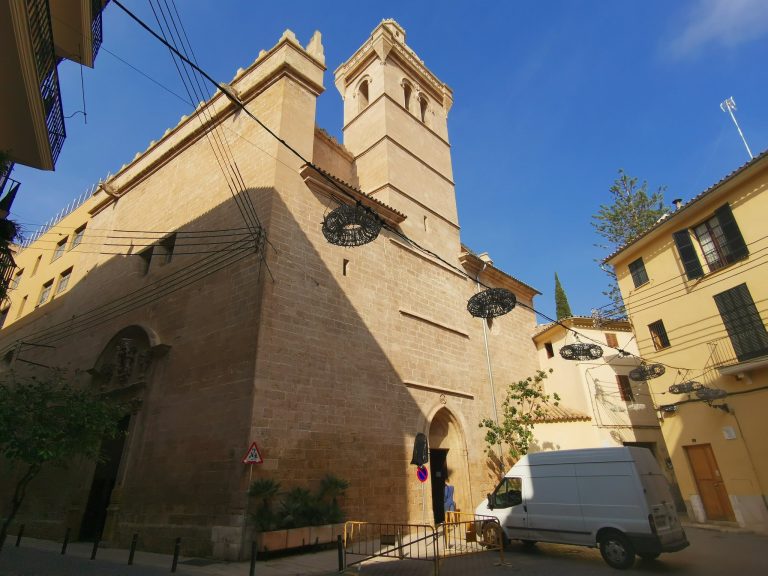
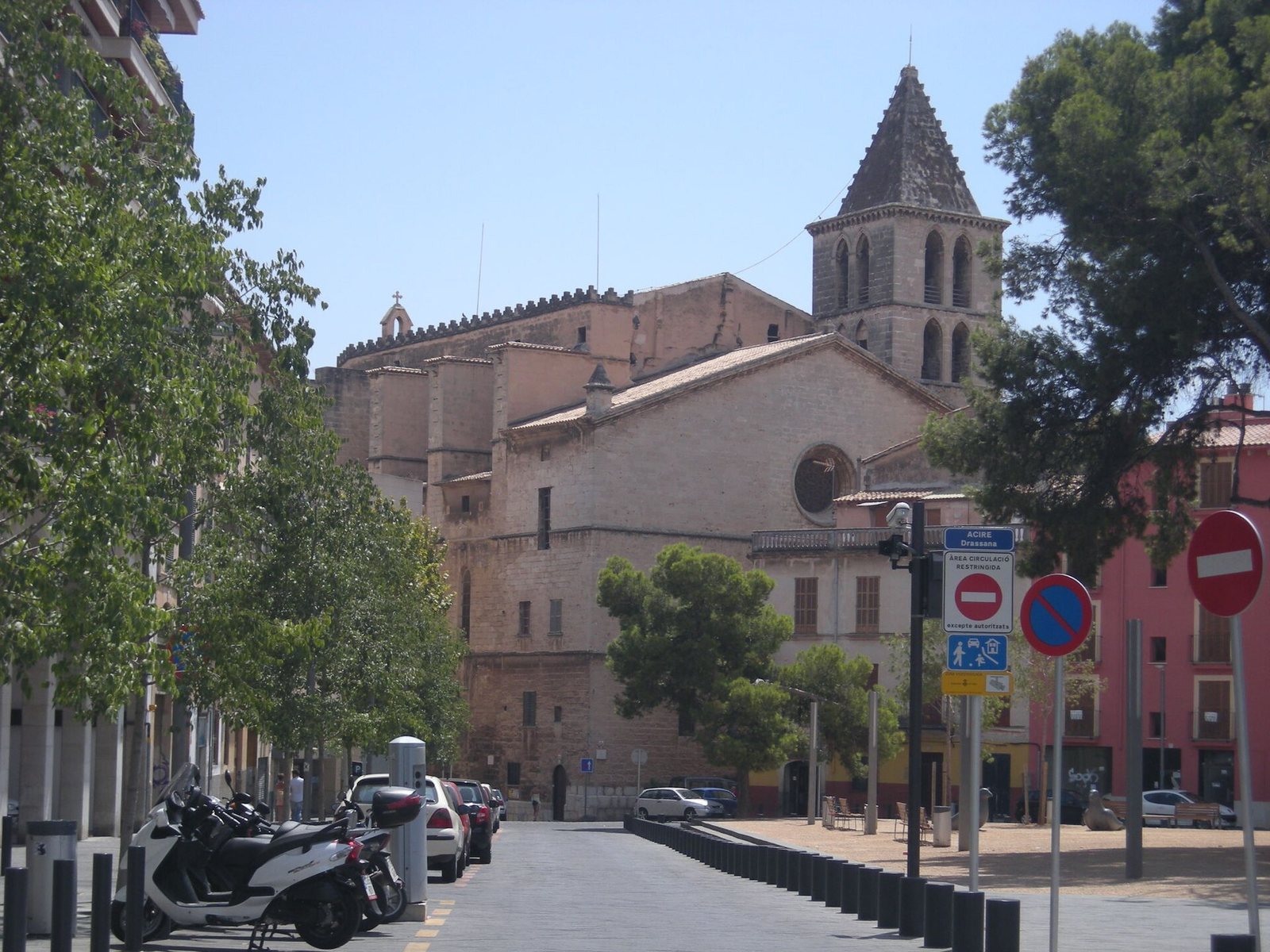
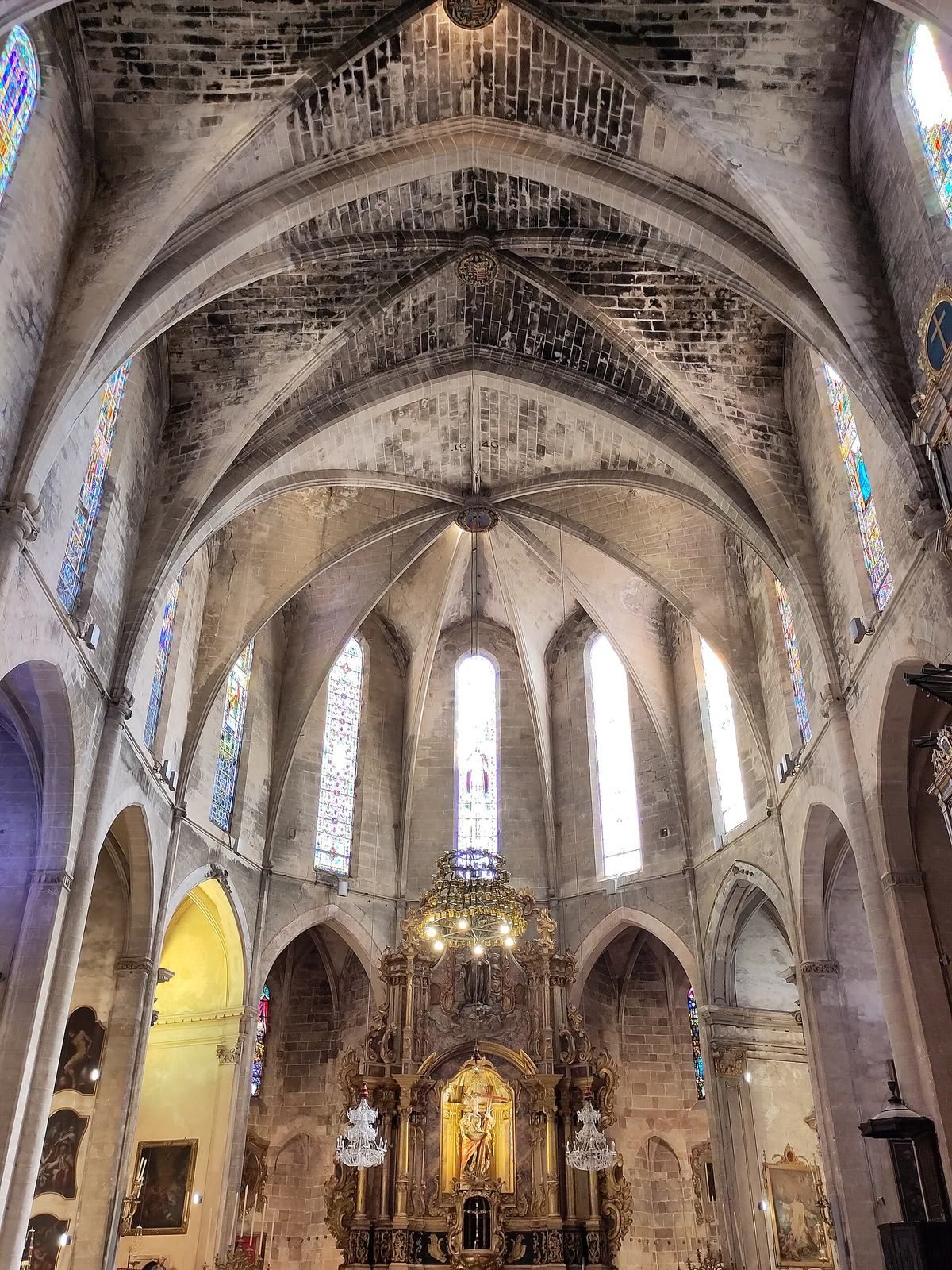
Built of stone from Bellver’s royal quarry, the church measures 26 metres wide and 48 metres long. Its side chapels occupy spaces between the buttresses, projecting supports for the walls, and its plan includes five apses, or projecting ends. Cross-ribbed vaults, supported by intersecting ribs, cover the roof except above the presbytery, the area around the main altar, where the vault is ribbed.
Façades and portal
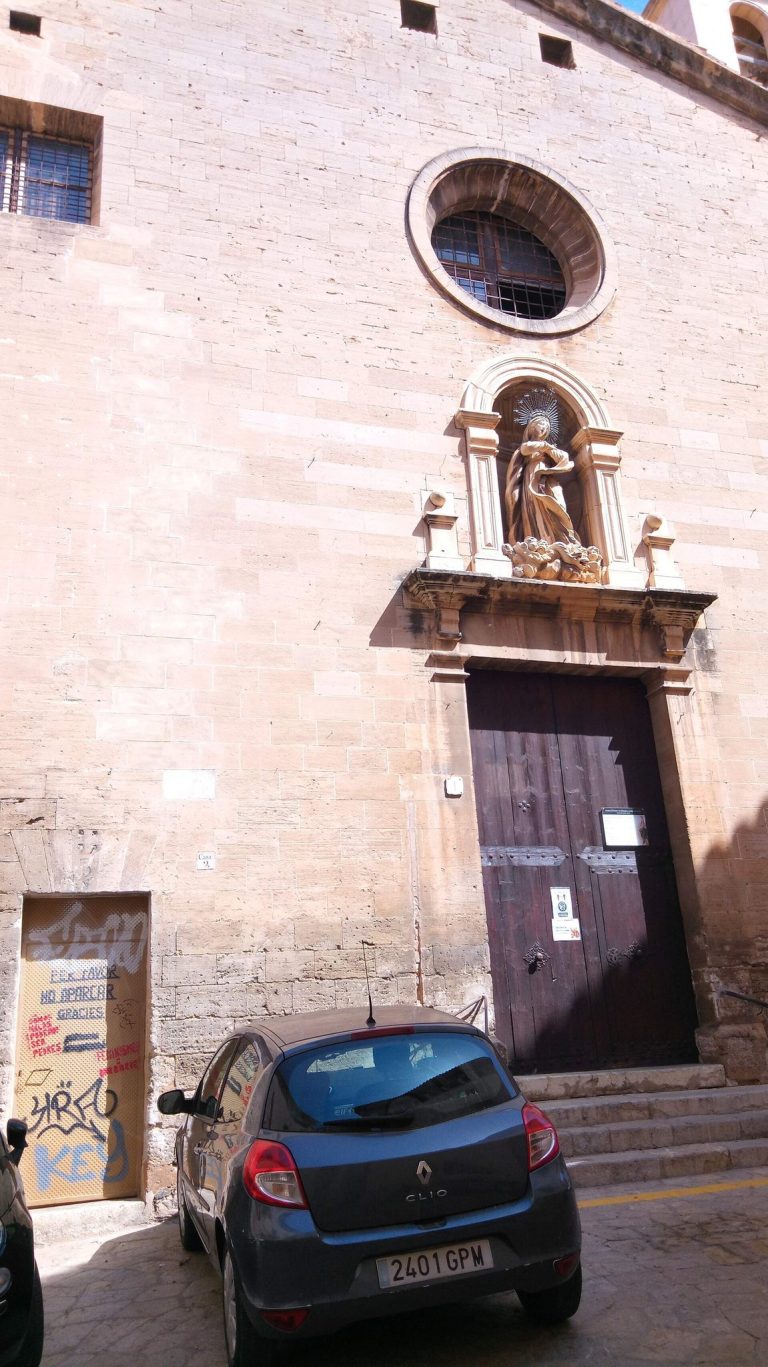
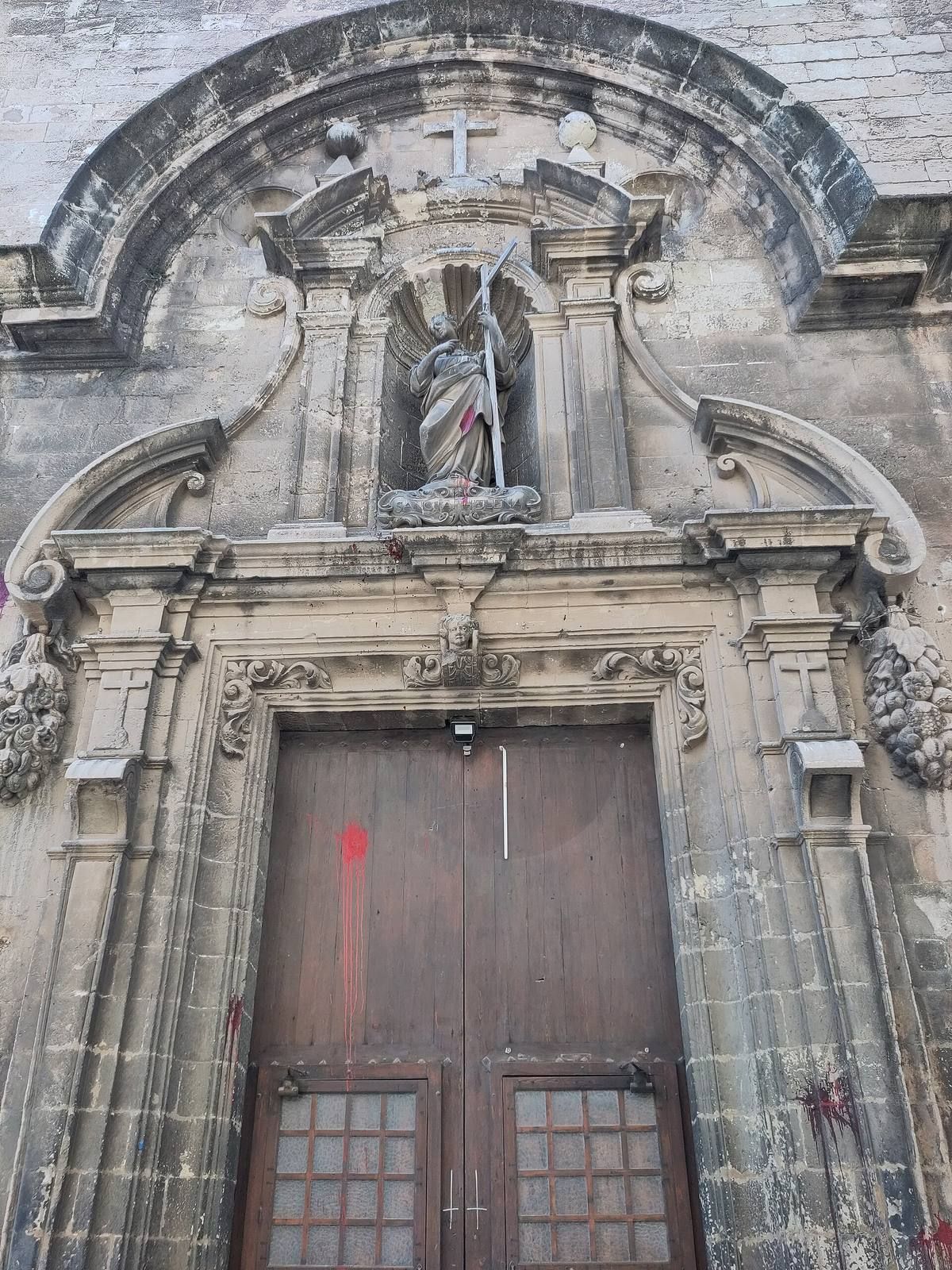
The main façade remains unfinished, and the bell tower stands to its right. On the north side, the façade facing Santa Cruz Street has a mainly Baroque portal approached by five steps. Geometric, tapering supports frame the entrance. Above them, a broken curved pediment is topped by two pyramids with balls and a central cross. A shell-shaped recess within the pediment holds an image of Saint Helena, a Roman empress and Christian saint.
Crypt of Saint Lawrence
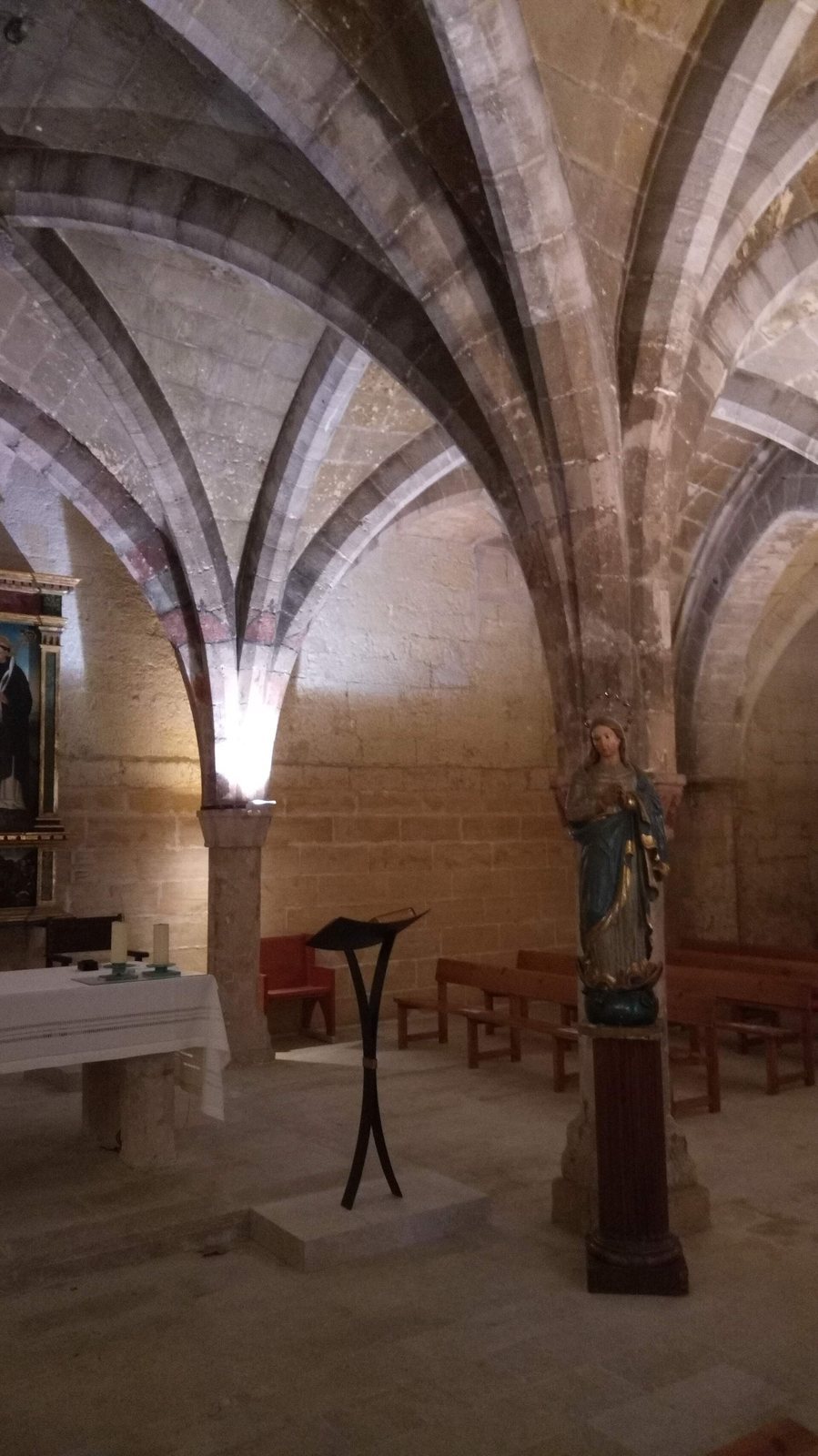
Below the presbytery lies the Crypt of Saint Lawrence, dating to the late thirteenth or early fourteenth century. It has a square plan and a passageway, or ambulatory, around it, divided into five bays that alternate between square and triangular forms. Five chapels lie between the buttresses. The cross-ribbed vault rests on four octagonal columns with geometric capitals. At the entrance, a moulded lintel sits above capitals carved with animal forms. The crypt contains a Renaissance altarpiece dedicated to Saint Lawrence, an early Christian deacon and martyr, and a Gothic crucifix. It also formed part of the former parish museum.
Interior furnishings
Altarpieces and painted panel
The late Baroque main altarpiece includes images of Saint Helena and the Virgin Mary under the title Our Lady of Mount Carmel, reflecting the parish’s maritime tradition. Other Gothic and Baroque altarpieces are also found in the church. A sixteenth-century Gothic panel of the Virgin Mary as Our Lady of the Good Way is by the painter Gabriel Mòger.
Chapels and burial
The third chapel on the right contains a Gothic image of the Virgin Mary as Our Lady of the Holy Cross. Opposite it, the third chapel on the left is dedicated to the Sacred Heart of Jesus and contains the tomb of Antonio Barceló i Pont de la Terra, known as Captain Toni. He was an eighteenth-century Spanish naval officer whom the church identifies as a lieutenant general of the Navy. A Saint Anthony altarpiece is also associated with his burial.
Organ
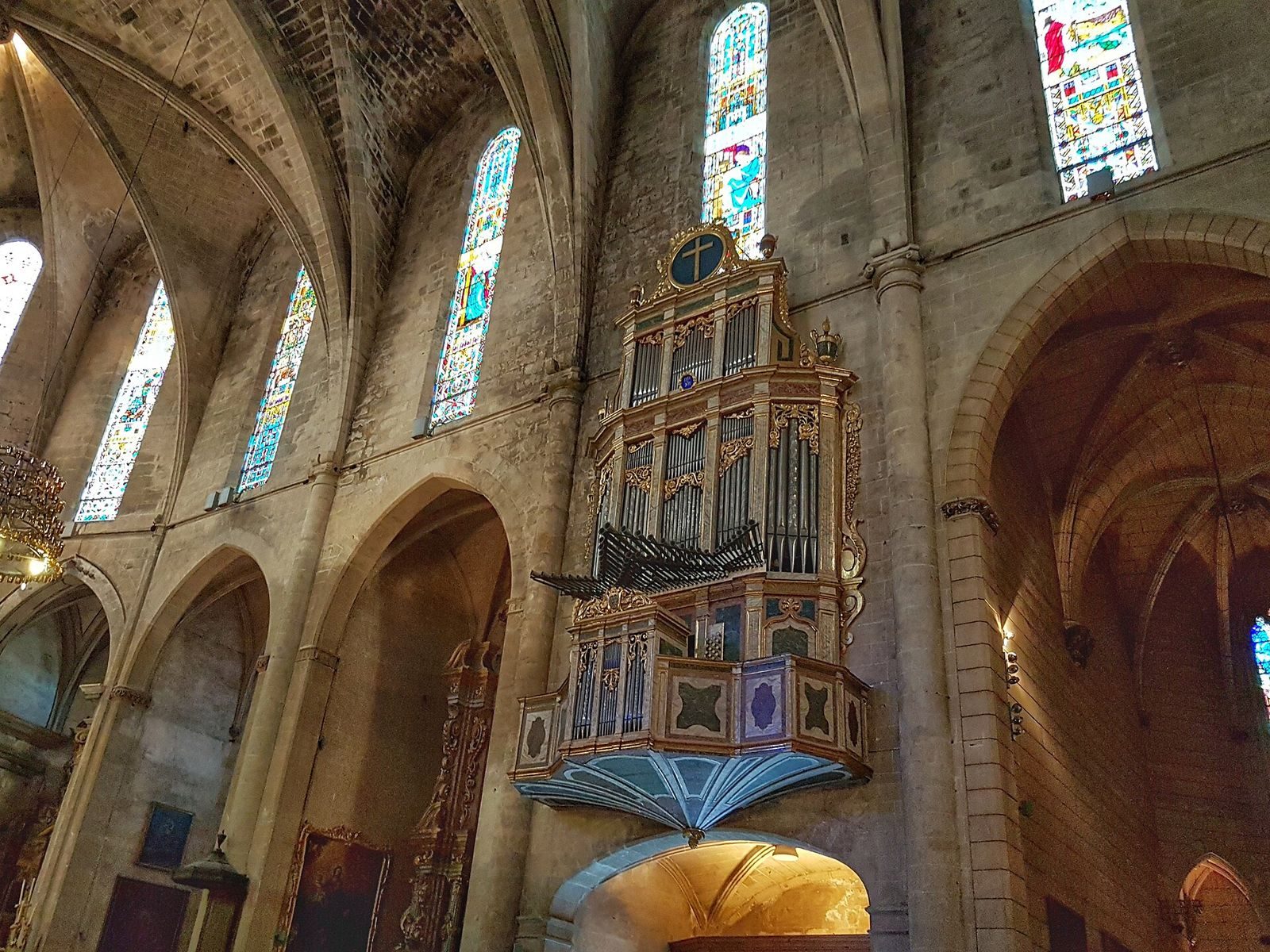
The organ is mounted on the church’s right-hand wall and remains in use. It has three manual keyboards, a pedalboard with 30 notes and 45 stops, controls that select sets of pipes. It is among the largest organs in Mallorca.