All Hallows-on-the-Wall: A Neoclassical Church in London
Site at a Glance
- Rating
- 4.6
- Popularity
- Low
- Country
- United Kingdom
- Primary era
- Early Modern
- Eras represented
- Early Modern
- Civilizations
- British
- Site type
- Religious
- Remains
- Church
On this page11 sections
History
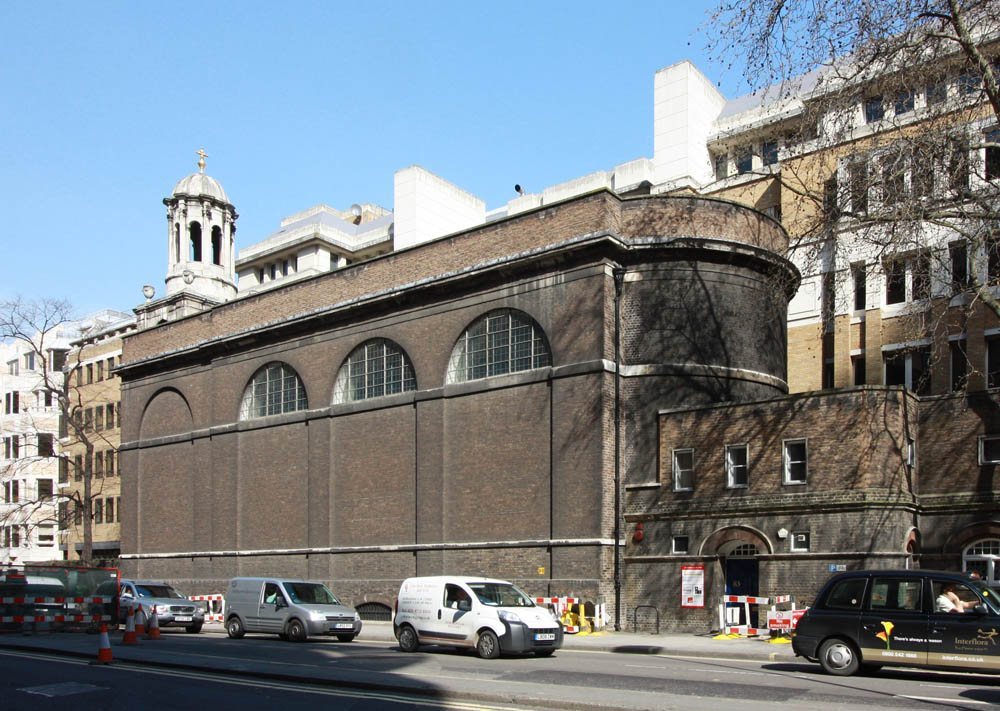
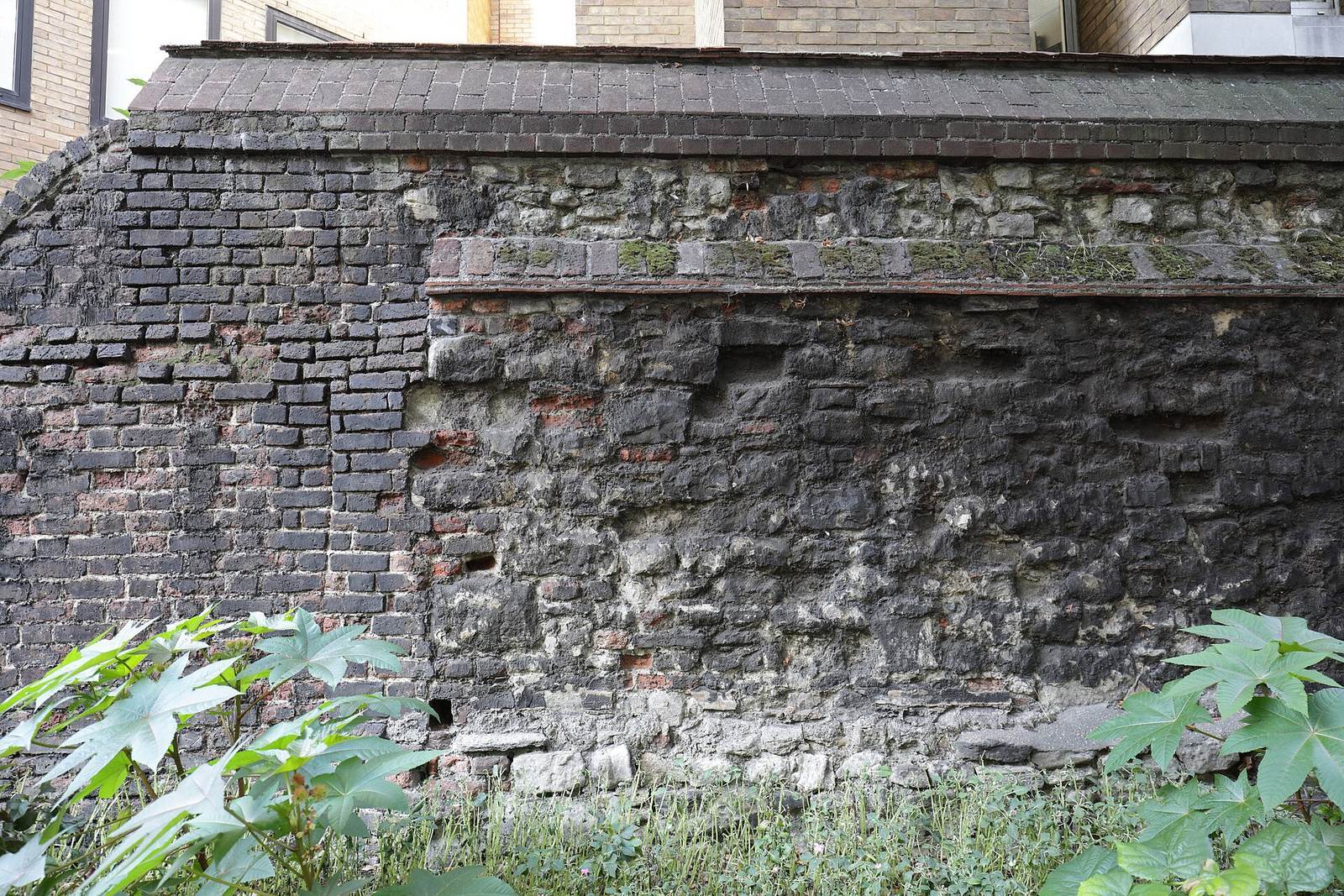
All Hallows-on-the-Wall is a Church of England church in London, United Kingdom, rebuilt in 1767 in a Neoclassical style drawing on ancient Greek and Roman forms. Its predecessor was built in the early 12th century on a projecting section of the former Roman city wall. Dedicated to All Saints, the church’s earlier Roman Catholic affiliation ended in 1538. It escaped the Great Fire of London, the major conflagration of 1666, because it stood beneath the old wall, but later fell into disrepair.
Medieval church and 18th-century rebuilding
George Dance the Younger replaced the earlier building with the present church in 1767. An English architect, Dance was 24 when he undertook the work, having recently returned from Italy, where he had studied classical architecture.
Parish ministry and guild life
The church developed services for poor residents and workers in the parish. Among those it served were women in domestic service who travelled into the City on early trains to avoid peak fares. Under the Reverend Sir Montague Fowler, this work helped attract one of the City’s largest congregations, even as many other City churches were coming to be regarded as redundant.
All Hallows is a guild church, a City church without a parish that is often associated with a livery company, or historic trade association. The Worshipful Company of Carpenters, a London livery company with civic and ceremonial functions, has held annual elections at the church since at least the 15th century.
War and changing uses
The German bombing campaign against Britain during the Second World War, known as the Blitz, damaged the church in 1940. It was restored in the early 1960s. On 4 January 1950, All Hallows was designated a Grade I listed building, the highest listed-building grade in England, reserved for buildings of exceptional interest.
The Council for the Care of Churches had its headquarters at All Hallows until 14 December 1994, when it and the Cathedrals Fabric Commission for England, an advisory body concerned with cathedral buildings and their conservation, moved out. The church then stood empty for about two and a half years. In April 1997, Christian Aid, an international development and humanitarian charity, was given use of the building. Its London and South East team leader, Garth Hewitt, became Guild Vicar, the clergy member appointed to serve a guild church, and was licensed by the Bishop of London on 18 June.
All Hallows became a centre for Christian Aid and its supporters, with a focus on justice, development, and peace. Other organizations based there included Christian Aid’s Community Fundraising Unit, the Amos Trust, a charity focused on justice issues, and Greenbelt, a Christian arts festival. From 1997, an English-speaking Antiochian Orthodox congregation, part of the Eastern Orthodox tradition associated with the historic Patriarchate of Antioch, also worshipped at the church for about 18 months. Led by Archpriest Michael Harper, a senior priestly rank in some Orthodox churches, it held Sunday services and evening services during Holy Week.
In 2014, the urban youth charity XLP made All Hallows its headquarters, and City Gates Church established its home there. City Gates has roots in the British New Church Movement and Ichthus Christian Fellowship, Christian renewal and fellowship movements. It was the first community to hold regular services at the church since 1941. The COVID-19 pandemic halted activities; meetings resumed in September 2021 and community projects in December 2022.
Remains
The church building
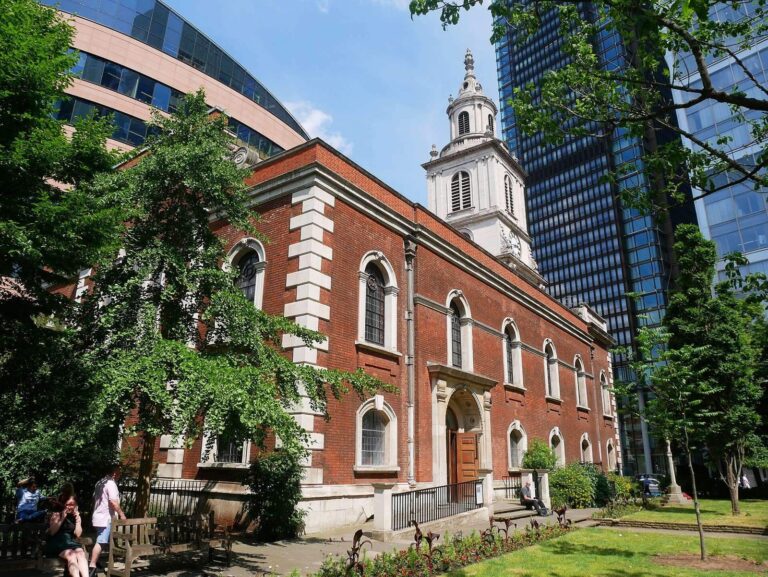
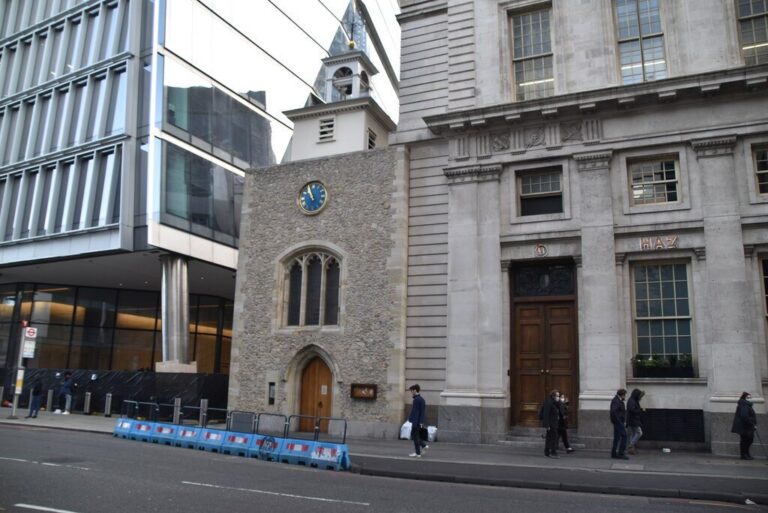
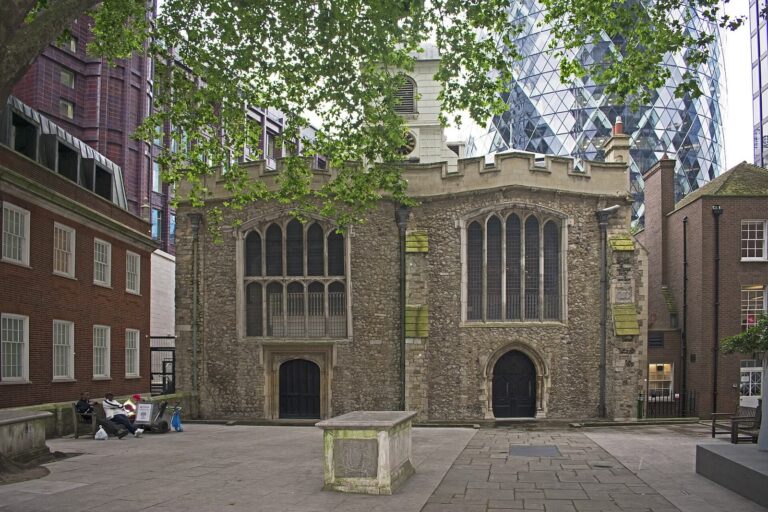
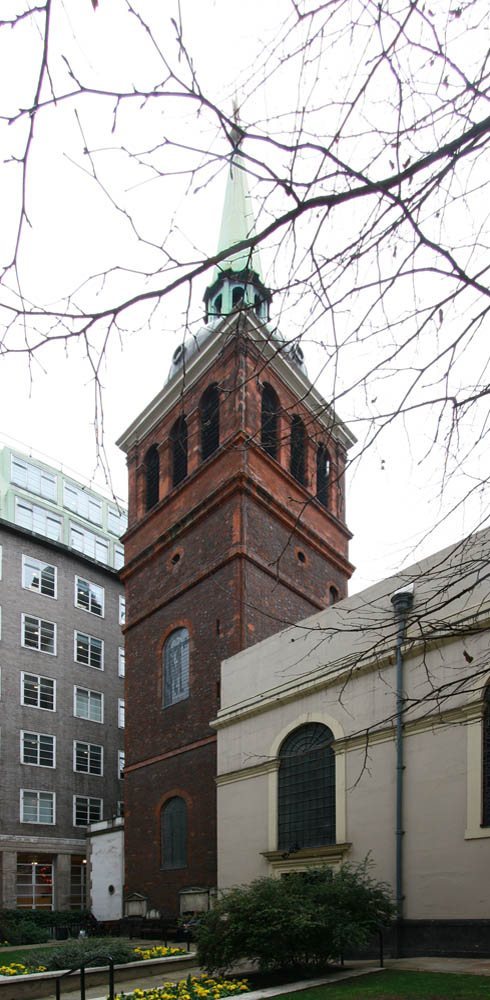
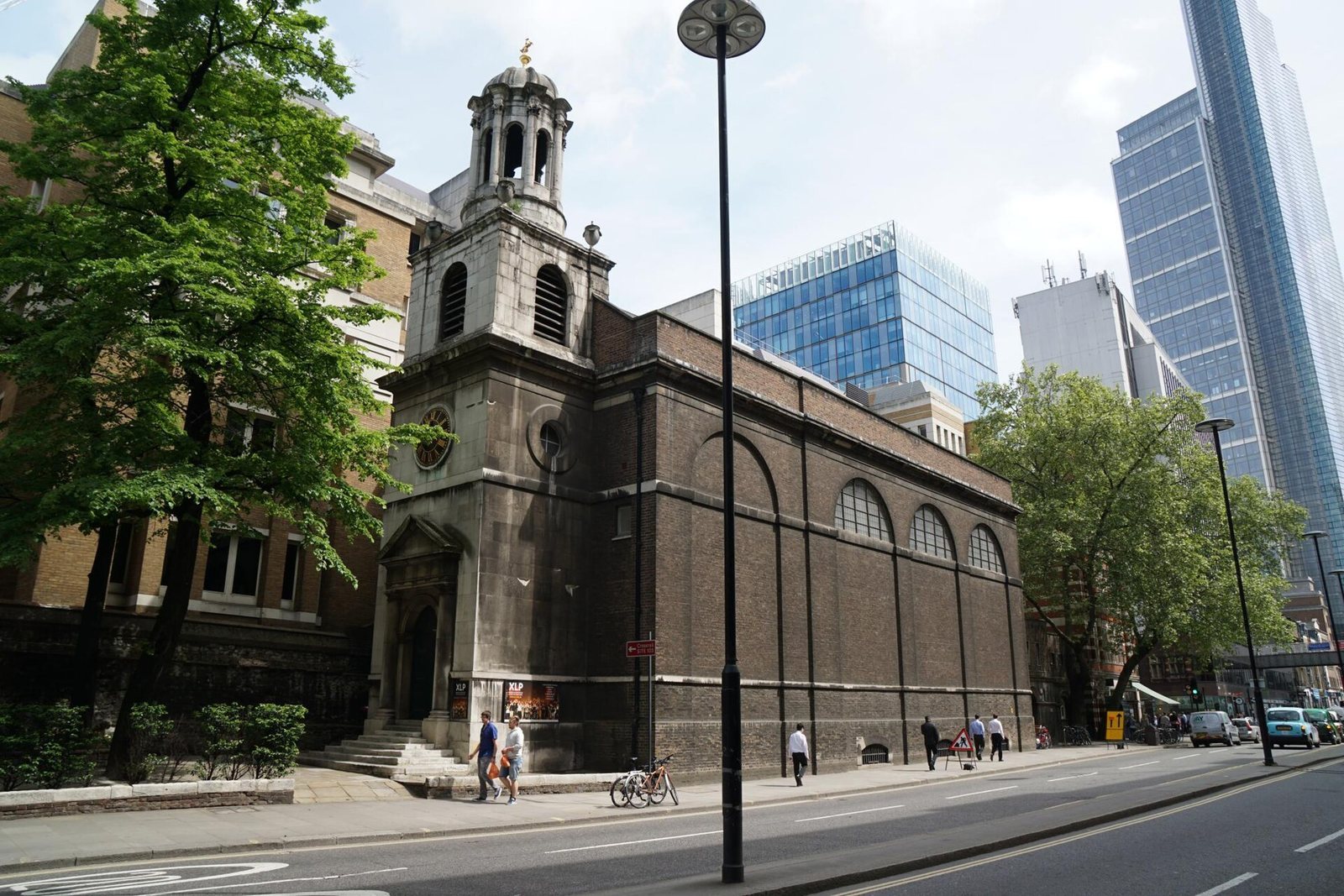
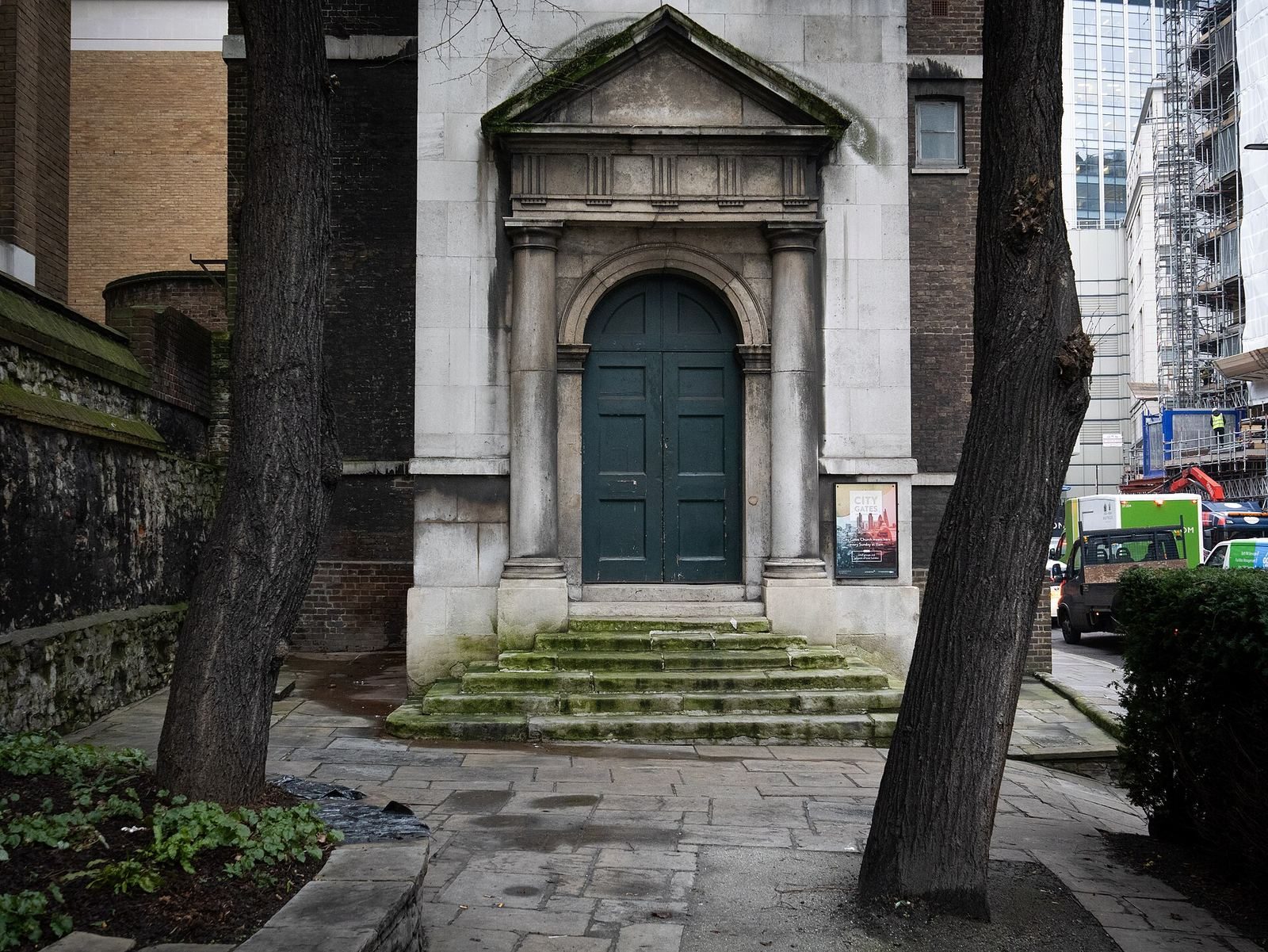
The church takes its name from its position within and alongside London Wall, the former city wall. Its simple Neoclassical design organizes the building around a central worship space, with a plain brick exterior and a stone-faced tower over the porch at the west end.
Interior
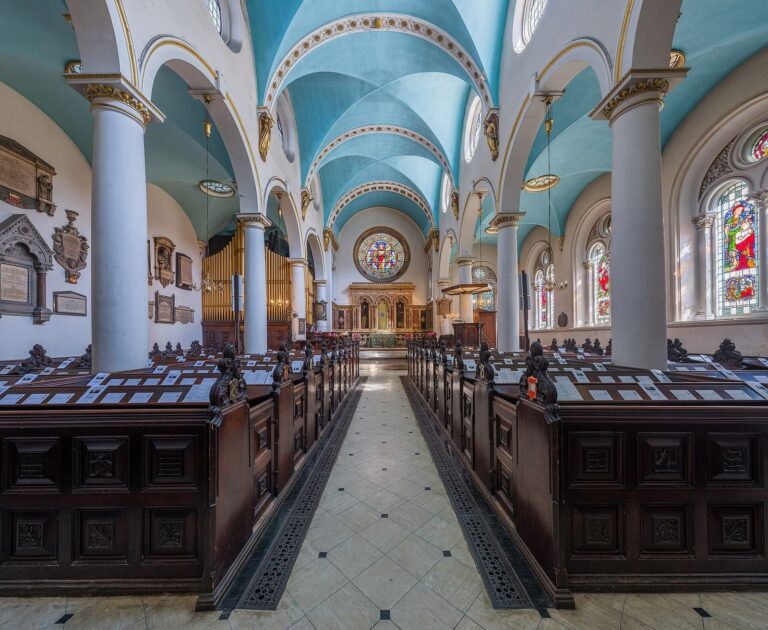
The central space has a barrel vault, a continuous arched ceiling, and ends in a half-dome apse, a projecting, often semicircular church end. Attached Ionic columns, with scroll-shaped capitals, support a frieze, a horizontal decorative band, rather than an entablature, the horizontal structure typically supported by columns. The interior decoration draws on the ancient Roman Temple of Venus and Rome.
Exterior
The exterior is plain brick, with the stone facing of the tower above the western porch providing a contrast in material.
Spaces associated with the church
Hermits’ cells and crypt
Cells associated with All Hallows housed hermits. The church also has a crypt, a chamber beneath the building, from which the Millennium youth event Time of Our Lives was organized.
Churchyard and educational institute
During Fowler’s ministry, tents were set up in the churchyard to serve refreshments. The initiative also led to the construction of an educational institute behind the church.