Wat Phutthaisawan: A Royal Buddhist Monastery in Ayutthaya
Site at a Glance
- Rating
- 4.7
- Popularity
- Very High
- Country
- Thailand
- Primary era
- Medieval
- Eras represented
- Medieval
- Civilizations
- Ayutthaya
- Site type
- Religious
- Remains
- Monastery
On this page12 sections
History
Wat Phutthaisawan is a Buddhist royal monastery on the west bank of the Chao Phraya River in Ayutthaya, Thailand. Its foundation is traditionally placed in 1353, during the early years of the Ayutthaya Kingdom, a Thai kingdom established in 1350. The central shrine follows Khmer architectural style, but the temple’s founder and exact foundation date remain uncertain.
Origins and competing attributions
Tradition connects the monastery with Phra Chao U Thong, later King Ramathibodi I, Ayutthaya’s first monarch. Before establishing Ayutthaya as his capital in 1350, he is said to have camped at a place called Wiang Lek or Wiang Hlek. He may have used it as a temporary residence until his palace was completed in 1353. In this account, he founded Wat Phutthaisawan that year as a royal monastery and memorial to his former camp.
Other accounts name different founders. A version of an Ayutthaya chronicle dated 1795 attributes the temple to U Thong, while the Sangitiyavamsa assigns it to King Naresuan, who reigned from 1590 to 1605. Ayutthaya residents taken captive in 1767 instead attributed it to King Songtham, who privately funded two monasteries so monks could study Pali, a language used in Buddhist scriptures and scholarship. Wat Phutthaisawan was one of them. The Dutch merchant and chronicler Jeremias Van Vliet described three temples built by Ramathibodi I; historian David K. Wyatt suggested that this monastery may have been among them.
Later Ayutthaya and modern history
A separate interpretation associates the monastery with King Narai and a late queen. A town plan from 1687 labels the site the Monastery of the Late Queen, and French writer Nicolas Gervaise, who lived in Ayutthaya from 1683, described a new monastery built in a queen’s memory. Narai may have established Wat Phutthaisawan in her honor.
In 1750, King Boromakot showed the monastery to visiting Sinhalese monks. During the Burmese invasion and the fall of Ayutthaya in 1767, Wat Phutthaisawan and neighboring St Joseph’s Church formed part of a fortress used by converts to resist the invading forces. The temple survived without being destroyed. Its main tower was renovated in 1868 with donations from Ayutthaya residents.
Wat Phutthaisawan is affiliated with the Maha Nikaya, a major Thai monastic fraternity within Theravada Buddhism, a major Buddhist tradition. It is classified as a third-class, ordinary-type royal monastery, forms part of Ayutthaya Historical Park, and was registered as an ancient monument by the Fine Arts Department on March 8, 1935. The temple’s krabi-krabong school, devoted to a traditional Thai martial art using weapons, dates to the Ayutthaya period and continues today.
Remains
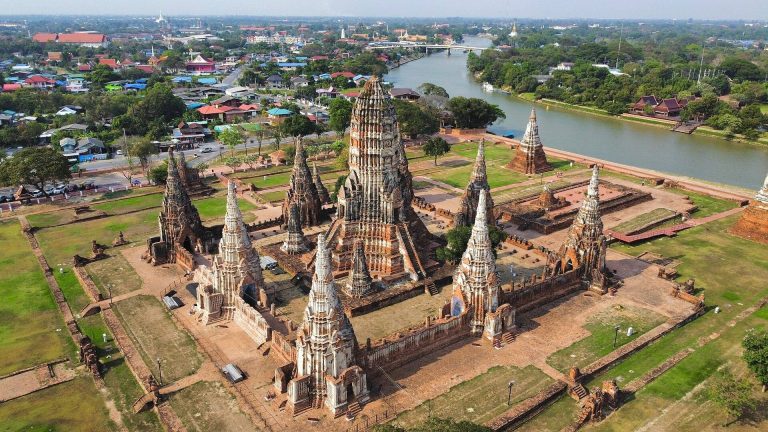
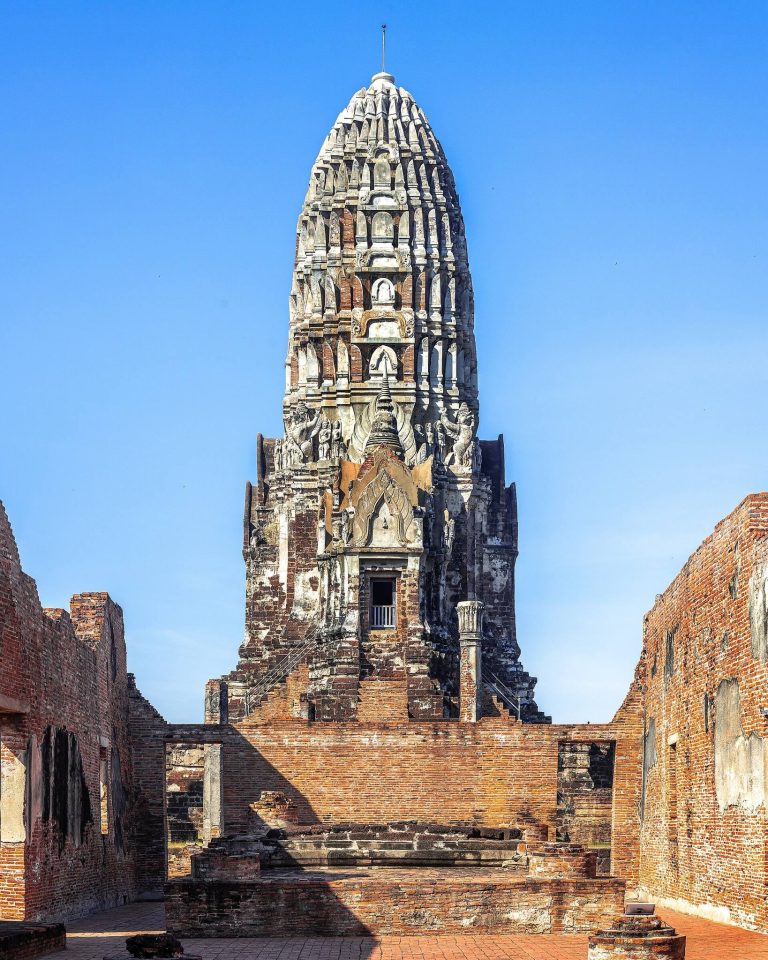
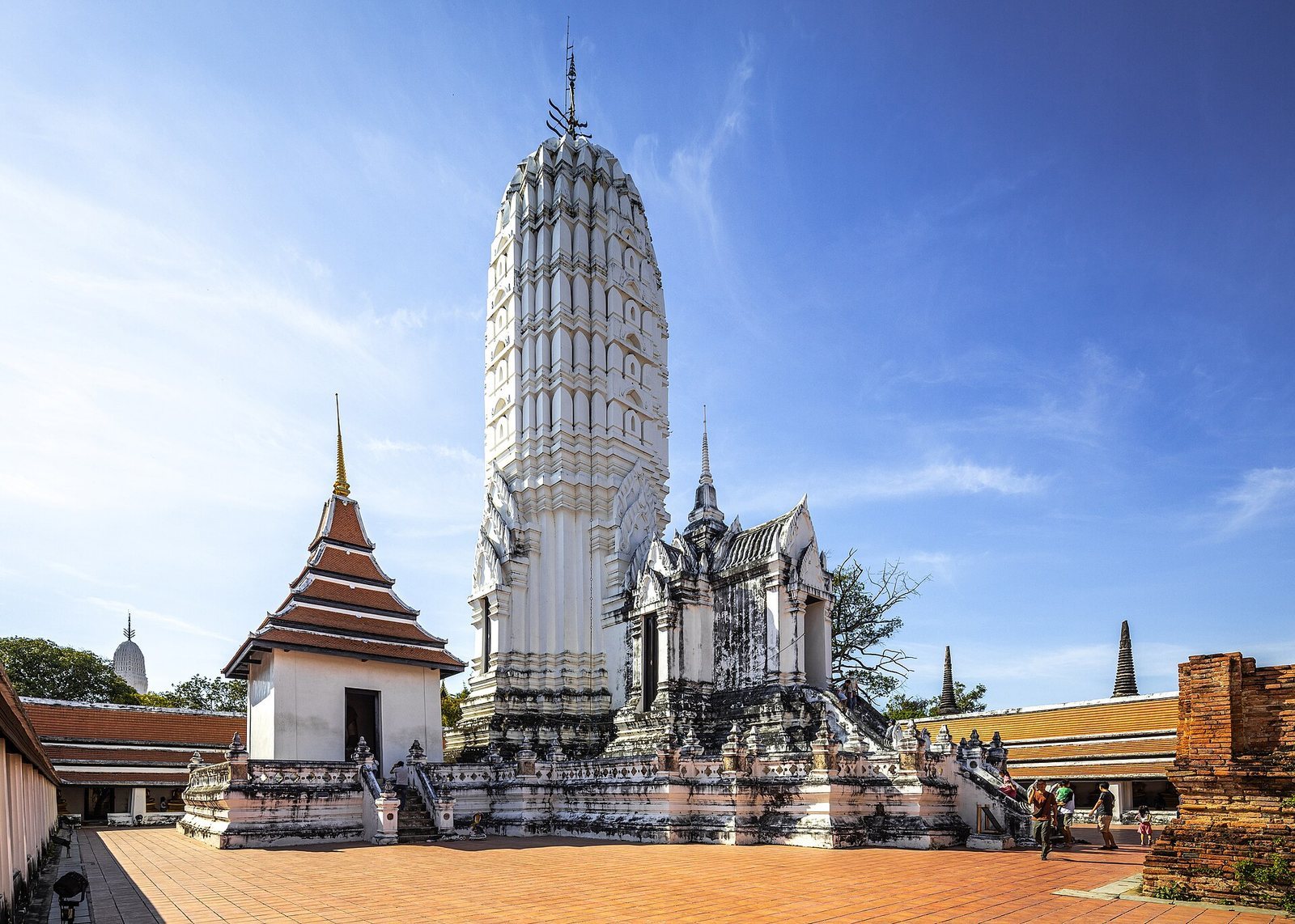
The complex stands south of Ayutthaya’s historic city and is arranged around a white Khmer-style prang, a tower-like Buddhist temple structure. The tower rises from an indented platform, with projections to the north and south and stairways on its east and west sides. In Buddhist cosmology it represents Mount Meru, the cosmic mountain at the center of the universe.
Central Buddhist precinct
Main tower and entrance
A porch marks the northern entrance. A small chedi, a Buddhist monument often associated with sacred objects, stands on its roof and has twelve indented corners. A second small chedi within the precinct contains a footprint of the Buddha.
Pavilions and cloister
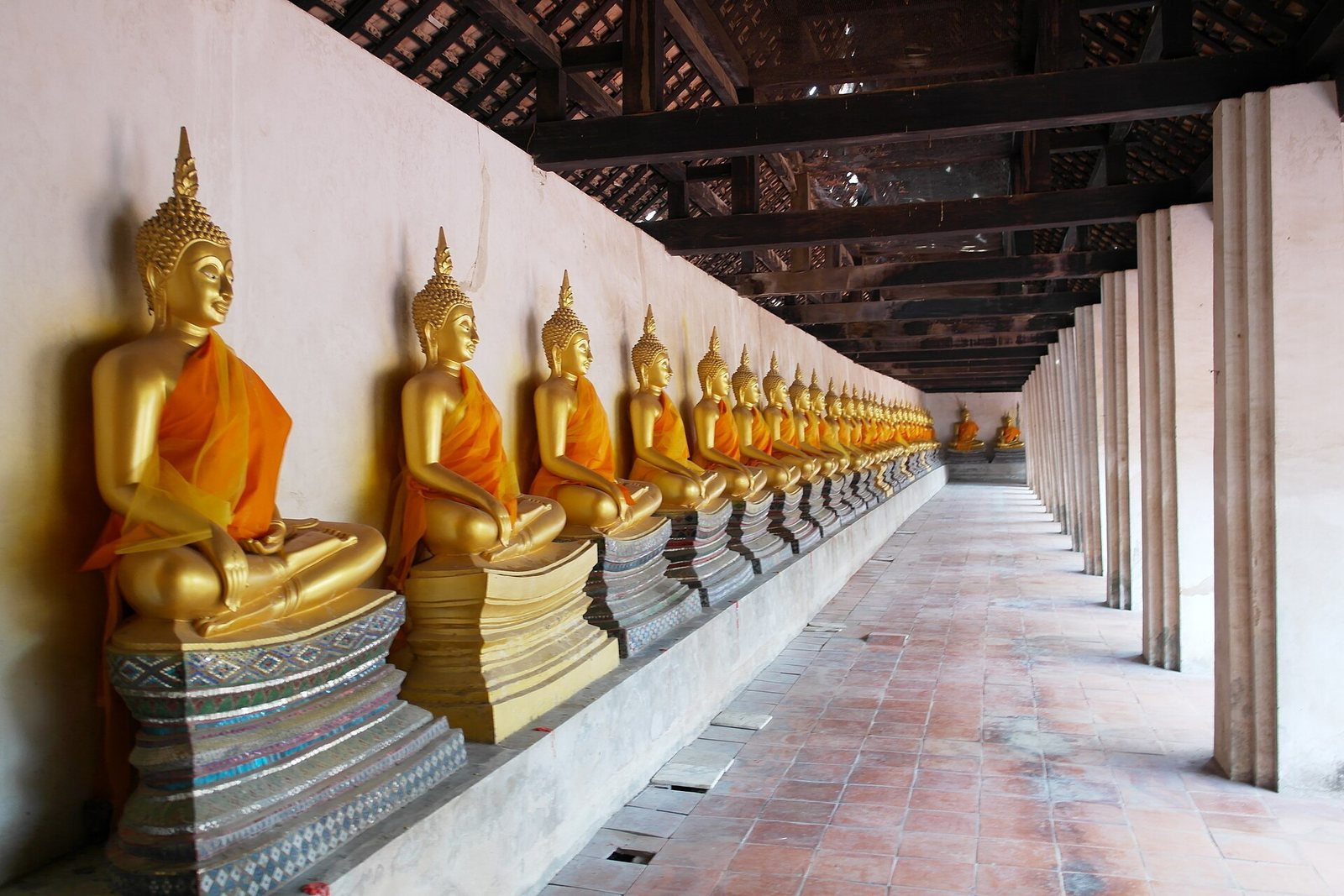
Two roofed pavilions, or mondops, stand north and south of the central tower on the same platform. They contain the principal Buddha images and appear to have replaced smaller towers that may originally have occupied those positions. A square cloister, a covered walkway, surrounds the tower and pavilions. Its outer wall and interior pillars support a roof, while the terrace floor stands one step above the courtyard. Rows of Buddha images on decorated bases line the inner wall. These images follow the artistic tradition of Sukhothai, an earlier Thai kingdom, and numerous other Buddha statues also stand within the cloister.
Halls and eastern remains
Western halls and subsidiary monuments
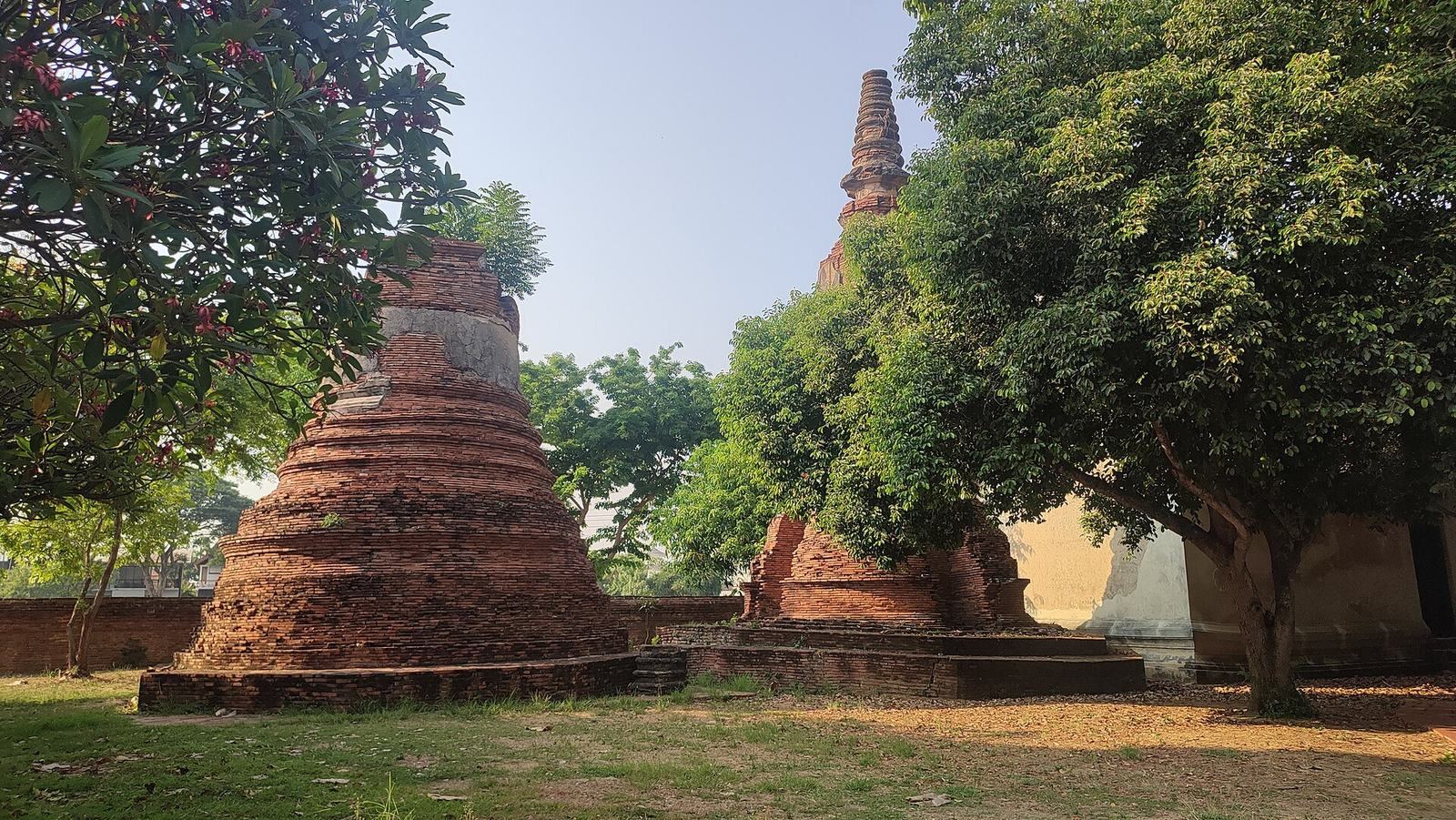
An ubosot, or ordination hall, lies west of the central tower, and two smaller viharns, halls for worship or religious images, stand to its south. The complex also includes a group of twelve chedis.
Eastern buildings
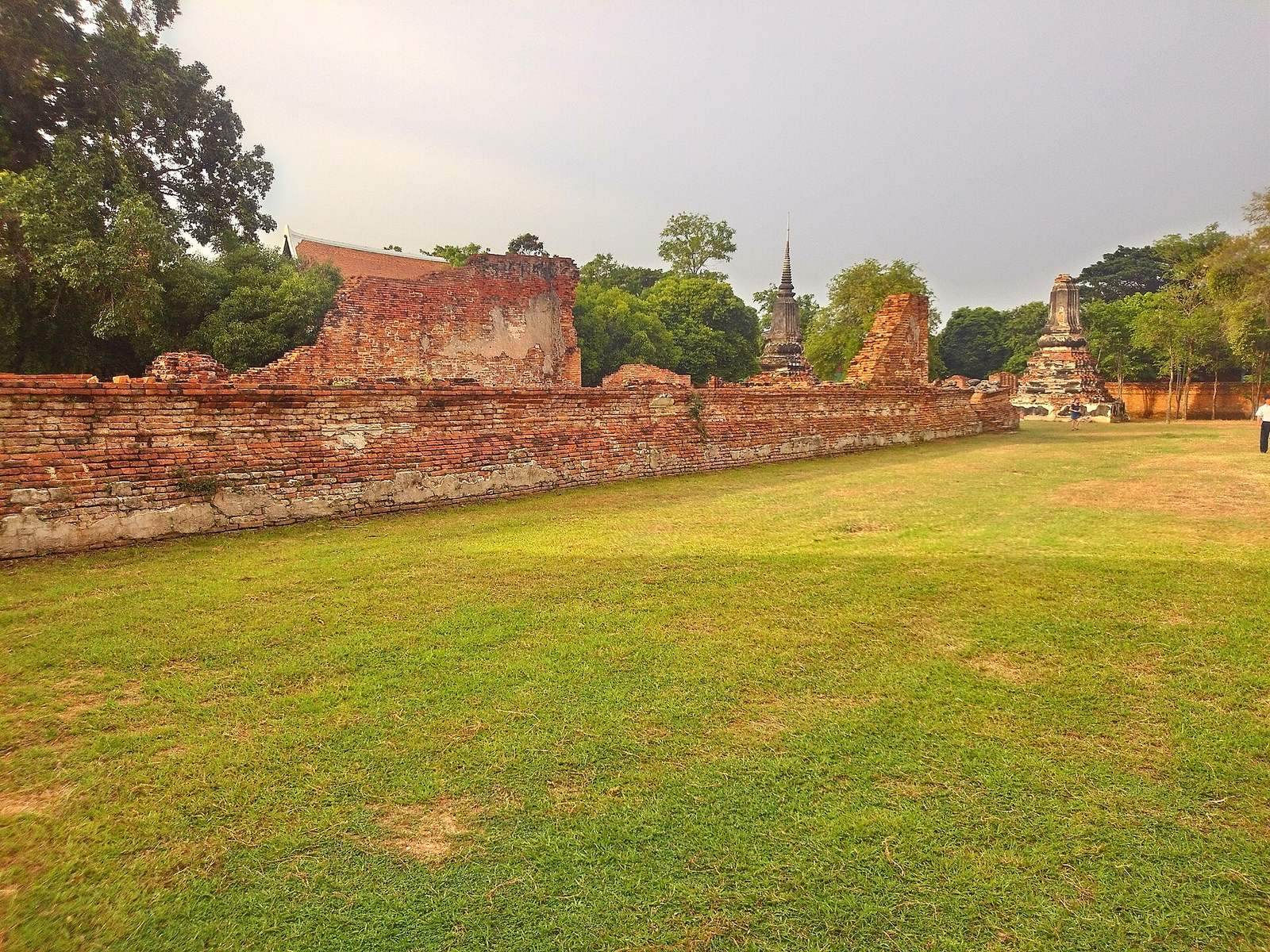
Several smaller chedis, the foundation walls of a kiln, and the remains of a large viharn occupy the eastern grounds.
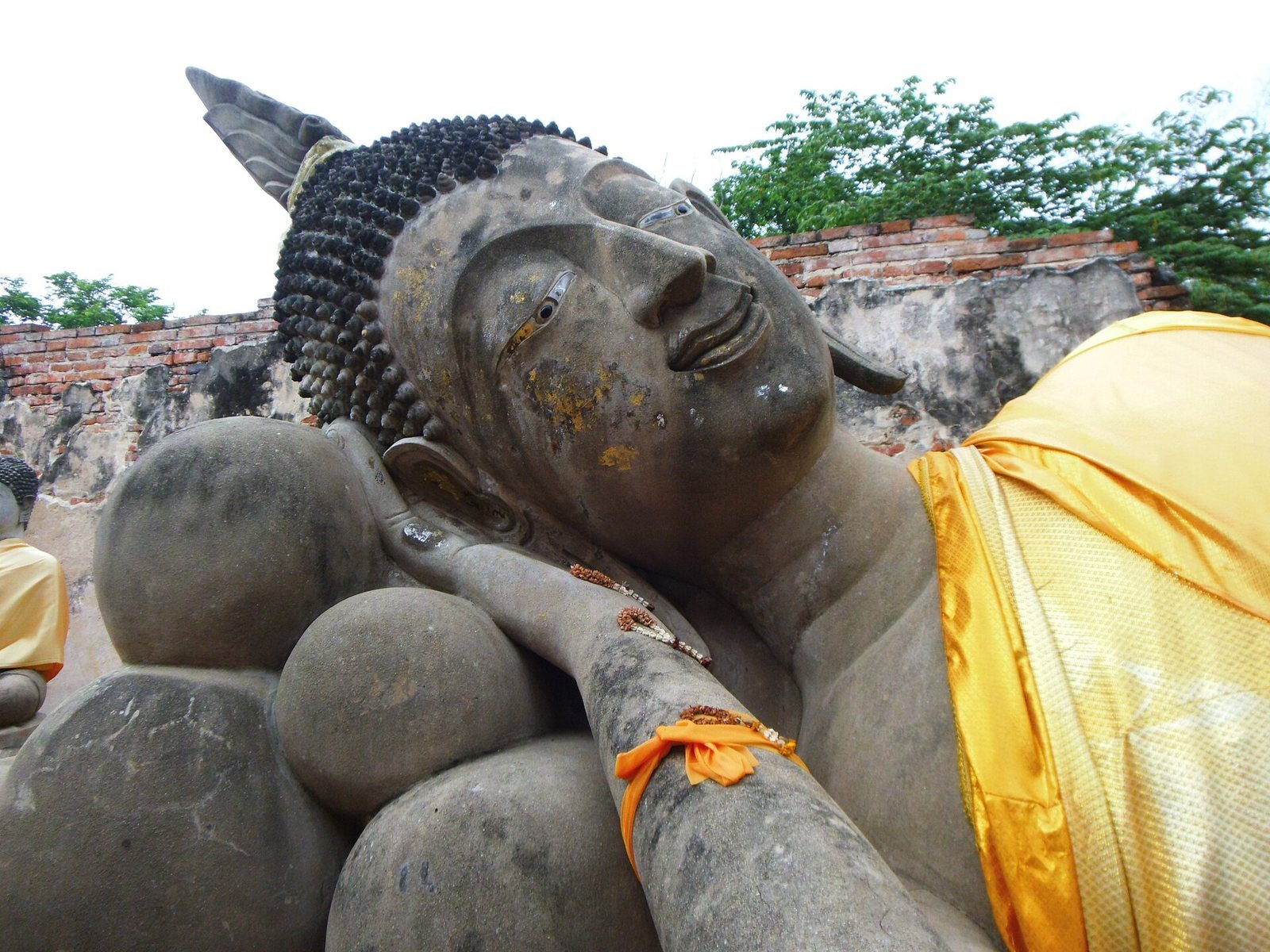
Reclining Buddha hall
A separate viharn houses a large reclining Buddha image. The building survives only as walls.
Monastic residences and other features
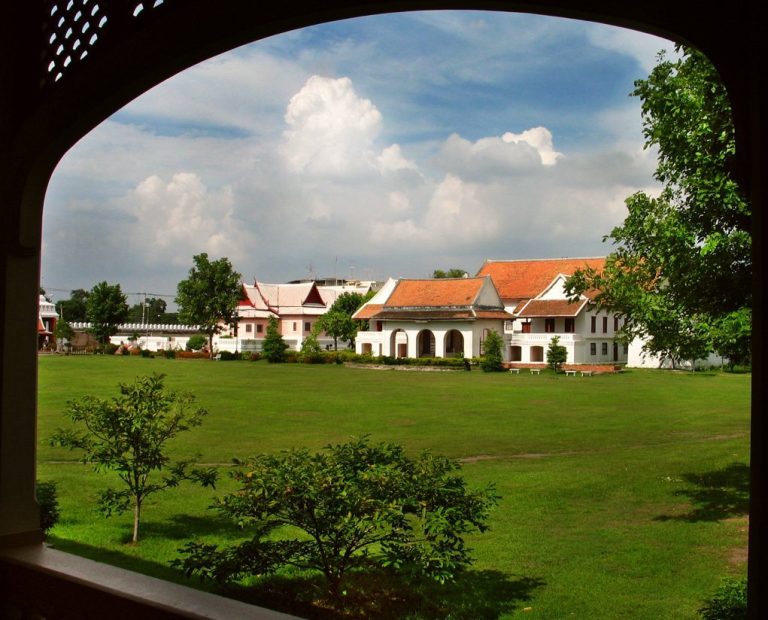
The monks’ residential precinct occupies the western part of the complex. It includes the two-storey former residence of the Supreme Patriarch, known as the Buddhaghosa Residence. The building is dilapidated, and its interior walls retain faded colored paintings. They depict deities and ascetics honoring the Buddha’s footprint, a merchant ship connected with Buddhaghosa’s journey to Lanka, episodes from the Buddha’s life, and Jataka stories about his previous lives. Buddhaghosa was a fifth-century Theravada scholar associated with Pali literature and Sri Lanka. Other features include a Three Kings Monument and a pavilion associated with a deity.