Church of Sainte-Mère-Église: A Medieval Parish Church in France
Site at a Glance
- Rating
- 4.6
- Popularity
- High
- Country
- France
- Primary era
- Medieval
- Eras represented
- Medieval, Modern
- Civilizations
- French
- Site type
- Religious
- Remains
- Church
On this page9 sections
History
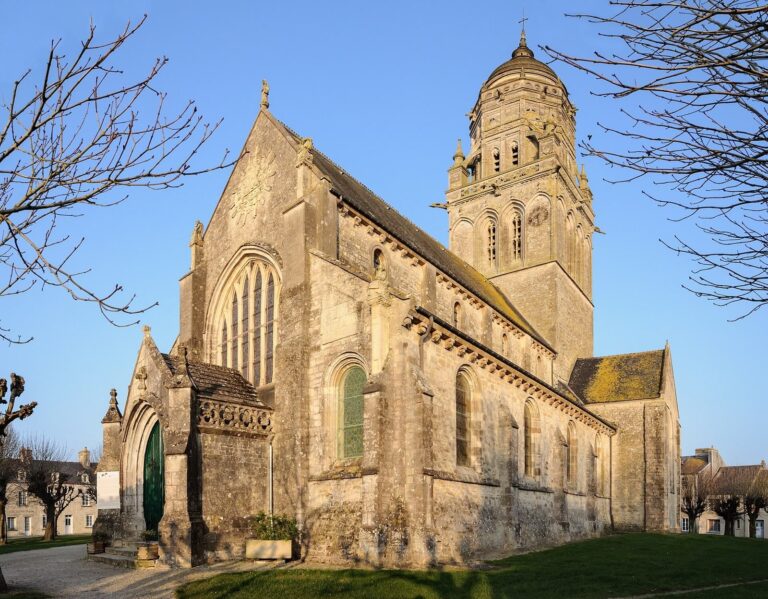
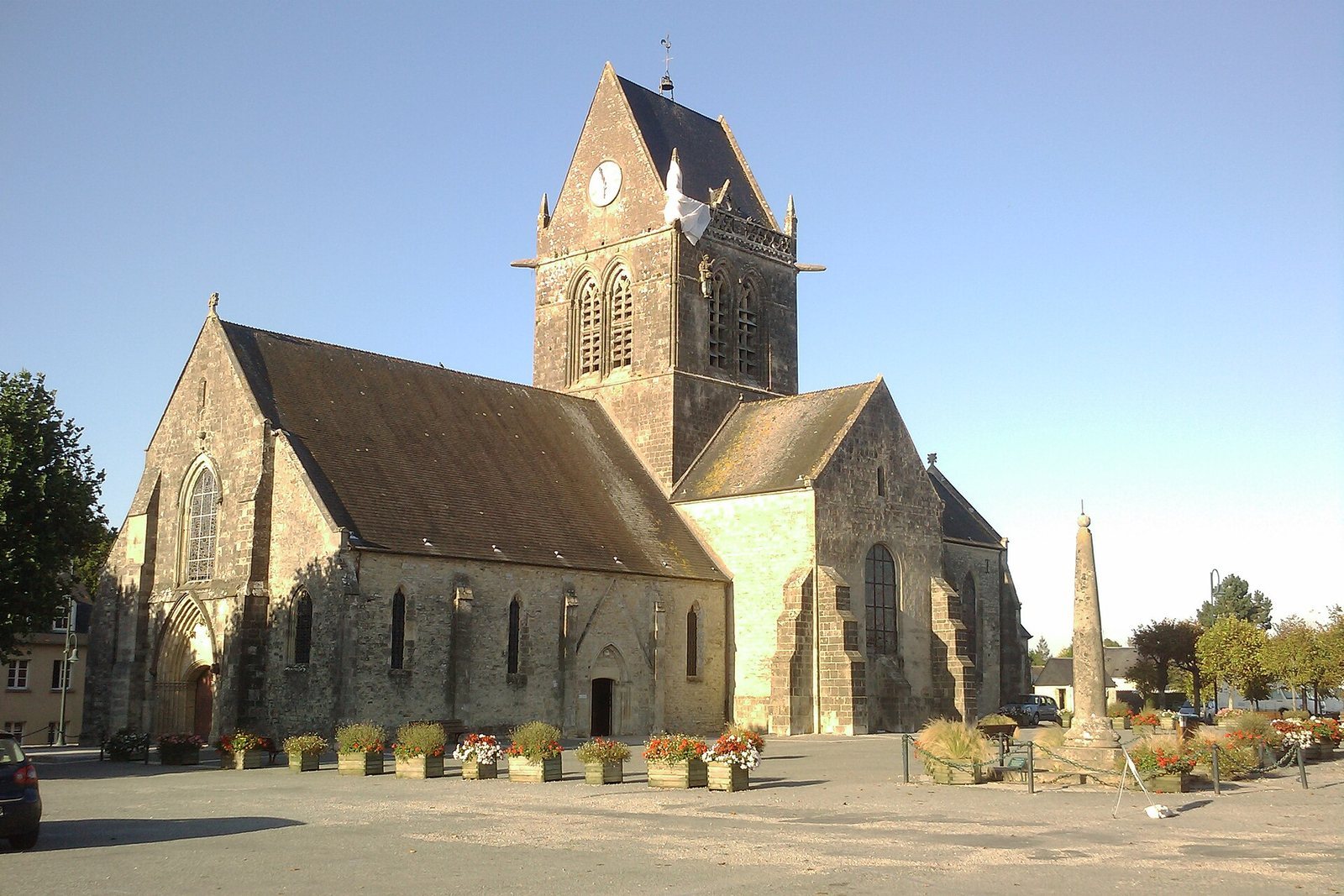
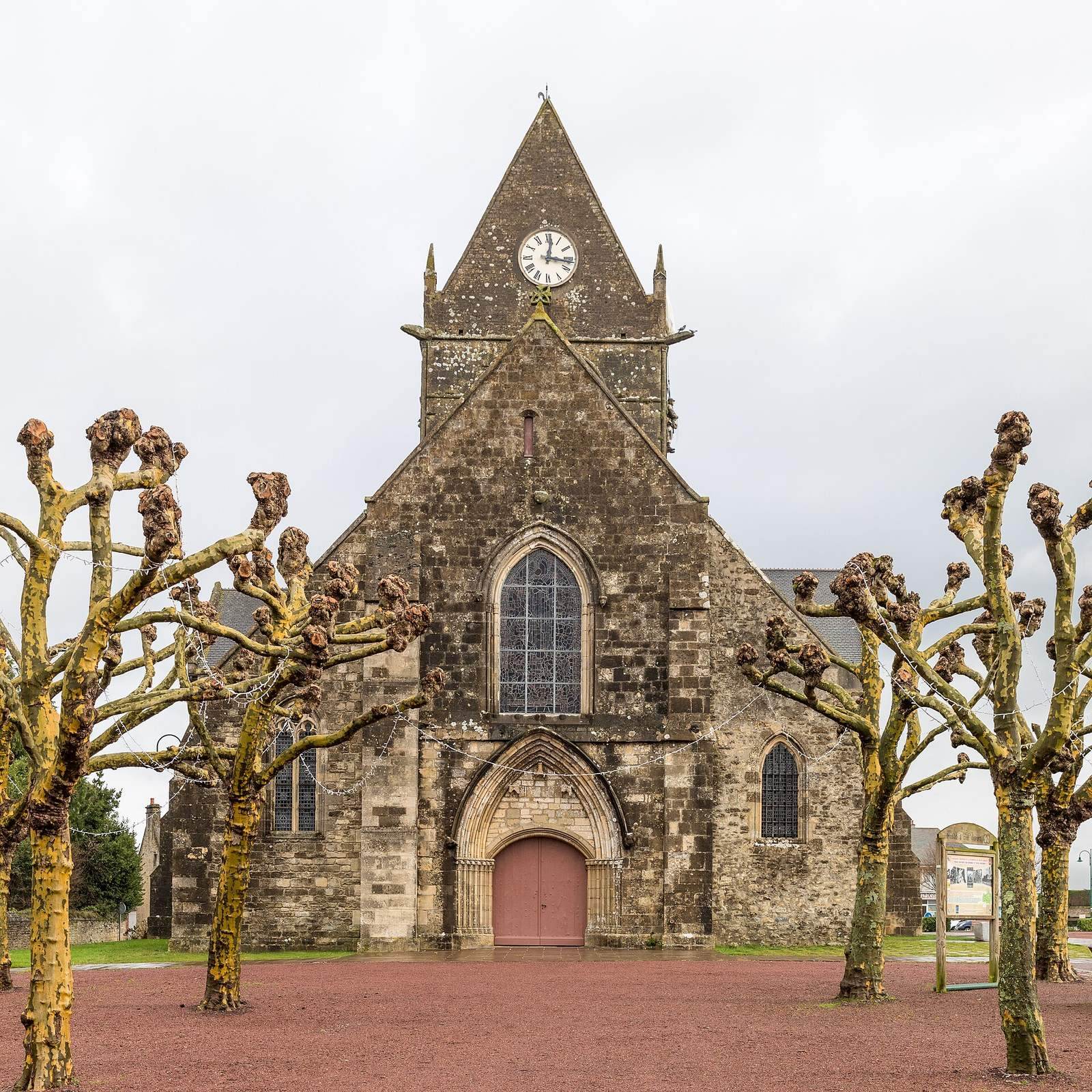
The Church of Sainte-Mère-Église, formally the Church of Our Lady of the Assumption, is a Catholic parish church in France. It dates to the 12th and 13th centuries, while most of its present building dates from the 14th century. Its architecture combines Romanesque forms, represented by rounded arches, with Gothic rib vaults, ceilings supported by intersecting ribs. The church is dedicated to the Assumption of Mary.
Medieval church and later status
The church was damaged during the Hundred Years’ War, a prolonged conflict between the English and French crowns conventionally dated from 1337 to 1453. In the early 15th century, workers restored its west entrance and north side aisle. The church belongs to the parish of Our Lady of Peace of Sainte-Mère-Église and the Diocese of Coutances and Avranches, a district administered by a bishop. It formerly belonged to the Diocese of Bayeux. In 1840, it was classified as a French historic monument, a legally protected heritage property. Several furnishings also have protected status as historic objects.
The 1944 parachute incident
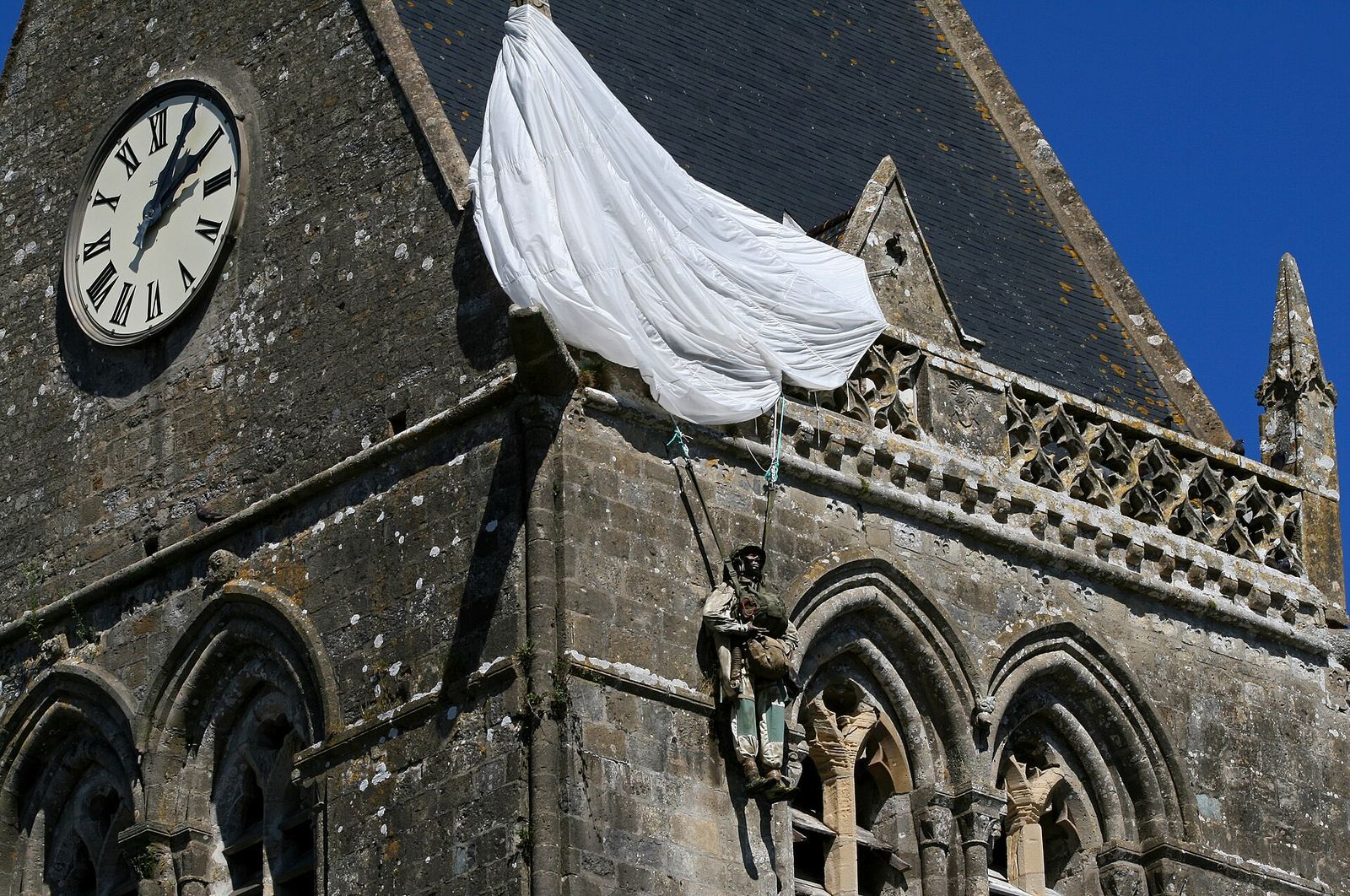
In 1944, during Operation Albany, the 101st Airborne Division’s parachute operation in support of the Normandy landings, American paratrooper John Steele’s parachute caught on the church tower. He remained suspended there for several hours, feigning death as bullets passed around him. The episode became widely known after its portrayal in the 1962 film The Longest Day.
Remains
The church has a cross-shaped plan, with the nave and cross-arms meeting beneath a central tower. Its surviving structure brings together Romanesque and Gothic construction, alongside later Gothic features.
Crossing and tower
The crossing, where the nave meets the transept (the church’s cross-arms), rests on four pillars joined by round arches. Its Romanesque base, probably the oldest part of the church, dates to the 12th and 13th centuries. Animal forms decorate the pillars’ carved upper sections. The tower has a saddleback roof, with two sloping sides meeting at a ridge. Openwork railings added to its north and south sides in the 15th century use the Flamboyant Gothic style, a late Gothic design with elaborate, flame-like patterns.
Nave and choir
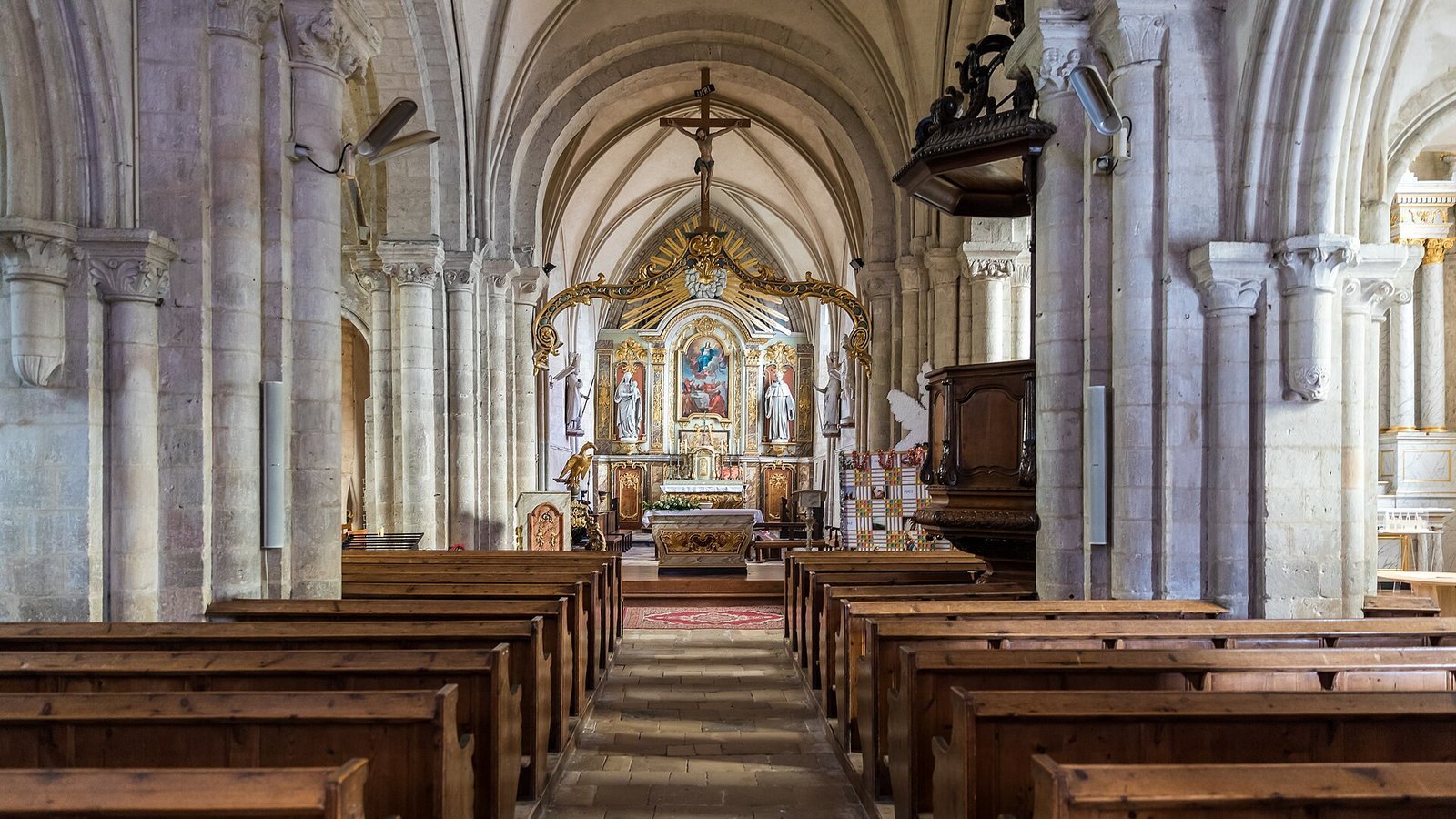
The nave lies beneath a single roof associated with the Romanesque phase and has Gothic rib vaults. Side aisles were added later; the north aisle and west entrance are Gothic. Dating to the 14th century, the choir ends in a flat wall and has a lower, semicircular apse, a projecting end of the sanctuary.
Interior furnishings
The high altar is accompanied by an altarpiece, a decorated work placed on or behind an altar, a painting of the Assumption, and statues of the Virgin and Child and Saint Marcouf. Marcouf was a sixth-century Frankish monk and abbot venerated in Normandy. Other furnishings include an 18th-century carved wooden bookstand supported by an eagle figure, a pulpit (a raised platform for preaching), and fixed seats for clergy or choir members.
Stained-glass windows
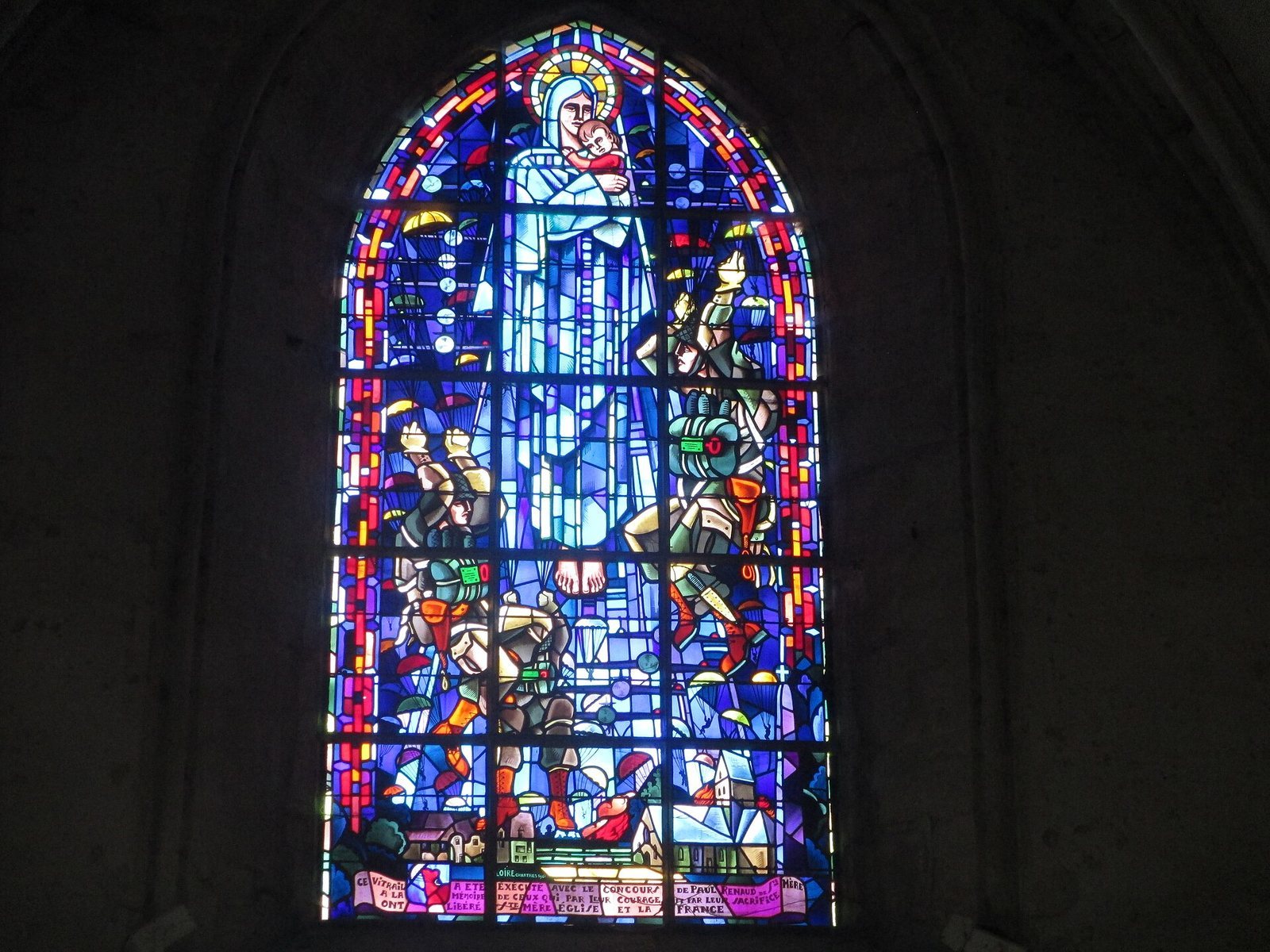
French stained-glass artist Gabriel Loire made the Liberation window in 1947 and the Paratroopers window in 1972. His stained glass in the church also commemorates the invasion and liberation.
Tower memorial
The tower carries a commemorative mannequin known as Big Jim, dressed in a parachute, uniform, and equipment in memory of John Steele. The municipal festival committee installed it after the incident became widely known. Because of the Cotentin’s rainy climate, its outfit and equipment are replaced twice a year; a protective coating has been applied to reduce the need for replacements.