Great or St Martin’s Church in Tiel: An Unfinished Late Gothic Church
Site at a Glance
- Rating
- 4.4
- Popularity
- Medium
- Country
- Netherlands
- Primary era
- Medieval
- Eras represented
- Medieval, Early Modern
- Civilizations
- Carolingian, Dutch, Habsburg, Habsburg Spain, Holy Roman Empire, Spanish
- Site type
- Religious
- Remains
- Church
On this page11 sections
History
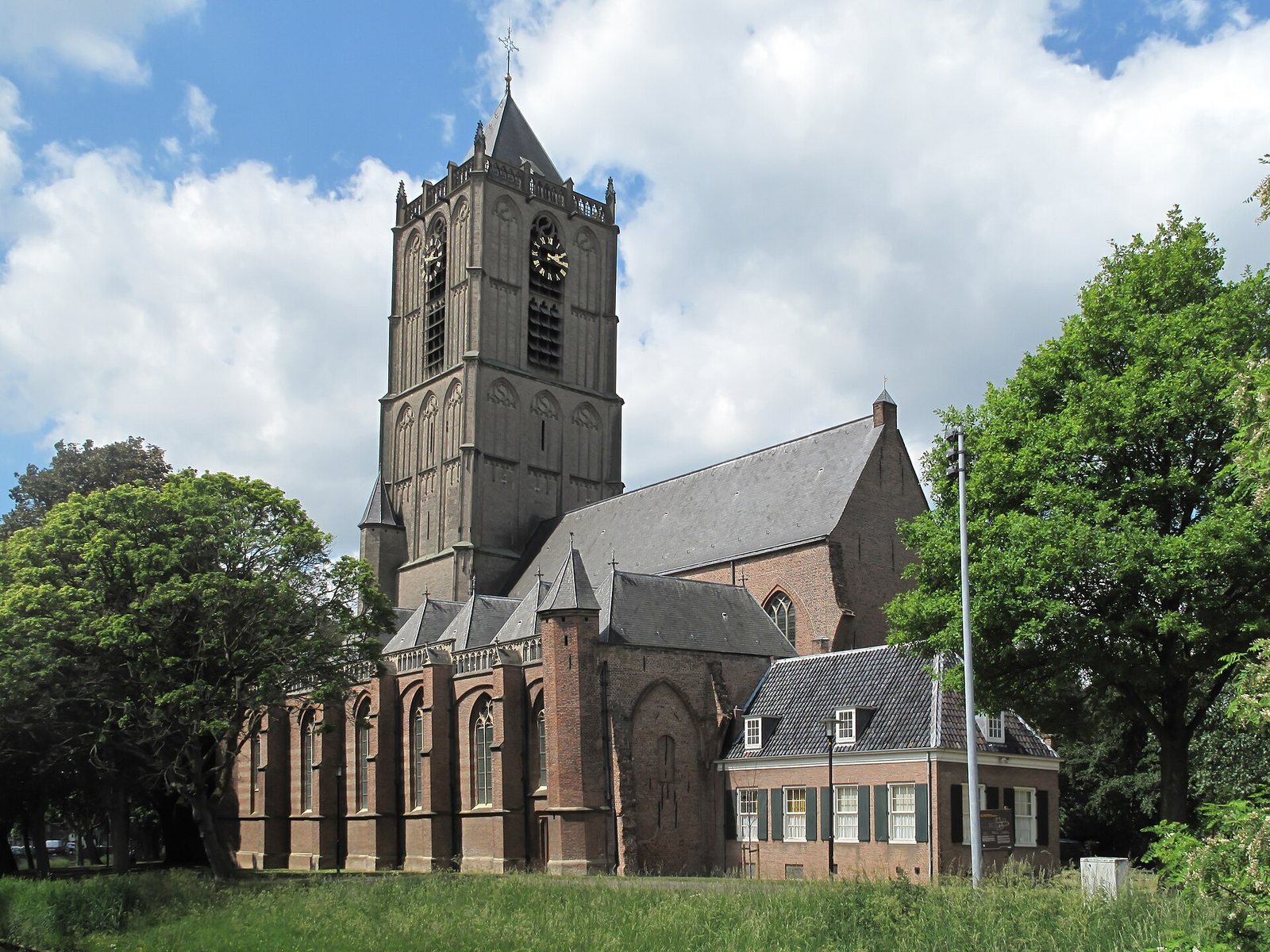
The Great or St Martin’s Church in Tiel, Netherlands, is a Protestant church dedicated to Martin of Tours, a fourth-century Christian bishop widely venerated as a saint. It is affiliated with the Protestant Church in the Netherlands. The church is Tiel’s oldest building and has passed through ten successive forms. Its present, unfinished Late Gothic form, from the later phase of Gothic architecture, took shape after a fire in 1420.
Early church and medieval rebuilding
A Romanesque hall church stood on the site in the tenth century, during the Carolingian period, the era of the Frankish dynasty that included Charlemagne and his successors. Romanesque is a medieval European architectural style, and a hall church has a nave and side aisles of roughly similar height. This early church may have helped form the settlement that became Tiel around 1000. A written reference to the church dates to 1317.
After the 1420 fire, rebuilding produced the main nave and north aisle between 1420 and 1430. The double south aisle followed in 1450.
Expansion and religious change
A library was established in 1554. On 10 January 1558, the church’s spire collapsed and damaged part of the building; severe weather that year also caused serious damage to the tower and transept. Repairs continued over the following decade. A major expansion began in 1560, but the choir (the area around the altar) and transept (the crosswise section of a church) remained unfinished because of the Reformation, the sixteenth-century religious movement that led to the establishment of Protestant churches. Both sections were demolished in 1731, and masonry closed off the nave.
Protestants took control of the church in 1580. During French rule from 1672 to 1674, Catholics used it again, after which it returned to Calvinist control. Calvinism is a Protestant tradition associated with the teachings of John Calvin.
War damage and restoration
The church suffered heavy damage in 1944 and 1945, including damage from artillery fire in 1945.
Postwar restoration was completed in the mid-1960s. The church is a Dutch national monument.
Remains
Buildings and archaeological remains
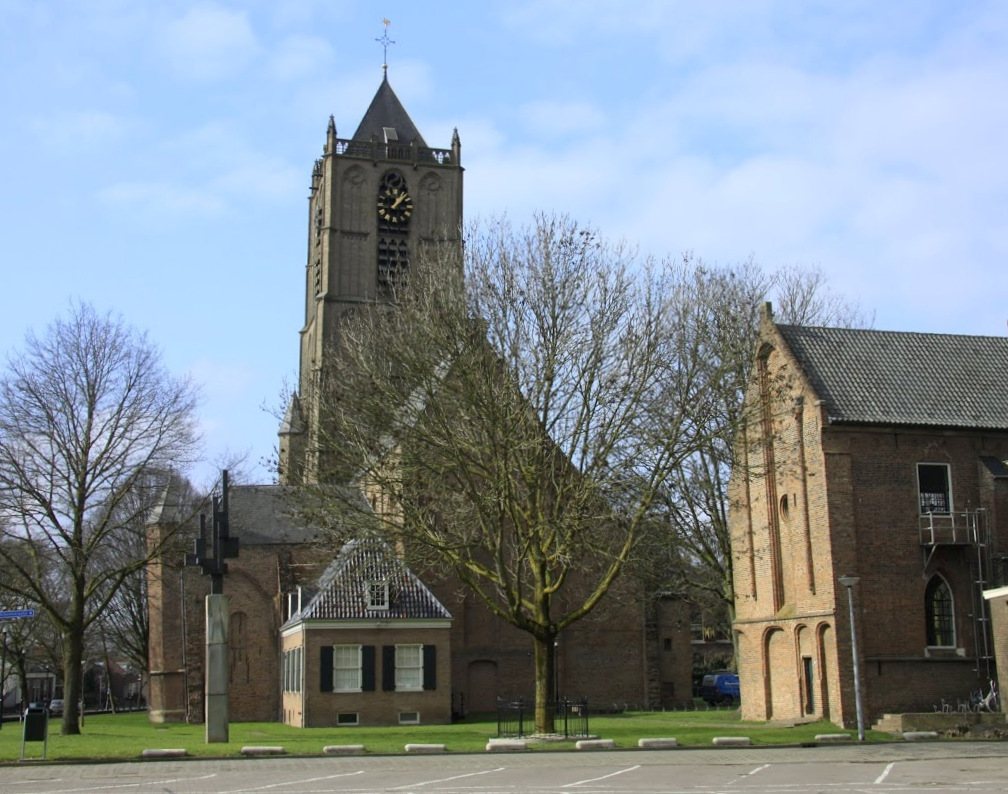
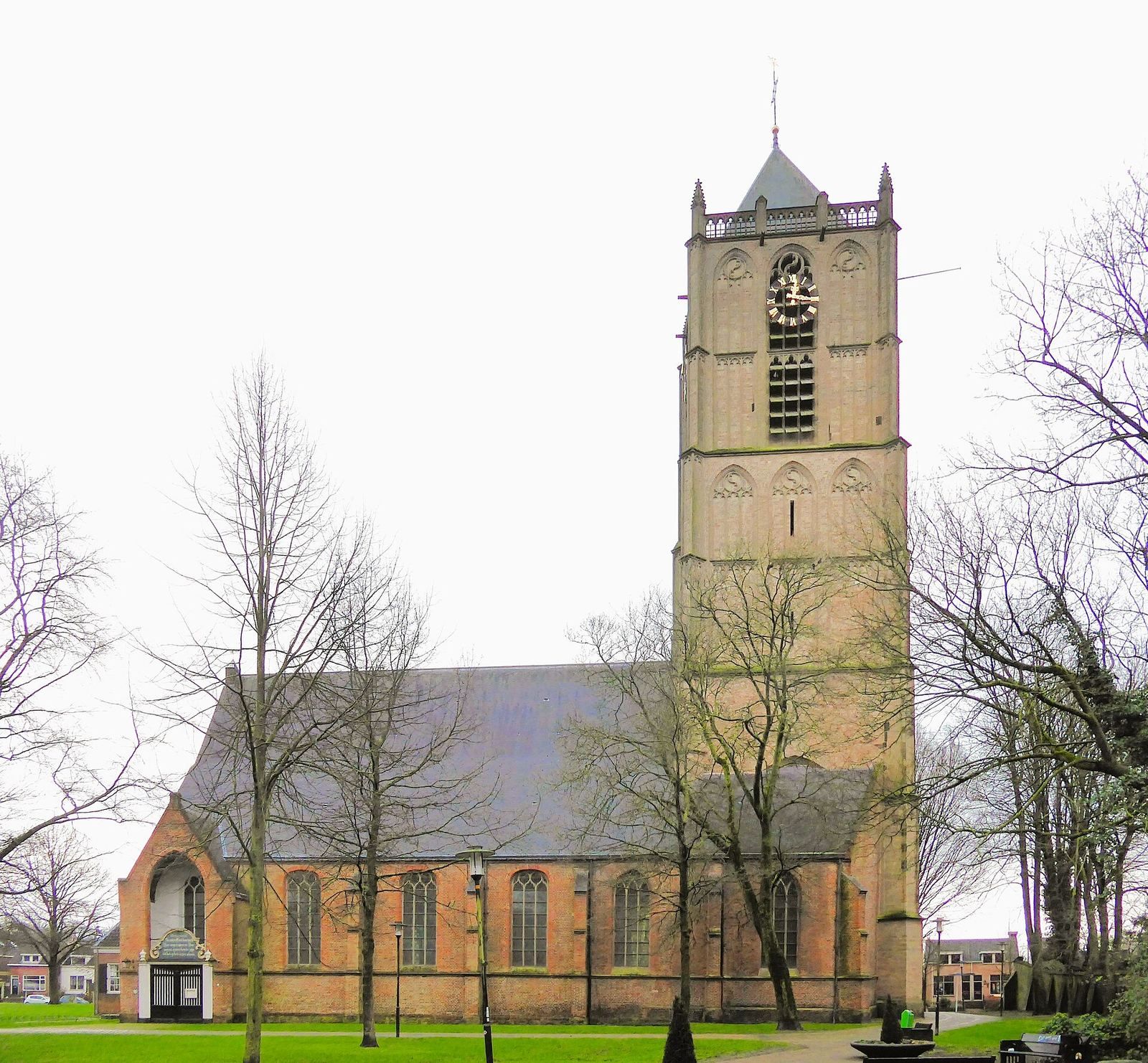
The surviving complex is an unfinished Late Gothic structure with a basilican, three-aisled plan: a central nave flanked by side aisles. It consists of the nave and bell tower, with a fifteenth-century sacristy standing separately.
Nave and aisles
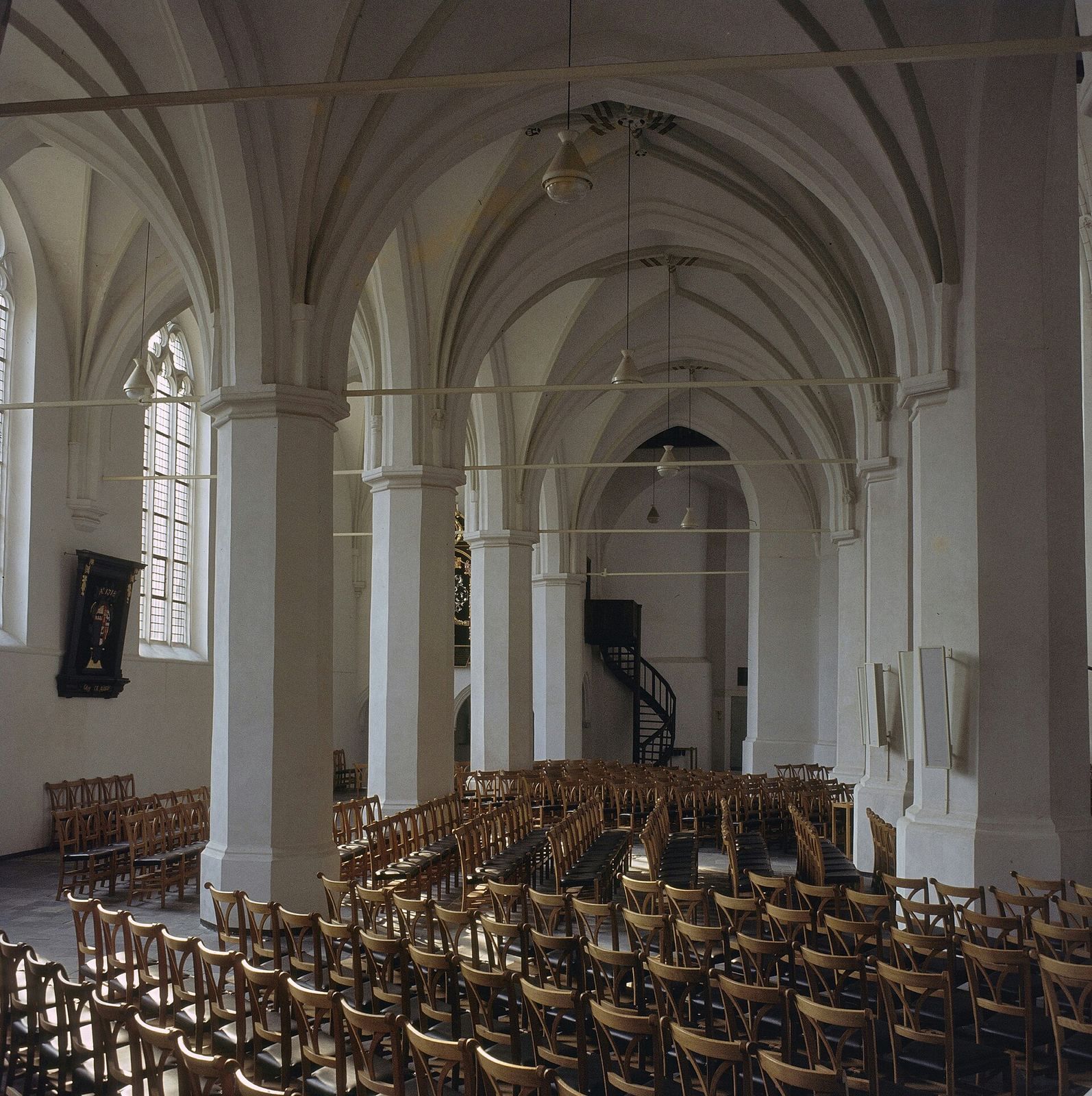
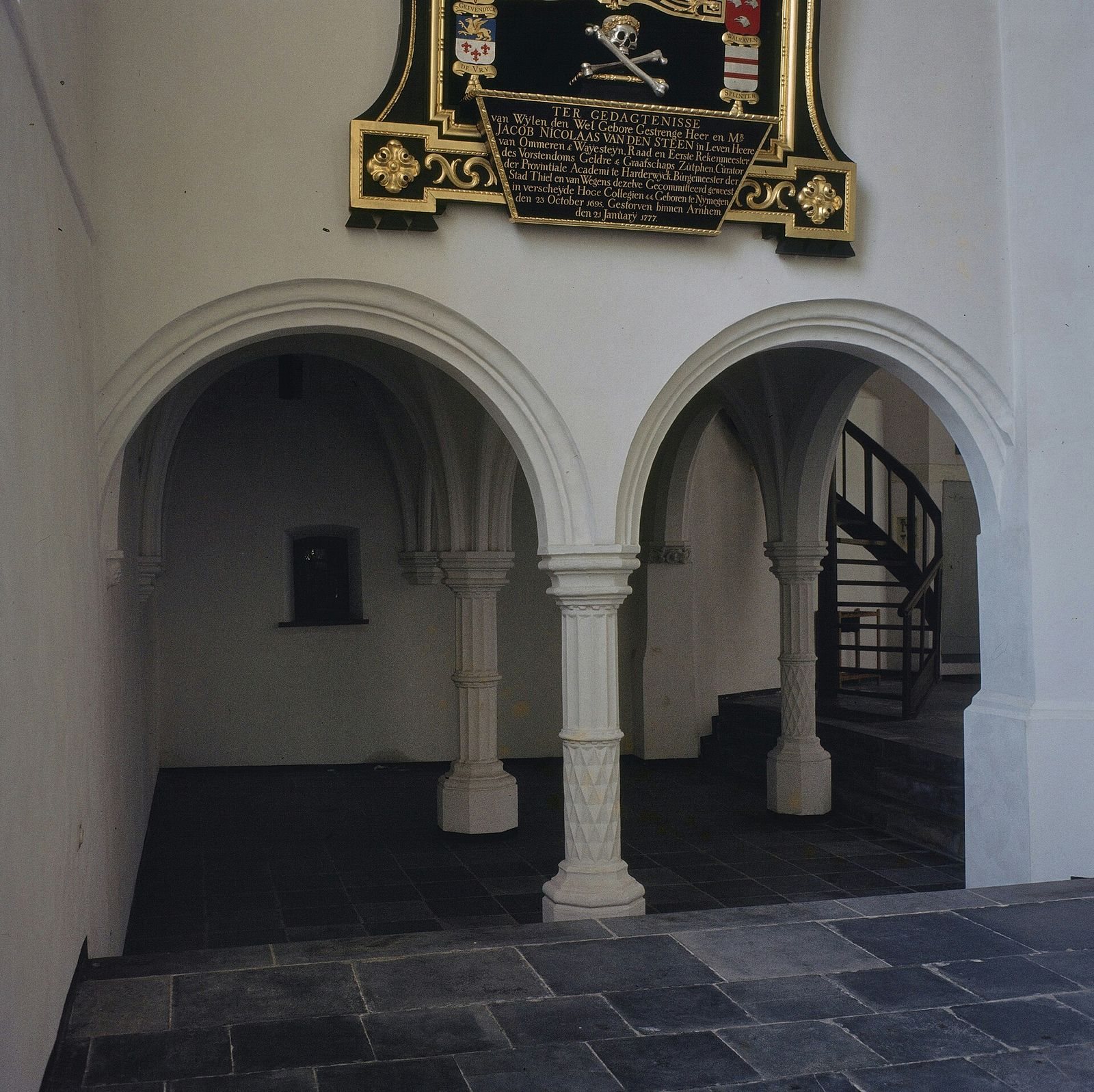
The nave sections are built of brick. A curved wooden ceiling in the main nave is shaped to resemble a barrel vault, while the side aisles have star vaults, ribbed ceilings whose ribs form star patterns. In the southernmost south aisle, a baptismal chapel built in 1558 lies beneath the library. A lepers’ window allowed sick people in the Middle Ages to attend Mass, and a signboard is positioned above the entrance.
Tower and bells
The tower, built of tuff, a rock formed from consolidated volcanic ash, was constructed between 1431 and 1451. It holds Salvator, the sole survivor of ten bells hung there during the sixteenth century and rung on different occasions. A carillon, a set of bells arranged to play melodies, was installed in 1964; the tower holds 47 bronze carillon bells.
Detached sacristy
The fifteenth-century sacristy survives as a separate building. A sacristy is a room used to store church furnishings and prepare for services.
Interior fittings
The interior includes a copper pulpit dating to the sixteenth century and a marble memorial to Stephanus van Welteren from 1709. The organ was made in 1854 by the workshop of Christian Gottlieb Friedrich Witte and moved to the church in 1962 from Nieuwkerk in Dordrecht.
Choir foundations
Archaeological investigations exposed the foundations of the original choir. Their outlines are marked in the grass of Kerkplein, and further investigations took place inside the church.