Fuquanshan Site: A Neolithic Burial and Habitation Site in Shanghai
Site at a Glance
- Popularity
- Medium
- Country
- China
- Primary era
- Stone Age
- Eras represented
- Stone Age, Bronze Age, Iron Age, Classical, Medieval
- Civilizations
- Han, Liangzhu, Song, Tang
- Site type
- Burial
- Remains
- Necropolis
On this page10 sections
History
Neolithic settlement and cemetery
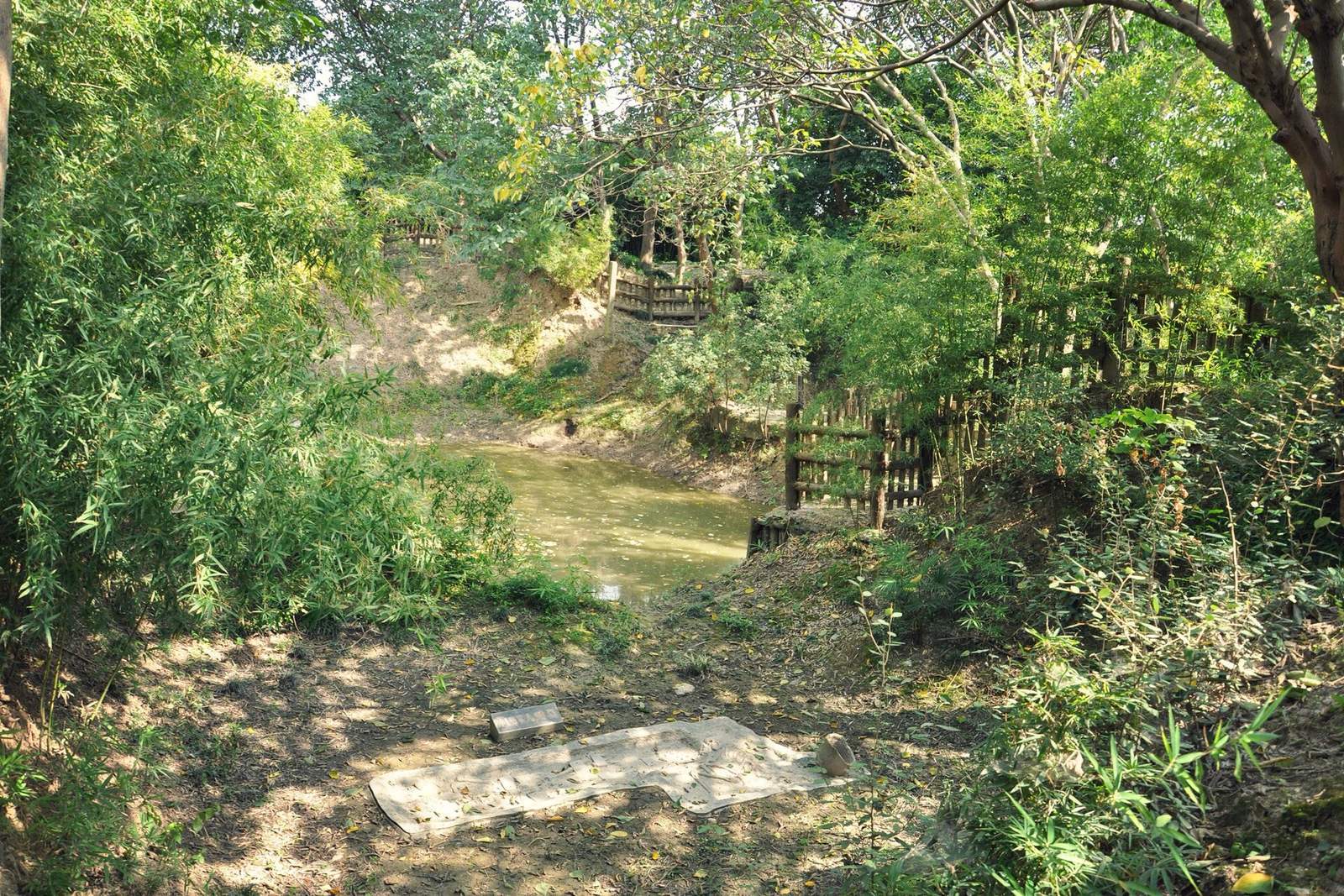
The Fuquanshan site is a Neolithic burial and habitation site about 200 metres west of Chonggu Town in Qingpu District, Shanghai, China. Its earliest remains date to 5,620 ± 110 years ago. During the Liangzhu period, a prehistoric culture of the lower Yangtze region, people built an elevated cemetery over an earlier site belonging to the Songze culture, another prehistoric community of the region.
The mound was once called Overturned-Boat Mountain because its shape was thought to resemble an inverted boat. The name Fuquanshan later referred to the sweetness of its well water. The site was also associated with a Daoist surnamed Xue who had lived there. Daoism is a Chinese religious and philosophical tradition.
Discovery, excavation, and protection
In 1962, the Shanghai Museum’s archaeological department found Neolithic pottery fragments at Fuquanshan, and the site received Shanghai municipal cultural-protection status that year. Local students found a Songze jar and pot on the mound’s eastern side in 1977. A trial excavation in 1979 established that cultural layers extended beneath the surrounding fields.
On 19 August 1982, farmers digging for soil uncovered half of a bi, a flat, ring-shaped jade object, as well as broken stone knives and axes. They took the finds to Qingpu Museum, whose staff found the other half of the bi nearby three days later. Large-scale excavations began that year. A rescue excavation in September was carried out ahead of a road project, followed by work in 1983 and in 1986–88. The latter excavation was approved by the Ministry of Culture, China’s central government department for cultural affairs, and took place in two stages, including work from late 1987 into 1988.
In 1984, Fuquanshan was again designated for municipal protection under the name Fuquanshan Ancient Cultural Site. It became a National Key Cultural Relics Protection Unit in 2001, a nationally designated preservation category, with a protected zone extending 200 metres around the mound. In 2013, it was included among 150 major archaeological-site protection projects. The Shanghai Museum’s archaeological work station for Fuquanshan was inaugurated in April 2023.
Remains
Layout and distribution
The site covers about 150,000 square metres, roughly 500 metres from east to west and 300 metres from north to south. A mound about 7 metres high stands at its centre, measuring 84 metres north to south and 94 metres east to west. Its principal feature is an artificially raised cemetery. Majiabang, a prehistoric culture of the lower Yangtze, is represented in the west. Songze and Liangzhu remains occur in the north, with Liangzhu remains also in the east. Maqiao, another prehistoric culture of the region, and remains associated with the ancient regional culture of Wu-Yue lie in the south.
Songze remains
Burials
Excavation recorded 18 Songze graves, 17 on the mound’s northern side and one on its southern side. Together they formed a cemetery associated with a clan and dated to about 5,000 years ago. Grave goods included pottery net sinkers and vessels such as ding, tripod vessels used for cooking or ritual, dou, stemmed vessels, and jars. Other finds included bone arrowheads, jade pendants, huang (crescent-shaped jade ornaments), jade tubes, and fragments of pig and deer bones.
Habitation remains
The Songze habitation area included four boards used as post bases, small branches, pottery fragments, a broken jade huang, net sinkers, and animal bones discarded after meals. A hearth lay northeast of these remains. Beside it was a broken large cooking ding with a basin-shaped body and legs shaped like carpenter’s squares. Excavators also identified fragments of ding legs and a yan, a steamer, as typical Songze objects.
Liangzhu cemetery
All 32 Liangzhu graves were on the mound. Two overlapping groups occupied its central area, with other graves arranged around them. Traces of an altar lay among the graves, and some burials had associated pits containing human remains. Some graves had coffins. Objects found inside them included axes, yue (axe-shaped objects), cong (square-sectioned tubular jade objects), bi, ding, yan, gui (ritual food vessels), and incense burners.
Later burials and finds
The excavations also recorded two Wu-Yue graves, four Chu graves, 96 Western Han graves, one Tang grave, and three Song graves. Western Han, Tang, and Song were Chinese dynasties; Chu was an ancient regional culture. More than 2,800 artifacts were recovered from the site.