Bardsey Abbey: A Medieval Monastery on Bardsey Island
Site at a Glance
- Popularity
- Medium
- Country
- United Kingdom
- Primary era
- Medieval
- Eras represented
- Medieval
- Civilizations
- Kingdom of Gwynedd
- Site type
- Religious
- Remains
- Monastery
On this page6 sections
History
Bardsey Abbey is a medieval monastery at the northern end of Bardsey Island, off the Llŷn Peninsula in Wales, United Kingdom. Tradition attributes its foundation in the sixth century to Saint Cadfan, whose arrival on the island is placed in the fifth century; construction of the abbey is dated from the eleventh century onward. The island became one of three Welsh pilgrimage sites of national importance and a sanctuary for Christians fleeing persecution.
Early Christian community
From an early period, Bardsey was considered sacred. Tradition held that 20,000 saints were buried on the island. The early community was a clas, an early Welsh Christian religious community, and a centre of the Culdees, an ascetic Christian order originating in Ireland. Saint Cadfal is also said to have built the first abbey on the site. Dubricius, an early Welsh bishop, retired to Bardsey after resigning in favour of Saint David, a Welsh bishop and religious leader.
Around 1188, Bardsey remained a traditional clas. The medieval cleric and writer Gerald of Wales praised the monks’ devotion. A story associated with this period claimed that islanders died only of old age and that no one died before Bardsey’s oldest resident.
Augustinian abbey and decline
Around 1200, the monastery became an abbey of Augustinian Canons Regular, clergy who lived according to the Rule of Saint Augustine. This change probably reflected the influence of Llywelyn the Great, the thirteenth-century ruler of Gwynedd, who persuaded several religious communities in the region to adopt the Augustinian form. An agreement between Bardsey Abbey and the canons of Aberdaron dates to 1252.
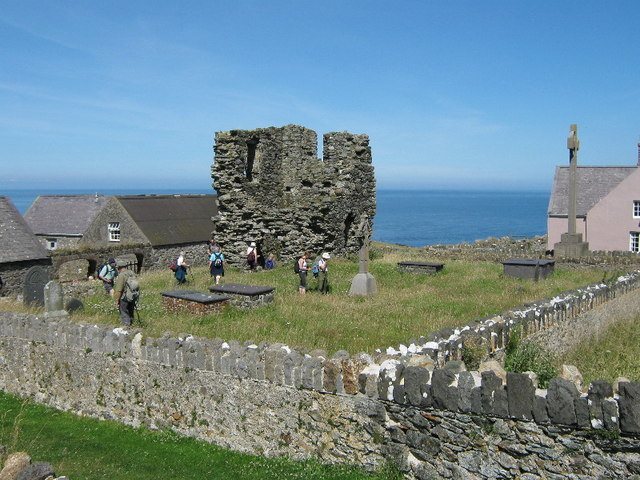
The abbey held substantial lands on the Llŷn Peninsula but never became wealthy. Edward I visited in 1284. By the end of the Middle Ages, the monastery had lost importance. It was destroyed following the dissolution of the monasteries in 1537, when religious houses were suppressed, and fell into ruin. More substantial remains still stood in the eighteenth century, but by the twentieth century only a fragment of one tower remained. The abbey is a Grade I listed building, a designation for exceptional architectural or historic interest, and a scheduled monument under statutory protection. Three crosses in its grounds are listed at Grade II.
Remains
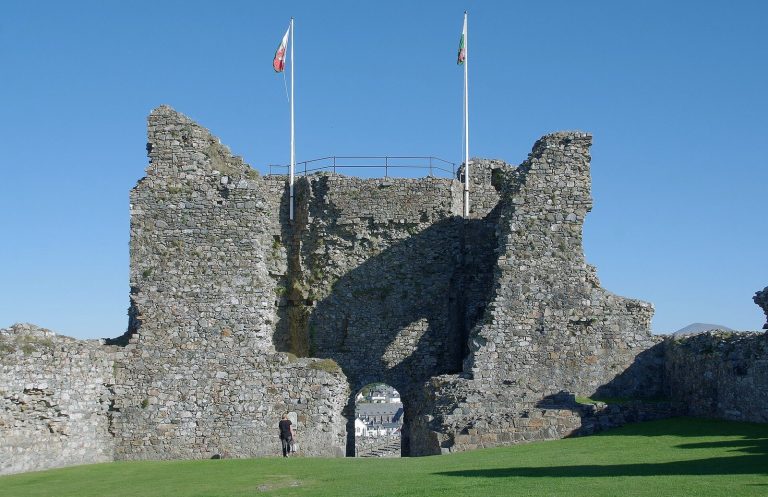
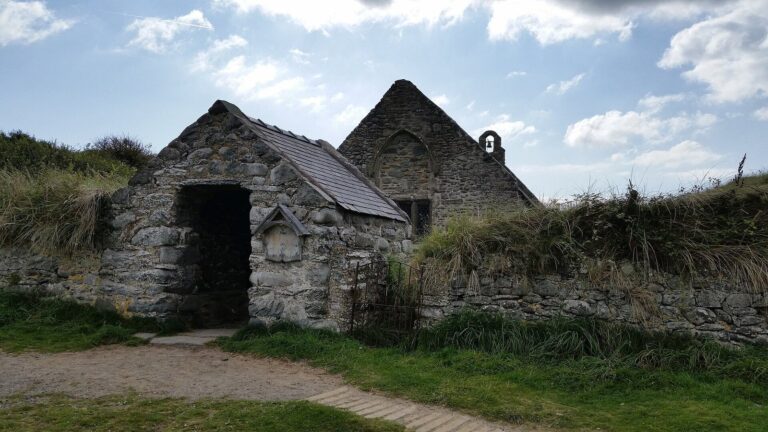
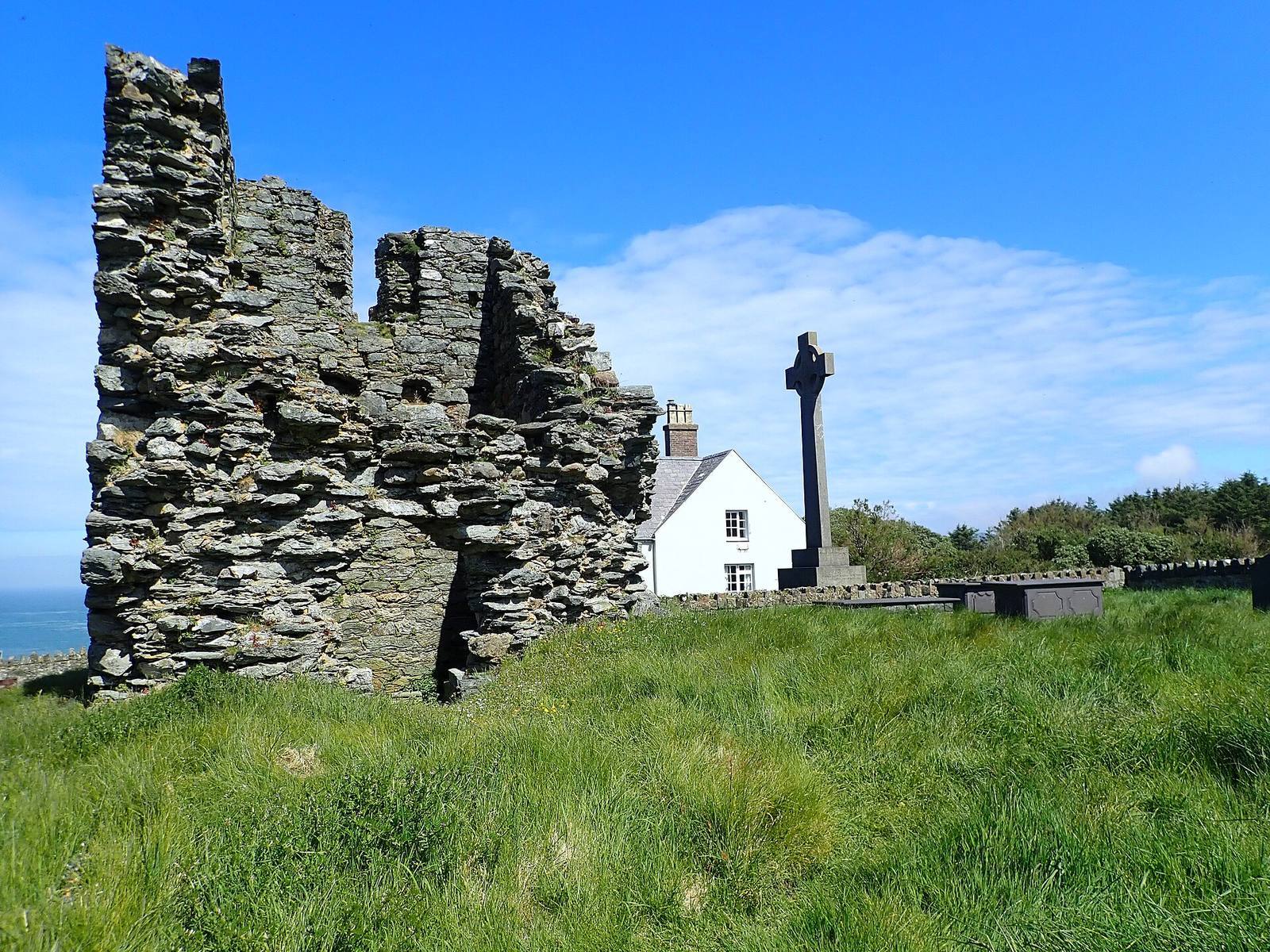
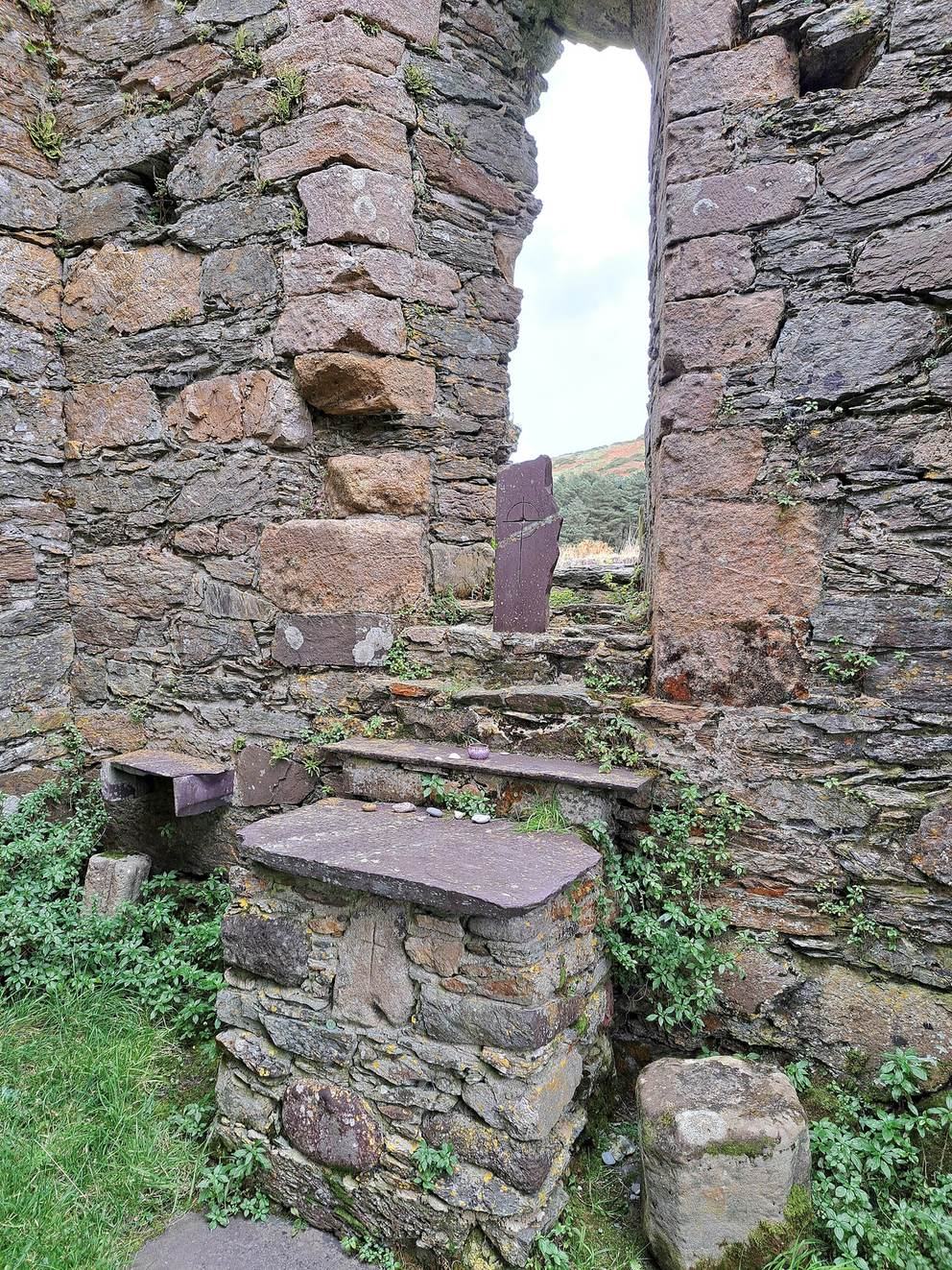
The ruins stand within a walled enclosure at an elevation of 45.7 metres on the northern end of Bardsey Island. The abbey’s construction is dated from the eleventh century onward. A fragment of a tower and three crosses survive among the remains.
Tower
The surviving tower fragment is square, measuring 5.8 metres on each side, with walls 1.0 metre thick. It has two stages and stands 8.0 metres high.
Crosses
Three Celtic crosses are set among the abbey ruins. One memorial cross stands in the centre of the graveyard, and another is in its southern part. The third is Newborough Cross.