Tre’r Ceiri: An Iron Age Hillfort in Wales
Site at a Glance
- Popularity
- Medium
- Country
- United Kingdom
- Primary era
- Iron Age
- Eras represented
- Bronze Age, Iron Age
- Civilizations
- Celtic
- Site type
- Military
- Remains
- Fortified Town
On this page9 sections
History
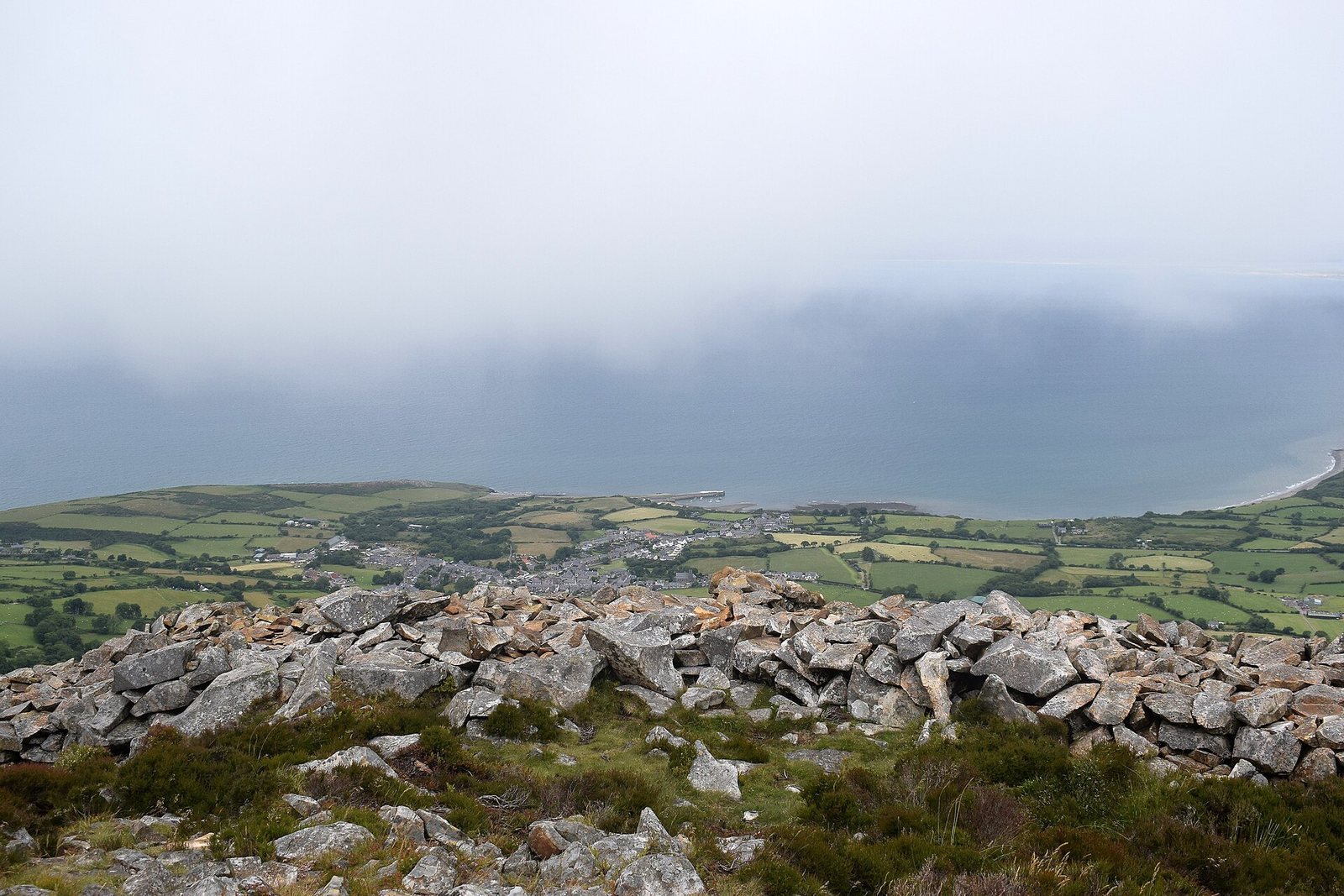
Tre’r Ceiri is an Iron Age hillfort, a defended settlement on elevated ground, on the easternmost summit of Yr Eifl above Llanaelhaearn in Wales, United Kingdom. It is among Wales’s most impressive hillforts. Its Welsh name means “town of the giants,” and the settlement began on a site with earlier funerary use.
Iron Age settlement
Tre’r Ceiri lay within the territory of the Gangani, a Celtic people associated with the area. A link between them and a similarly named Celtic tribe in Ireland has been proposed, but remains uncertain. Welsh historian John Davies suggested that the settlement’s huts may have been summer homes for shepherds who also had winter dwellings in the lowlands.
Roman-period occupation
People continued to live at Tre’r Ceiri during the Roman period. Finds dating to about AD 150–400 indicate this later use, and Roman authorities apparently allowed the Gangani to keep using the fort. The settlement may have housed about 400 people before it was abandoned around AD 400.
Archaeology and care
Archaeological investigations took place in 1904–1906, 1956 and 1980. Cadw, the Welsh Government’s historic environment service, is responsible for the hillfort, which is protected as a scheduled monument, a nationally protected archaeological or historic site. Maintenance in recent years has addressed the walls and paths around the site.
Remains
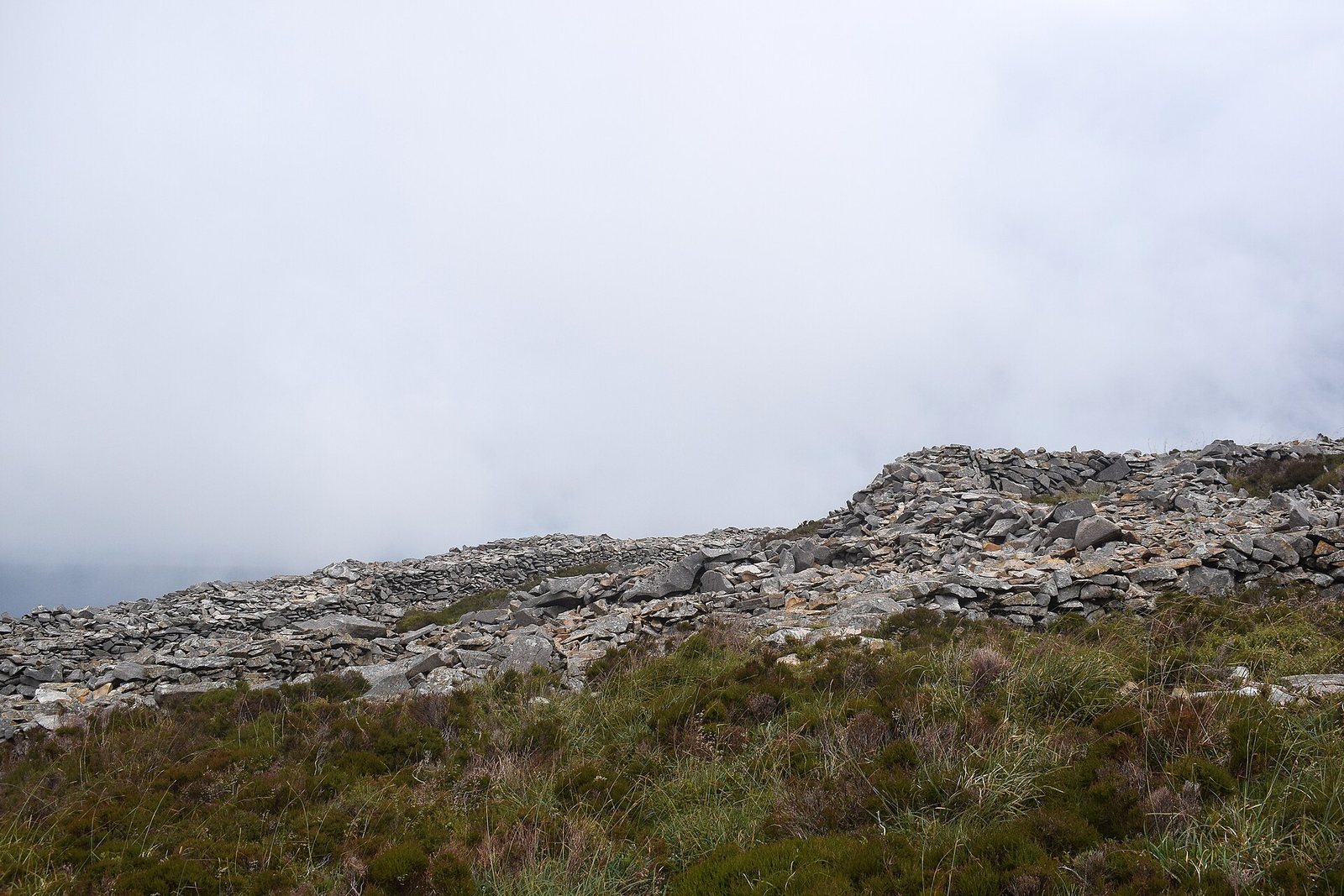
The hillfort covers about 2.5 hectares on the easternmost of Yr Eifl’s three summits. Stone walls enclose the settlement, with additional walls extending down the slopes and within the central area.
Enclosure and defenses
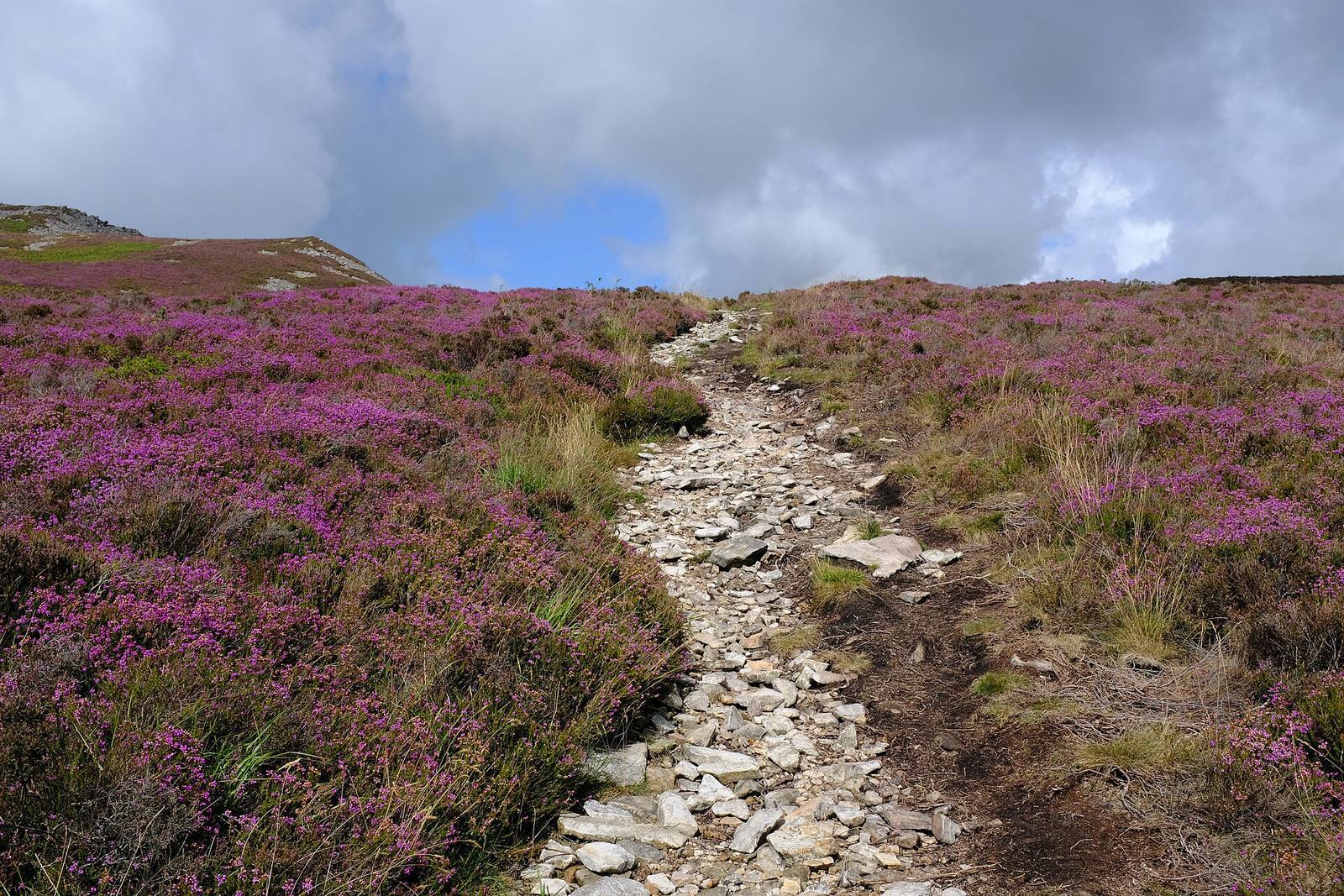
The enclosure walls stand about 3–4 metres high in places. A single wall protects the sections where the natural defenses are strongest, while other stretches have two walls. Igneous rock outcrops and scree covered with boulders add to the defenses. A track through the scree leads toward a side gate; the enclosure also has a main gate. Further walls inside the central fort may have bounded plots for crops or livestock.
Buildings and burial monument
Stone houses
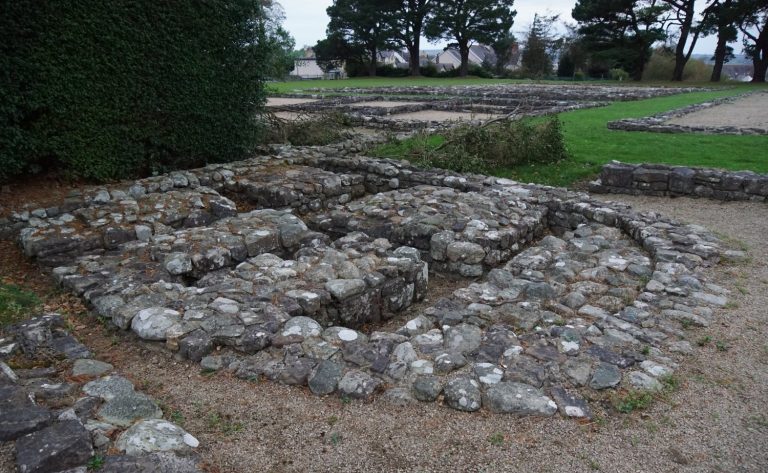
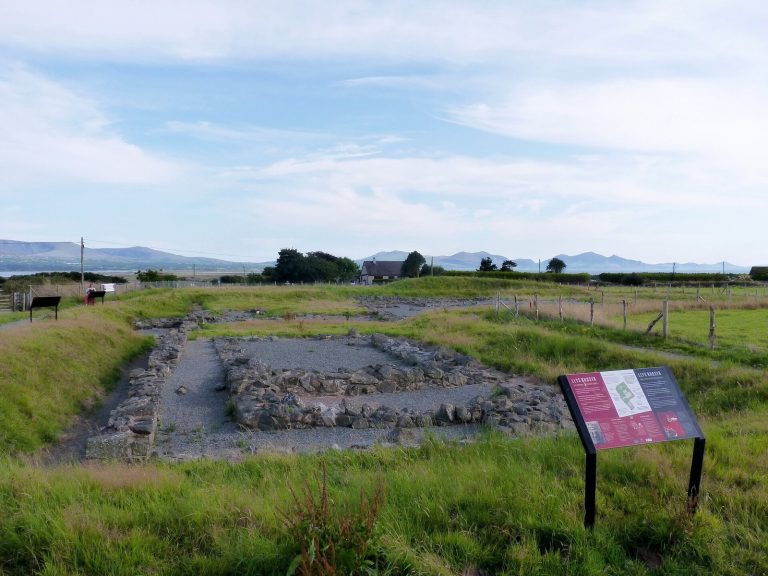
The enclosure contains the ruins of about 150 stone houses. Earlier buildings were round; rectangular houses appeared in later phases alongside the round ones. The roofs are thought to have been made of turf.
Burial cairn
A Bronze Age cairn, a mound of stones used as a burial monument, stands at the settlement’s north-eastern edge. It was incorporated into the later fortified site, and stone steps lead to its top.