St Govan’s Chapel: A Medieval Place of Catholic Worship in Wales
Site at a Glance
- Rating
- 4.8
- Popularity
- High
- Country
- United Kingdom
- Primary era
- Medieval
- Eras represented
- Medieval
- Civilizations
- Unclassified
- Site type
- Religious
- Remains
- Chapel
On this page6 sections
History
Origins and traditions
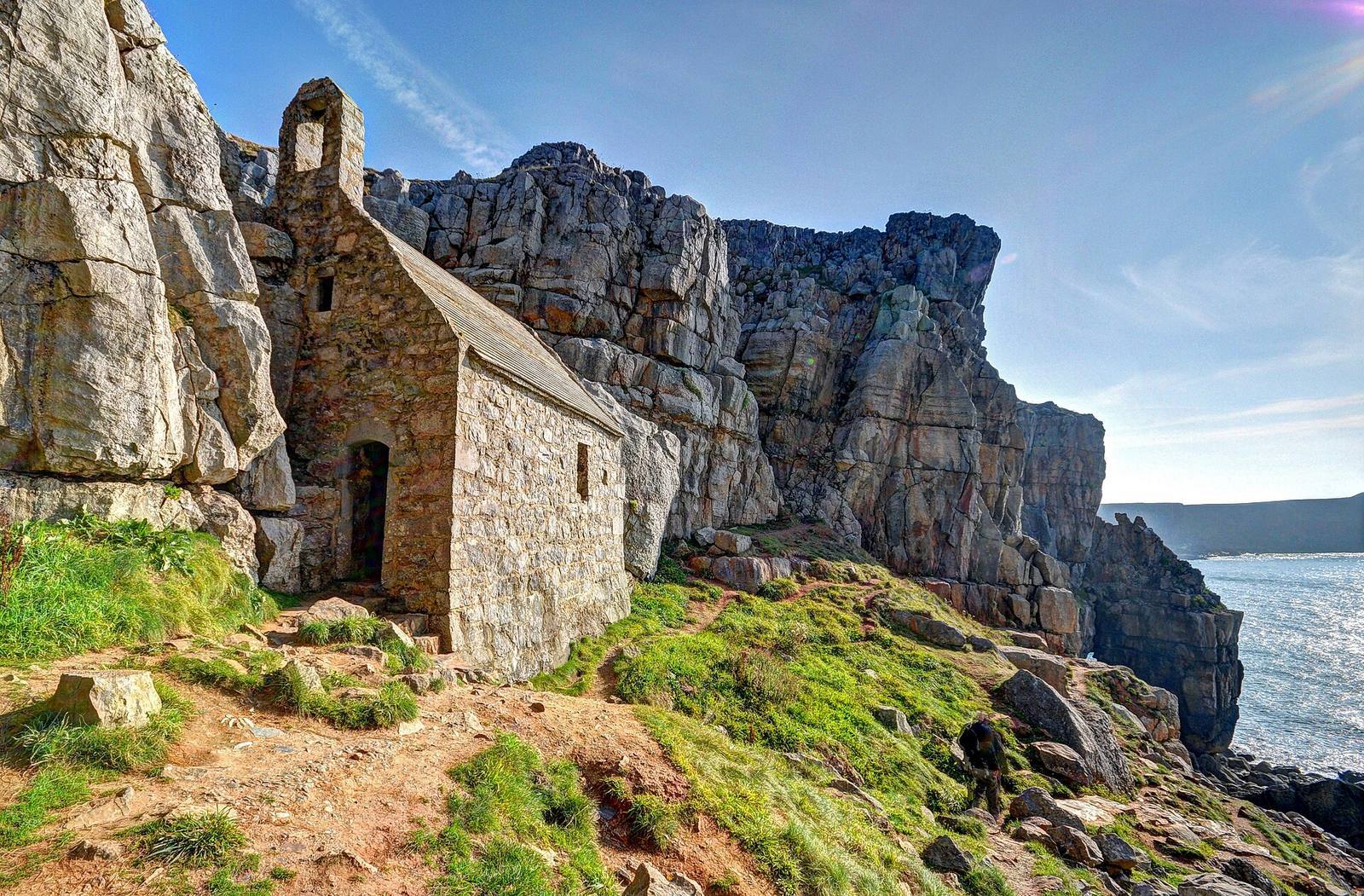
St Govan’s Chapel is a small Catholic chapel built largely in the thirteenth century on the limestone cliff at St Govan’s Head, on the Pembrokeshire coast of Wales, United Kingdom. It is dedicated to Saint Govan, traditionally identified as a sixth-century Christian monk and hermit. Some parts of the chapel may date to that earlier period. Tradition says Govan lived in a cave here and was buried beneath the altar.
Local stories describe pirates trying to seize Govan on the Pembrokeshire coast, including raiders from Lundy. In one version, a cleft in the rock opened to shelter him and closed again after the pirates departed. Another tells how he lived in a rocky refuge on fish and water from a sacred spring. A magical bell warned of the pirates’ return; after they stole it, a storm sank their ship, and angels brought the bell back and sealed it in rock. Govan was then said to make the rock ring by striking it.
People used the cave system beneath the chapel for thousands of years, when the sea was still miles from its entrance. The caves, known as Ogof Gofan, were rediscovered in 1966.
Later history
In 1996, the chapel received Grade I listed status, the highest listed-building grade in Wales, reserved for buildings of exceptional interest.
Remains
The chapel
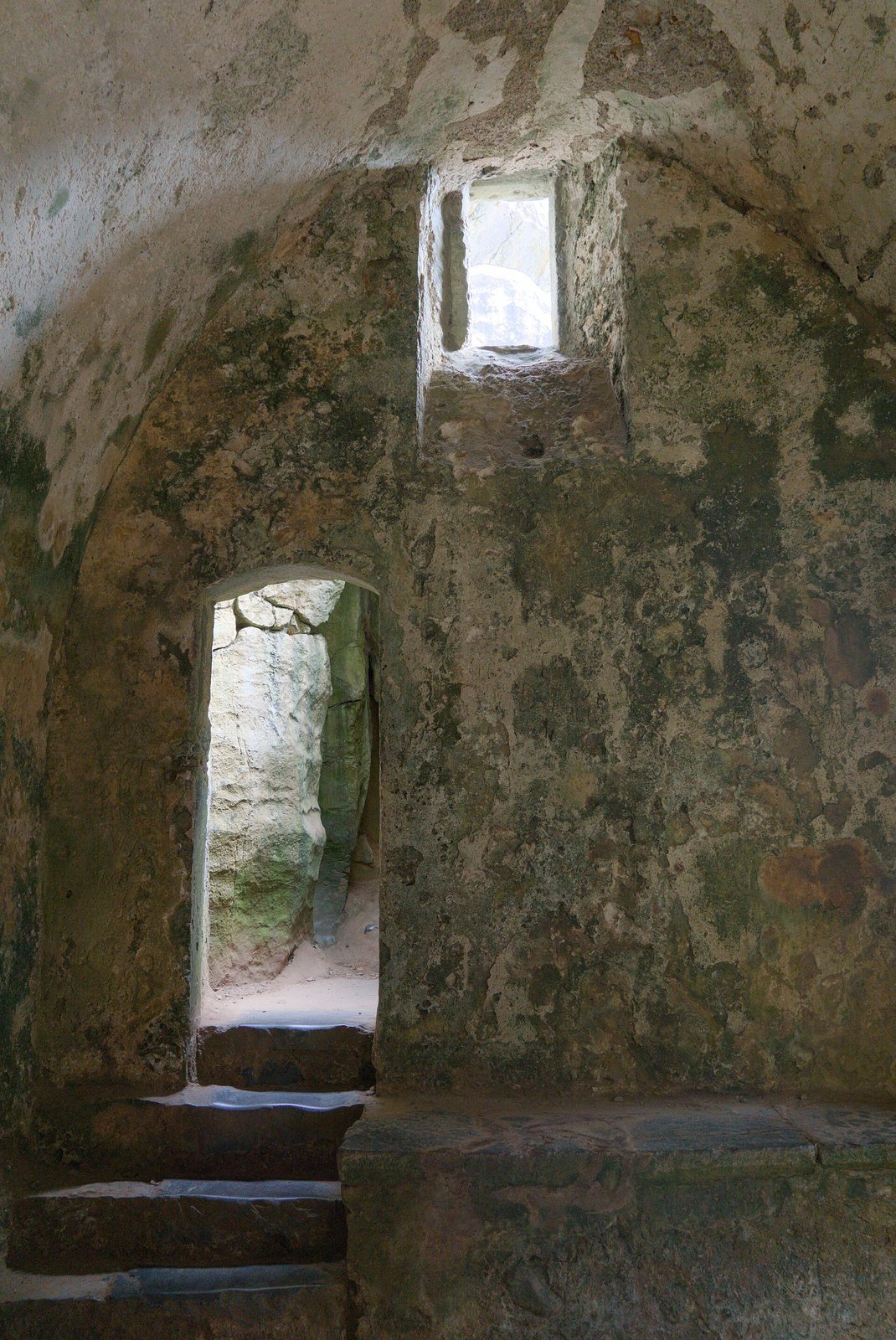
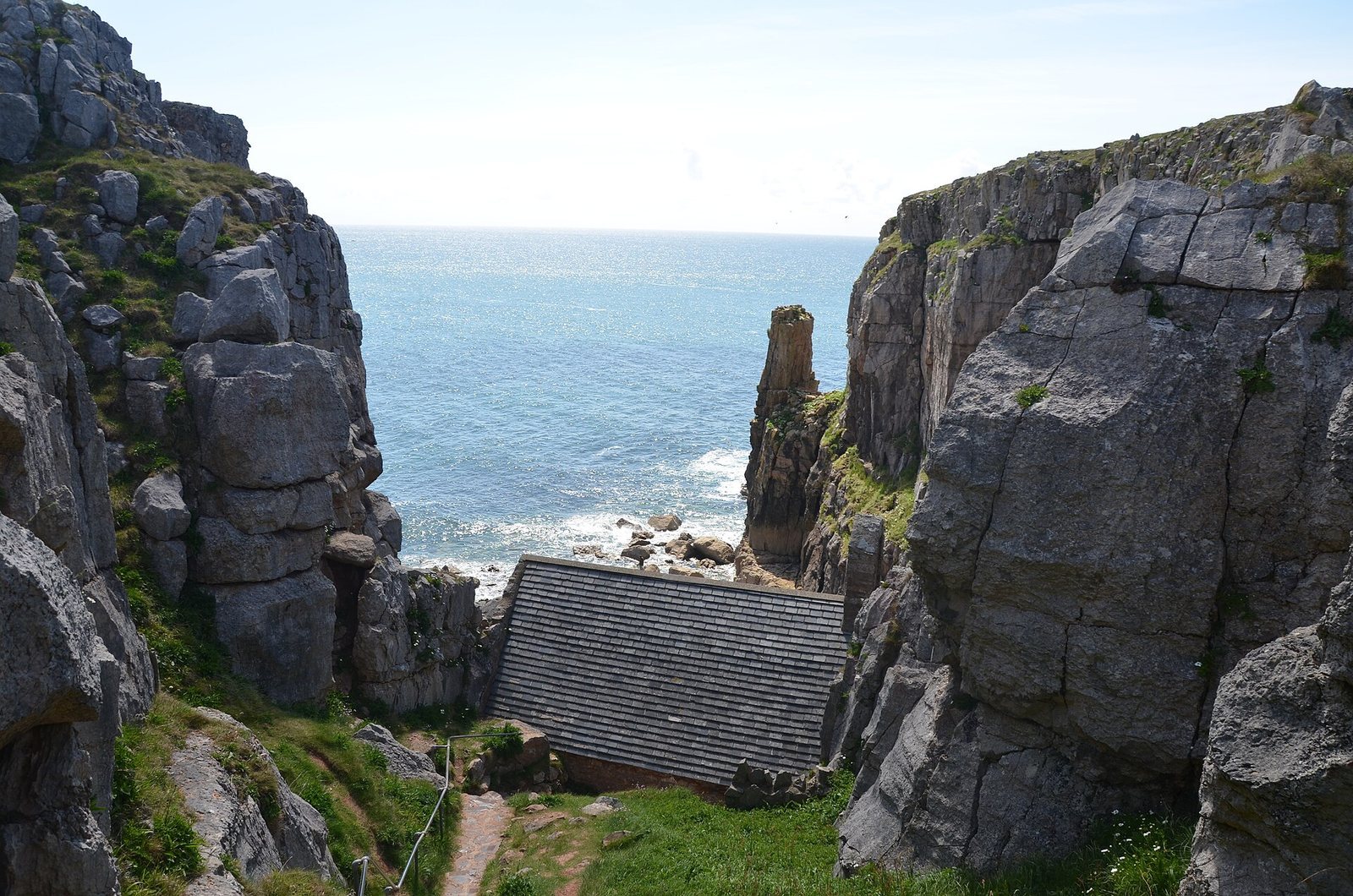
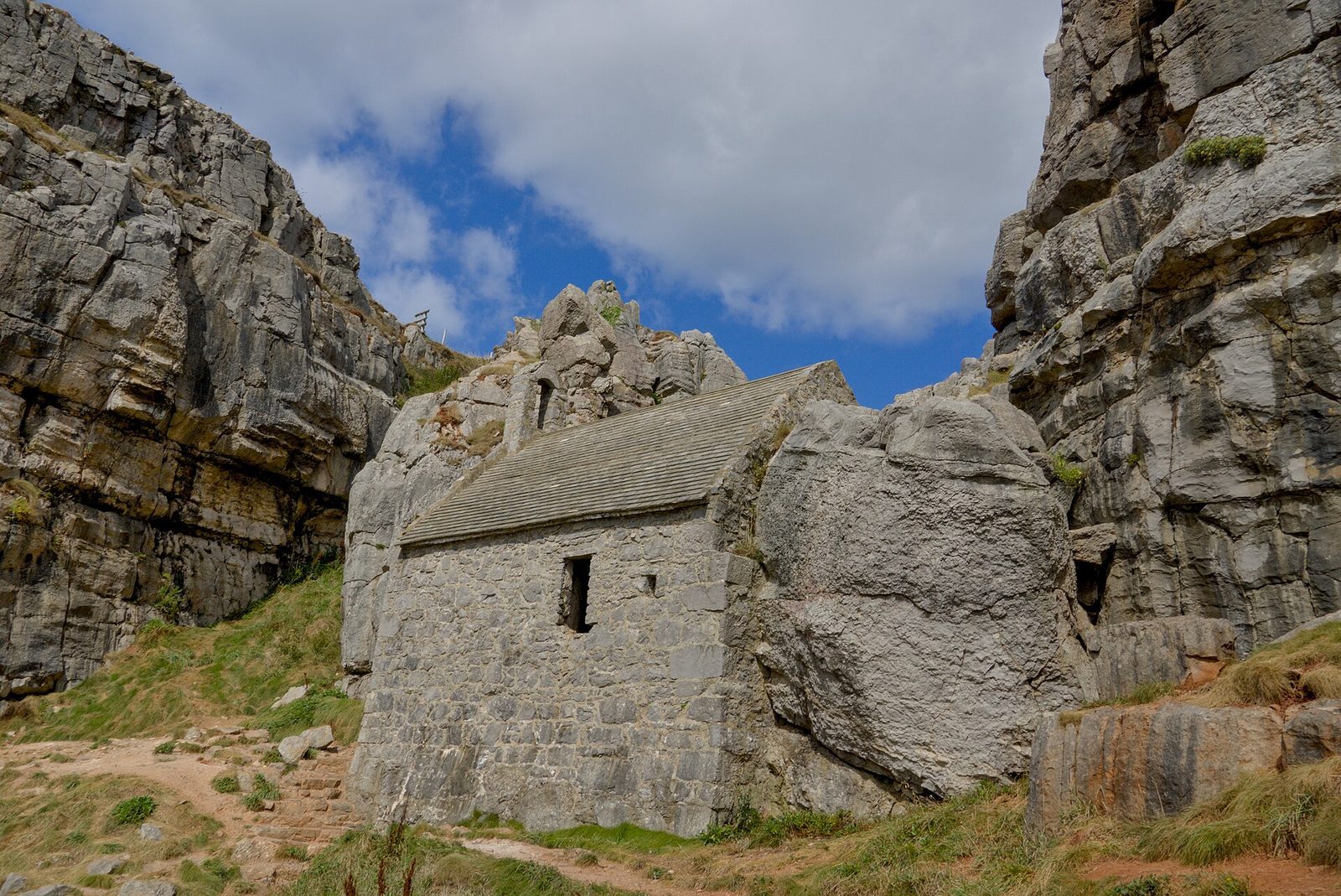
The chapel stands about 23.3 metres above sea level, around 1.6 kilometres from Bosherston, within Pembrokeshire Coast National Park. Its single chamber measures about 6.1 by 3.7 metres and has limestone walls; the slate roof is thought to have been added later. A stone altar occupies the east end. The north wall contains the entrance and a small niche or shelf, while low stone benches run along the north and south walls. In the south wall are the main window, a small opening and a piscina, a drained basin traditionally used to wash sacred vessels. A roughly plastered circle appears on the west wall, and a bell-cote, a small structure for housing a bell, stands at that end.
Cliff and underground features
About 52 irregular steps cut into the rock descend from the clifftop to the chapel. Local tradition says the number seems different when counted on the way down and back up. Steps at the east end lead from the altar to a small cell cut into the rock and shaped like a human body, possibly intended to receive Govan. A well lies below the chapel and is locally regarded with reverence, while tradition also places a sacred spring nearby. A cleft is linked to Govan’s escape, and one version of the story identifies impressions resembling ribs in the rock. Another rock is associated with the stolen-bell legend. Beneath the chapel, Ogof Gofan contains a formation described as cathedral-like; the cave system can be reached only by abseiling down the cliff.