Terrassa Cathedral: Seat of the Diocese of Terrassa
Site at a Glance
- Rating
- 4.4
- Popularity
- High
- Country
- Spain
- Primary era
- Early Modern
- Eras represented
- Early Modern, Modern
- Civilizations
- Crown of Aragon, Habsburg, Habsburg Spain, Spanish
- Site type
- Religious
- Remains
- Cathedral
On this page17 sections
History
Egara and the church’s construction
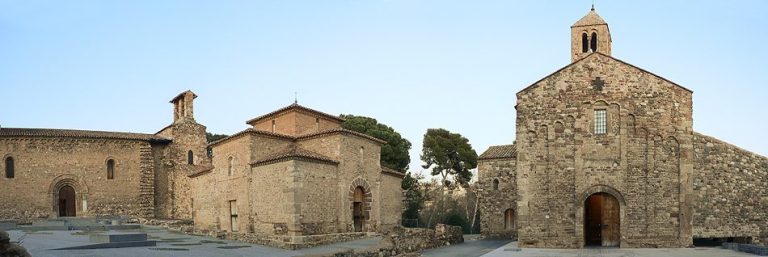
Terrassa Cathedral, the Basilica of the Holy Spirit, stands on Plaça Vella in Terrassa, Spain, and is the principal church of the Diocese of Terrassa, a territory administered by a bishop. The earlier Bishopric of Egara, the historical name associated with Terrassa, existed from the fifth to the eighth centuries and was based at the church complex of Sant Pere, Sant Miquel and Santa Maria. It ended after the Muslim invasion, possibly because the area was close to a frontier.
The Catholic church was built between 1574 and 1616. Its builders continued the Gothic tradition rather than adopting the Baroque style prevalent at the time. When the new basilica was built, the parish of Sant Pere was transferred to the church.
Religious and musical life
By the seventeenth century, the basilica had become a center of Terrassa’s spiritual life. Its music chapel employed music masters and organists, including musicians associated with the Escolania de Montserrat, the boys’ choir school linked to the monastery of Montserrat. The first named music master at the church was Pere Joan Quer, in 1656.
War damage and restoration
During the Spanish Civil War, a conflict fought in Spain from 1936 to 1939, a fire caused by Republican forces damaged the church’s interior and destroyed its Baroque altarpiece by Joan Mompeó. The building was also used to park vehicles. Restoration was completed in 1958, with a replacement altarpiece by Enric Monjo. On 10 March 1951, the church had received the Catholic Church’s honorific title of Minor Basilica.
Later changes and cathedral status
A parish museum was installed in the Chapel of the Holy Christ in 1992. Work completed in 1999 remodeled the bell tower and upper façade, which had been unfinished, and added a section above the attic storey for the cathedral chapter’s meeting room.
In 2004, the Diocese of Terrassa was created by separation from the Diocese of Barcelona, and the Basilica of the Holy Spirit became its cathedral and seat. The new diocese revived the former Bishopric of Egara. In 2006, a new frontal for the main altar was inaugurated.
Remains
Layout and exterior
Church plan and entrance atrium
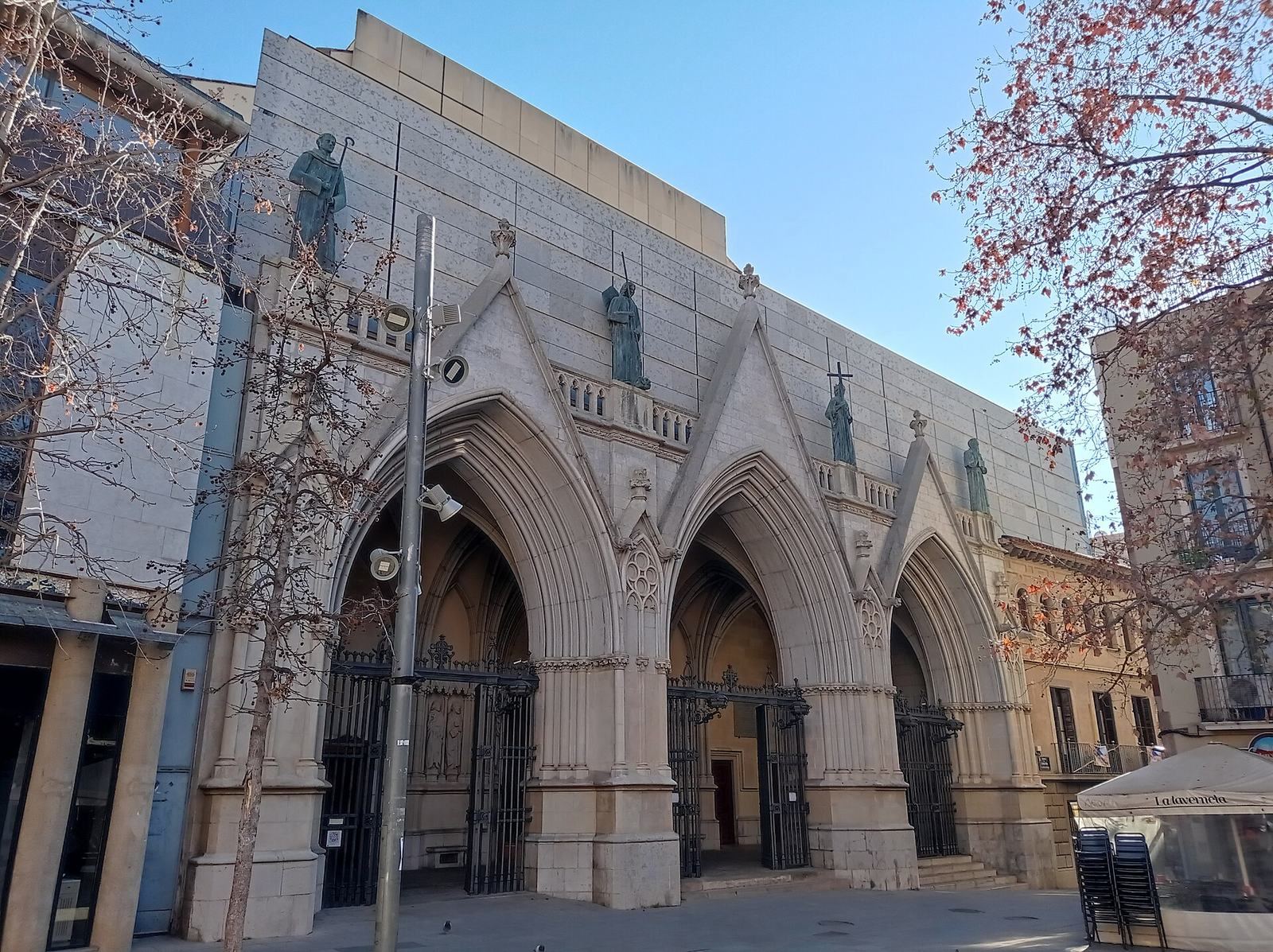
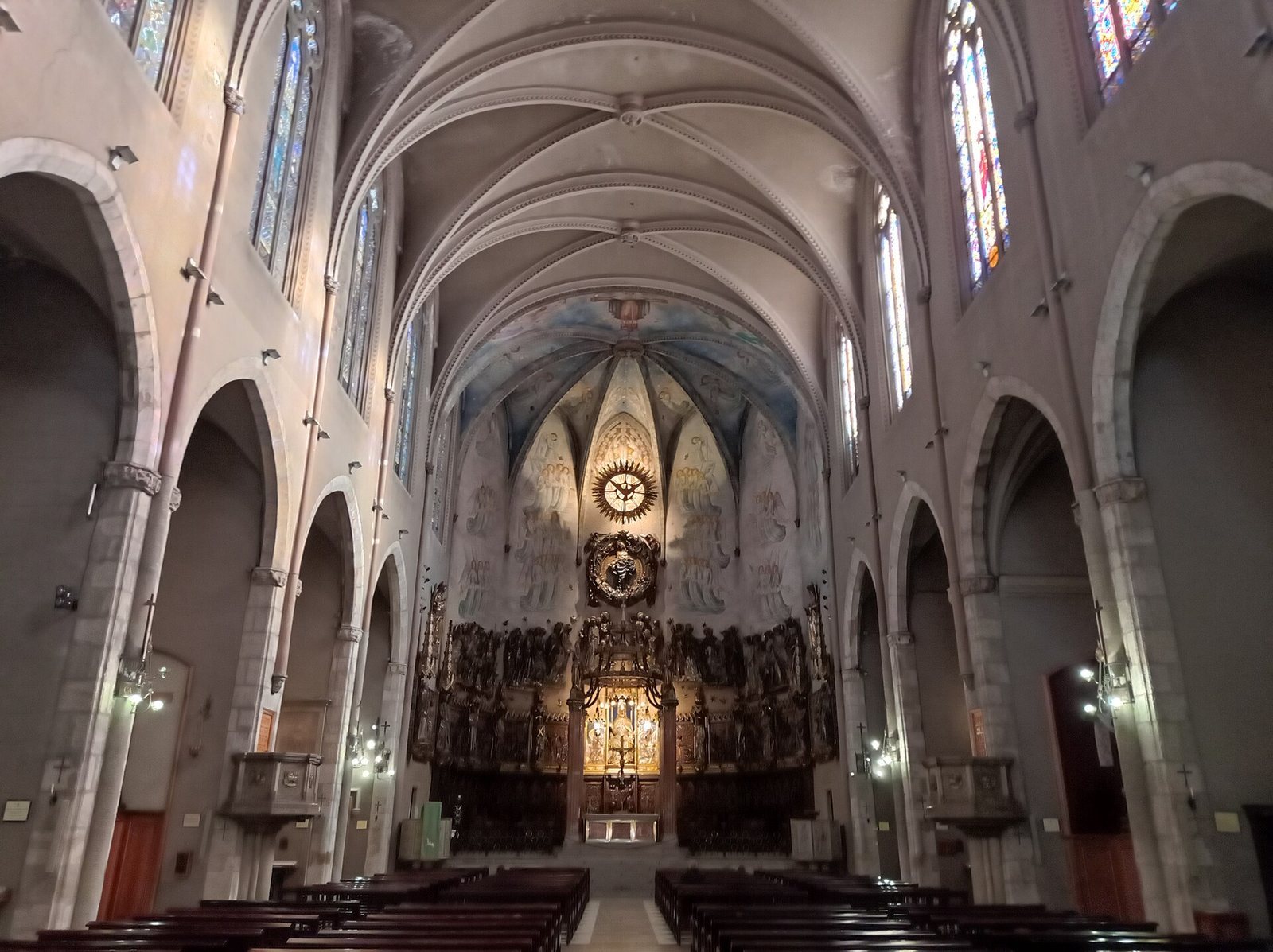
The church combines late Gothic, Neo-Gothic and Modernisme features. Its layout has a single main hall, side chapels set between exterior supports, a transept crossing the church, and a many-sided sanctuary at the end. The Neo-Gothic entrance atrium was built in 1918. War damage led to its rebuilding with apostolic sculptures by Nicanor Carballo in place of sculptures by Josep Llimona that were lost in the fire. The reconstructed atrium was inaugurated in 1994.
Tower and upper façade
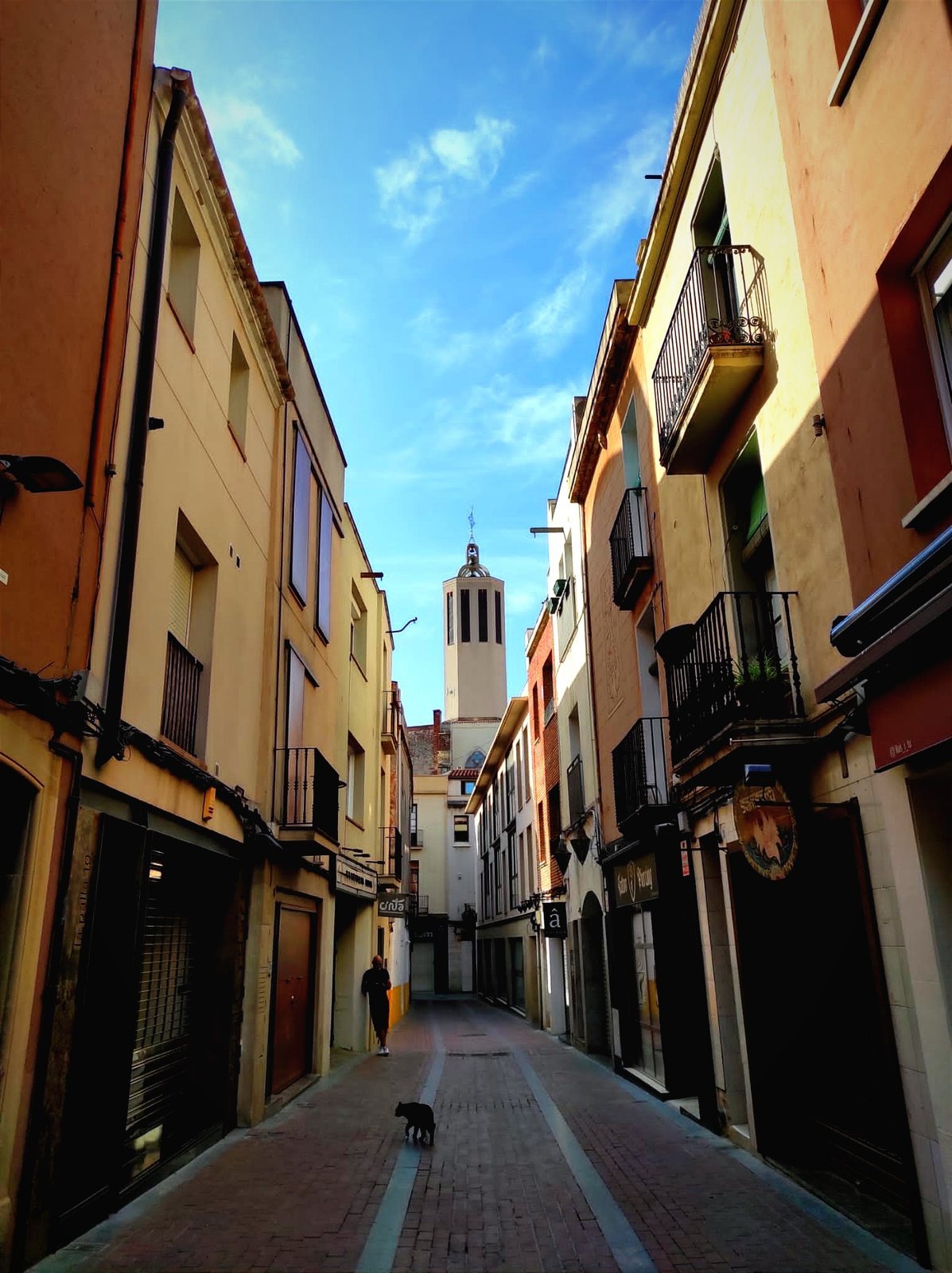
The remodeled tower is topped by a large wrought-iron cross made by welder Jesús Ramos Vázquez. It contains six liturgical bells mounted on a metal frame, while three clock bells sit on the roof. The remodeled upper façade includes a new section above the attic storey, which houses the chapter room, a meeting space for the cathedral chapter.
Interior works and chapels
Main altar and choir ensemble
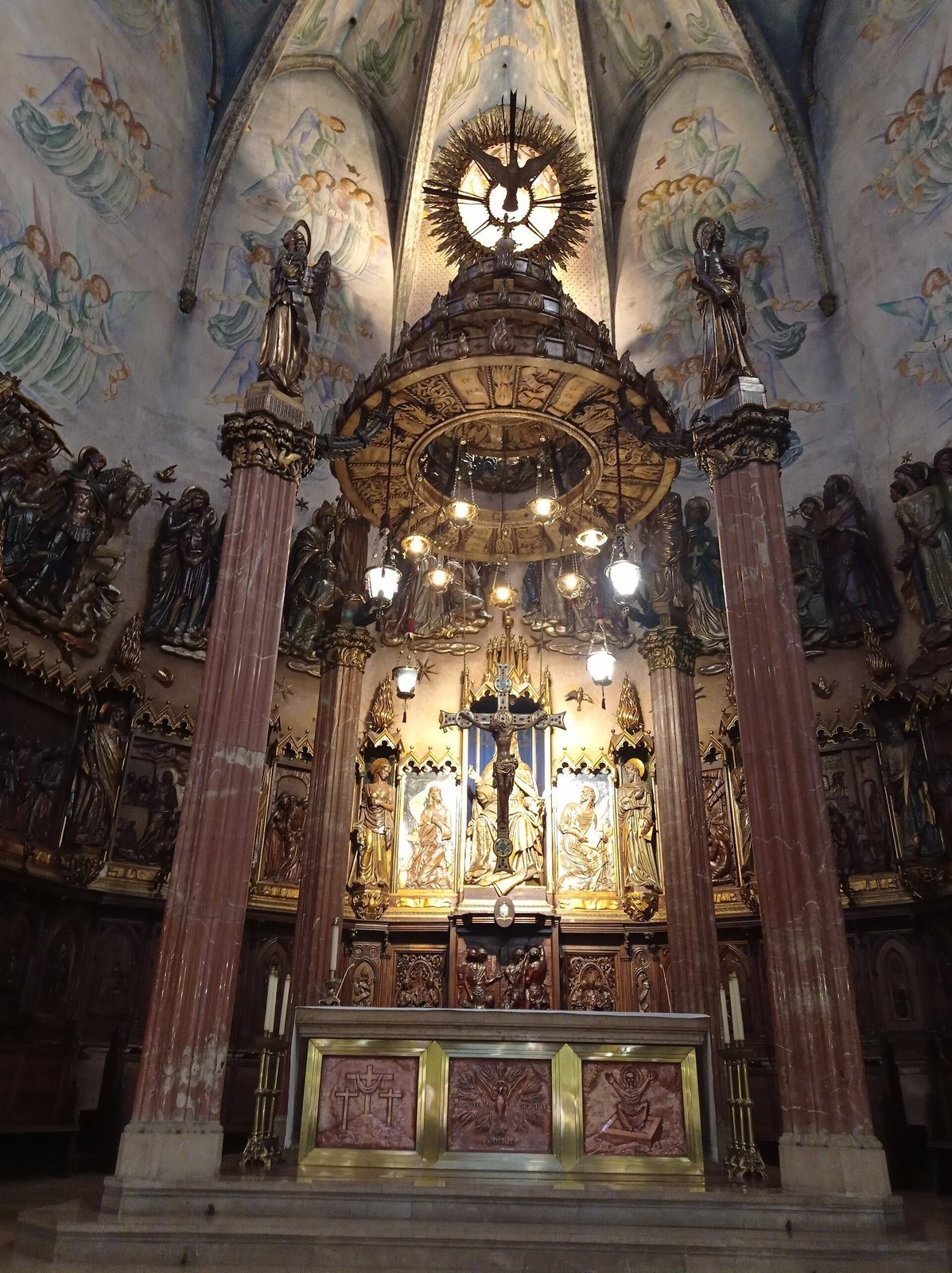
The choir ensemble, made in the 1940s, brings together architectural work, paintings by Antoni Vila i Arrufat, and sculpture by Enric Monjo. Reliefs, statues and choir stalls, seats for clergy or singers, form part of the ensemble, with Saint Peter in its central section. The altar frontal inaugurated in 2006 was made by Jeroni Font and gemologist Jaume Mercadé. Its three panels show the Death of Jesus, the Resurrection and, in the center, the coming of the Holy Spirit.
Chapel of the Holy Christ
In the left arm of the transept, the Chapel of the Holy Christ contains Holy Thursday processional pieces, precious-metal objects, old books and documents. Among them is an illuminated Gospel book from the eleventh century, a manuscript decorated with images or ornament. The chapel also houses the parish museum.
Entombment group
The Entombment, a sculptural group by Martín Díez de Liatzasolo completed in 1544, stands in the right arm of the transept. Its eight figures gather around the recumbent Christ. The work was destroyed during the Civil War; its pieces were kept in the churches of Sant Pere and reassembled after the conflict. It is a rare example of Renaissance sculpture in Catalonia.
Chapel of the Blessed Sacrament and sacristy
On the south side of the basilica, the Chapel of the Blessed Sacrament and the sacristy form a group designed in 1907 in Modernisme, Catalonia’s form of Art Nouveau. Parabolic arches shape the ceiling. The chapel contains an altarpiece by Rafael Solanic and fresco paintings by Miquel Farré.
Chapel of Our Lady of Montserrat
This chapel contains an image by Esteve Casanovas and a sculpture of the Rapture of Saint Ignatius by Josep Maria Camps i Arnau. Its paintings are by Joaquim Vancells, Tomàs Viver and Ramon Cortés.
Other chapels
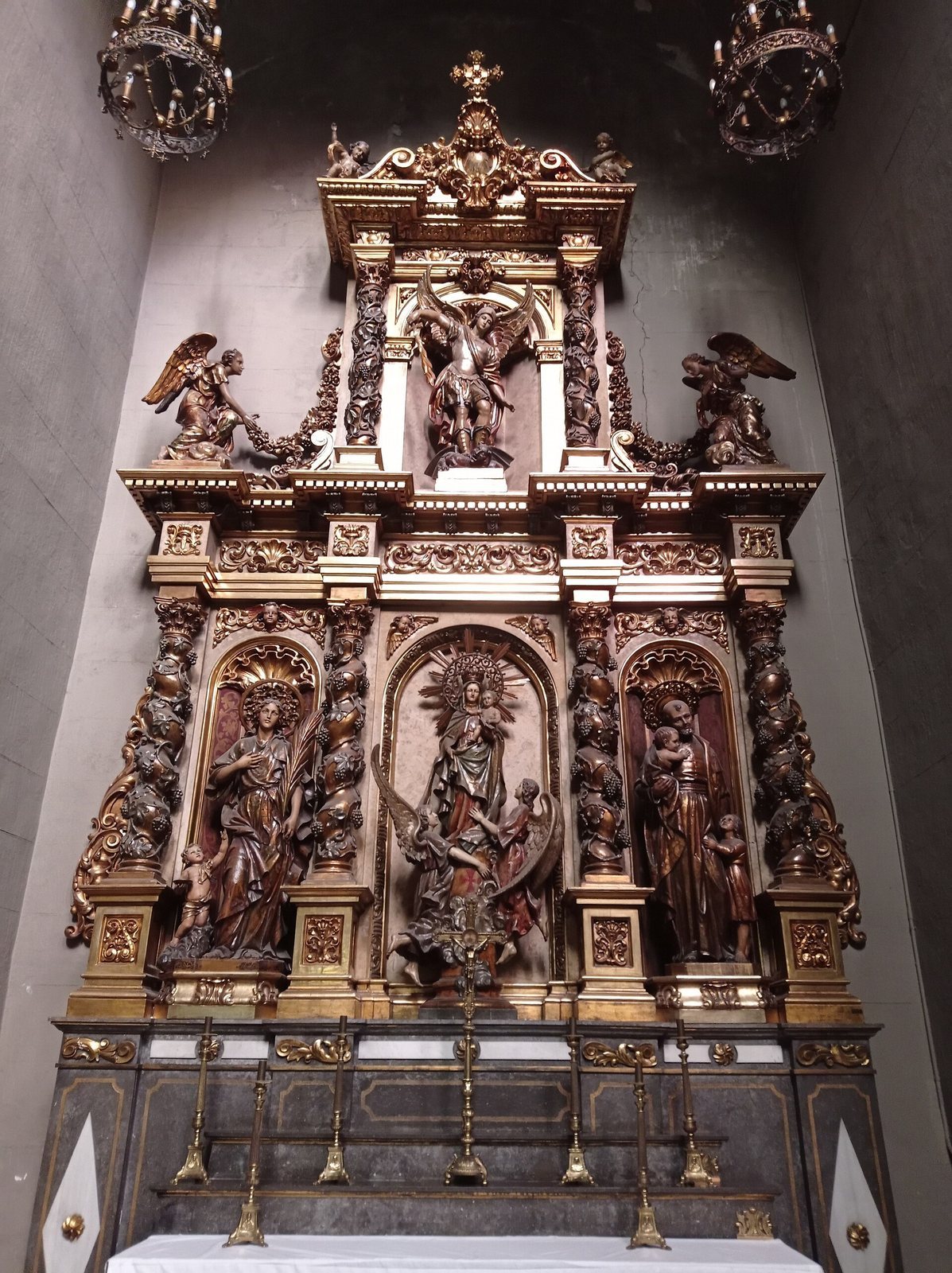
The Chapel of Our Lady of the Rosary houses a Baroque image by Agustí Pujol. The Chapel of Saint Joseph contains a sculpture by Gabriel Alabert dated 1993, while the Chapel of the Immaculate Conception holds a sculpture by Francesc Juventeny dated 1949. Images of Saint Joaquina de Vedruna and Saint Teresa of Jesus in the Chapel of Our Lady of Mount Carmel, and images of Saint Lucy, Saint Vincent de Paul and Saint Michael in the Chapel of Our Lady of the Pillar, were made by the Salesian Workshops of Barcelona.
Archive
The cathedral archive occupies a room beside the organ gallery, formerly used for rehearsals by the Escolania and the old music chapel. Its 979 inventoried items comprise 672 manuscripts by identified authors, 291 anonymous manuscripts and 16 choir books. The archive also includes collections associated with the Schola Cantorum of Terrassa, a choir or school for sacred music, and the Daughters of Mary, a Catholic Marian devotional association.