Temple of the Delians: The Great Temple of Apollo on Delos
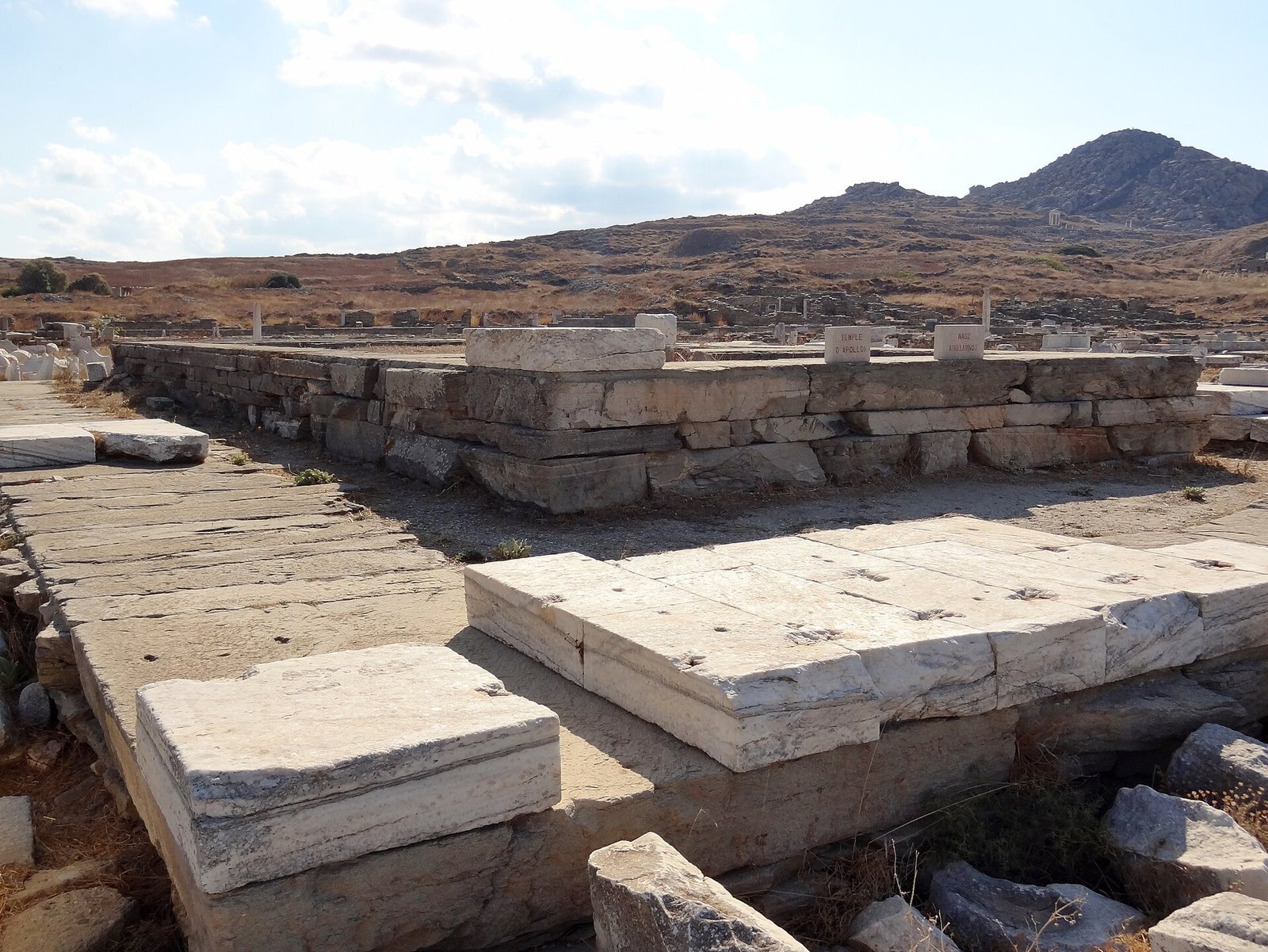
Site at a Glance
- Popularity
- High
- Country
- Greece
- Primary era
- Classical
- Eras represented
- Classical
- Civilizations
- Ancient Greek
- Site type
- Religious
- Remains
- Temple
On this page7 sections
History
The Temple of the Delians, also known as the Great Temple of Apollo, is an ancient Greek temple dedicated to Apollo in the Sanctuary of Apollo on Delos, Greece. Built in the Doric order, one of the principal systems of Greek temple design, its construction began in 476 BC with funding from the Delian League, an alliance of Greek city-states led by Athens. The sanctuary served worshippers from across the Greek world and was one of slightly more than a dozen such centers.
Construction and interrupted work
Work stopped in 454 BC, when the Delian Treasury was transferred to Athens. Building resumed during Delos’s period of independence after 314 BC. The main structure was completed only in the late fourth or early third century BC, and its finishing work and decorative additions were never completed.
Worship and destruction
Delian festivals joined religious worship with commercial activity. Apollo and his twin sister Artemis were worshipped on the island as healing deities; they were also identified respectively with Helios, the personification of the sun, and Selene, the personification of the moon.
The temple was largely destroyed during the Mithridatic Wars, conflicts between Rome and the kingdom of Pontus. The Greek travel writer Pausanias describes its destruction and sacrilege by Mithridates VI Eupator, king of Pontus, while the geographer and historian Strabo also discusses its destruction. The ruins form part of the archaeological site of Delos, a UNESCO World Heritage Site.
Remains
Position and plan
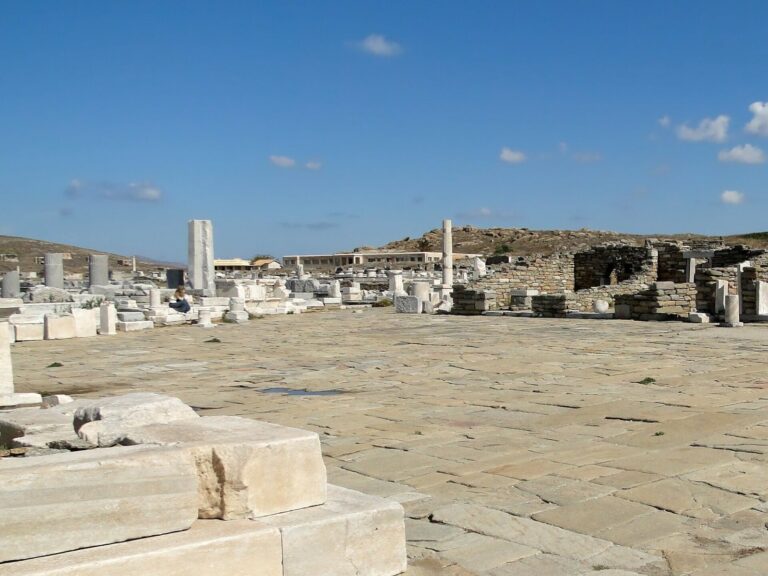
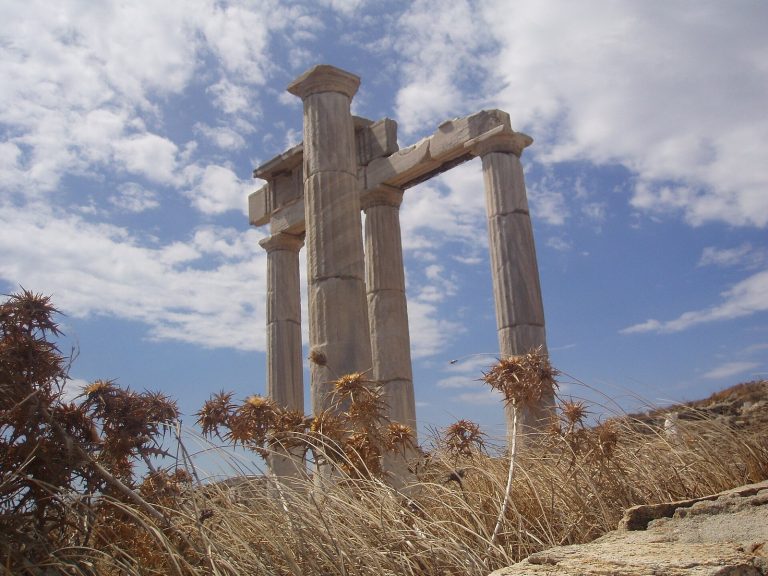
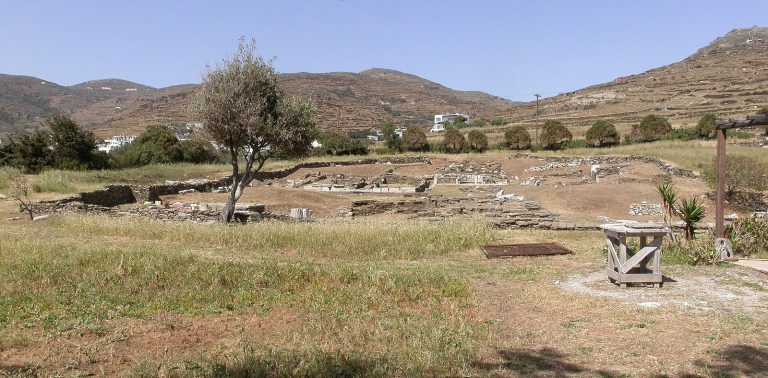
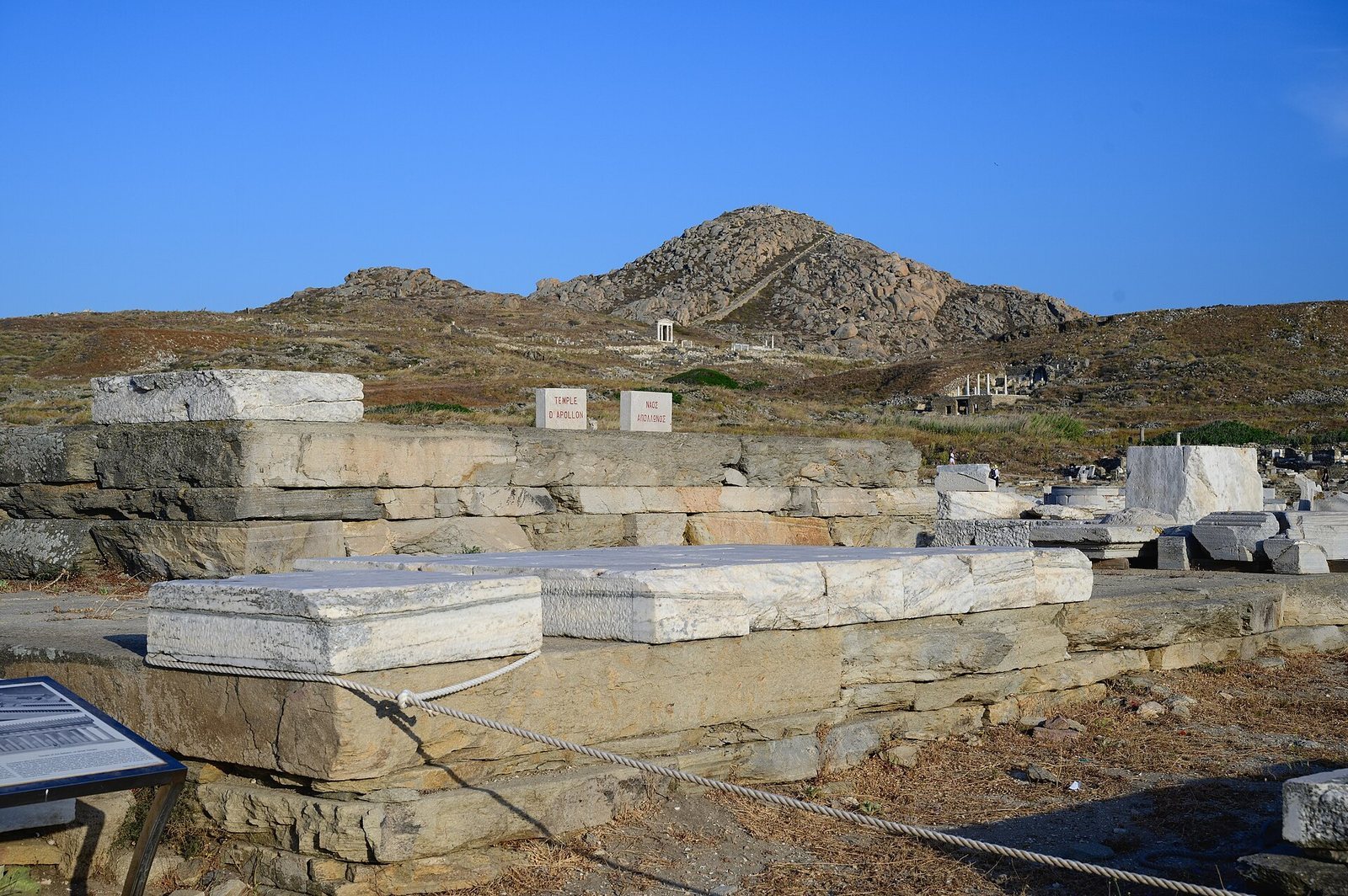
The temple was the largest of Delos’s three temples to Apollo and the island’s only temple surrounded by a colonnade. It stood south of the Athenian Temple of Apollo, while the earlier Archaic Poros Temple lay farther north. Its foundations measured about 30 by 13 metres. Six columns stood along each short end and thirteen along each long side. The main chamber opened to the west, with an entrance porch and a rear porch, each framed by two columns between projecting side walls. The sanctuary’s horn-built Keraton altar stood west of the temple, in front of it.
Surviving fabric and unfinished work
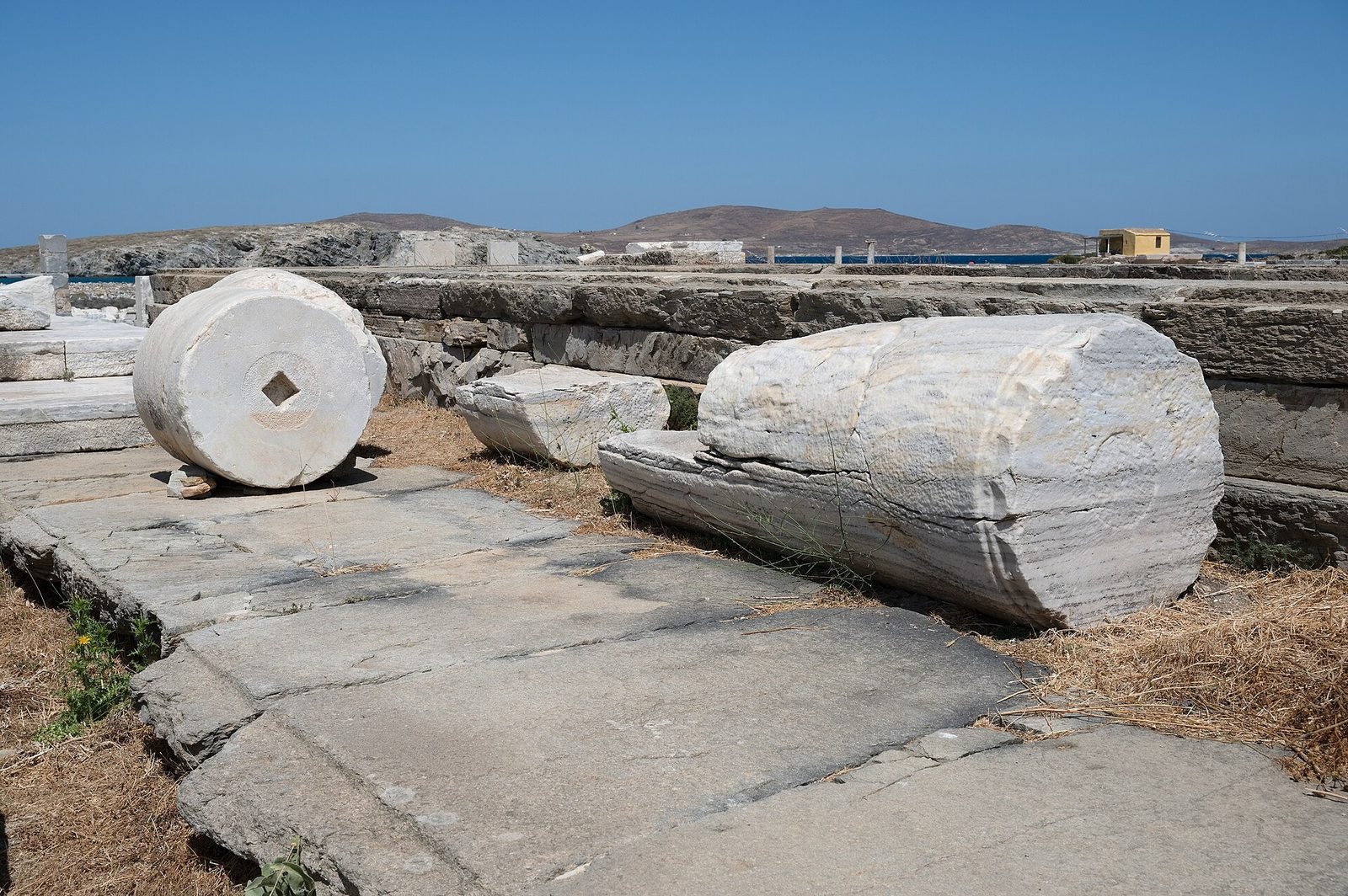
The remains include the lower foundations, the raised platform on which the columns stood, and fragments of the columns. Their unfinished surfaces preserve evidence of how they were made. Stone sections were roughly shaped on the ground, and short lengths of the vertical grooves were cut into the uppermost and lowest sections as guides. After the sections were assembled, masons would normally have completed the grooves from scaffolding, but that final work was never carried out.
Cult statue and courtyard
The temple housed a cult statue of Apollo and hundreds of valuable offerings accumulated over time. A notable statue by the Greek sculptors Angelion and Tektaos, sons of Dionysiodotos, showed Apollo holding three Charites, goddesses also known as the Graces and associated with beauty and charm. The Colossus of the Naxians, inhabitants of the island of Naxos, stood in the adjacent courtyard.