Tourliani Monastery: An Orthodox Monastery on Mykonos
Site at a Glance
- Popularity
- Medium
- Country
- Greece
- Primary era
- Early Modern
- Eras represented
- Early Modern
- Civilizations
- Ottoman
- Site type
- Religious
- Remains
- Monastery
On this page9 sections
History
Foundation and traditions
Tourliani Monastery is an Orthodox men’s monastery in Ano Mera on Mykonos, Greece, founded in 1542 on the site of an earlier church. It is dedicated to the Dormition of the Theotokos. Theotokos means “God-bearer,” a title for Mary; in Orthodox belief, the Dormition commemorates her death and bodily assumption. Its principal church follows Byzantine traditions, the cultural and artistic heritage of the Eastern Roman Empire. The monastery belongs to the Holy Metropolis of Syros and holds a status that exempts it from ordinary diocesan jurisdiction. It is Mykonos’s most important monastery, and the Virgin Mary venerated under the title Panagia Tourliani is the island’s patroness.
One tradition says that monks from the Archontissa of Paros, a religious institution whose Greek title means “lady,” fled to Mykonos and sought refuge. They took shelter at a small church in the island’s upper part, where a nun named Tourli served. Another tradition links the monastery’s name to a miraculous icon said to have been found in the sea near Tourlos, outside Mykonos Town. The icon is traditionally attributed to Luke the Evangelist, an early Christian figure associated with the Gospel of Luke.
Renovation and religious life
Between 1757 and 1767, hieromonk Ignatios Basoula, a monk ordained as a priest, renovated the monastery and gave it its present form.
The monastery holds a major festival on August 15, while its principal feast falls on August 23. This is the Apodosis of the Dormition, the liturgical leave-taking that marks the close of a feast’s celebration. On the first Sunday of Lent, the monastery’s icon is carried to one of three parish churches in Chora, or Mykonos Town: Megali Panagia, Panachrantos, or Saint Kyriaki. It stays at the chosen church until Lazarus Saturday.
Social role in the twentieth century
At the beginning of the twentieth century, the monastery first served as a nursing home and later as an orphanage. Land it made available without charge was used for a kindergarten, a primary school, a square, and a spiritual center.
Remains
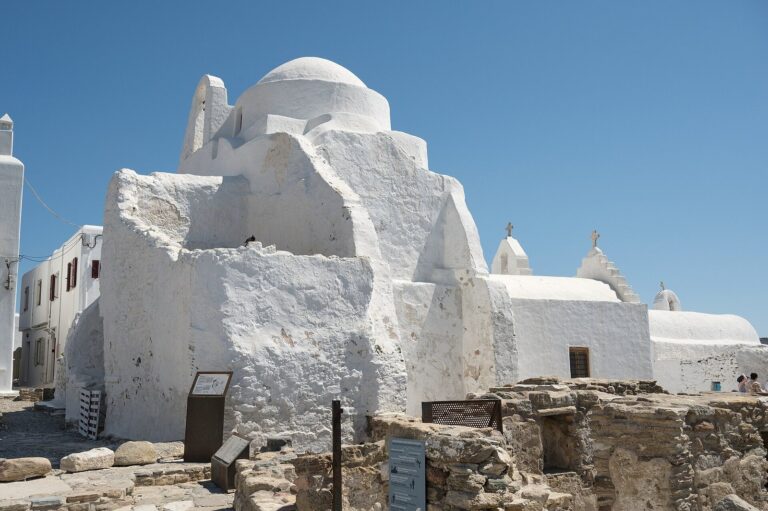
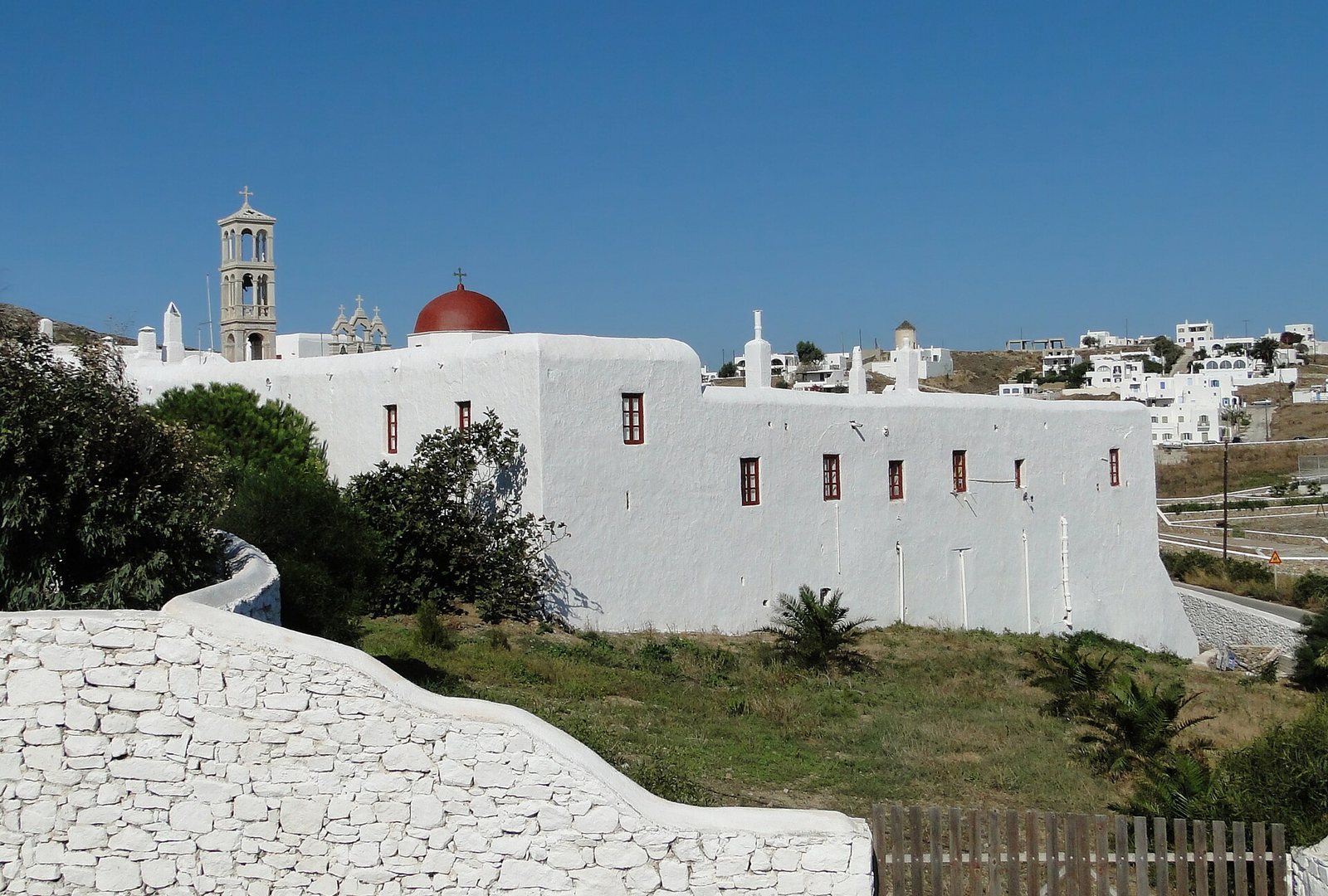
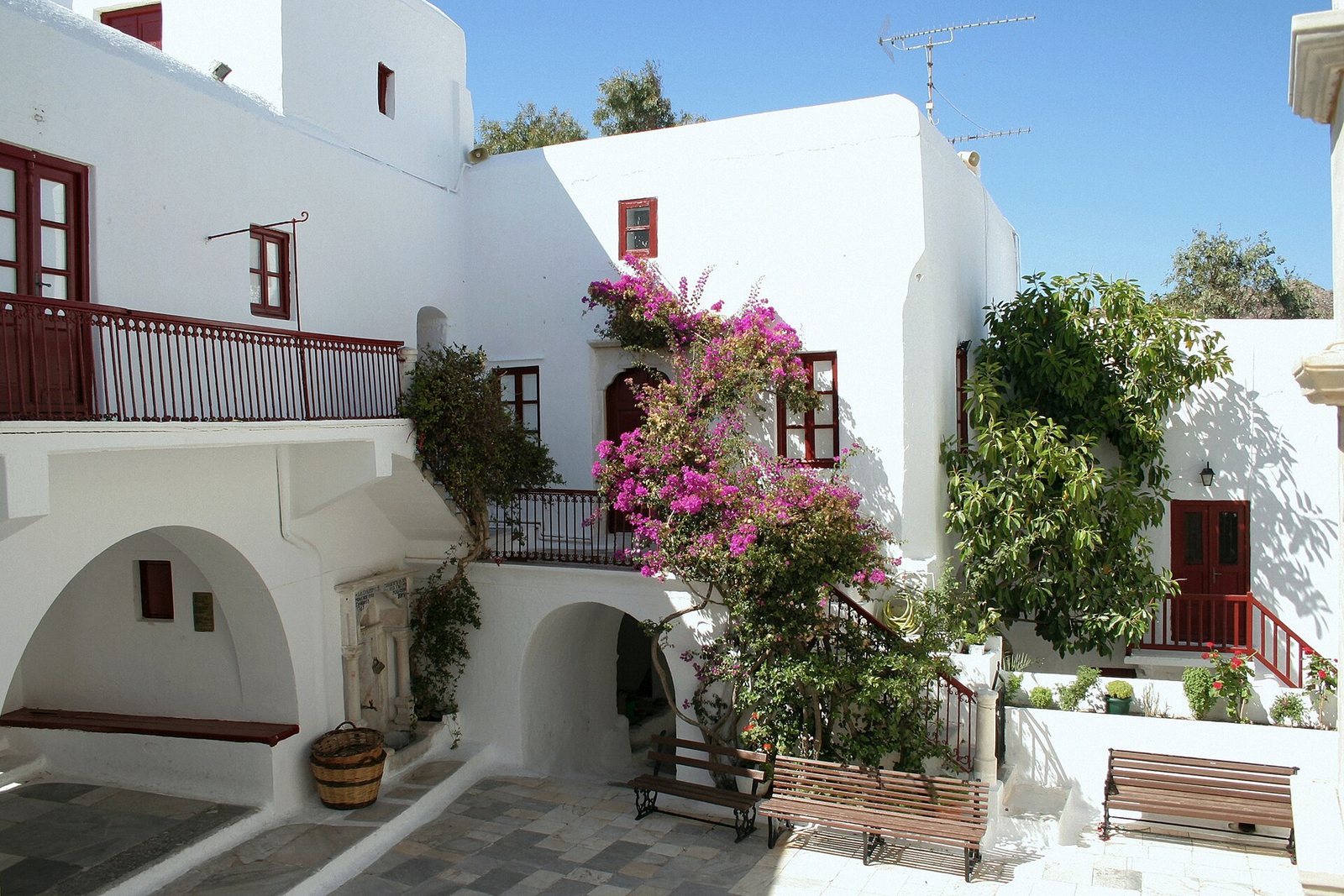
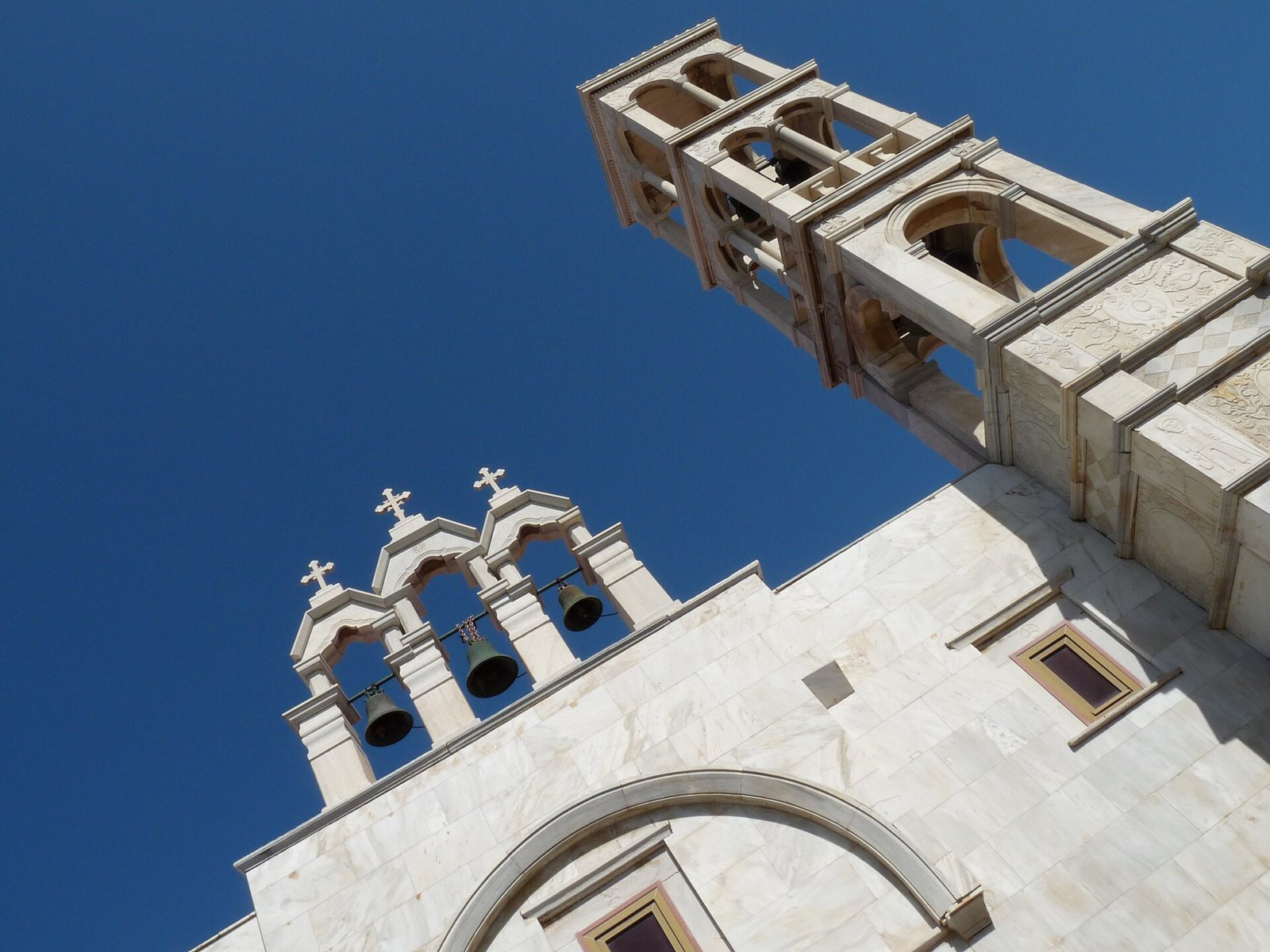
In Ano Mera, seven kilometers from Mykonos Town, the monastery includes a three-aisled, cross-shaped Byzantine church with a dome and a tall marble bell tower.
Principal church
Aisle dedications
The central aisle is dedicated to the Dormition of the Theotokos, the left aisle to the Nativity of the Theotokos, and the right aisle to Saint Ignatius the God-Bearer, also known as Ignatius of Antioch, an early Christian bishop and martyr.
Carved icon screen
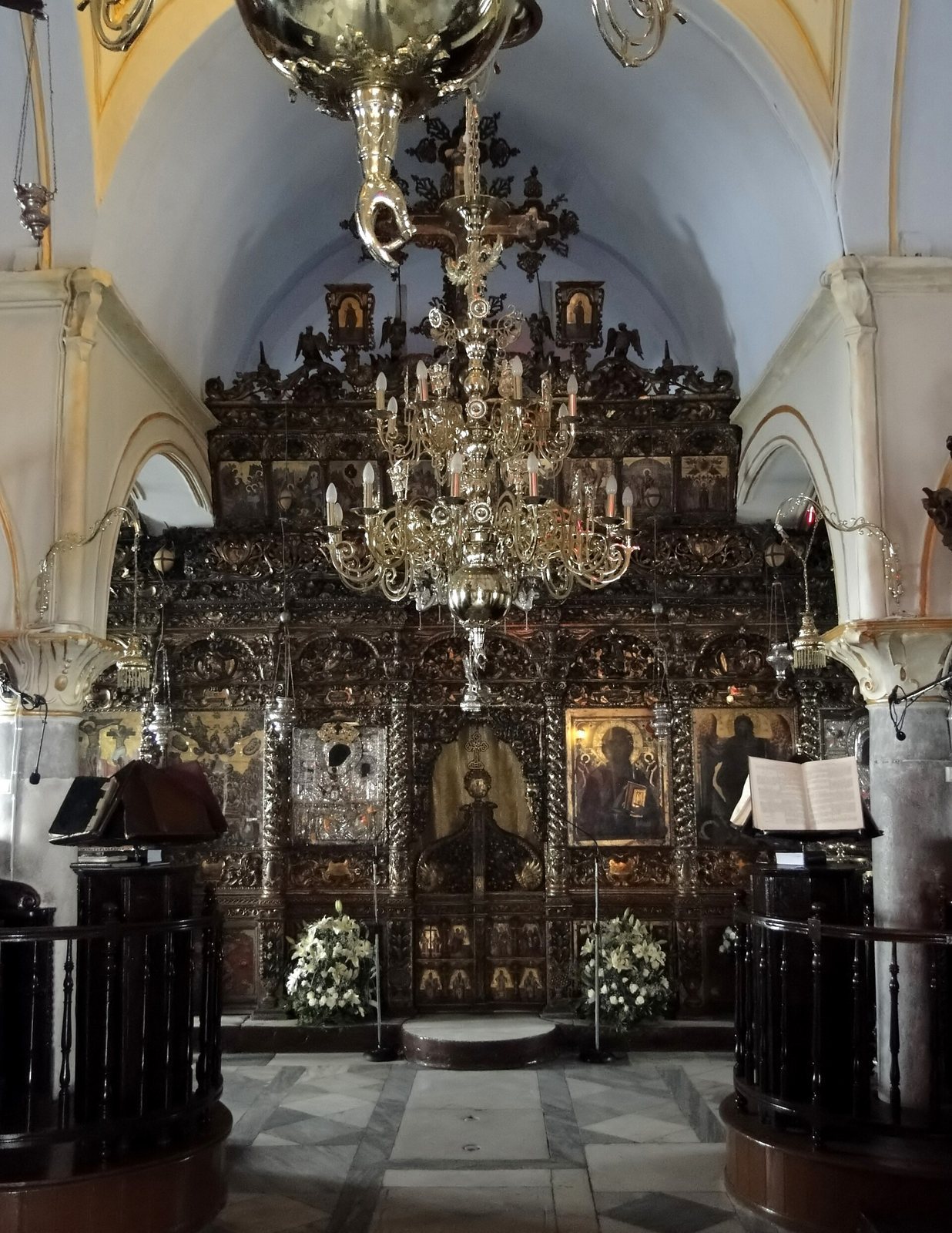
The church’s gilded, carved-wood iconostasis, a screen of icons separating the sanctuary from the main body of the church, spans all three aisles and measures 10.20 meters long. Its Baroque style, a European tradition known for elaborate ornament, was designed and made by Florentine artists in 1775. The icons on the screen were painted by Ioannis, an iconographer from Corfu.
Church museum
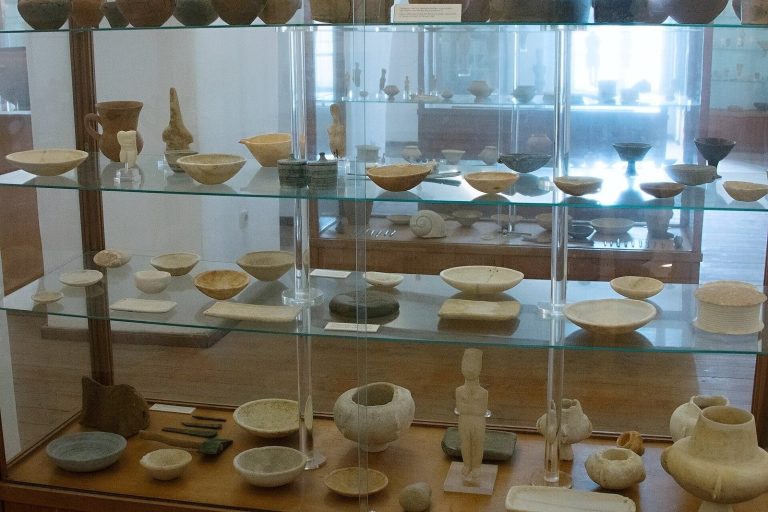
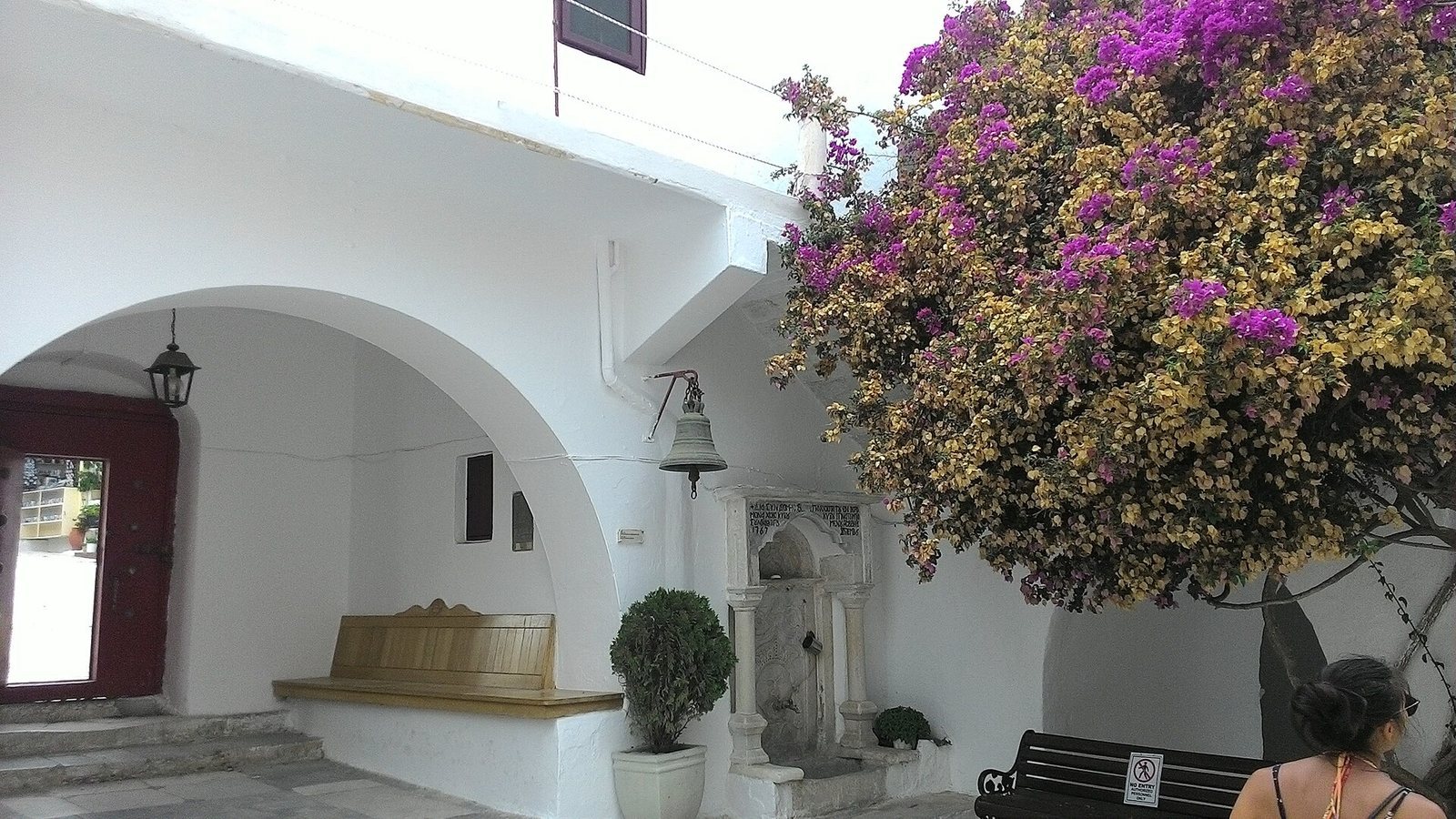
A museum in the monastery displays icons, gold-embroidered cloths used in liturgical burial rites, and the monastery’s first bells.