Agora of the Competaliasts: A Market and Commercial Center on Delos
Site at a Glance
- Rating
- 4.5
- Popularity
- Very Low
- Country
- Greece
- Primary era
- Classical
- Eras represented
- Classical
- Civilizations
- Ancient Greek
- Site type
- Civic
- Remains
- Forum
On this page7 sections
History
The Agora of the Competaliasts was an open public marketplace on Delos, Greece, and one of the island’s principal commercial centers. It was built around 150–125 BC and enlarged during the second century BC. A guild of free and freed people called the Hermaistai established the agora. Its better-known name came from a similar guild, the Kompetaliastai, and has a Latin root that may refer to merchants from the Italian peninsula.
After 167 BC, harbor development and land-reclamation work created the agora’s broad open square. In antiquity, the market lay between Delos’s sacred and commercial districts. The cult of the Lares Compitales, Roman guardian deities associated with crossroads, was practiced there. The cult came from Italy, and these deities served as patrons of a brotherhood of freedmen and enslaved people.
The agora’s remains form part of the archaeological site of Delos, a UNESCO World Heritage property, a designation for places judged to have outstanding cultural or natural importance.
Remains
Layout and paving
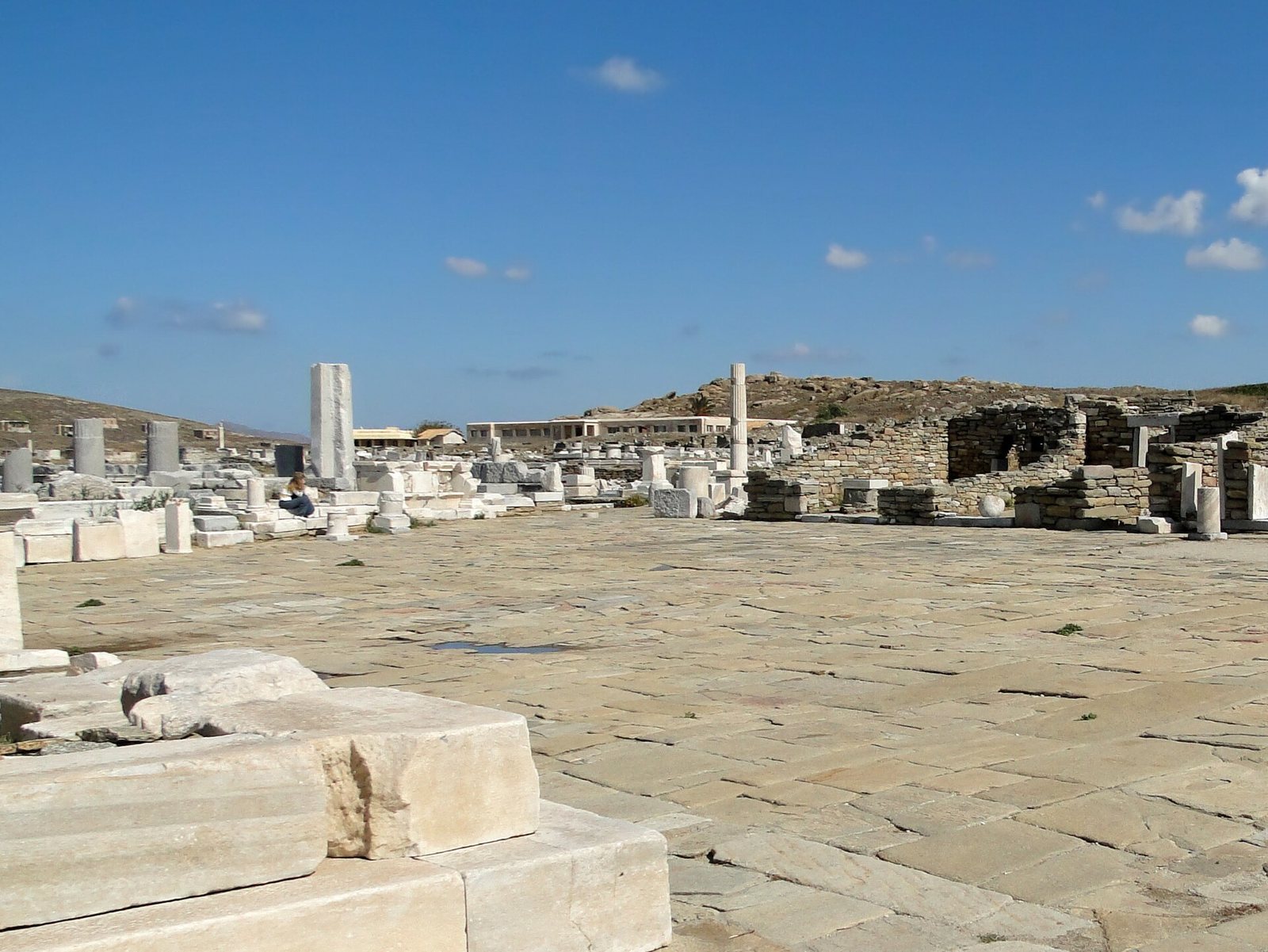
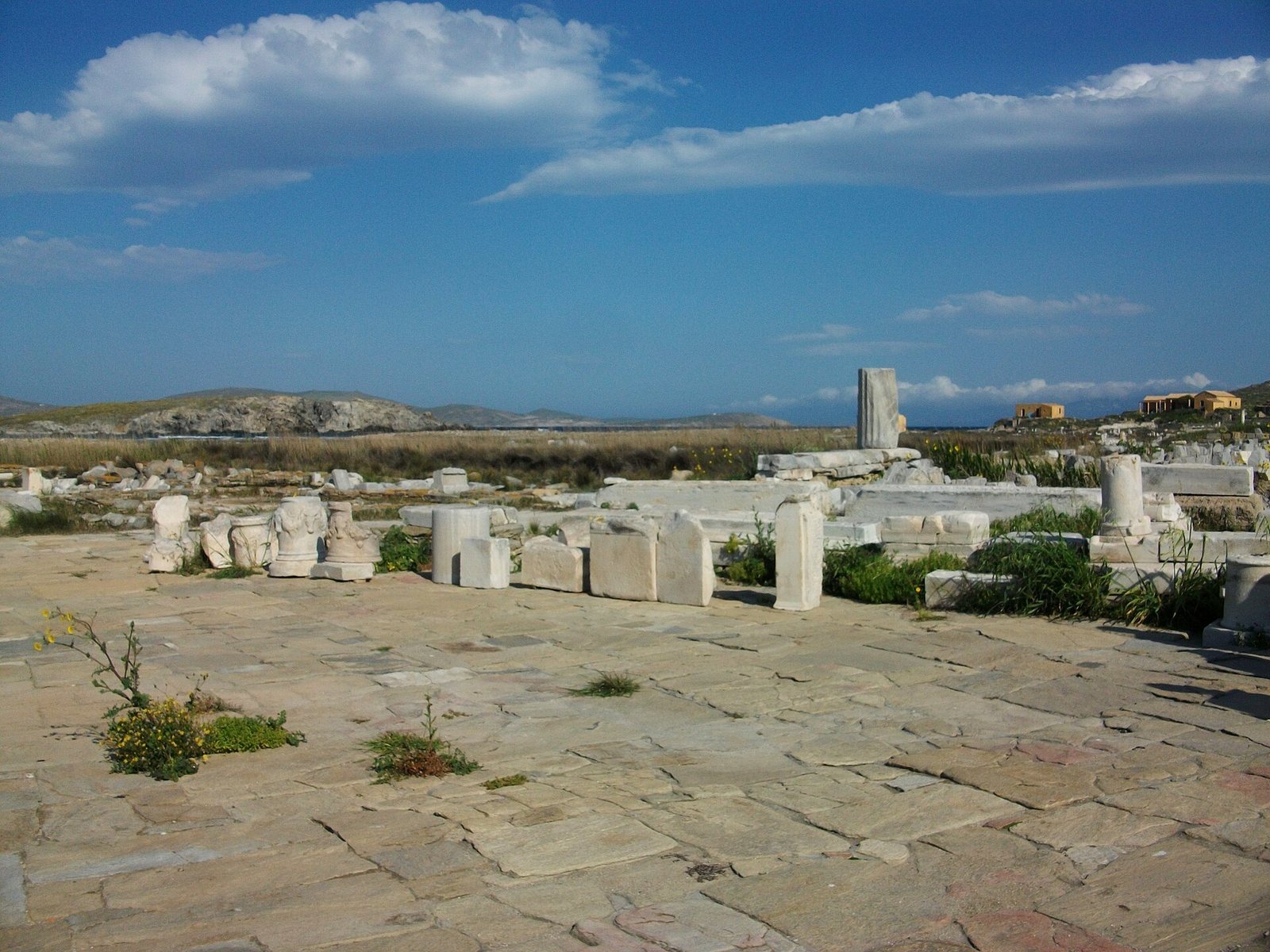
The agora occupied a broad paved square near Delos’s western shore, south of the sanctuary of Apollo and Artemis. It stood beside the Sacred Harbour and roughly between that harbor and the commercial harbor. Several streets met across the open space. The paving consists of gneiss, a metamorphic rock, and holes in the stones show where poles for market stalls were fitted.
Monuments and buildings
Central monuments
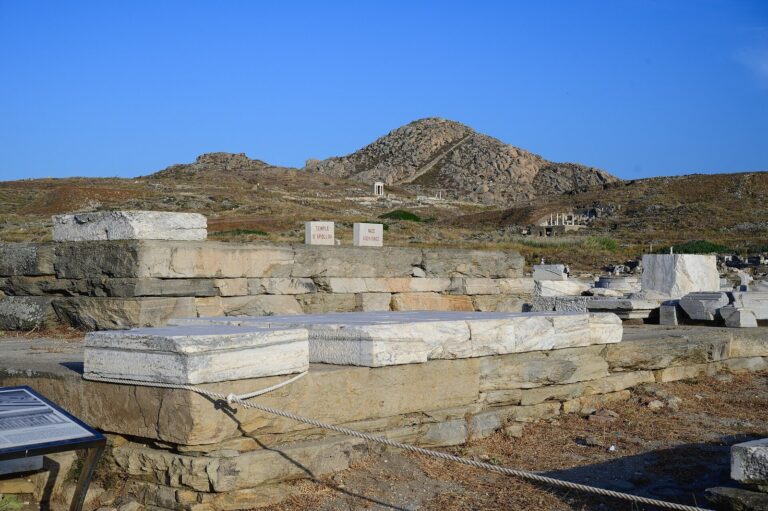
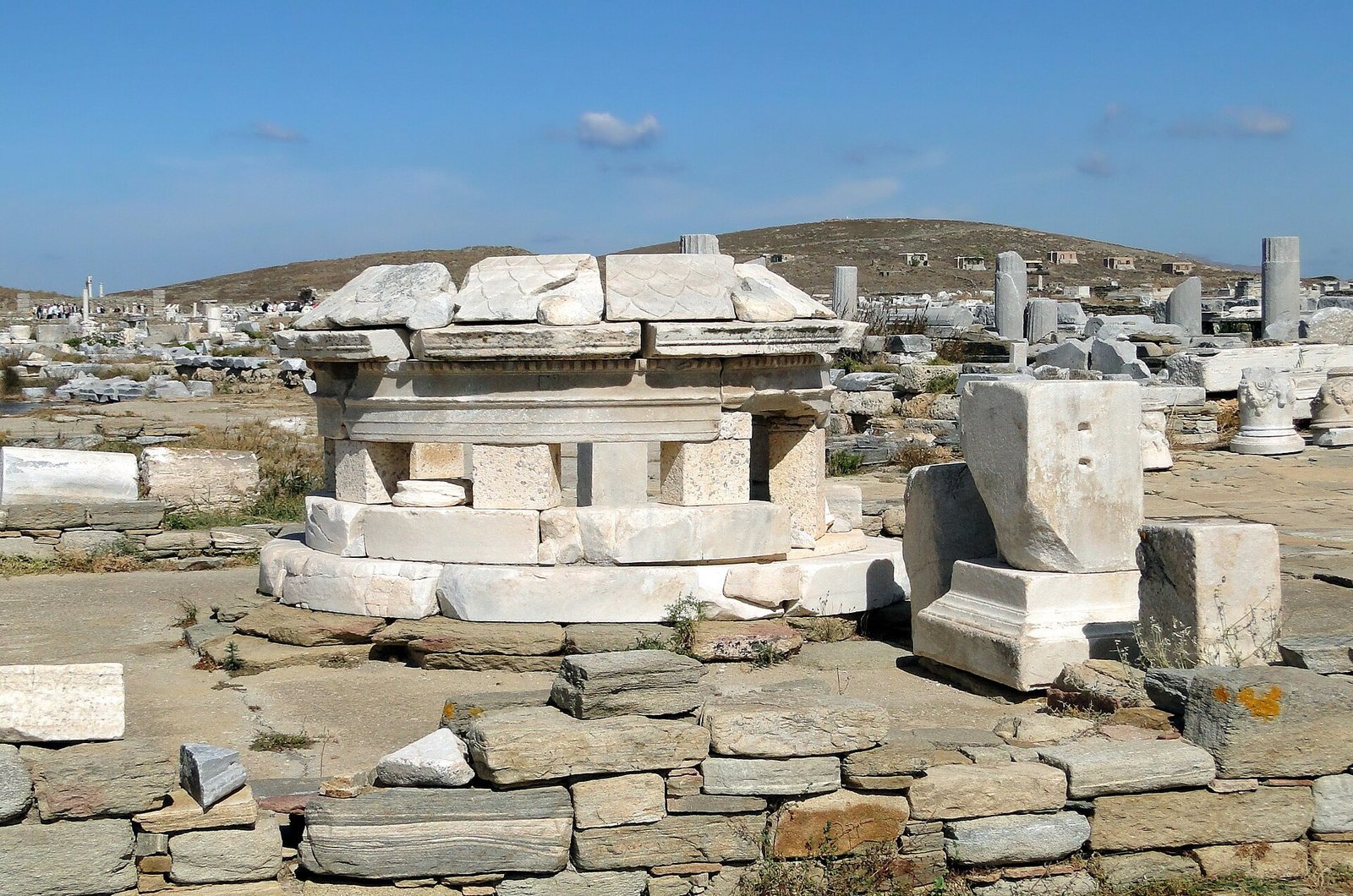
At the center are marble bases for a square monument and a round monument, both dedicated to Hermes, the Greek god associated with trade. Merchants, ship captains, and bankers erected numerous other monuments around them.
Northern buildings
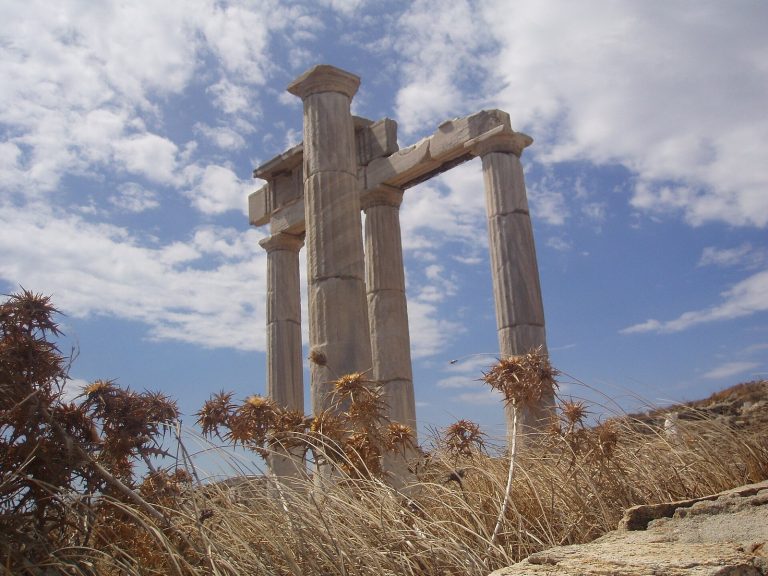
The northern part included the Portico of Philip, a roofed structure supported by columns, and two small temples dedicated to Hermes. The temples were built in the Ionic order, a Greek architectural style distinguished by scroll-shaped capitals.
Shops and guild sculptures
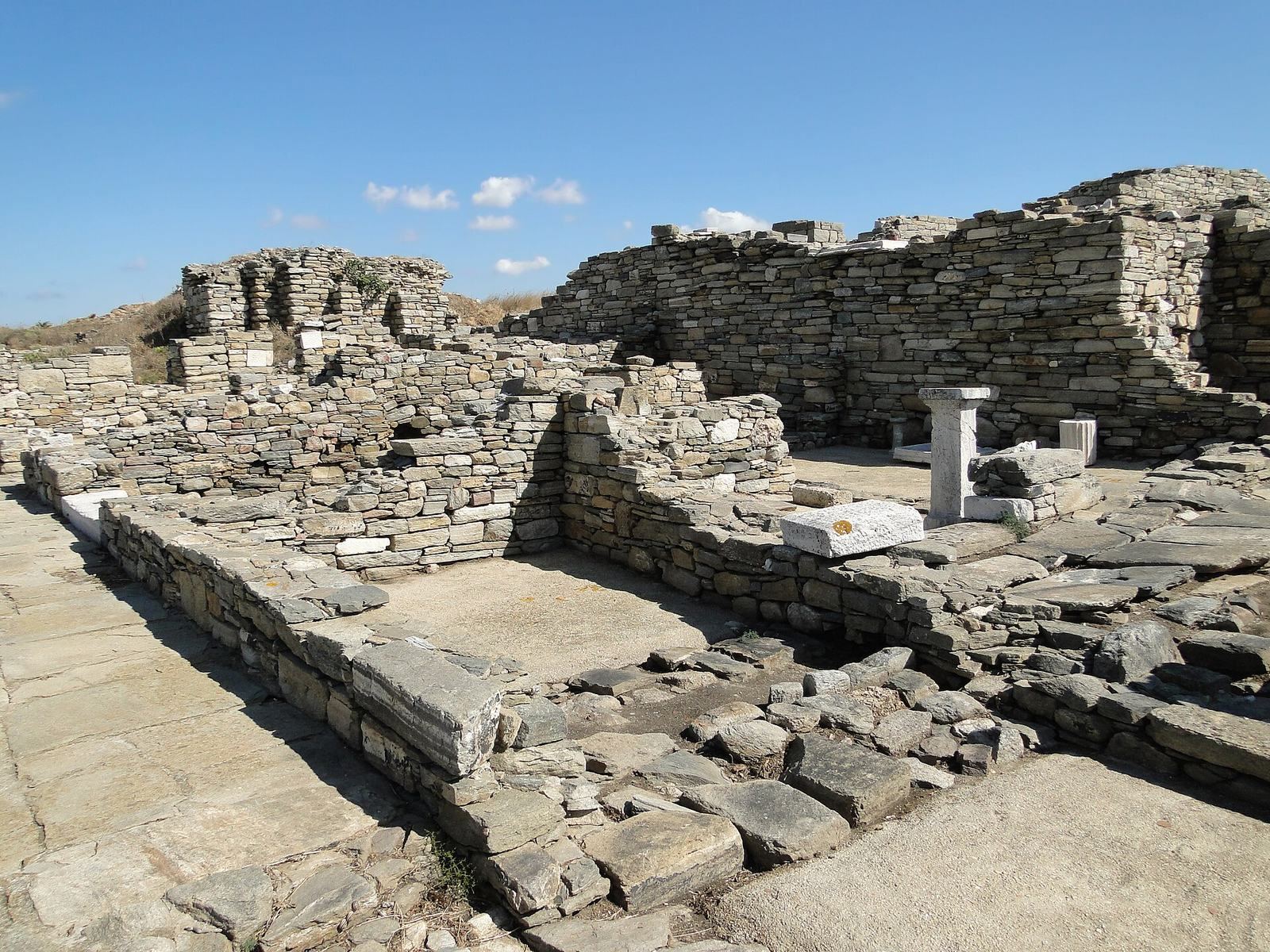
Remains of shops occupy the eastern and southern parts of the square, dating from Delos’s flourishing period as a Greek commercial center. Guilds representing different trades donated sculptures for the agora, including herms, sculpted pillars often bearing a head or bust. The Sacred Way led north toward the sanctuary of Apollo, associated with prophecy and music, and Artemis, associated with hunting and wilderness. The Theater Road ran south through the Theatre Quarter to the theater.