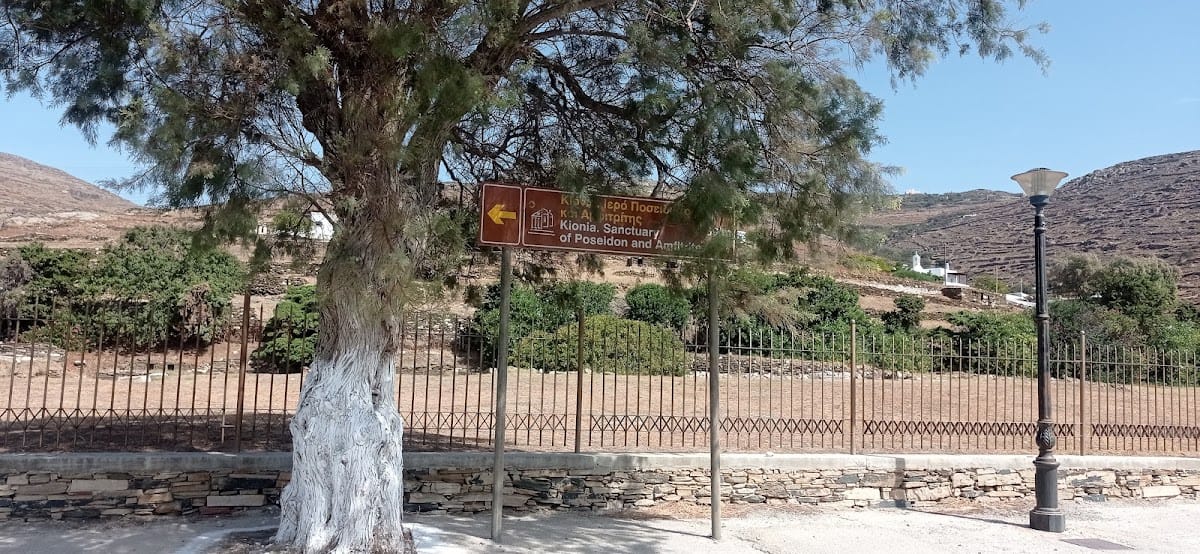
Archaeological Site Kionia Tinos: Sanctuary of Poseidon and Amphitrite
Site at a Glance
- Rating
- 4.1
- Popularity
- Very Low
- Country
- Greece
- Primary era
- Classical
- Eras represented
- Classical
- Civilizations
- Ancient Greek
- Site type
- Religious
- Remains
- Sanctuary
On this page8 sections
History
The Archaeological Site Kionia Tinos in Greece preserves the remains of an ancient Greek sanctuary dedicated to Poseidon and Amphitrite, near the ancient town of Tinos and the modern settlement of Kionia. Its larger temple was built in the Doric style during the 4th century BC, and the sanctuary became one of the most important cult centers of Poseidon in the ancient Greek world. It was also the only known temple dedicated to him in the Cyclades.
Foundation and Hellenistic development
The sanctuary began with a temple in a sacred grove. During the 4th century BC, this building was replaced by a larger Doric temple, after which the complex underwent further rebuilding between the 3rd and 1st centuries BC. Its expansion may have formed part of a wider building program carried out while the Cyclades were under Macedonian control.
Poseidon was worshipped at Kionia both as a sea god and as a healer. Amphitrite, his divine consort and a sea goddess, was associated with fertility and was believed to assist women who could not bear children. These beliefs gave the sanctuary an important healing role, and its priests may also have acted as physicians.
Regional religious center
The sanctuary flourished during the 2nd and 1st centuries BC, attracting kings, generals, travelers, and other pilgrims. Those journeying to Delos stopped at Tinos for ritual purification before continuing to the sacred island. Around 100 BC, the sanctuary appears to have functioned as a religious center for the island region under Rhodian influence.
Annual Poseidonian festivals took place in January and February. Their program combined religious ceremonies and sacrifices with athletic events and theatrical competitions. The Greek geographer Strabo later described the sanctuary as standing in a grove outside the city and praised its scale and connection with Amphitrite.
Decline and archaeological investigation
The sanctuary began to decline from the middle of the 1st century BC. It was abandoned around AD 200 and destroyed around AD 300, at a time when Christianity was becoming established in the region. Christians dismantled the ancient temple and reused its materials, while later Venetian and Turkish construction on Tinos continued this process.
Systematic excavations took place in 1902 and 1903 under H. Demoulin, followed by further work by P. Graindor in 1905. These investigations exposed parts of the destroyed sanctuary and its associated installations, allowing the layout and religious functions of the complex to be studied.
Remains
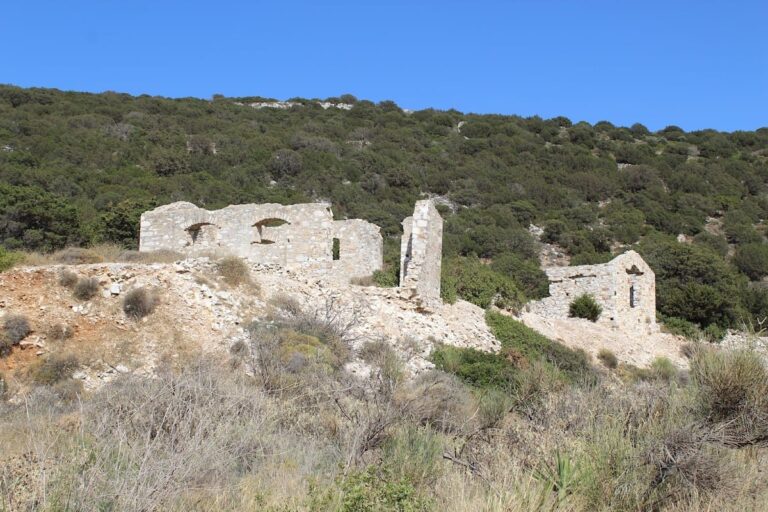
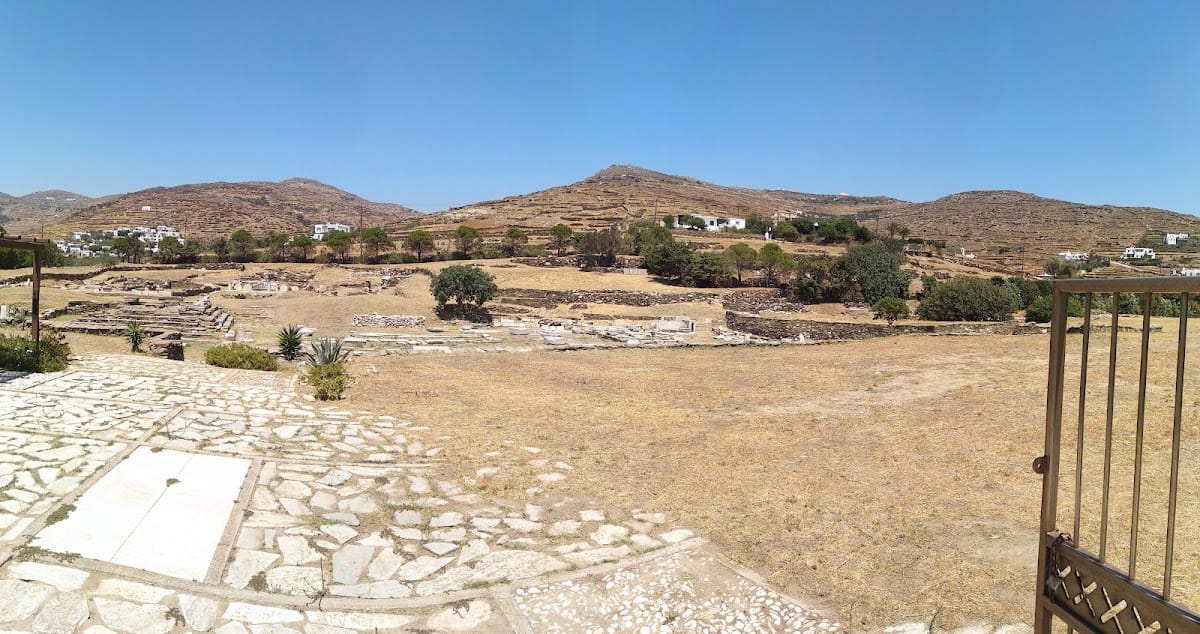
The sanctuary stood in a grove opposite the beach at Kionia, outside the ancient town. The surviving site consists mainly of excavated foundations and limited architectural remains. Much of the original building material was removed and incorporated into later churches and other buildings on Tinos.
Temple and altar
The earlier 4th-century-BC temple had a rectangular plan with two interior spaces. Its pronaos, or entrance porch, led to the naos, the principal inner chamber where the cult image was kept. A later and larger temple was constructed in the Doric style from local marble and gneiss. It held cult statues of Poseidon and Amphitrite attributed to the Athenian sculptor Telesinos, with decoration that included tridents, sea creatures, and dolphins.
A large altar occupied part of the sanctuary and covered approximately 100 square metres. Its sculptural decoration was attributed to the Ephesian artist Agasias. The altar formed part of the complex’s ceremonial area, where sacrifices connected the worship of Poseidon and Amphitrite with the sanctuary’s wider ritual life.
Ritual and service buildings
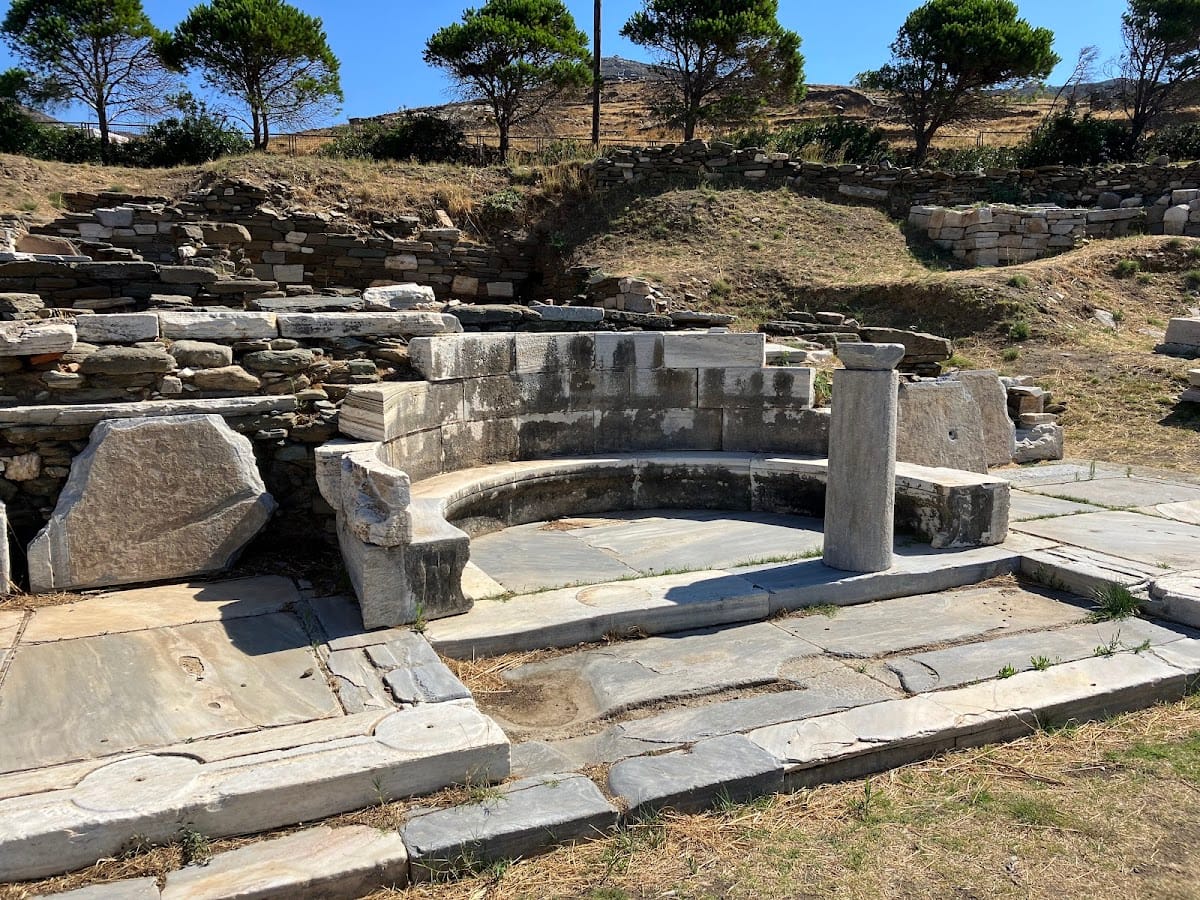
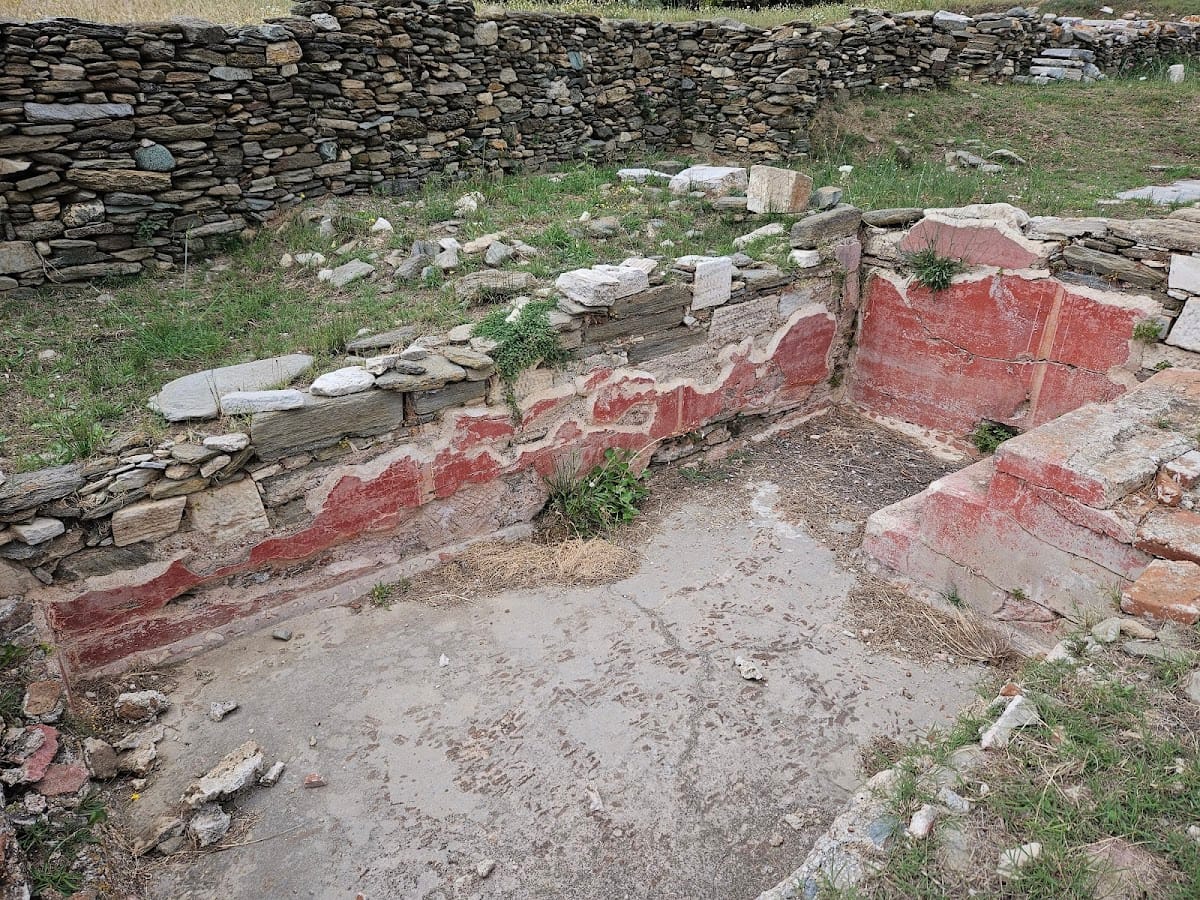
The complex included a hestiatorion, a space used for ritual banquets, as well as two bath complexes. A monumental stoa, meaning a covered colonnaded gallery, provided another major architectural element. The sanctuary also contained the votive Exedra of Nausion, a recessed structure or seat associated with a dedication.
A fountain or water-supply structure dated to approximately 300 BC served the sanctuary’s water needs. The site also had a sundial designed by Andronikos of Cyrrhus, an ancient Greek astronomer and architect known for scientific instruments. Together with the spring, baths, mosaics, statues, and other excavated remains, these features show the range of religious and practical installations within the sanctuary.
Excavated objects
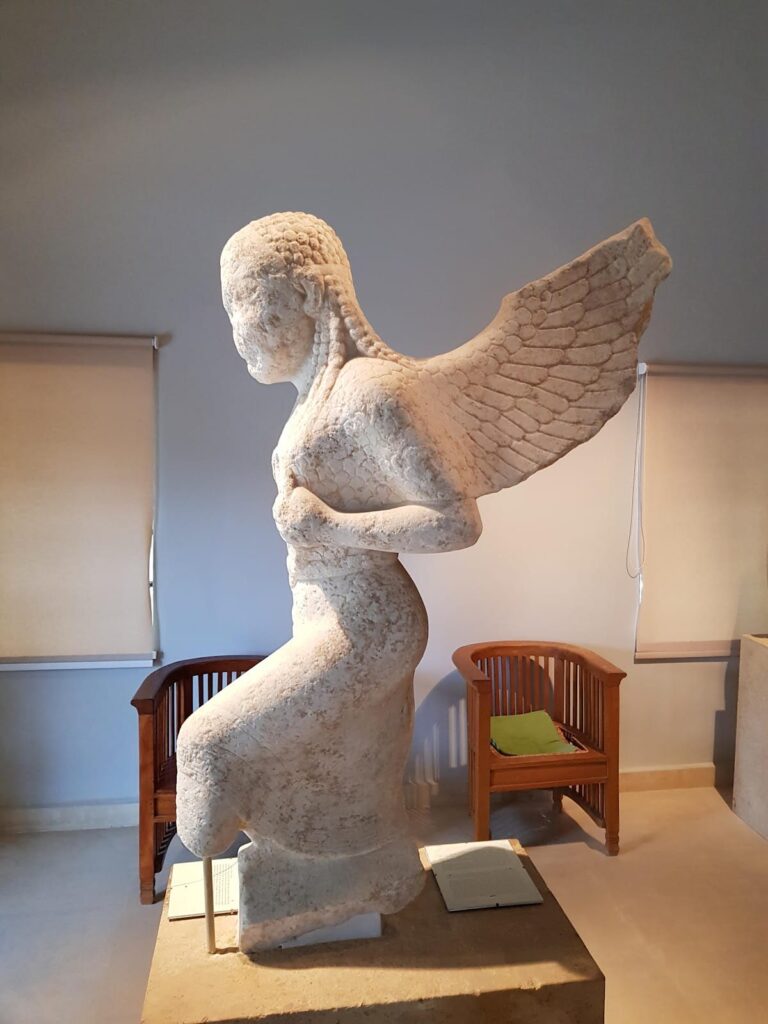
The excavations brought to light architectural fragments and associated objects from the sanctuary, including statues, mosaics, the sundial, and elements connected with its water installations. The excavated finds are preserved in the Archaeological Museum of Tinos, while the site itself presents the foundations and surviving remains of the ancient complex.