Koukounaries: A Mycenaean Acropolis on Paros
Site at a Glance
- Popularity
- Very Low
- Country
- Greece
- Primary era
- Bronze Age
- Eras represented
- Stone Age, Bronze Age, Iron Age
- Civilizations
- Ancient Greek, Mycenaean
- Site type
- City
On this page12 sections
History
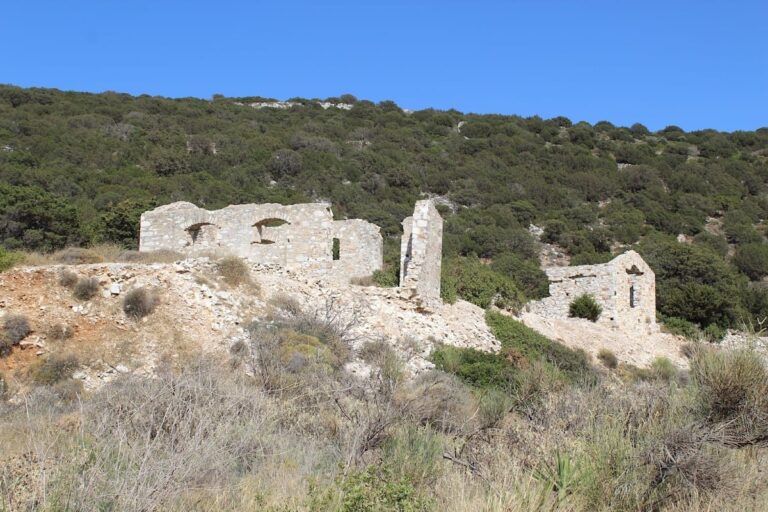
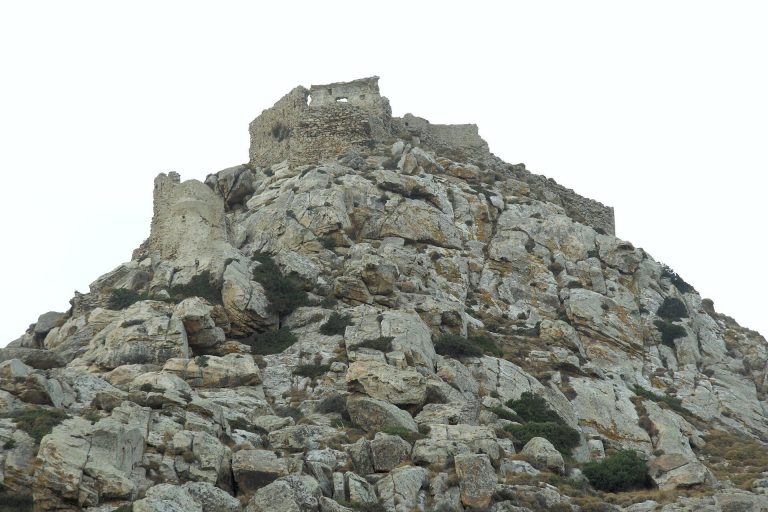
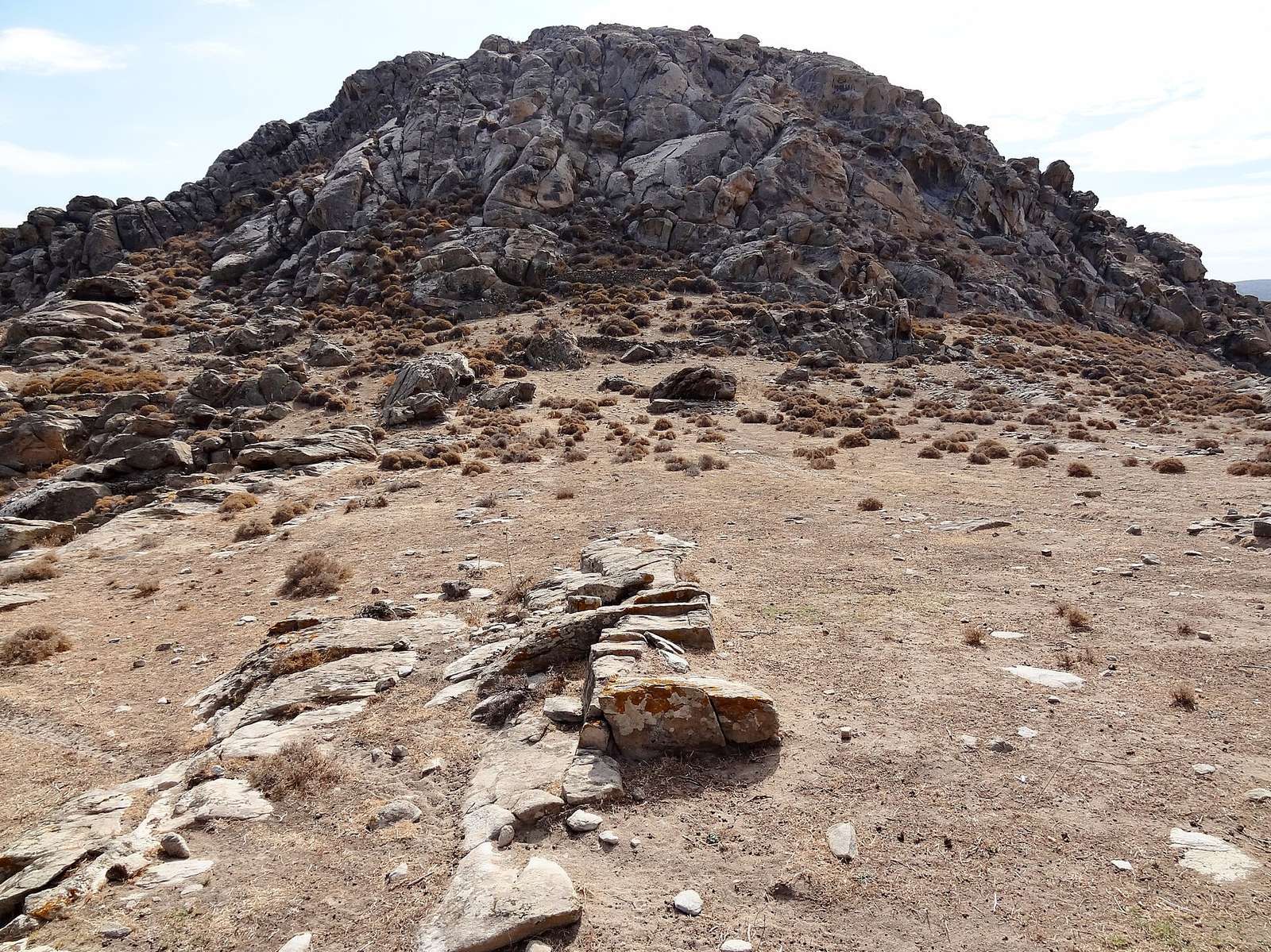
Koukounaries is an ancient acropolis, a defensible high area of a settlement, on a granite hill above Naoussa Bay in northern Paros, Greece. Mycenaeans reoccupied and fortified it in the early 12th century BCE. Its history spans several distinct periods of settlement, separated by long gaps.
Neolithic and Early Cycladic occupation
People lived at Koukounaries from the fifth millennium BCE, though not without interruptions. A late and final Neolithic layer beneath later remains on the lower plateau indicates early activity. Archaeologist Dimitris Schilardi placed the settlement’s beginnings near the transition from the Final Neolithic to the Early Bronze Age. Early Cycladic I and II, phases of the prehistoric cultures of the Cyclades, are represented on both the upper and lower plateaus during the third millennium BCE. The site was then abandoned for roughly 12 centuries, between Early Cycladic II and Late Helladic IIIC, a late phase of the Mycenaean period.
Mycenaean return and destruction
The hill was fortified and occupied again after the collapse of the Mycenaean palace system, the major administrative and political centers of Bronze Age Greece. Some of its residents may have been refugees from the mainland. A fire destroyed the settlement and the summit defenses around 1150 BCE. Schilardi interpreted the burning and deaths as the result of an assault on the fortification. The destruction came amid turmoil in the Aegean at the end of the Bronze Age, including conflicts associated with the Sea Peoples, a modern collective name for groups linked to upheavals across the eastern Mediterranean. Archaeologist Vassos Karageorghis suggested that a mainland Mycenaean ruler might have sought shelter at Koukounaries and that rivals or pirates attacked the palatial building.
Resettlement and early Greek periods
Koukounaries was settled again during Late Helladic IIIC, and a new defensive wall was built. Occupation continued through the Submycenaean, Protogeometric, Geometric, and Archaic periods, successive stages of early Greek history. Protogeometric finds have been interpreted as signs of links with Athens.
An earthquake damaged the site in the late eighth century BCE. A small town later developed on the hill, with a temple to Athena, the Greek goddess associated with wisdom, warfare, and crafts. Around the time the sanctuary was established, two settlements also developed on the shore of Naoussa Bay. Their agricultural hinterlands and seaward access offered advantages over the hilltop location. By about 680 BCE, Parian connections extended to Thasos, where there was a Parian settlement, and to Thrace on the opposite mainland. The hill settlement was abandoned by the middle of the seventh century BCE, while the temple continued in use until the third century BCE.
Excavation and preservation
The Archaeological Society of Athens, a Greek research institution, carried out excavations at Koukounaries from 1974 to 1992 under Schilardi’s direction. Preservation work on the ruins took place from 1976 to 1992.
Remains
Hilltop layout and setting
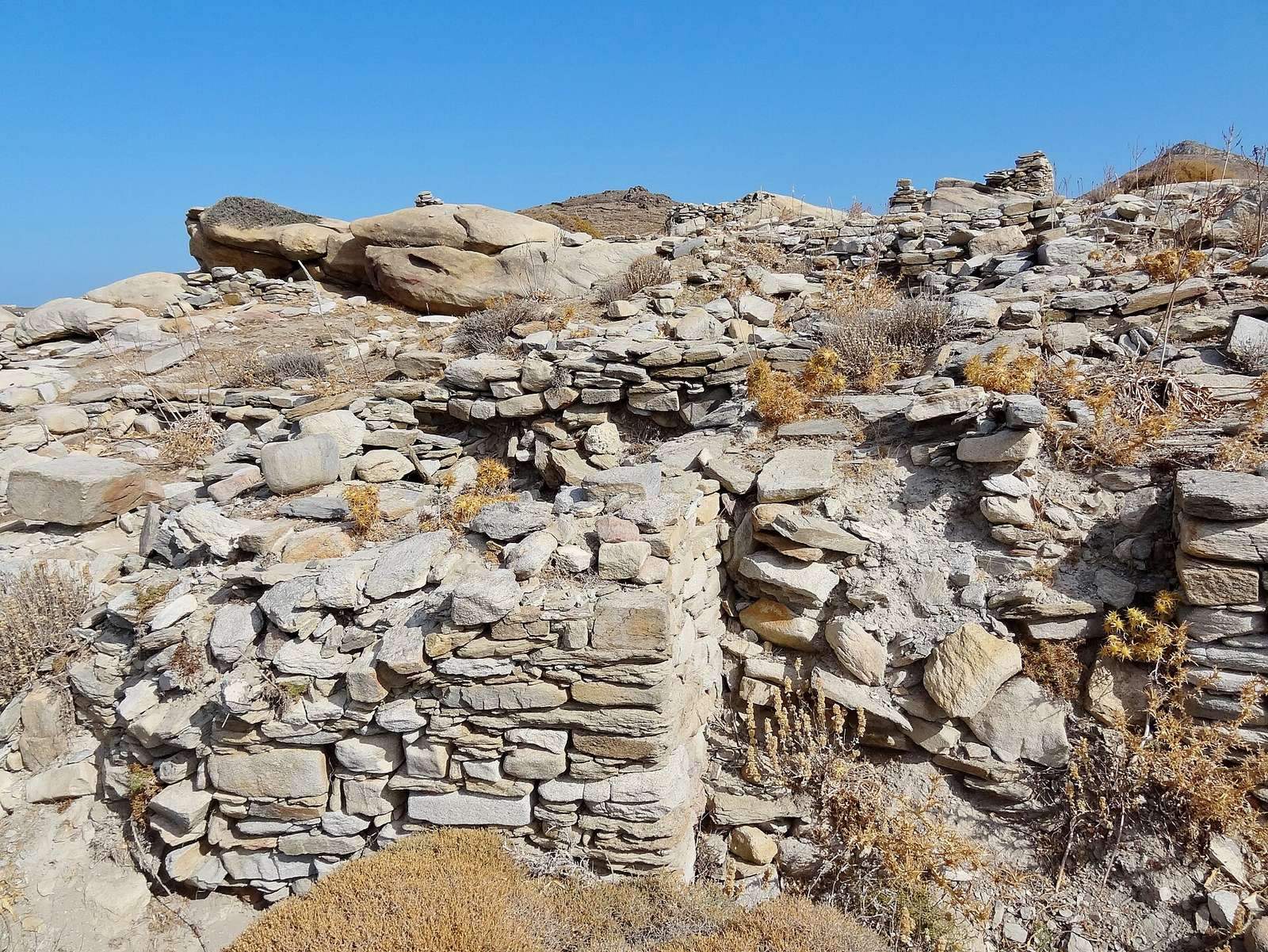
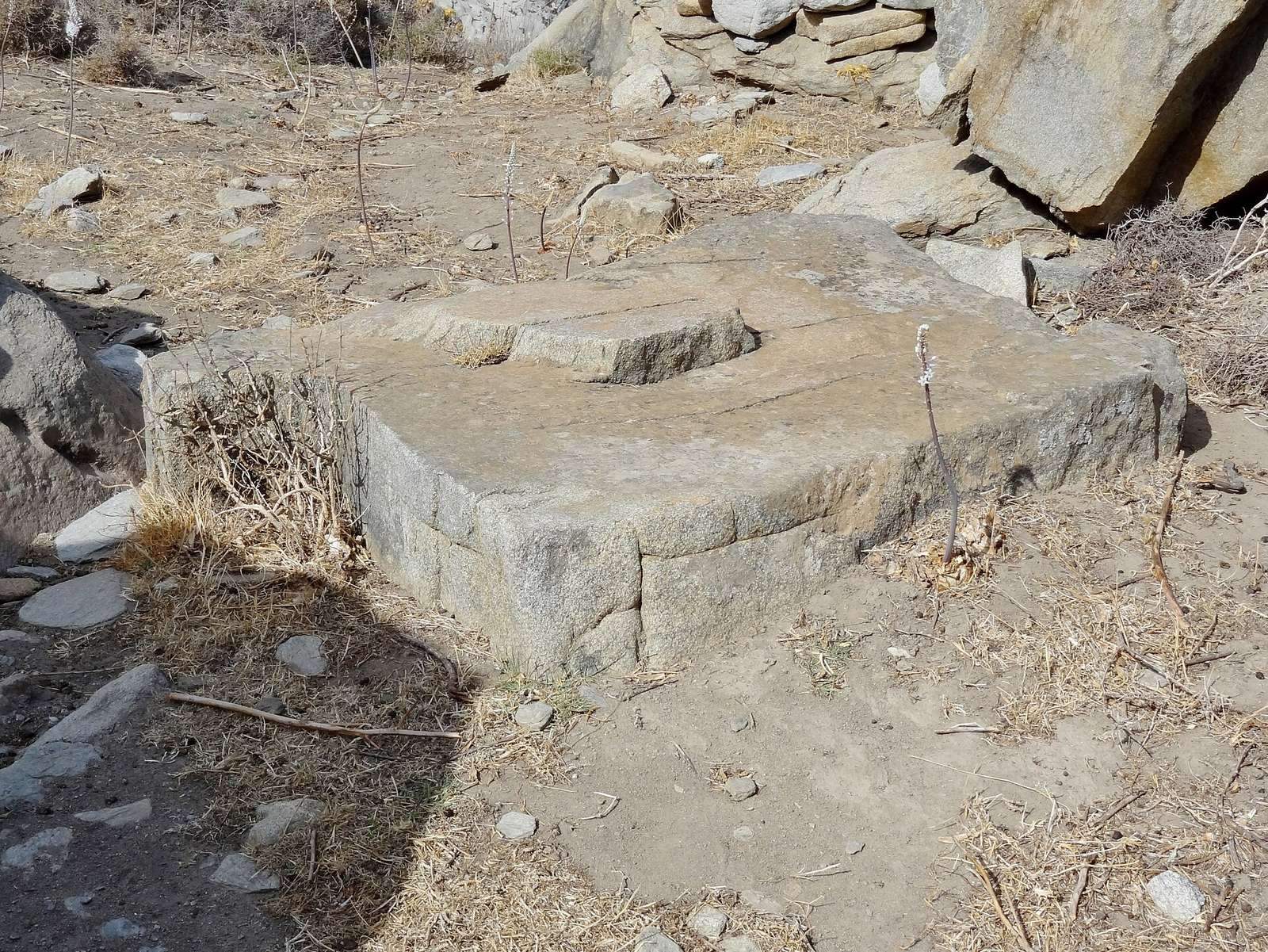
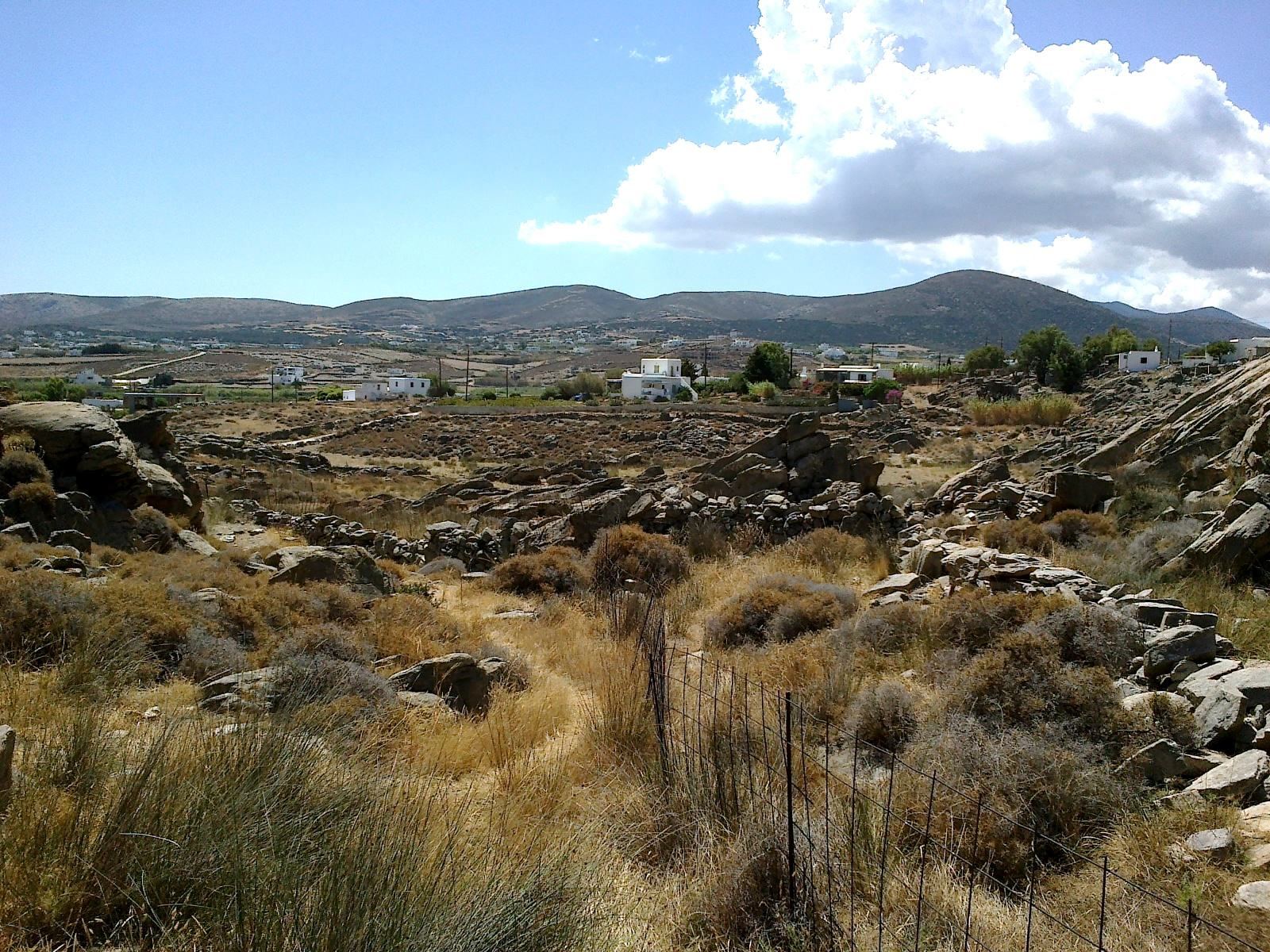
The site covers the summit of a 75-metre grey-granite hill on the southwestern side of Naoussa Bay. Remains extend across three narrow terraces: a lower eastern plateau at 40 to 50 metres, a middle southern one at 60 to 65 metres, and an upper plateau at 75 metres. Retaining walls reinforced these natural surfaces. Erosion has cut the granite, and access to the summit is through openings on its northern and southern sides. The hill overlooks the hinterland and the sea toward Naxos. South of it, a small river runs from the Kamares plain through a delta to the bay. The plain is now cultivated for wheat, legumes, and fruit, and was probably marshland in antiquity.
Early Cycladic remains
Finds and figurines
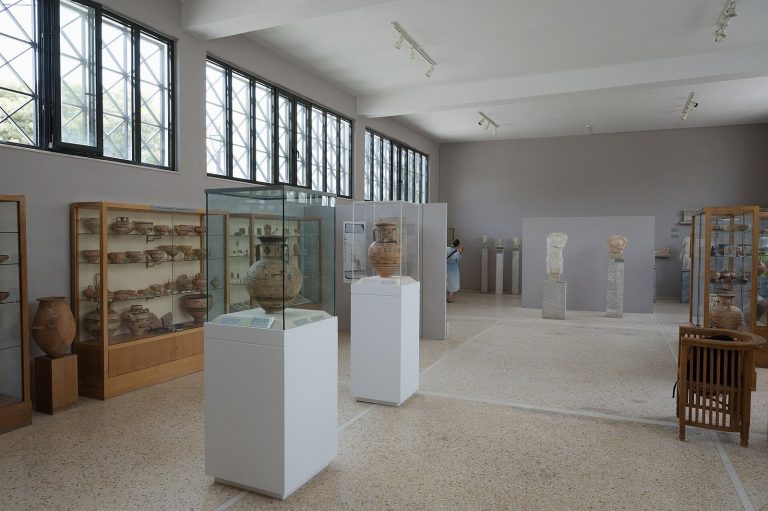
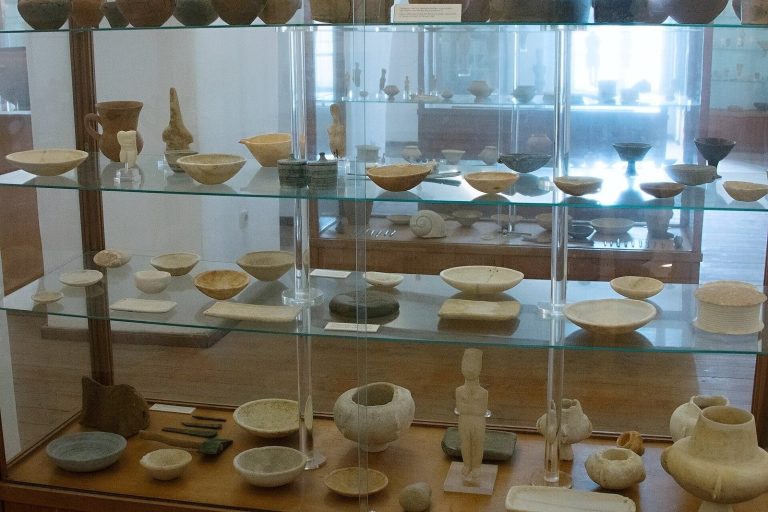
Early Cycladic remains include incised pottery, abundant obsidian, a natural volcanic glass, fragments of marble and rock crystal, seashells, and bones of sheep, goats, and pigs. Finds also include part of an incised pyxis, a small lidded container, and a terracotta head representing either a bull or a dog. A marble pendant shaped as a female figure with pronounced buttocks is comparable to the Fat Lady of Saliagos and is held at the Archaeological Museum of Paros in Parikia. A Cycladic figurine was found in 1977, and further heads and lower parts of figures came to light in 1982 and 1983.
Two-room building
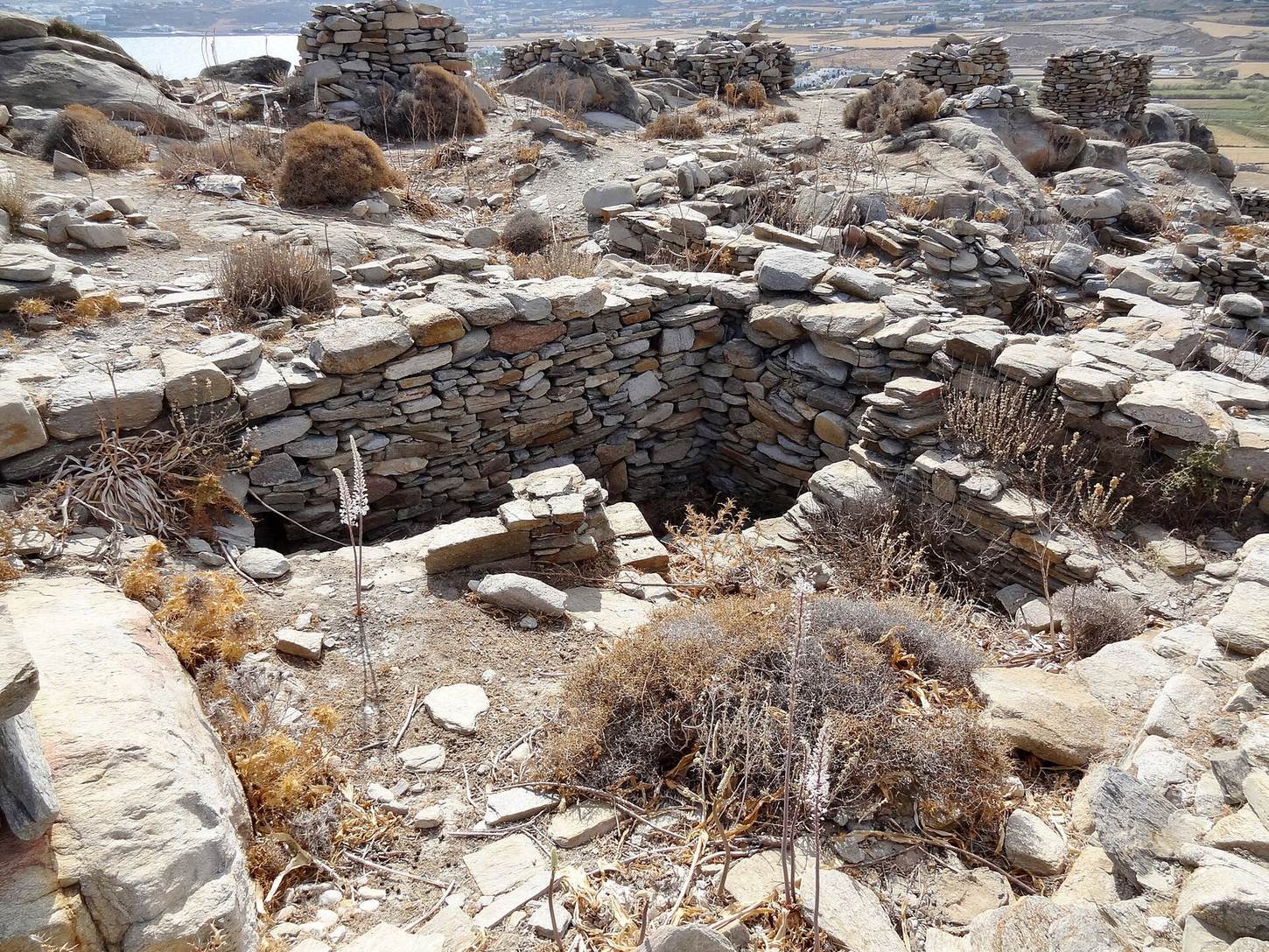
At the northeastern corner of the upper plateau, beneath Mycenaean walls, excavators identified an Early Cycladic building in 1991. Its trapezoidal plan contained two rooms. Slab-like stones formed the walls, and sea pebbles covered the floors.
Mycenaean summit building
A large building on the summit, identified by Schilardi as a palace, had a southern facade of Cyclopean masonry, monumental construction using large, roughly fitted blocks. He interpreted one room as a megaron, a principal hall in Mycenaean palatial architecture. Fragments of a clay bathtub suggested a bathroom on the upper floor, while other rooms served as storerooms. Associated finds include pottery, storage vessels, weapons, tools, violin-bow-shaped brooches, part of an ivory furnishing, rock crystal, beads, buttons, spindle whorls (weighted tools for spinning fibre into yarn), engraved gems, and a bronze horse. Other objects were made of steatite, or soapstone, ivory, and copper. Fire-damaged remains included charred human remains, among them children, as well as cattle, sheep, and horses. A woman was buried in the building’s cellar. Schilardi compared the building and its finds with the Mycenaean settlement at Maa-Palaeokastro on Cyprus’s western coast, and its hilltop position with Pyla-Kokkinokremmos in southeastern Cyprus.
Later settlement remains
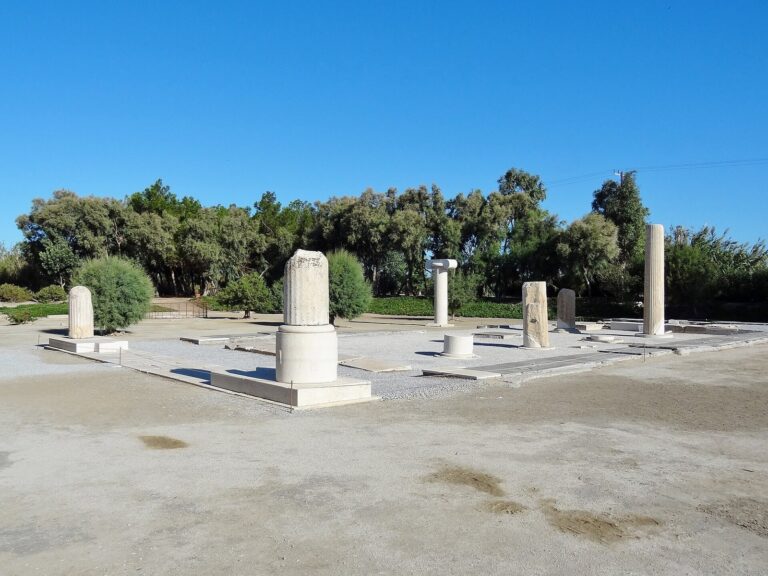
Southeast of the middle plateau, a temple dedicated to Athena dates to around 700 BCE. Other remains attributed to the later settlement include an agora, a public civic space used for assembly and commerce, and a building interpreted as a possible place for symposia, formal social gatherings centered on drinking and conversation.