Trinity Bridge: A Medieval Three-Way Stone Bridge in Crowland
Site at a Glance
- Rating
- 4.8
- Popularity
- Medium
- Country
- United Kingdom
- Primary era
- Medieval
- Eras represented
- Medieval
- Civilizations
- English
- Site type
- Infrastructure
- Remains
- Bridge
On this page8 sections
History
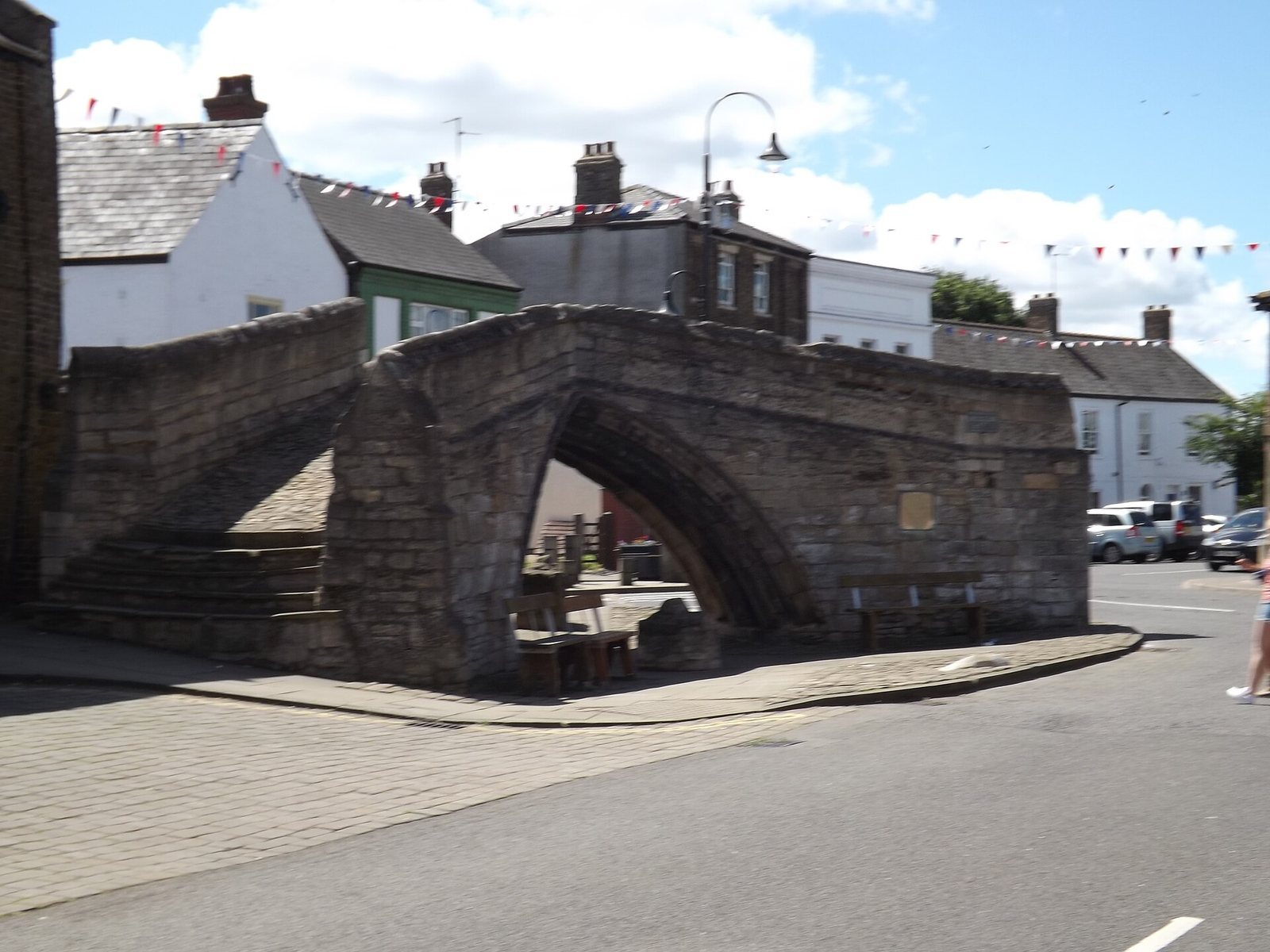
Trinity Bridge is a medieval stone bridge in Crowland, Lincolnshire, United Kingdom. Built between 1360 and 1390 by monks of nearby Crowland Abbey, it provided a single crossing where the River Welland divided into two channels.
Early bridge references
A bridge at Crowland is mentioned in 716, during the reign of Æthelbald, an eighth-century king of Mercia. Another reference appears in a charter attributed to Eadred, a tenth-century English king, but that charter is spurious and cannot be treated as reliable evidence.
The medieval bridge
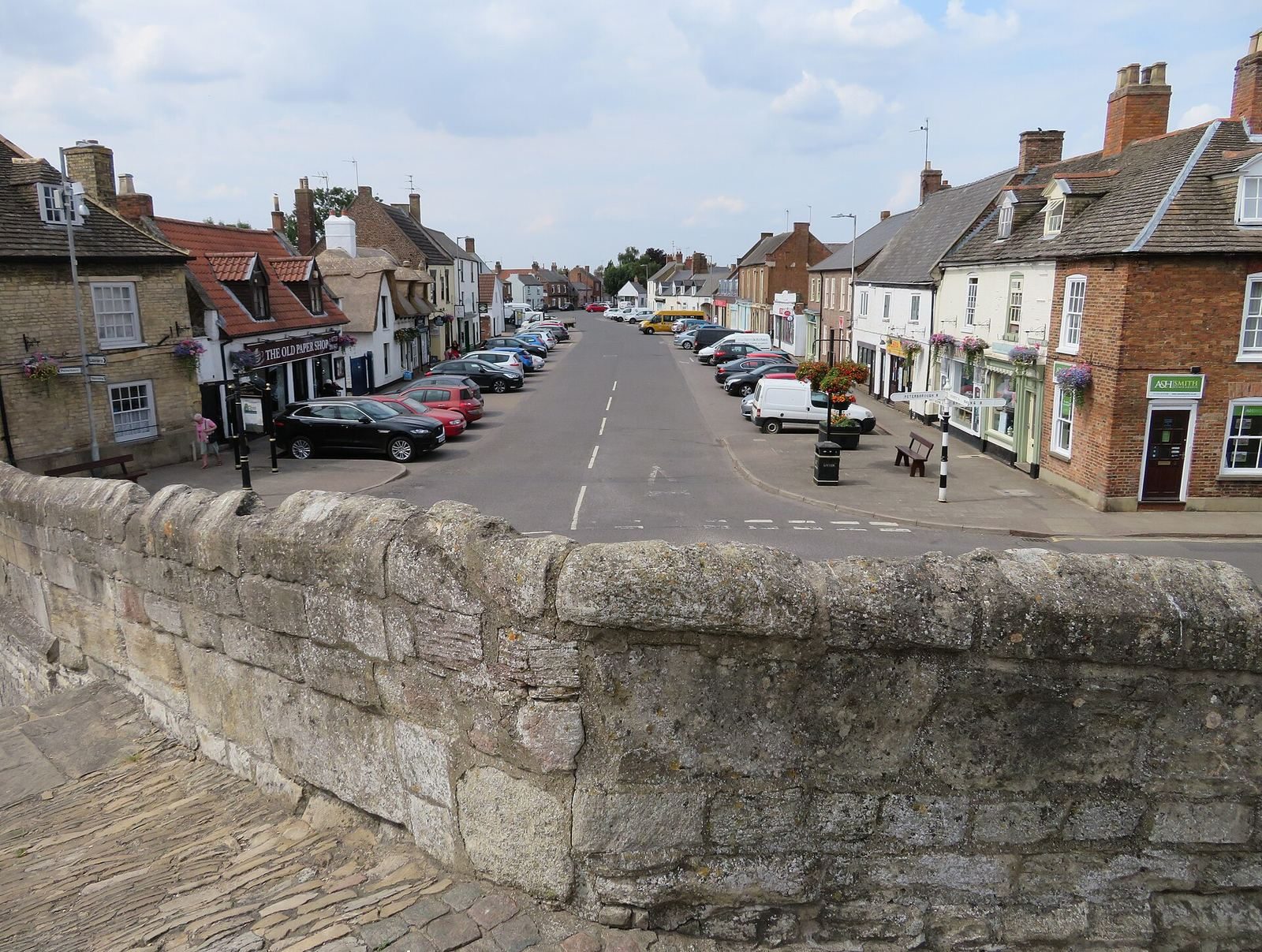
The stone bridge replaced earlier wooden crossings. By spanning the point where the Welland branched, it avoided the need for three separate bridges. Trade routes from Peterborough, Stamford and Spalding converged at Crowland.
Changed waterways and modern care
In the mid-17th century, the Welland and its branching channel were rerouted, ending the bridge’s original function over water. It continues to serve as a pedestrian route and local landmark. The bridge is a scheduled monument, a nationally protected historic site, and a Grade I listed structure, the highest listing category in England. Repairs in 2002–2003 addressed its structural stability.
Remains
Three-way stone structure
Arches and stairways
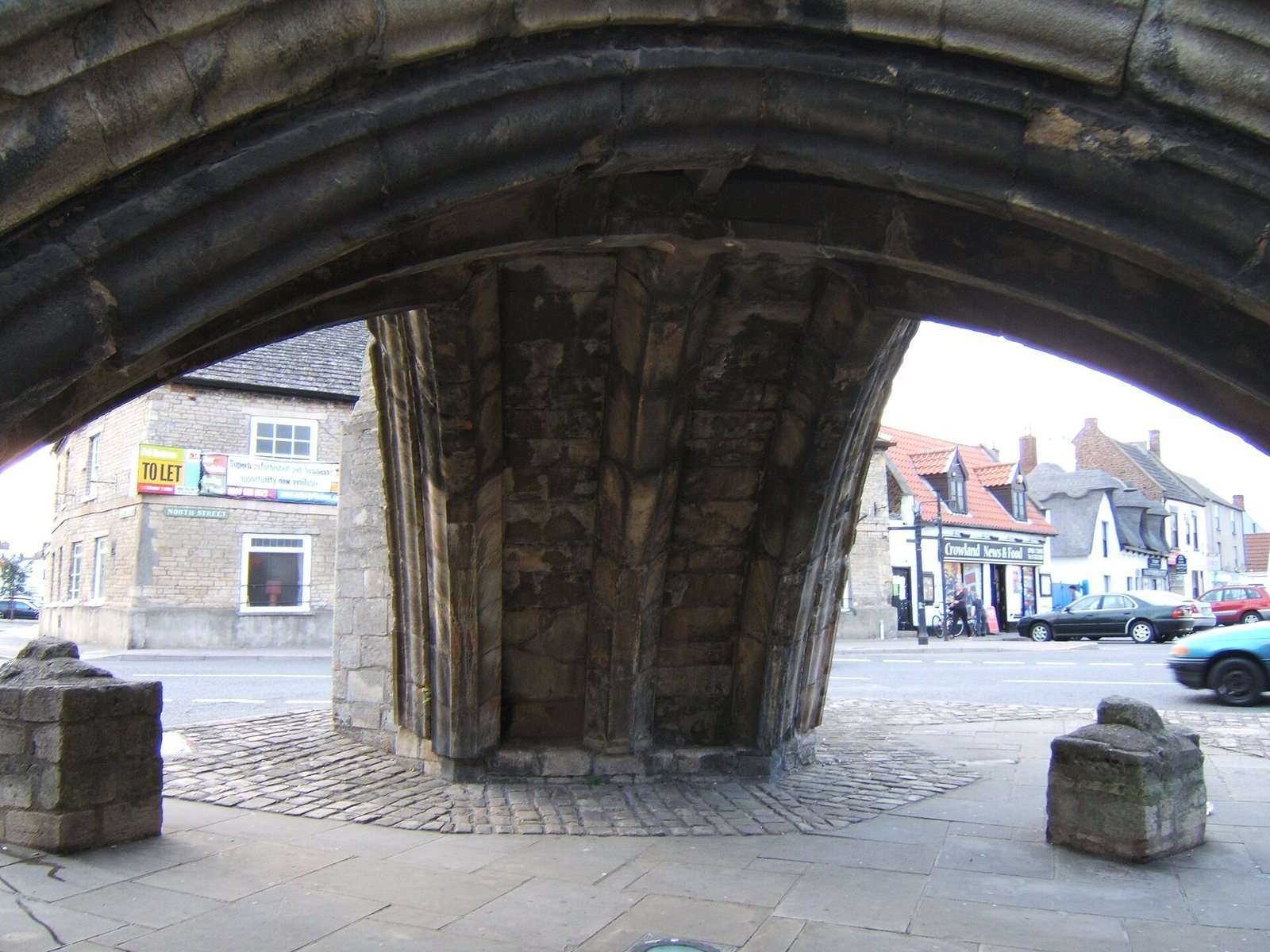
Also known as the Triangular Bridge, the structure has three arching arms that meet at the top, where three stairways converge. The arches meet at angles of 120 degrees, and each is three to six metres long and two metres wide. Their supports form the corners of an equilateral triangle. Each pointed arch has three stone ribs, with all nine converging at the centre. This arrangement provided three roadways and three watercourses.
Stonework and figure fragments
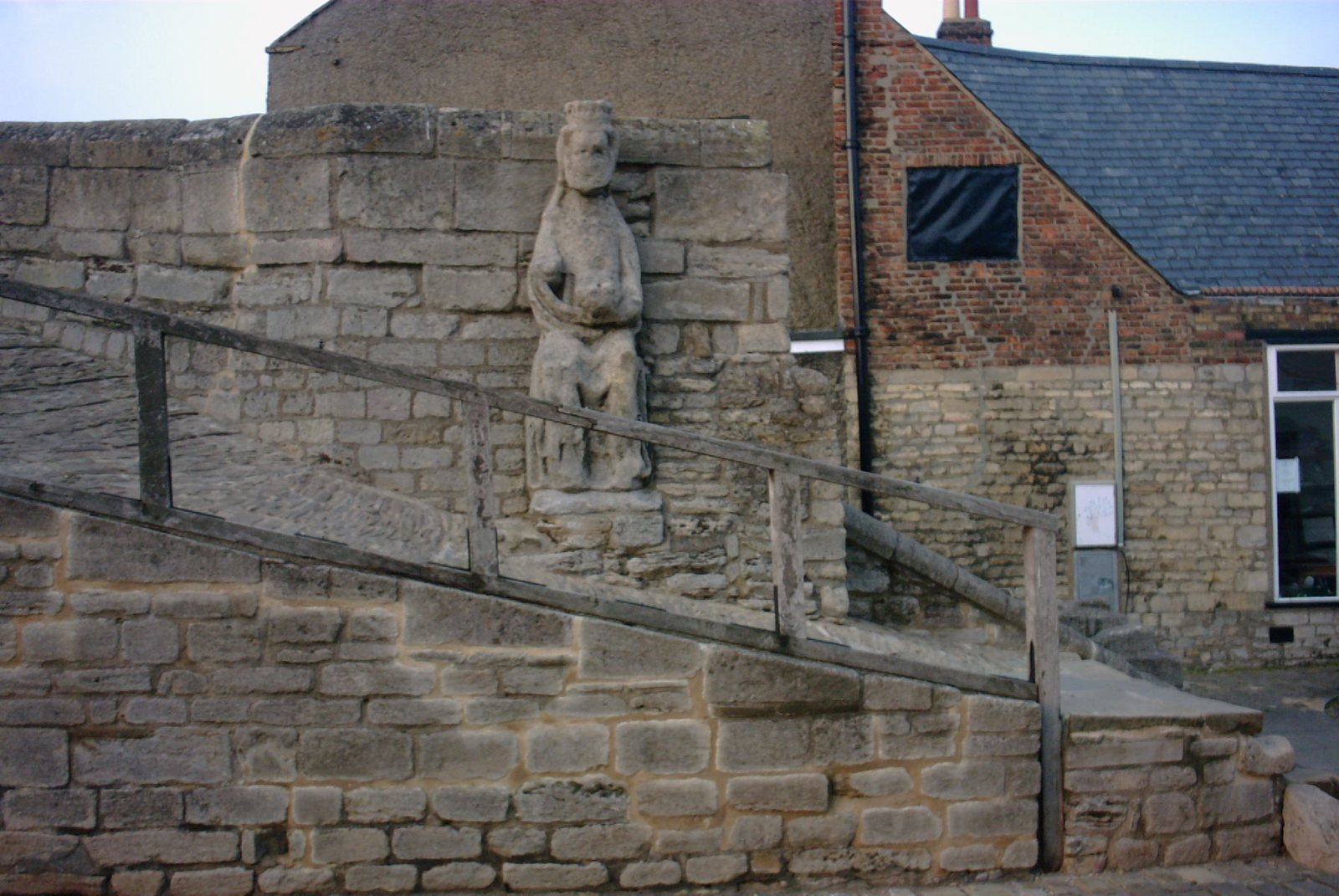
The bridge is built mainly of Barnack limestone, quarried about 16 kilometres to the west. The stone was presumably brought to Crowland by boat along the Welland. Fragments of a figure about six metres tall are set on the bridge. They were probably transferred from Crowland Abbey’s west front, and the figure may represent either Jesus Christ or Æthelbald of Mercia.