St Philip and St Jacob, Bristol: A Historic Parish Church
Site at a Glance
- Popularity
- Medium
- Country
- United Kingdom
- Primary era
- Medieval
- Eras represented
- Medieval, Modern
- Civilizations
- Anglo-Saxon, British, English
- Site type
- Religious
- Remains
- Church
On this page10 sections
History
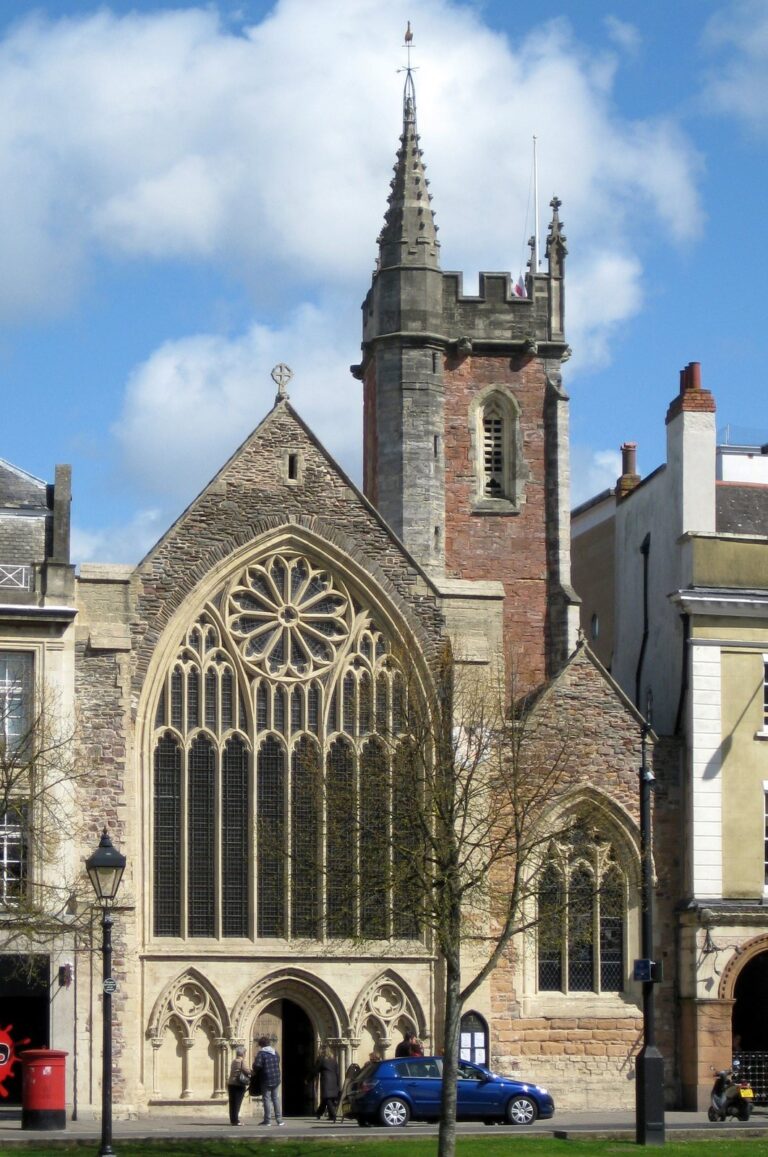
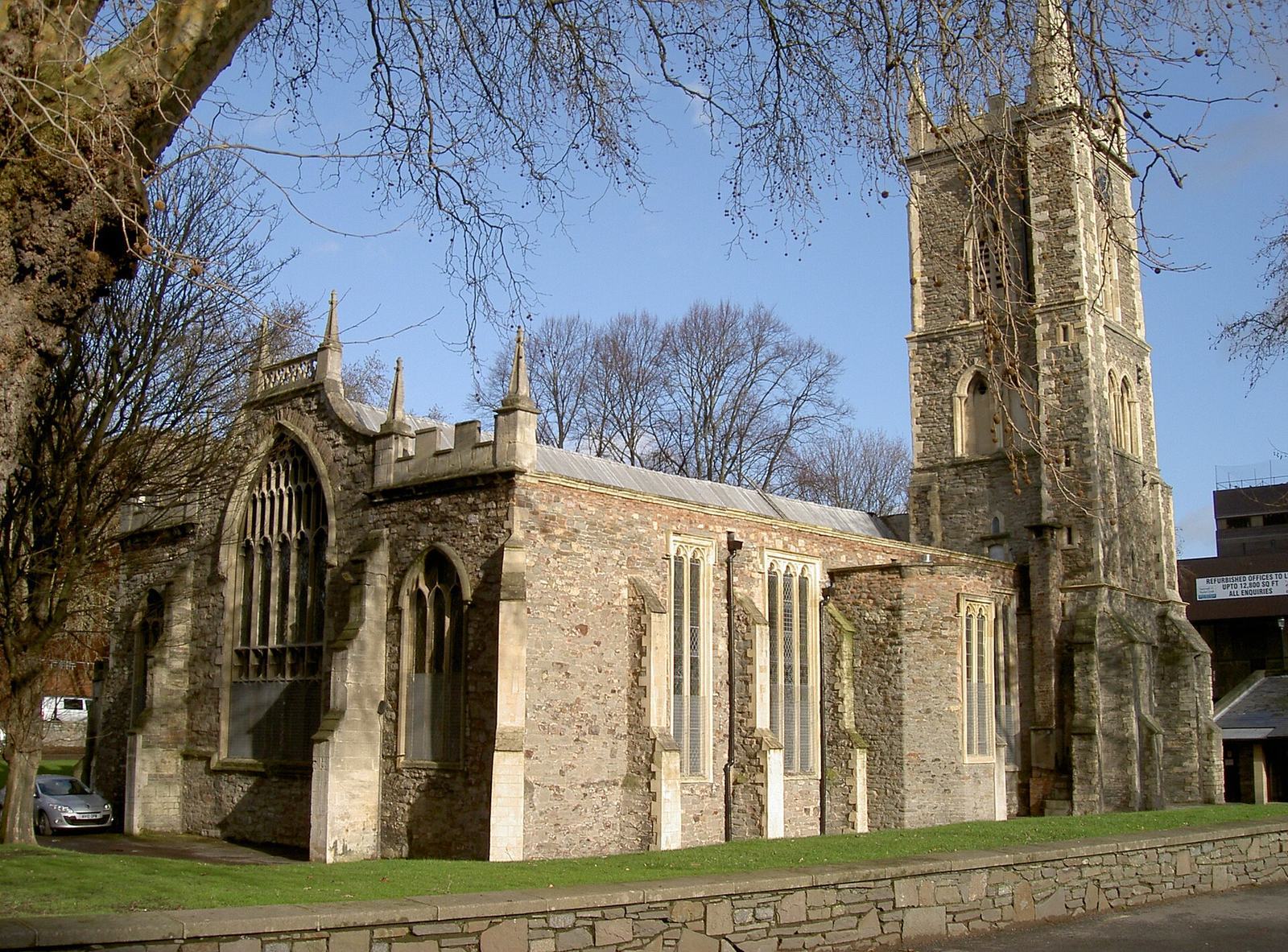
St Philip and St Jacob is a Church of England parish church in Bristol, United Kingdom. It began as a small priory around AD 900, and its architecture includes Early English and Perpendicular phases of English Gothic. One of Bristol’s original parishes, the church describes itself as the city’s oldest place of Christian worship.
Origins and medieval church
A record from 1174 refers to the original church of St Philip. Robert, 1st Earl of Gloucester, later rebuilt it. A powerful Anglo-Norman nobleman and an illegitimate son of King Henry I, Robert also built nearby St James’s Priory.
Parish and civil war
St Philip and St Jacob was known as East Bristol’s mother church. Its parish included Old Market and reached beyond the former city boundary, covering areas that are now Baptist Mills, Barton Hill, Lawrence Hill, Newtown, Russell Town, St Jude’s, St Philips Marsh, The Dings, and part of Easton. The church continues to serve The Dings.
As the parish population increased during the nineteenth century, ten churches were built in its eastern part; seven have since closed. Greenbank Cemetery opened in 1871 as a burial ground for the whole parish.
During the English Civil War, a series of conflicts fought in England, Scotland, and Ireland from 1642 to 1651, authorities ordered the church and nearby St Peter’s to be demolished. The aim was to prevent the buildings from being used as fortresses in attacks on Bristol. Reinforcements arriving in the city saved St Philip and St Jacob.
Changing congregation and name
The church received Grade II* statutory listing on 8 January 1959, a category for particularly important buildings. In the early 1960s, a proposal to close it was resisted by its small congregation, which adopted the motto “Seek First,” from Matthew 6:33, and the nickname “Pip ’n’ Jay.” From 1963 the church became one of Bristol’s leading Evangelical churches, and in the 1970s it participated in the Church of England’s Charismatic revival.
Malcolm Widdecombe served as vicar from 1974 until retiring in 2009. The church’s full name became St Philip and St Jacob with Emmanuel the Unity in 1934. It remains an active Church of England parish church. In 2018 its name changed to Central, and the congregation is now called Central Church, Bristol. Its Charismatic Evangelical tradition combines evangelical beliefs with an emphasis on the gifts and activity of the Holy Spirit.
Remains
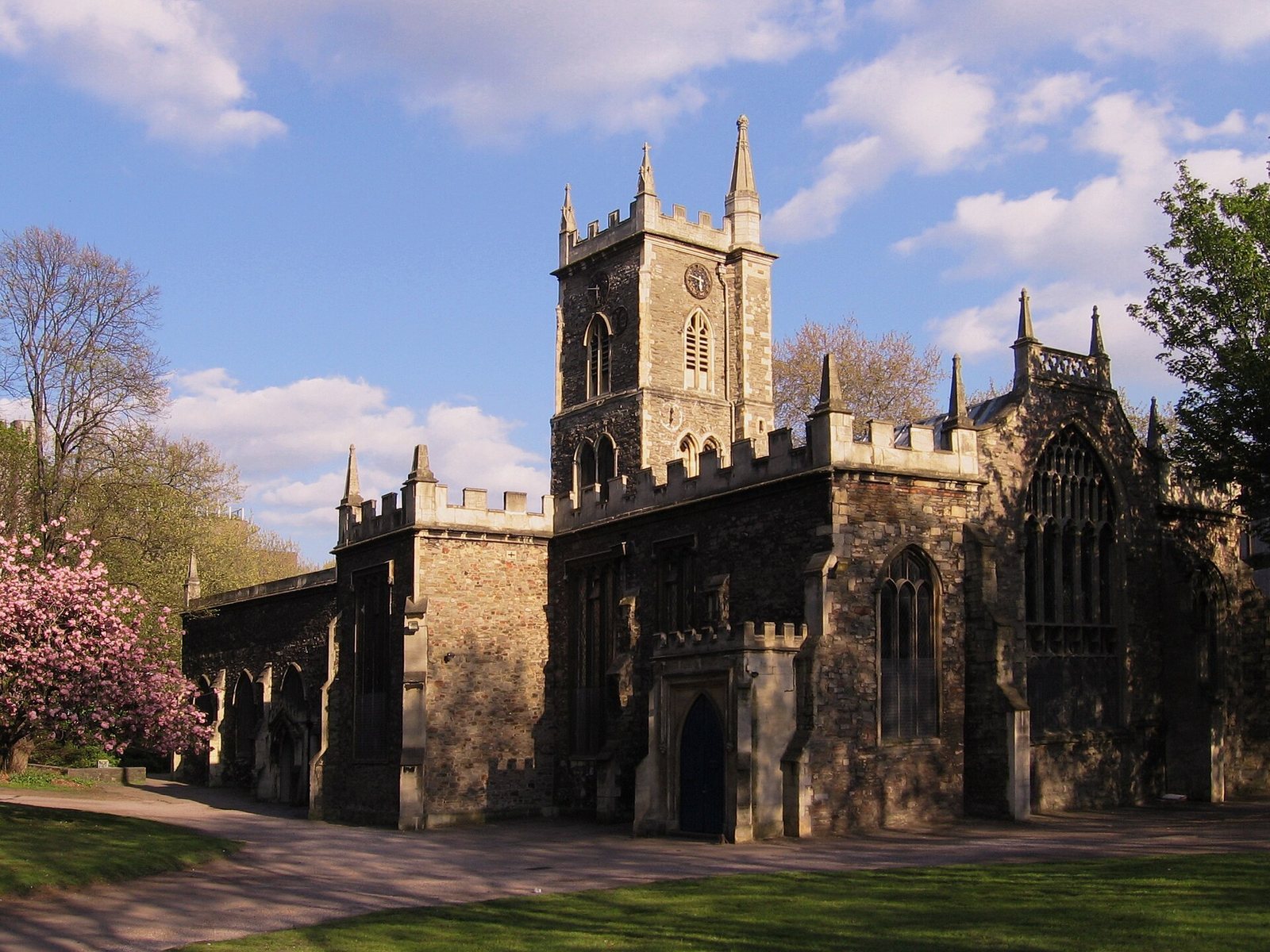
The church’s physical form reflects medieval building work and later alterations. Its historic fabric includes a chancel, nave, and tower, with a later extension at the south-east corner.
Church fabric and additions
Medieval and later work
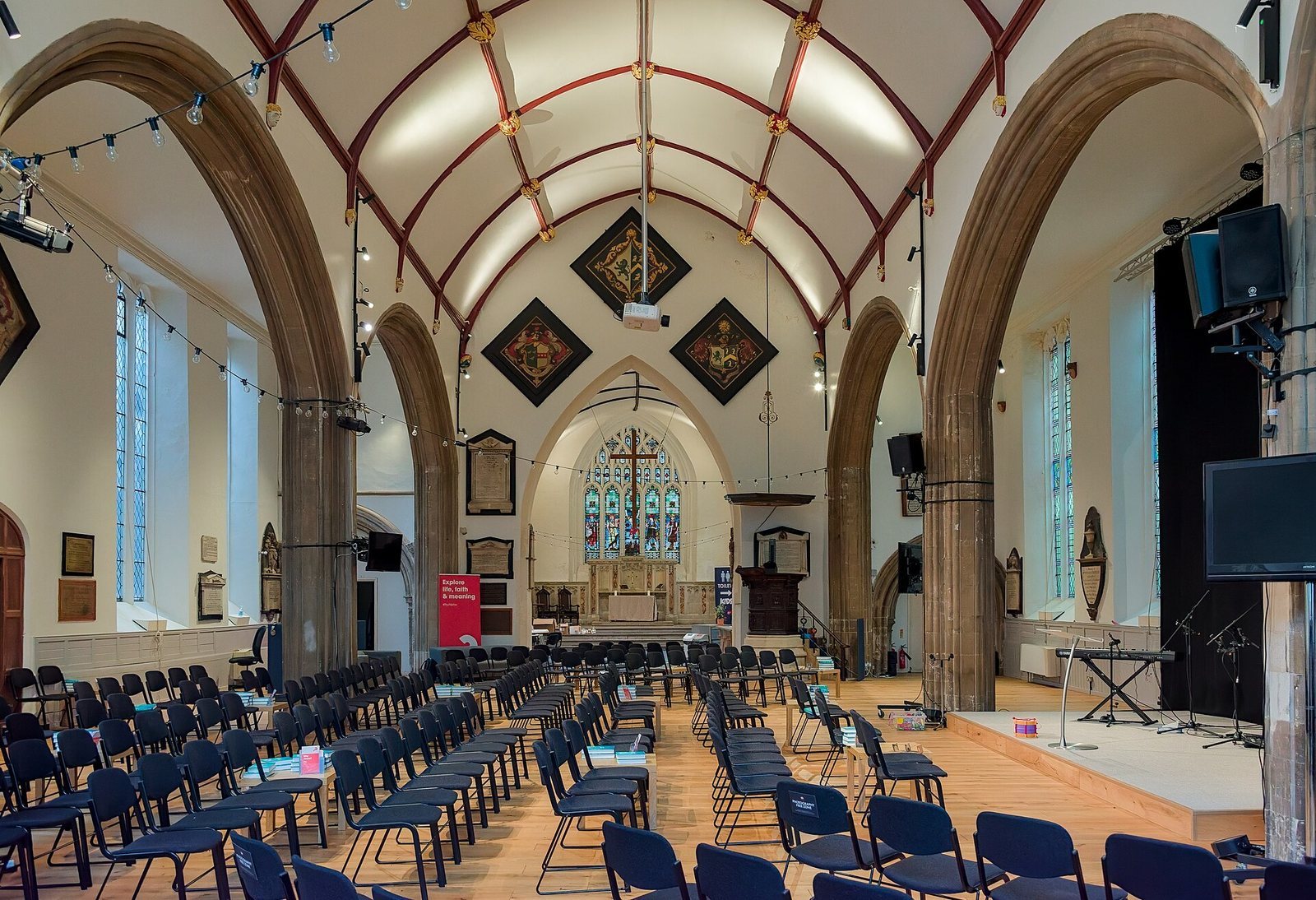
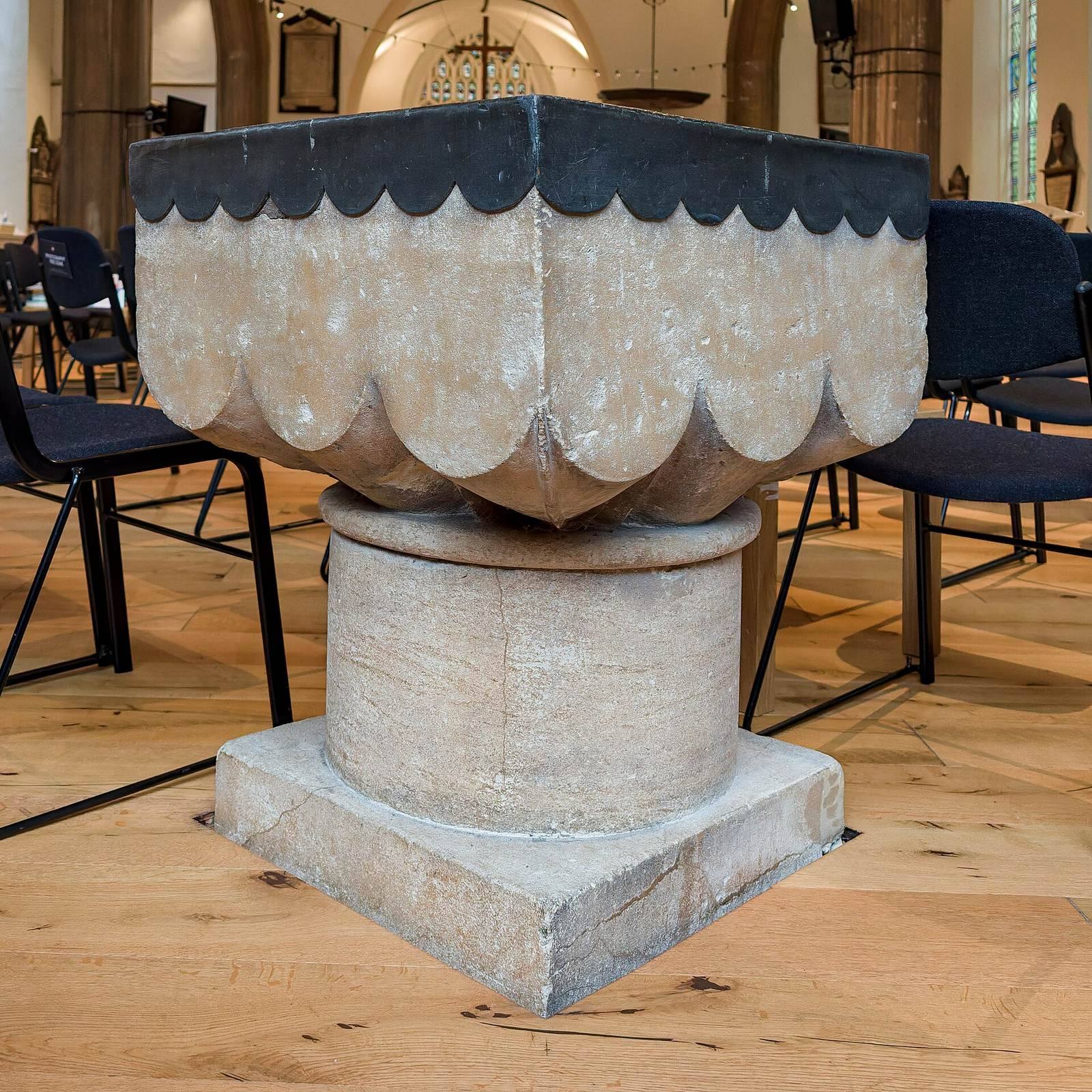
Parts of the chancel and tower date from at least the thirteenth century, while the present nave was added during the Middle Ages. Its pillars were added in the Victorian period, possibly by architect William Armstrong. The font is identified as a survival from the original church. Around 1860, plans to rebuild the church by John Bindon, Richard Shackleton Pope, and Thomas Shackleton Pope were submitted and accepted.
Tower bells
The tower contains eight bells cast in 1738 by William Bilbie, a member of a West Country bell-making family.
South-east extension
An extension added during the 1980s occupies the church’s south-east corner. It contains meeting rooms, a kitchen, and other facilities.
Knightly monument
The upper half of a carved monument showing a reclining knight dates to about 1470–75. It depicts a man-at-arms wearing a sallet, a late-medieval helmet with a rounded skull and projecting rear section. The helmet has a tall, narrow, pointed crown, whose profile forms two steep curves meeting along its ridge. A similar helmet appears on one other English effigy, at Ripon Cathedral. Local tradition identified the figure as Robert, son of William the Conqueror, but the armour dates to about two centuries later. The fragment belonged to a monument once complete and described as among England’s largest monumental effigies; it was last recorded in 1982.