Reutte Friary: A Franciscan House and Parish Complex in Austria
Site at a Glance
- Popularity
- Medium
- Country
- Austria
- Primary era
- Early Modern
- Eras represented
- Early Modern, Modern
- Civilizations
- Habsburg, Habsburg Austria, Holy Roman Empire
- Site type
- Religious
- Remains
- Monastery
On this page18 sections
History
Reutte Friary is a former Franciscan friary in Reutte, Austria, attached to the Church of St Anne. Its foundation stone was laid on 15 March 1628, and the friary was completed in 1630 as part of the Counter-Reformation, Catholic reform and renewed activity in response to the Protestant Reformation. Archduke Leopold V and his wife, Claudia de’ Medici, attended the foundation ceremony. The Franciscans, members of a Catholic religious order, were entrusted with pastoral work at the adjacent church. They belonged to the Tirol Franciscan Province, the order’s regional administrative division.
Foundation and early fires
In July 1632, during the Thirty Years’ War, Swedish soldiers damaged and looted the friary and its church. Fires brought further destruction in 1703 and 1846. Residents of the area contributed to rebuilding after both fires, while the 1846 blaze also destroyed almost all the church’s furnishings.
Religious and parish roles
During the eighteenth century, the friary housed a theological study centre for young Franciscans. From 1775 to 1782, members of the community also served as military chaplains at Ehrenberg Castle. Reutte was a novitiate, a community where people prepared to enter a religious order, from 1820 to 1861 and again from 1977 to 2000.
As the local population grew, the church became the centre of a separate parish in 1945. The Paulusheim, built between 1959 and 1961, provided space for parish gatherings. By the 2010s, four Franciscans remained at Reutte, working largely in hospital service and parish pastoral care. A shortage of personnel led to the friary’s closure on 1 September 2014.
The church today
The Church of St Anne serves as a parish-vicariate church, a local Catholic pastoral unit served by a vicar, within the Breitenwang deanery, an administrative grouping of parishes in the Diocese of Innsbruck. The church and the former friary complex have protected-monument status under Austrian law.
Remains
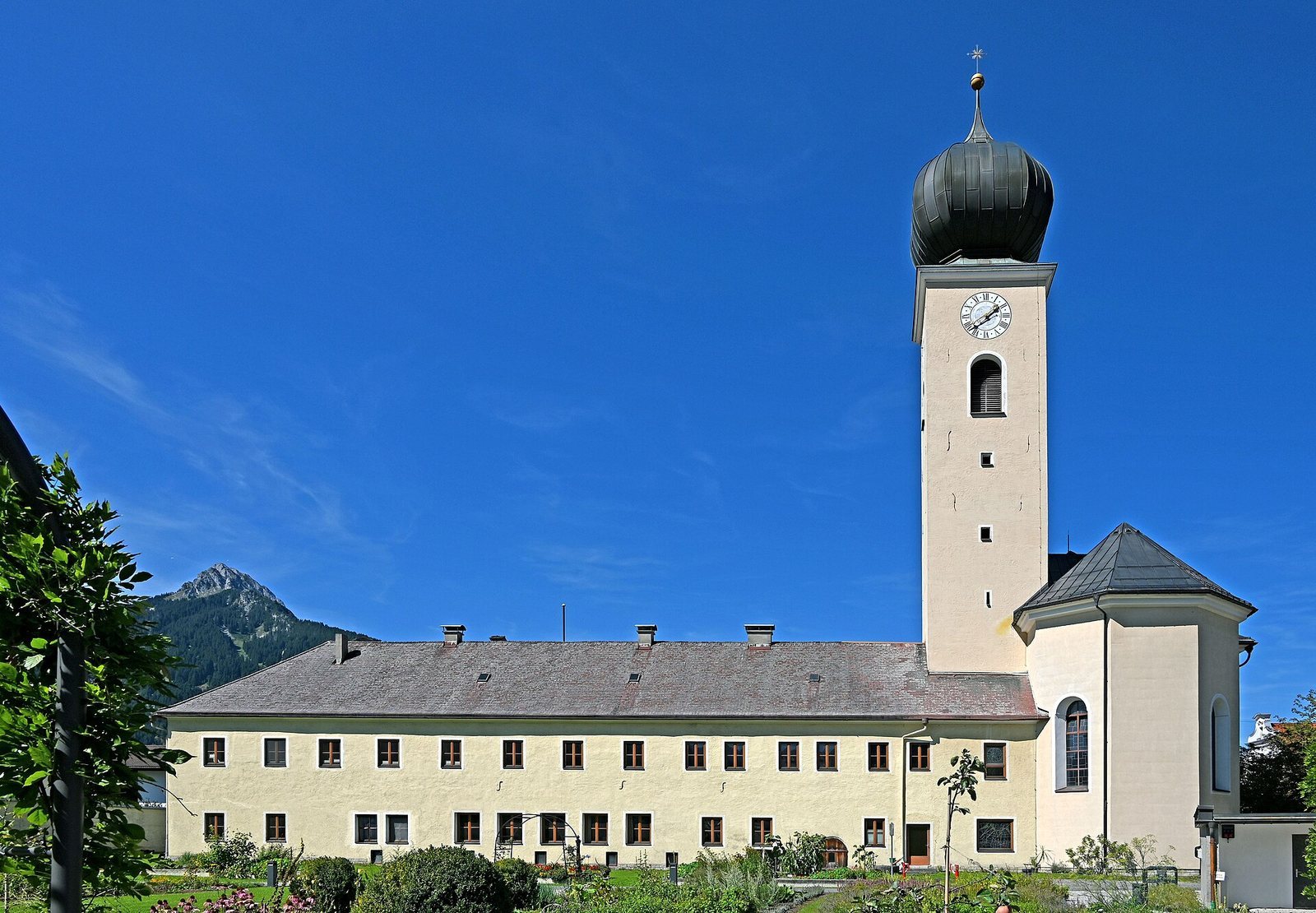
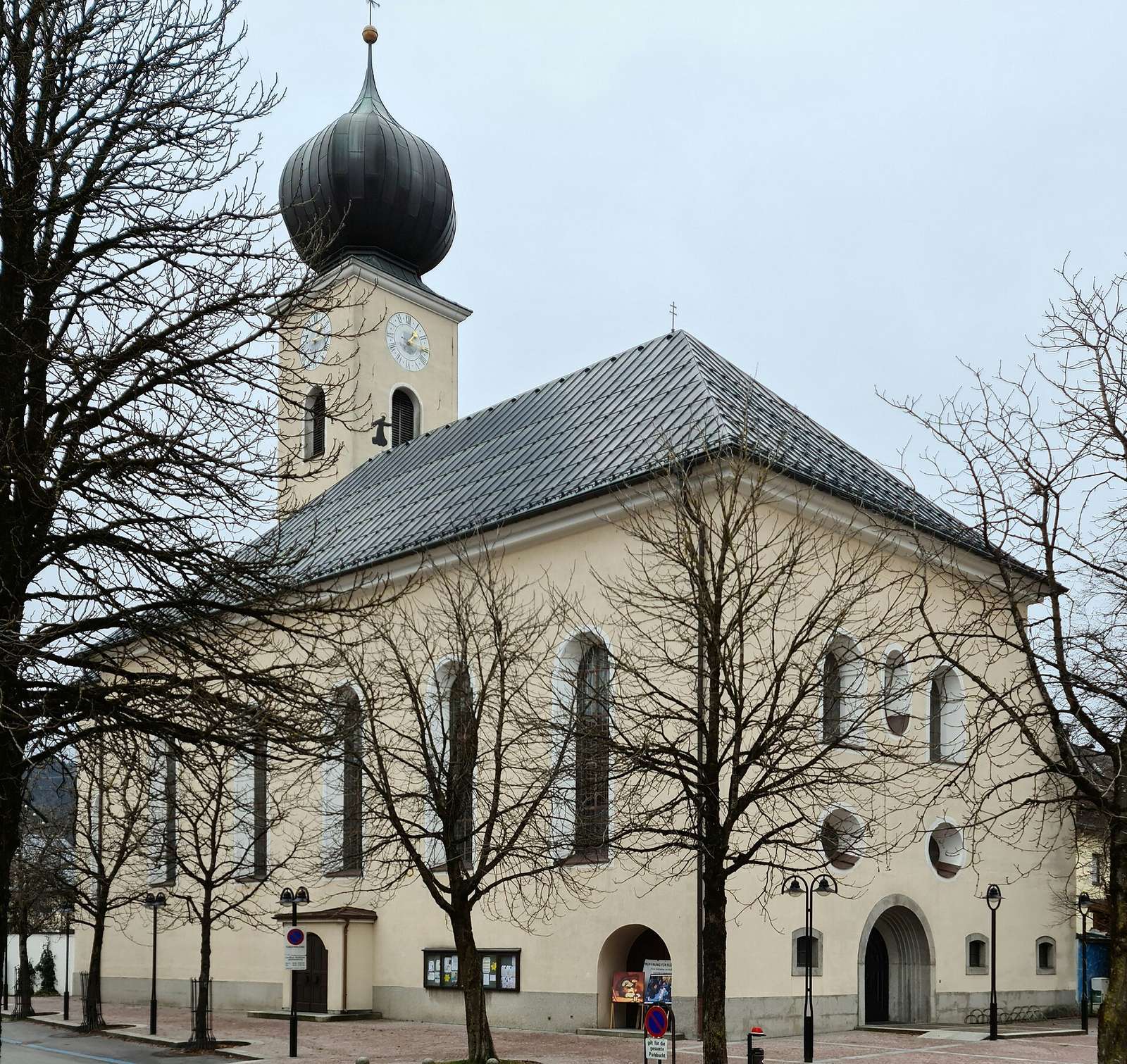
The Church of St Anne and the former friary form a connected complex in Reutte’s town centre. The church stands parallel to the street and is joined to the friary. Its Gothic choir, the section around the sanctuary, contrasts with a Baroque nave beneath a hipped roof. Round-arched windows light both parts of the church.
Church structure
Tower and exterior
The tower stands south of the choir, partly within the friary’s south wing. Arched openings carry the sound of the bells, and the tower is topped by an onion-shaped dome. The dome was replaced by a tent roof during rebuilding after the 1846 fire, then restored to its onion shape in 1981.
Nave and choir
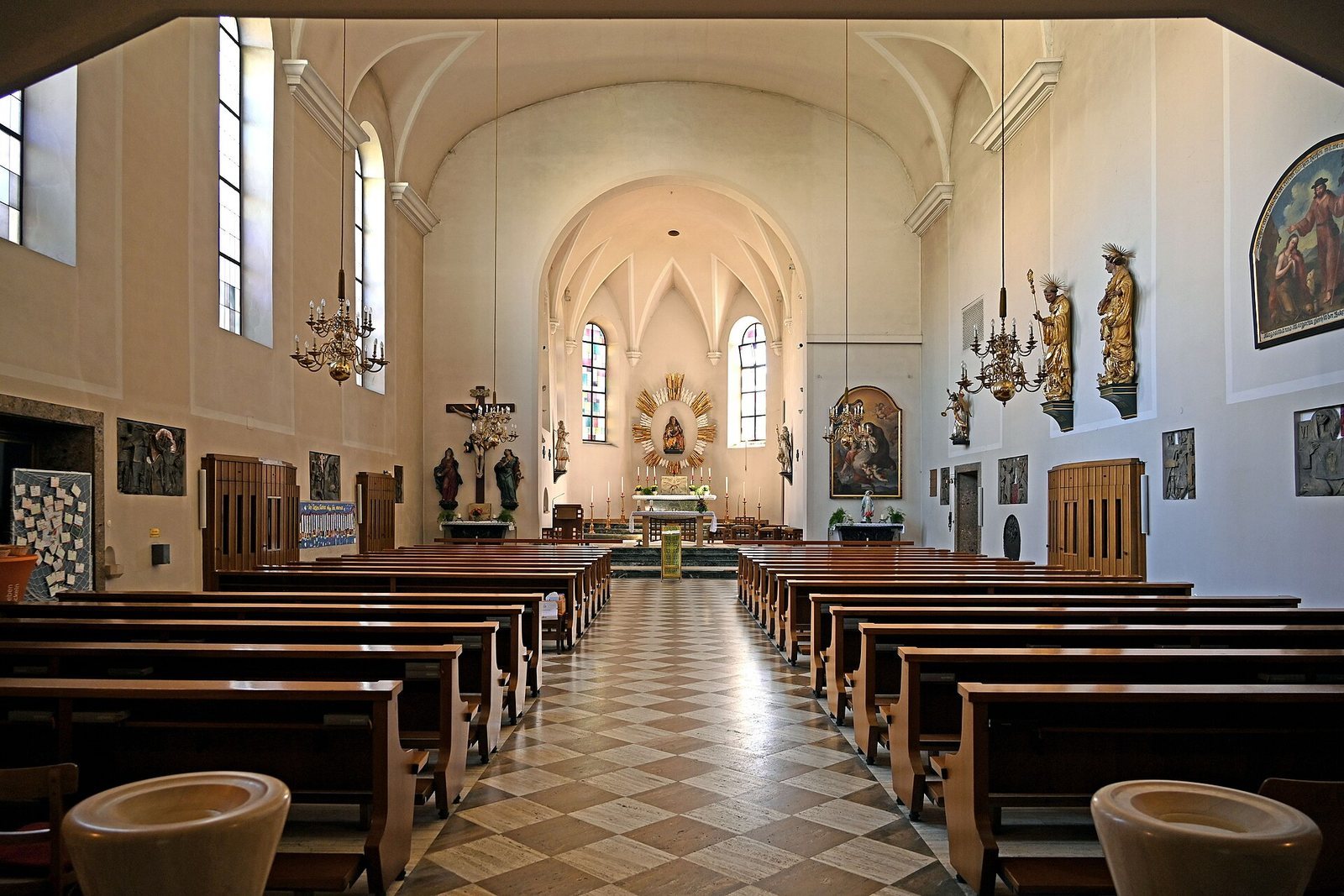
A narrow entrance vestibule opens into a broad nave divided into five sections, with a double gallery at its western end. The nave’s shallow barrel-shaped ceiling has lunettes, crescent-shaped surfaces where a vault meets an opening. A recessed arch separates the nave from the narrower choir, which has two sections and ends in a three-eighths apse, shaped like three sides of an imagined eight-sided form. Its barrel-shaped ceiling also has lunettes, supported by projecting consoles.
Altars and sculpture
Choir ensemble
The choir ends with a sculptural group of St Anne, Mary, and the infant Jesus, made around 1515 by Jörg Lederer. It occupies a raised platform framed by a radiating halo designed in the 1960s. This arrangement took the place of a high altar. During the extensive interior restoration of 1964–1967, furnishings were removed and selected works were repositioned.
Side altars
Above the left side altar is a crucifix by Balthasar Jais, brought from Breitenwang. The smaller figures of Mary and an apostle beside it were made by Anton Sturm and do not originally belong to the crucifix. Jais’s original accompanying figures are now in Breitenwang’s funeral hall. A painting of St Anthony of Padua by Paul Zeiller, dated 1708, hangs above the right side altar.
Other devotional works
A trombone-playing angel, made around 1770, once stood on the pulpit roof. Figures of St Magnus and St Afra, carved in 1703 by Ignaz Waibl, also came from Breitenwang. The concrete Stations of the Cross were created in 1970 by Rudolf Millonig. A cast-metal memorial plaque for Kaspar Bissinger bears the date 1633.
Seasonal church works
Christmas crib
The church’s board-built Christmas crib, a nativity scene with painted figures on boards, came from the Franciscan friary in Hall in Tirol. Painter Franz Michael Hueber made it around 1738. It is probably the oldest surviving example of this kind in Tyrol. Alongside the traditional three Magi, the scene includes a fourth figure. According to legend, he arrived too late to worship the infant Jesus because he had stopped on the way to perform acts of mercy. After a break of almost 30 years, the crib returned to annual display in 1991.
Easter sepulchre
Painter Anton Köpfle and master carpenter Josef Schweighofer made the Easter sepulchre in 1848. This church installation represents Christ’s tomb during Easter observances. After its last display in 1936, it was restored and returned to the church for Easter in 2004.
Bells and organ
Bells
All five church bells were cast in 1948 by the Franz Oberascher foundry in Salzburg. Their principal pitches are B0, D-sharp1, F-sharp1, G-sharp1, and B1. The bell frame in the tower was renewed in 1976.
Organ
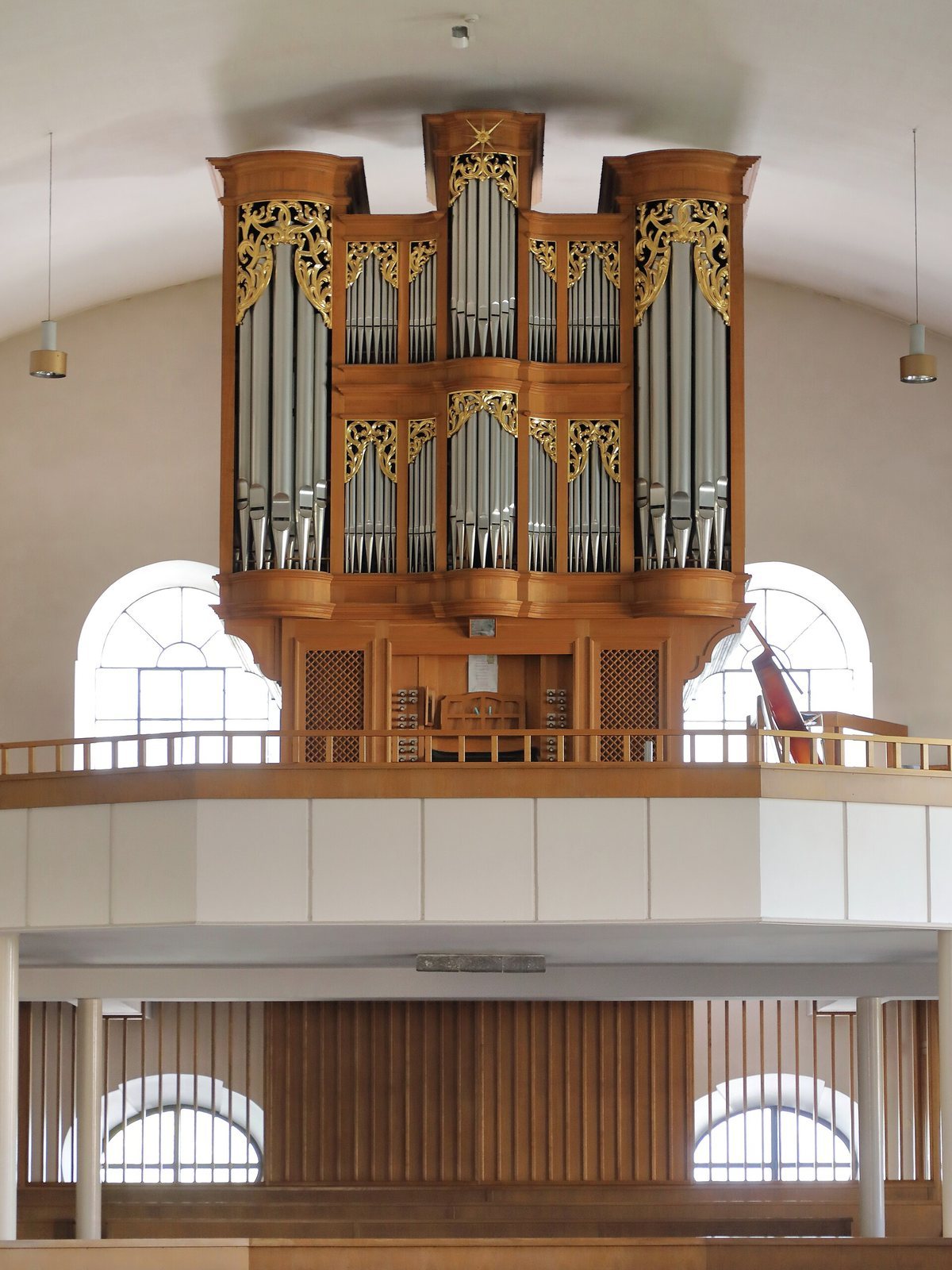
Built by Reinisch-Pirchner and consecrated in spring 1989, the organ has 30 stops, each selecting a set of pipes, three hand keyboards, and a pedal keyboard operated by the feet.