Carmelite Church in Warsaw: A Baroque Church of the Discalced Carmelites
Site at a Glance
- Popularity
- High
- Country
- Poland
- Primary era
- Early Modern
- Eras represented
- Early Modern
- Civilizations
- Polish–Lithuanian Commonwealth
- Site type
- Religious
- Remains
- Church
On this page9 sections
History
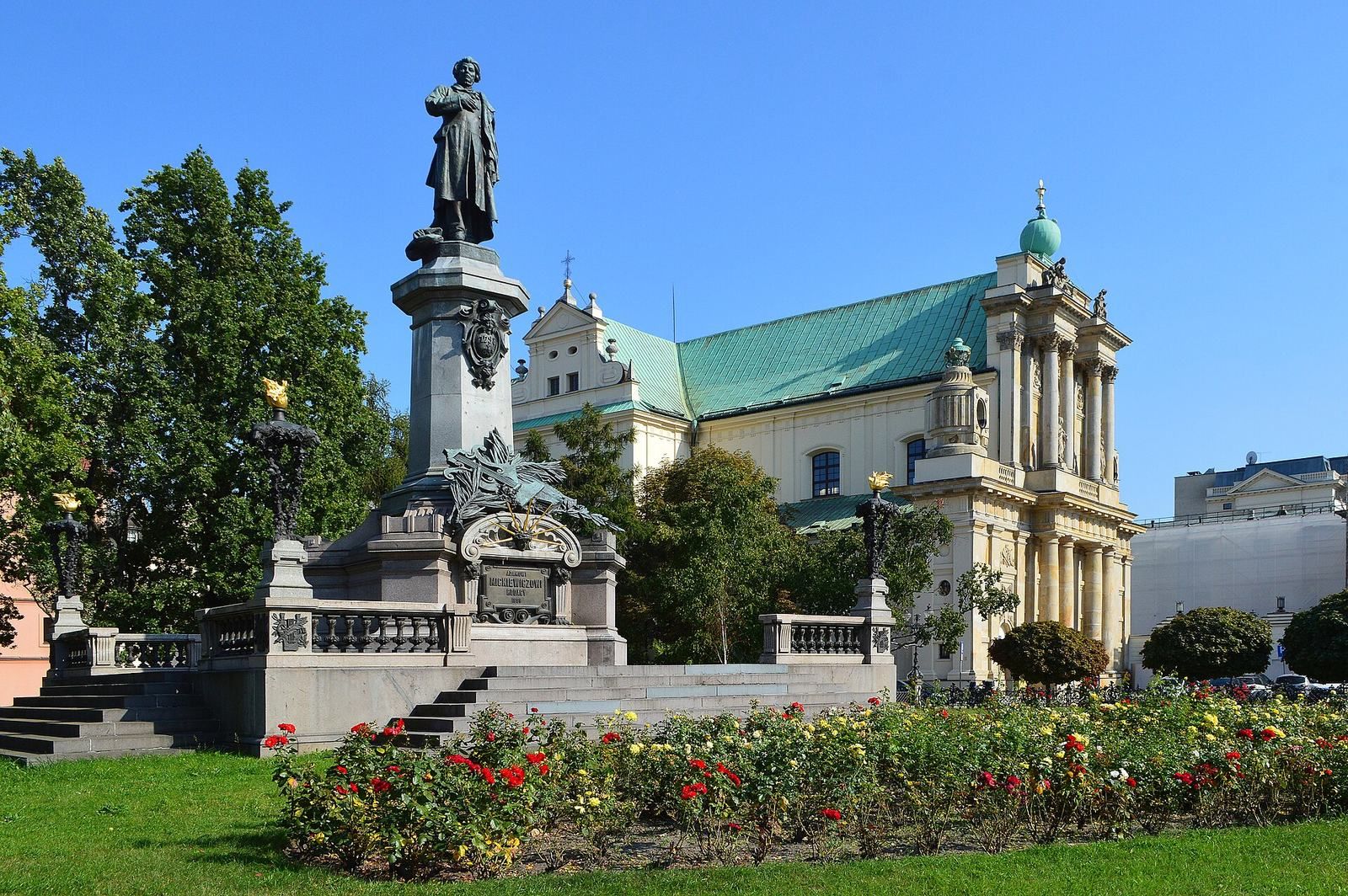
The Carmelite Church is a church of the Discalced Carmelites in Warsaw, Poland. The Discalced Carmelites are a reformed branch of the Carmelite order, associated with an austere tradition of going barefoot or wearing sandals. The church developed from a project begun around 1642; its main structure is Baroque, an ornate and dramatic style, while its façade was later rebuilt in Neoclassical forms inspired by ancient Greek and Roman design. Its long construction ended with consecration in 1716.
Foundation and construction
Around 1642, Albrycht Wessel planned a church for the Discalced Carmelites, who did not yet have a community in Warsaw. A wooden building was erected in 1643 on a square owned by Marcin Krasicki, with Wessel’s funding and support from King John II Casimir of the Polish-Lithuanian Commonwealth, the state formed by the union of Poland and Lithuania. Swedish and Brandenburg German forces destroyed it during their occupation of Warsaw in the 1650s.
A new church was founded in 1661 with the blessing of Michał Stefan Radziejowski, a cardinal and the senior church leader in Poland. Work continued through the latter half of the 17th century and into the early 18th. Wessel died before he had secured enough money to finish the project, so other patrons helped sustain it. John II Casimir provided annual support and, in 1668, granted land at Ujazdów for a brickworks where the Carmelites could make building materials. Prince Michał Czartoryski and royal-court officer Władysław Szmeling also left funds for the work.
Radziejowski became the church’s principal benefactor, intervening when its condition was deteriorating and the Carmelites could not complete construction. The order regarded him as a second founder and placed a black-marble memorial to him on the monastery courtyard wall during his lifetime. Augustyn Adam Wessel, a grandson of Albrycht’s brother, later restored and embellished the church and consecrated it in 1716. Jan Szymon Bellotti is associated with the main design.
Political, religious, and cultural life
The monastery hosted negotiations between Polish king Stanisław Leszczyński and Swedish king Charles XII. Talks on a final peace between Poland and Sweden began there on 1 September 1705, and the two sides signed an alliance at the monastery on 18 November. Carmelite prior and provincial Jerzy Brzostowski also founded a library regarded at the time as one of Poland’s largest. Father Honoré of St Elisha served as prior for 20 years.
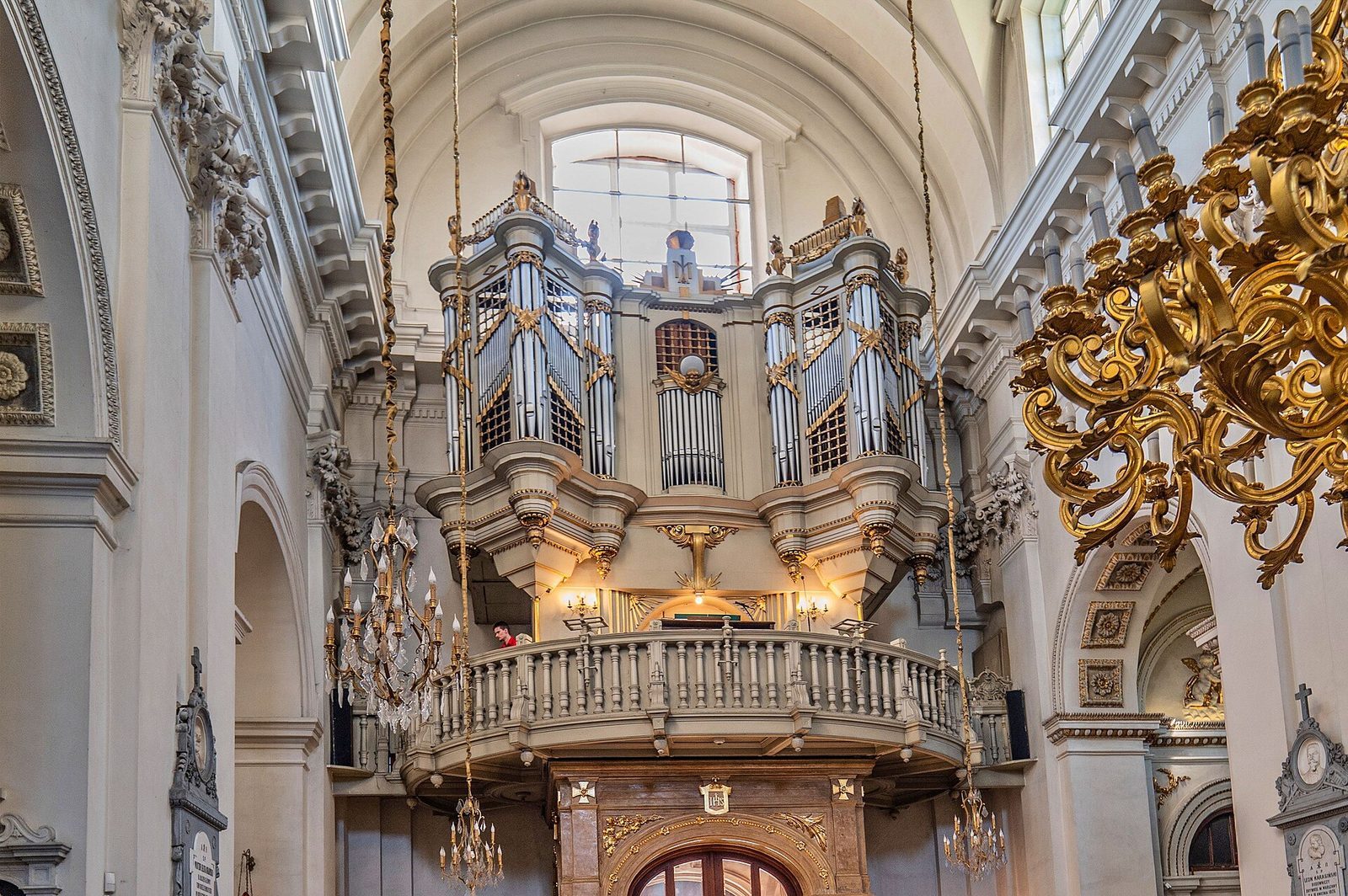
In the first third of the 19th century, Frédéric Chopin gave his first solo recital on the church organ. In 1864, following the January Uprising, a Polish insurrection against Russian rule in 1863–64, the Russian imperial government suppressed the Discalced Carmelite monastery because of its anti-government activity. The monastery buildings, including the church, passed to the Warsaw Archdiocesan Seminary, which trains candidates for the priesthood. Carmelite monks continued to serve at the church as seminary priests. It remains associated with the Warsaw Higher Metropolitan Seminary and the Archdiocese of Warsaw, and is affiliated with the Cathedral Parish of St John the Baptist.
Changes and preservation
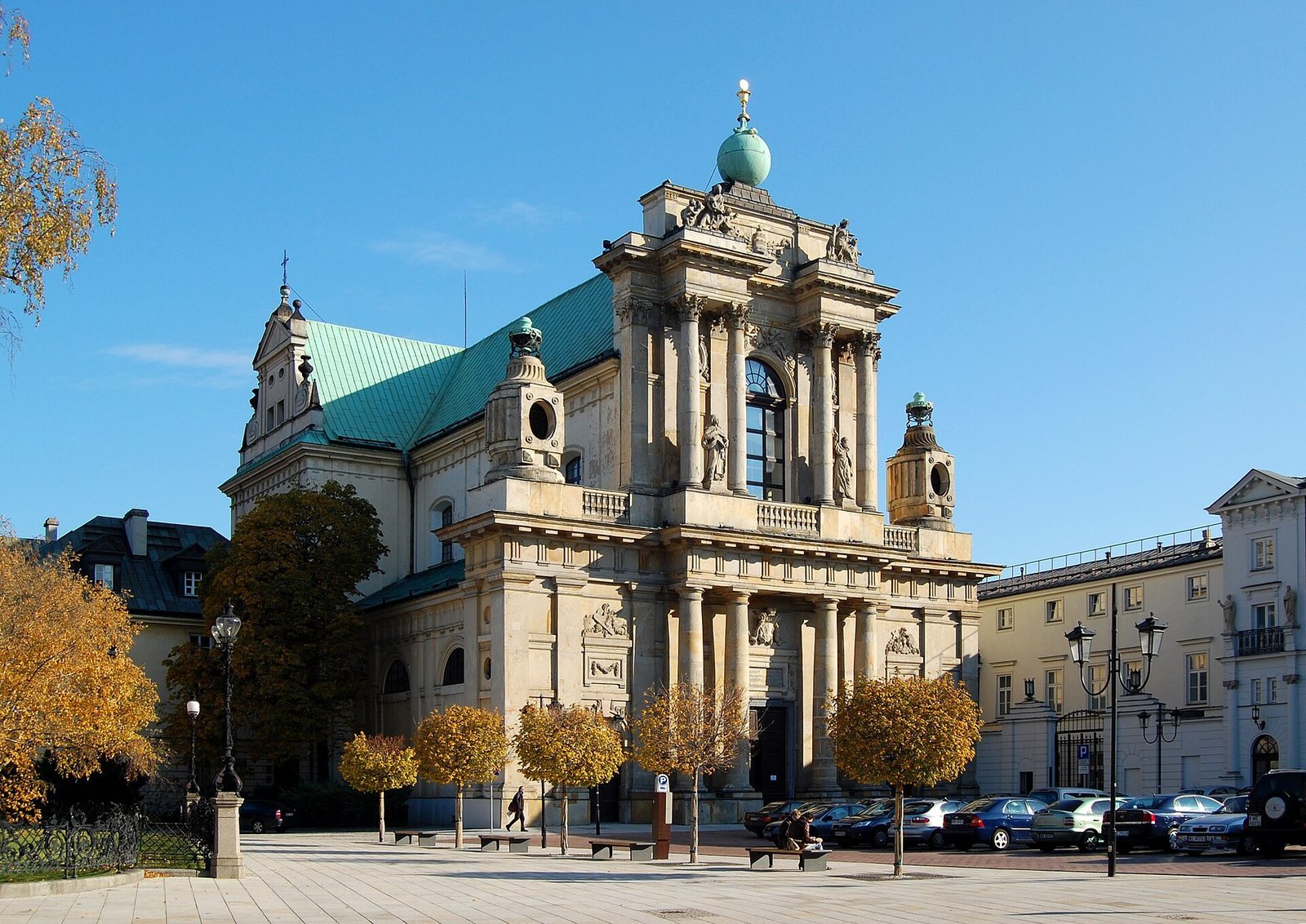
From the 1760s into the 1780s, the façade was rebuilt to a design by Efraim Szreger, commissioned by Prince Karol Stanisław Radziwiłł. It became the first stone Neoclassical façade in the Polish-Lithuanian Commonwealth. During the Second World War, the church escaped destruction and was spared deliberate demolition by retreating German forces. From 1945 to 1952, while St John’s Cathedral was being rebuilt, it served temporarily as the cathedral church of the Warsaw Archdiocese, a role known as a procathedral.
The church and Discalced Carmelite monastery complex entered Warsaw’s register of historic monuments in 1965. In 1994, the church received Poland’s Historic Monument designation as part of Warsaw’s historic city center, the Royal Route, and Wilanów. On 13 October 2026, it was elevated to the Sanctuary of Our Lady of Good Death and the Victorious Queen of the Rosary, a church formally recognized as a focus for particular devotion or pilgrimage.
Remains
Plan and exterior
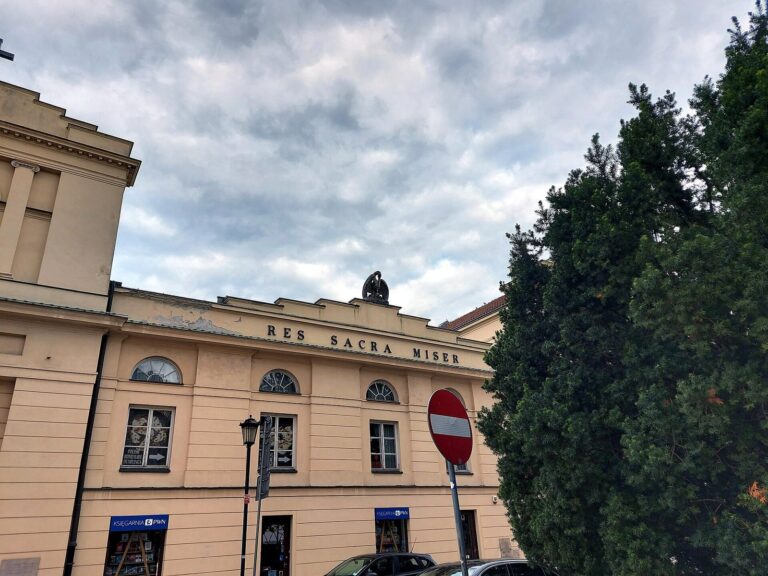
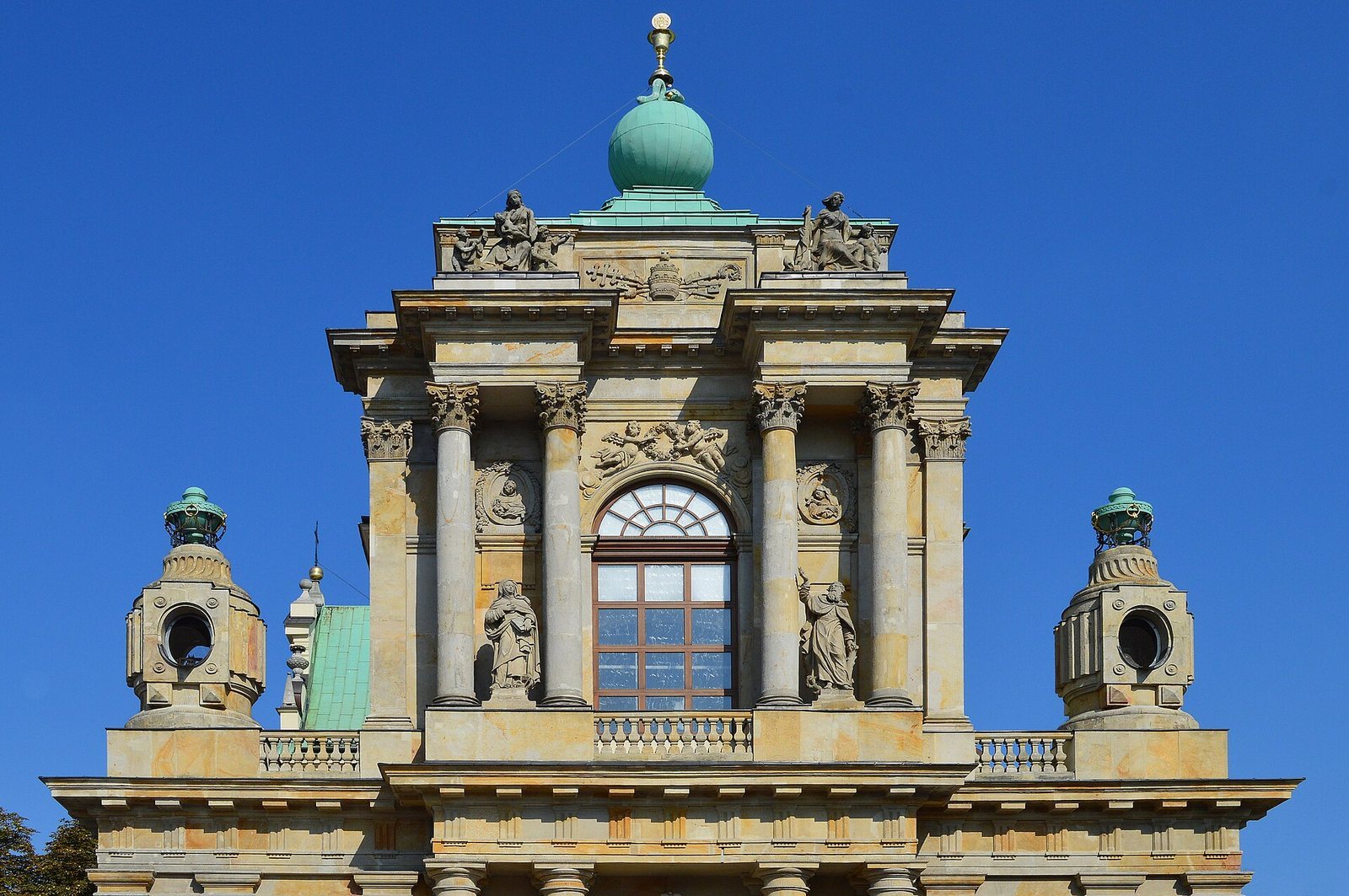
Built of brick, the church has a Latin-cross plan, with a long nave crossed by a shorter transept, or cross-arm. Two side naves flank the main one, and a dome rises above the central crossing. Former monastery buildings adjoin the transept. The façade has columns supporting a cornice and a central doorway framed with carved black and greenish marble. Above the doorway, an ornamental panel bears the Radziwiłł family coat of arms. Two bell towers shaped like incense burners flank the façade, and new bells were installed in them in 2000.
Niches on the façade hold statues of Teresa of Ávila and the biblical prophet Elijah. Above them are sculptural groups representing Charity, shown as a mother with a child and angels, and Hope, represented by a woman with an anchor and angels. A papal emblem stands between the groups. On the roof is a large sphere bearing a snake holding an apple. Placed there in 1779, it is locally known as the Carmelite orb.
Interior and furnishings
Altars and sacred images
The interior combines late Baroque decoration with Rococo, a lighter decorative style. It has a main altar, altars in the arms of the transept, and ten smaller altars in the side naves, five on each side. The third side altar from the entrance is dedicated to Mary as patroness of a good death. It contains an image of the Virgin Mary from Ukraine, given to the church by John II Casimir in 1664 and venerated as miraculous. A sculptural group of the Marriage of the Virgin, made around 1770 by Jan Jerzy Plersch, was transferred here from a Warsaw church of the Dominican Observants, a reform branch of Dominican friars. Plersch also made sculptures for the main altar.
Paintings and other features
Gilding and molded plasterwork decorate the ceiling, while paintings by Szymon Czechowicz cover the walls. The main altar is adorned with paintings by Franciszek Smuglewicz. Commemorative inscriptions honor painter Rafał Hadziewicz, journalist Józef Kenig, and landowner August Mazaraki. A figurine of the Infant Jesus stands to the right of the main nave; the church also contains an organ and a pulpit.