Sanmaizuka Kofun (Namegata): A Fifth-Century Burial Mound in Japan
Site at a Glance
- Popularity
- Medium
- Country
- Japan
- Primary era
- Classical
- Eras represented
- Classical, Medieval
- Civilizations
- Unclassified
- Site type
- Burial
- Remains
- Burial Mound
On this page12 sections
History
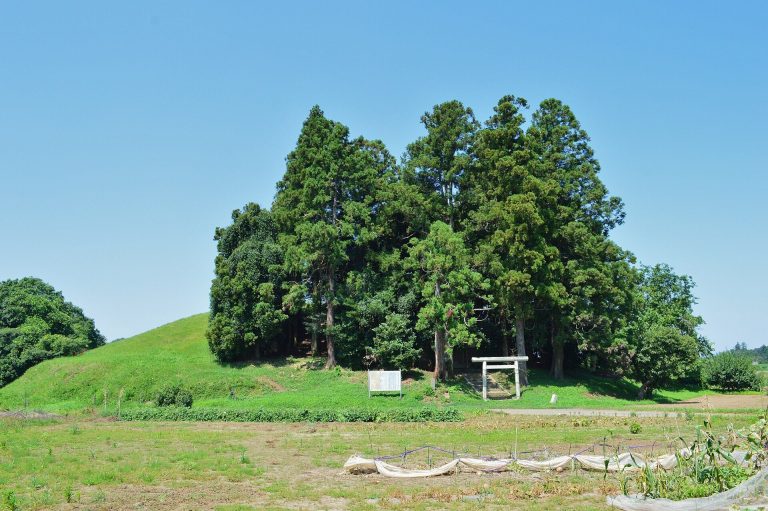
Sanmaizuka Kofun is a keyhole-shaped burial mound in Namegata, Japan, built in the middle to late fifth century during the Kofun period, an era of monumental Japanese tomb building from the third through seventh centuries. The identity of the person buried there is unknown, but the occupant is thought to have been a powerful local leader whose authority was linked to the Lake Kasumigaura region.
Medieval use
The mound was probably dug into and reused as a cemetery during the Muromachi period, a medieval era conventionally dated from 1336 to 1573. Burials from this time and disturbed soil indicate that activity. One interpretation proposes that monks of the Shingon Ritsu and Rinzai Buddhist schools drew on local traditions surrounding ancient burial mounds, treating them as sacred places and establishing burials on or near them. Similar practices have been proposed for other mounds in the region.
Damage, excavation, and protection
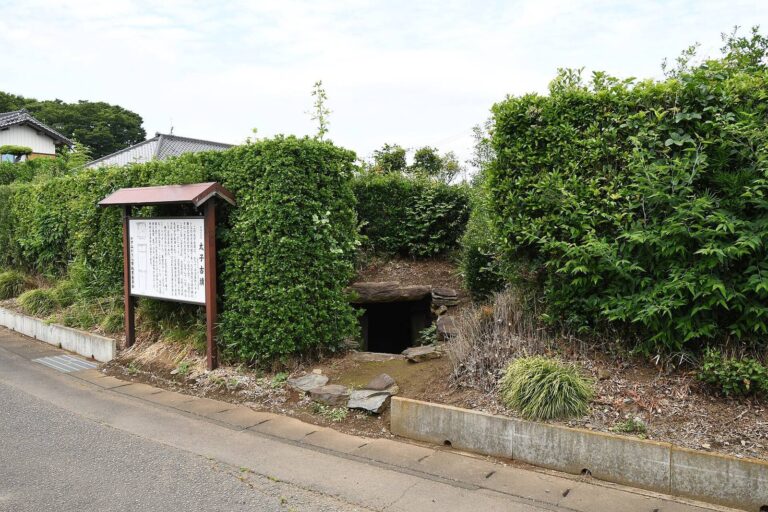
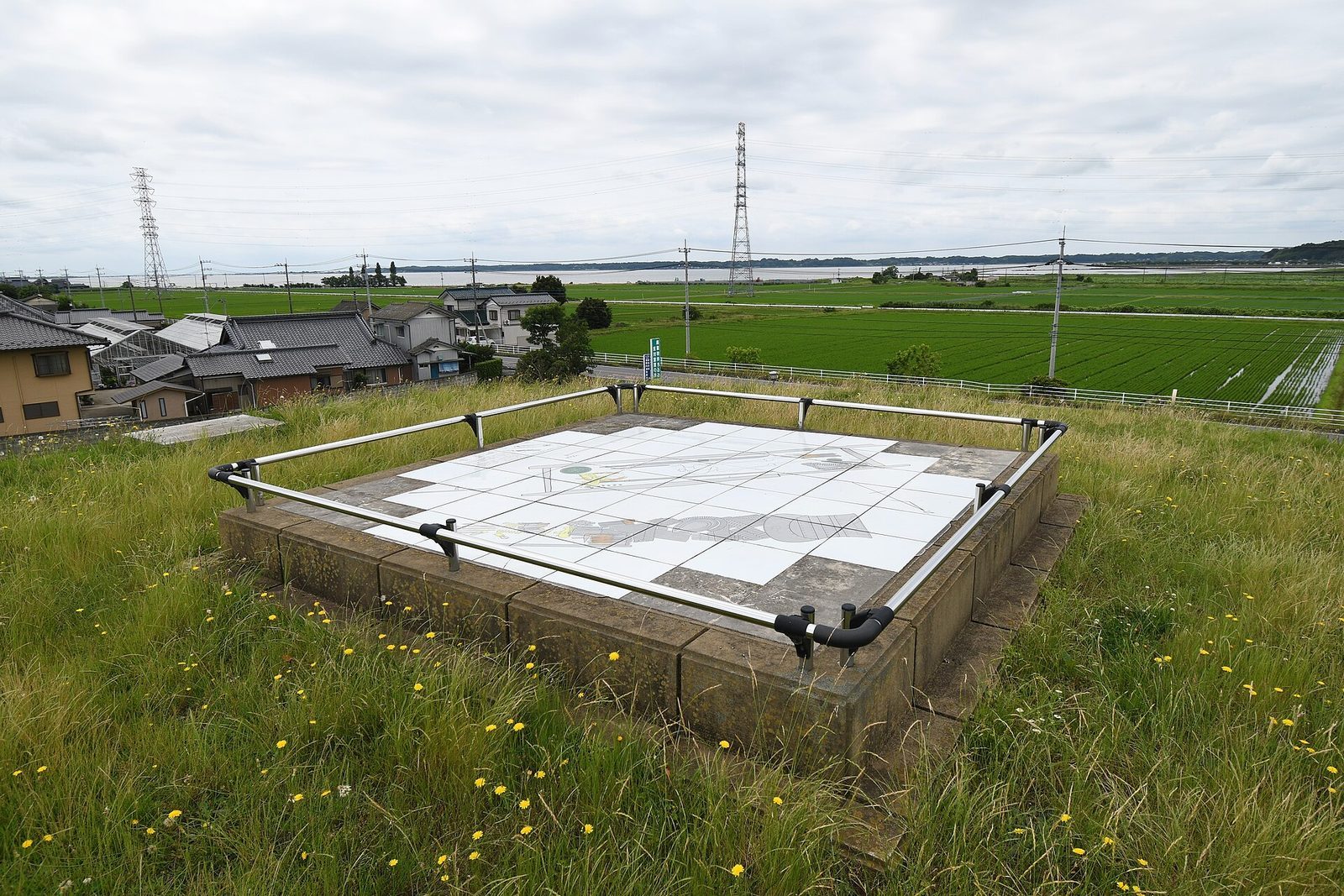
In 1955, soil was removed from the mound for embankment works, causing severe damage. An emergency excavation uncovered the burial chamber and many grave goods. Further investigations followed in 1994 and 1999. The mound’s length was revised after work examined its base. The site was reconstructed and developed as a rural park.
The mound received local historic-site designation in 1990 and is now designated by Namegata City. Its excavated artifacts became Ibaraki Prefecture tangible cultural properties in 2004 and a National Important Cultural Property in 2018. The national designation was corrected and additional artifacts were added in 2024.
Remains
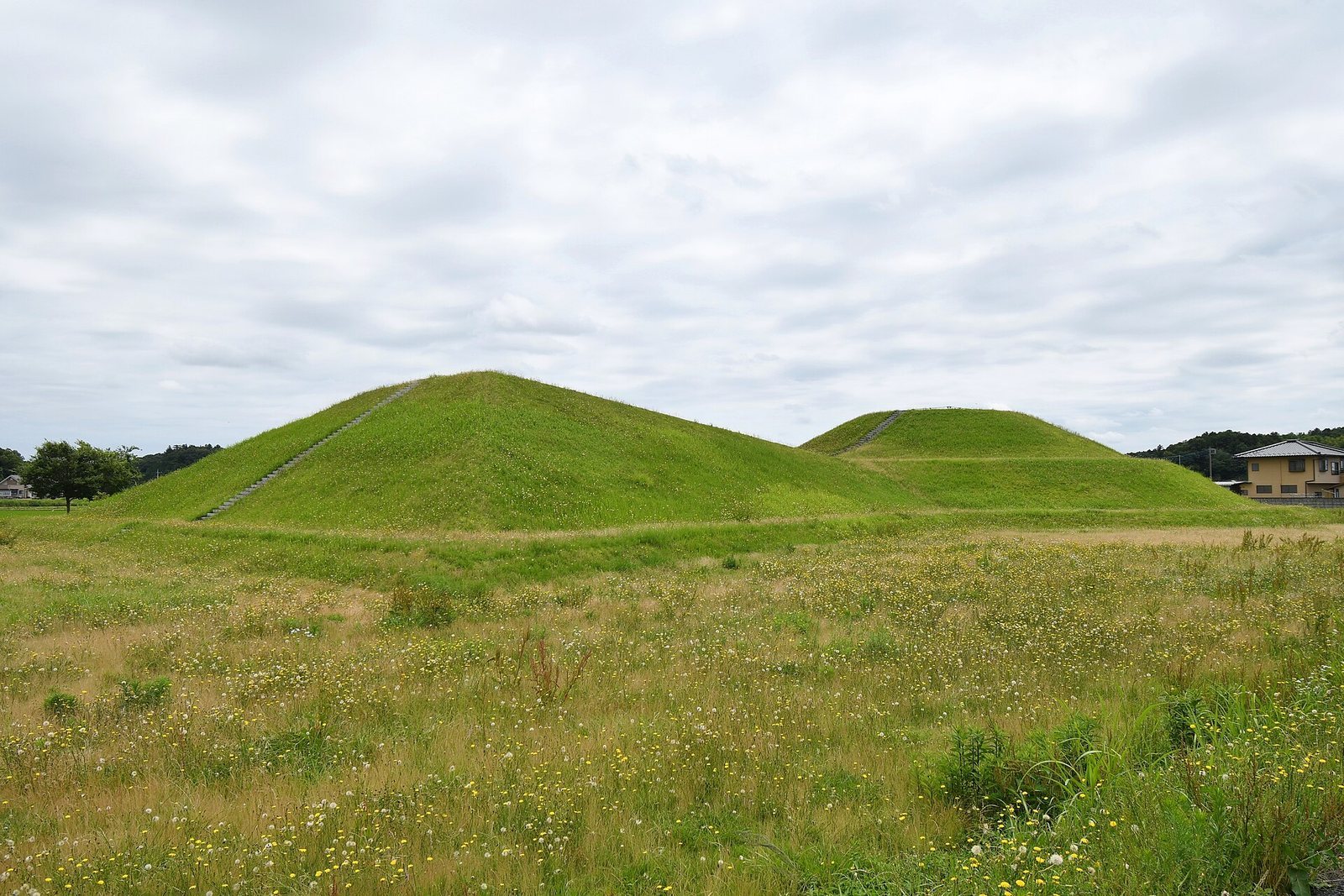
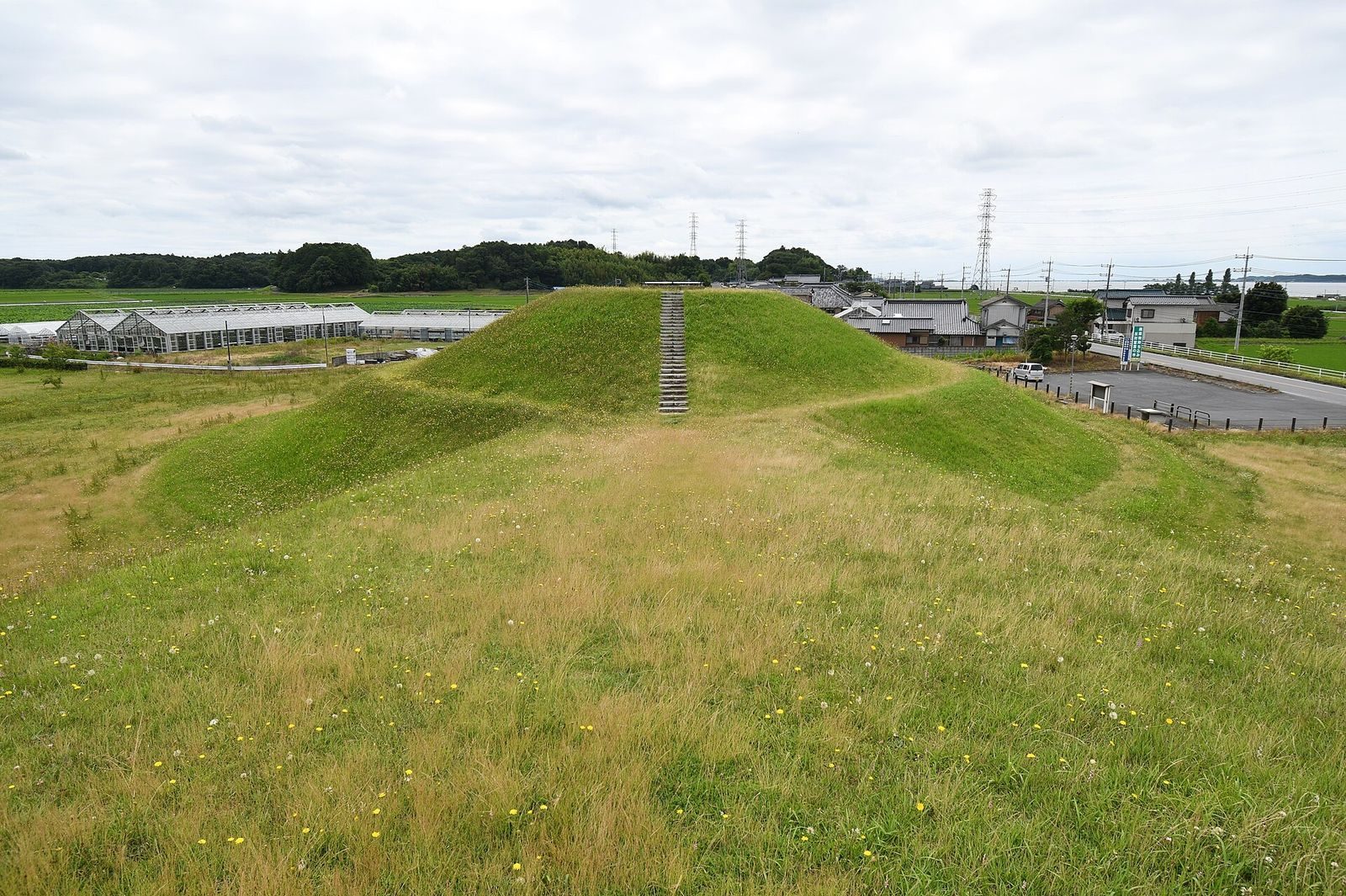
The mound stands on a flat lowland formed by river deposits along the Kamata River, north of Lake Kasumigaura. It belongs to a local group of burial mounds, others of which occupy the Namegata Plateau. Its keyhole-shaped plan has a northwest-facing front section and a circular rear section. A basal platform supports the mound, and a moat surrounds it.
Mound and exterior features
Shape and dimensions
The mound measures 82.1 metres in length, or 87.3 metres including its basal platform. Its rear circular section is 46.5 metres across, widening to 52.1 metres with the platform, and stands 8 metres high. The constricted section is 21.6 metres wide, or 23.4 metres including the platform. The front section is estimated to be 37.2 metres wide, or 40.9 metres with the platform, and 6 metres high. The rear section has two tiers.
Terracotta figures and cylinders
Rows of unglazed terracotta haniwa, objects placed on burial mounds, lined the exterior. Cylindrical examples stood alongside figures representing people, deer, cattle, and dogs.
Burial chamber and grave goods
Stone coffin
A stone coffin lay 2.7 metres below the summit, at the centre of the rear section; its original depth was about 3 metres. Set east to west, it held the deceased with their head to the east. Nine pieces of metamorphic slate formed the coffin: a lid, paired stones for each side, an end stone at either end, and two base stones. Its form belongs to the nagamochi tradition, modeled on a long storage chest. The lid is 2.3 metres long, 0.80 metres wide, and 0.10 metres thick, with projections along both long edges for attaching lifting ropes.
Deposits beside and within the coffin
The coffin held an extended human burial and numerous grave goods, including a gilt-bronze crown. An iron halberd had been placed on its lid. About 50 centimetres to the north, a separate wooden feature, possibly a box or a structure made from planks, held further grave goods, including weapons and horse equipment. The excavated artifacts are exhibited at the Ibaraki Prefectural History Museum and the Meiji University Museum.
Later burial evidence
Pagoda and cremated remains
A five-ring pagoda, a Buddhist funerary monument made of five stacked elements associated with the cosmos, and scattered cremated human bones were found about 1.5 metres below the summit of the rear section. Disturbed soil in the area also points to later digging connected with the medieval cemetery.