Hacienda Cocoyoc: A Colonial Sugar Estate in Mexico
Site at a Glance
- Popularity
- Medium
- Country
- Mexico
- Primary era
- Early Modern
- Eras represented
- Early Modern, Modern
- Civilizations
- Habsburg, Habsburg Spain, Spanish
- Site type
- Economic
- Remains
- Production Complex
On this page9 sections
History
Hacienda Cocoyoc is a Spanish colonial sugar estate in Mexico whose main development began in the early seventeenth century. Pedro de Izaguirre is credited with establishing the hacienda and its mill, which became part of a prosperous regional sugar enterprise. Its history reflects the successive Indigenous, colonial, and agrarian transformations of the surrounding region.
Regional history before the hacienda
The region was inhabited by Tlahuicas in the west and Xochimilcas in central and eastern areas. Both were Nahua peoples. Their political communities were associated with the regional centers of Cuauhnáhuac and Huaxtepec, while Oaxtepec headed several dependent communities. Cotton grown in the hot lowlands helped draw Mexica interest to the area. In the late fourteenth century, Mexica ruler Acamapichtli subdued Cuauhnáhuac, extending Mexica control. A separate tradition connects the region’s cotton with ruler Huitzilihuitl’s marriage to Miahuaxihuitl, the daughter of Cuauhnáhuac’s ruler. Their son was Moctezuma I, a later Mexica emperor.
Colonial foundation and sugar production
After the Spanish conquest of Tenochtitlan in 1521, lands around Cocoyoc formed part of the extensive domain granted by the Crown to Hernán Cortés, later called the Marquesado del Valle. The region’s water and land supported sugar-cane cultivation, and sugar mills spread under grants and other arrangements made by the Crown and Cortés’s descendants. Buildings stood on the Cocoyoc lands by 1560. Authorization to operate a sugar mill followed in 1614, and in 1619 Francisco de Sequera received permission to alter a mill he owned at Cocoyoque.
Izaguirre established the estate during the second decade of the seventeenth century, assembling land from several owners. He acquired Tlacomille and Guanacastitlán from Sequera, a caballería, a historical measure of land, belonging to Cuautla notary Mené Pérez Solís, and holdings associated with Diego Ferralde, who had bought them from the Santo Domingo convent at Oaxtepec. He also purchased Xalmile from María Cantia. A perpetual lease granted to Isabel Ruiz and Francisco Bernal covered half a caballería at Guajoyuca, land later incorporated into Cocoyoc. A separate lease and these purchases helped bring the hacienda and mill together as a substantial estate.
After Izaguirre’s death, his widow Nicolasa inherited the property. By 1655 it belonged to Catalina de Ordaz, who lost a lawsuit that year against the friars of San Hipólito, owners of neighboring Hacienda del Hospital. Between 1711 and 1714, Cocoyoc expanded by absorbing Hacienda Pantitlán. The estate became one of the region’s successful sugar enterprises, despite restrictions and difficult market conditions. The Crown prohibited sugar exports from New Spain in the late sixteenth century and banned brandy production in 1714. In the eighteenth century, overproduction and weaker demand lowered prices and contributed to a crisis among sugar estates.
Expansion, coffee, and changing ownership
Antonio Velasco de la Torre acquired Cocoyoc in 1785. His son, also named Antonio Velasco de la Torre, inherited it in 1801 and began a new period of expansion. He borrowed 30,000 pesos for improvements and introduced coffee cultivation in 1823. Known as Velasco coffee, the crop became popular in the region and in Mexico City. During the younger Antonio’s ownership, the estate ranked among Mexico’s twelve leading sugar plantations and, for a time, was the most valuable estate in its region.
After the younger Antonio died, his daughters Margarita, Josefa, and Guadalupe inherited Cocoyoc but lost it because of debt. Juan Goríbar became its owner, and after his death his son Jesús inherited the estate. Jesús sold it to Isidoro de la Torre in 1875; Isidoro’s son Tomás later inherited it. In February 1841, while Goríbar owned the property, Scottish-born travel writer Frances Erskine Inglis Calderón de la Barca toured the sugar mill, coffee mill, and brandy factory.
Revolution, redistribution, and restoration
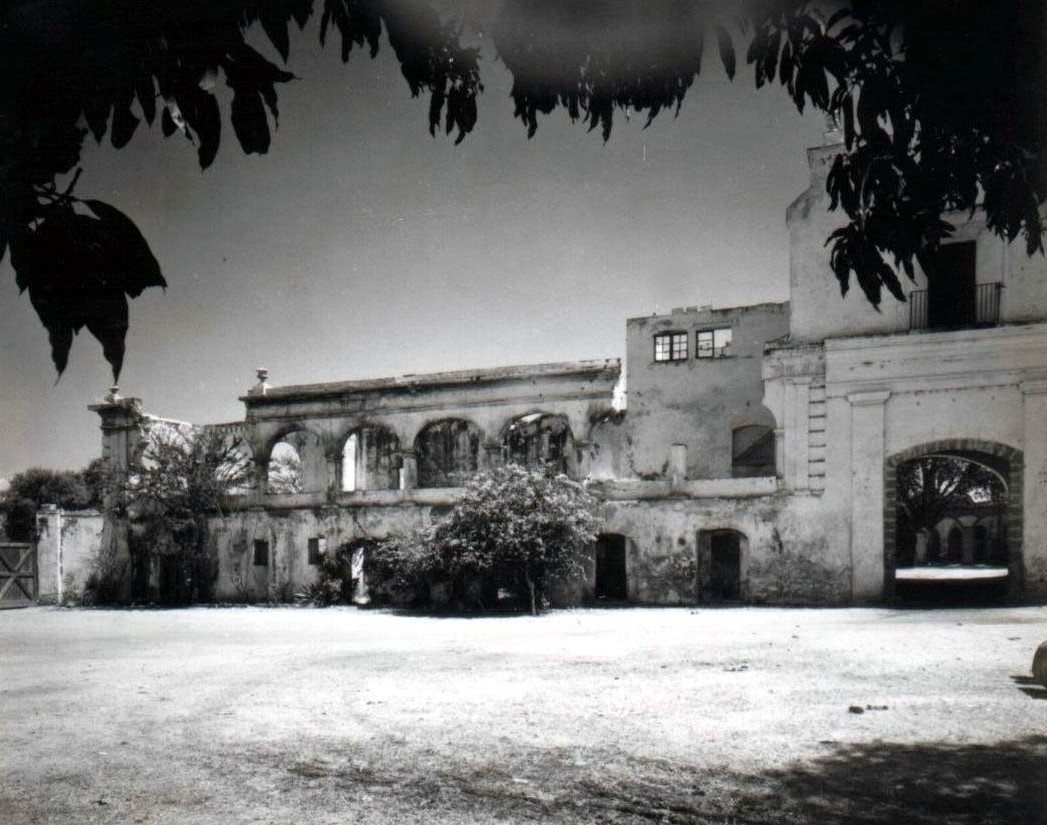
During the Mexican Revolution, agrarian revolutionary Emiliano Zapata declared war on the sugar haciendas, and fighting destroyed parts of Cocoyoc’s buildings. After the conflict ended in 1921, redistribution of the estate’s lands enabled the creation of thirteen ejidos, communal land units under Mexico’s system of agrarian tenure. Paulino Rivera Torres acquired the remaining estate in 1957 and restored it for use as a resort. Hacienda Cocoyoc is recognized as a Historical Monument by Mexico’s National Institute of Anthropology and History.
Remains
Estate layout and residences
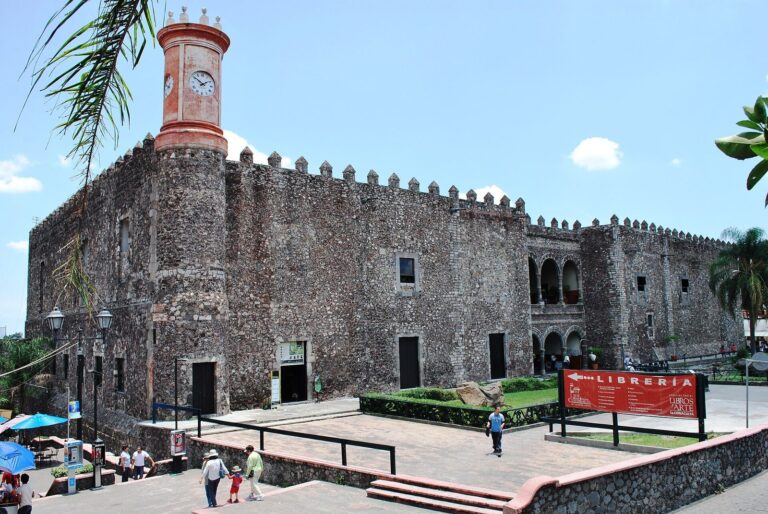
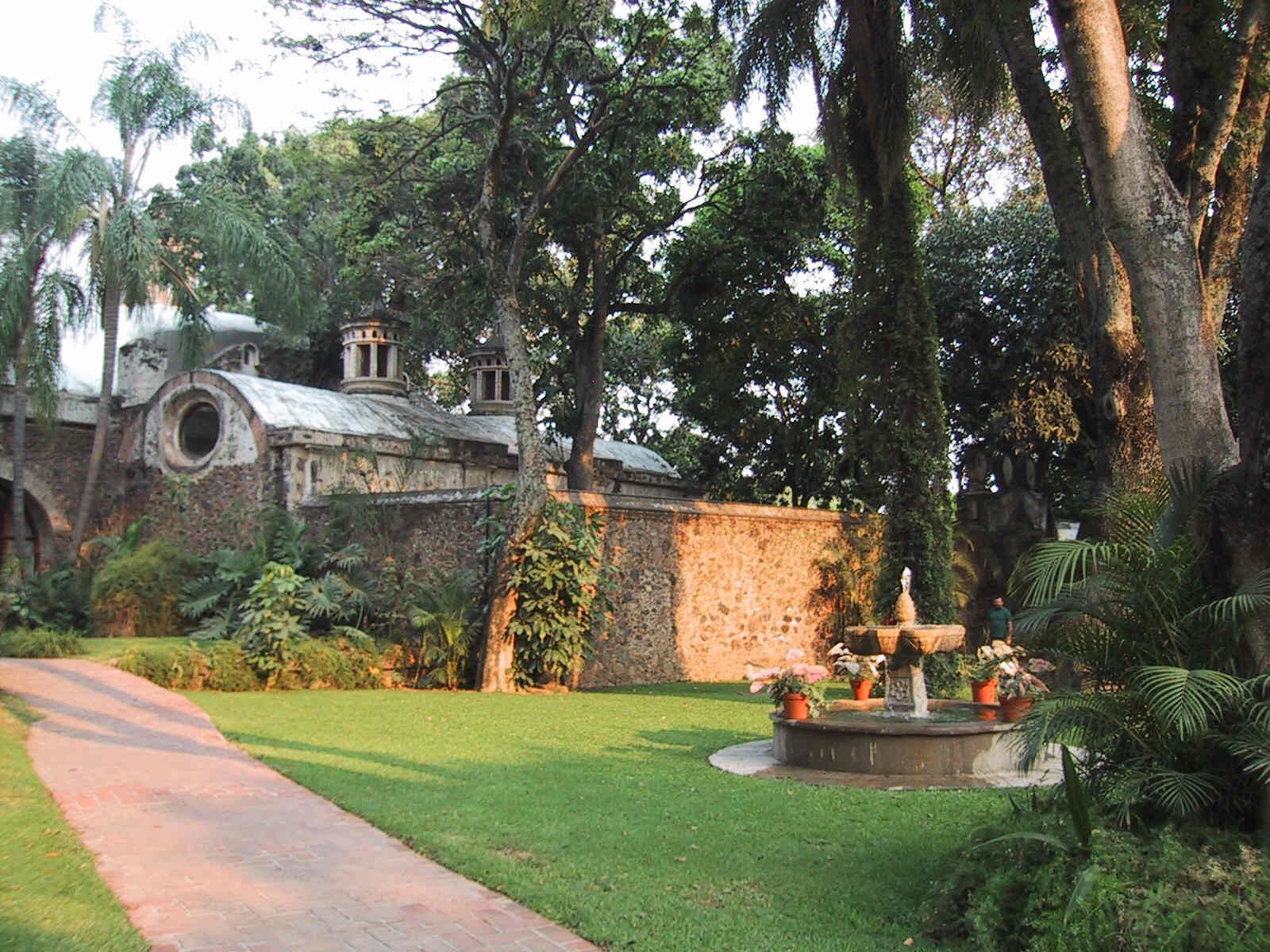
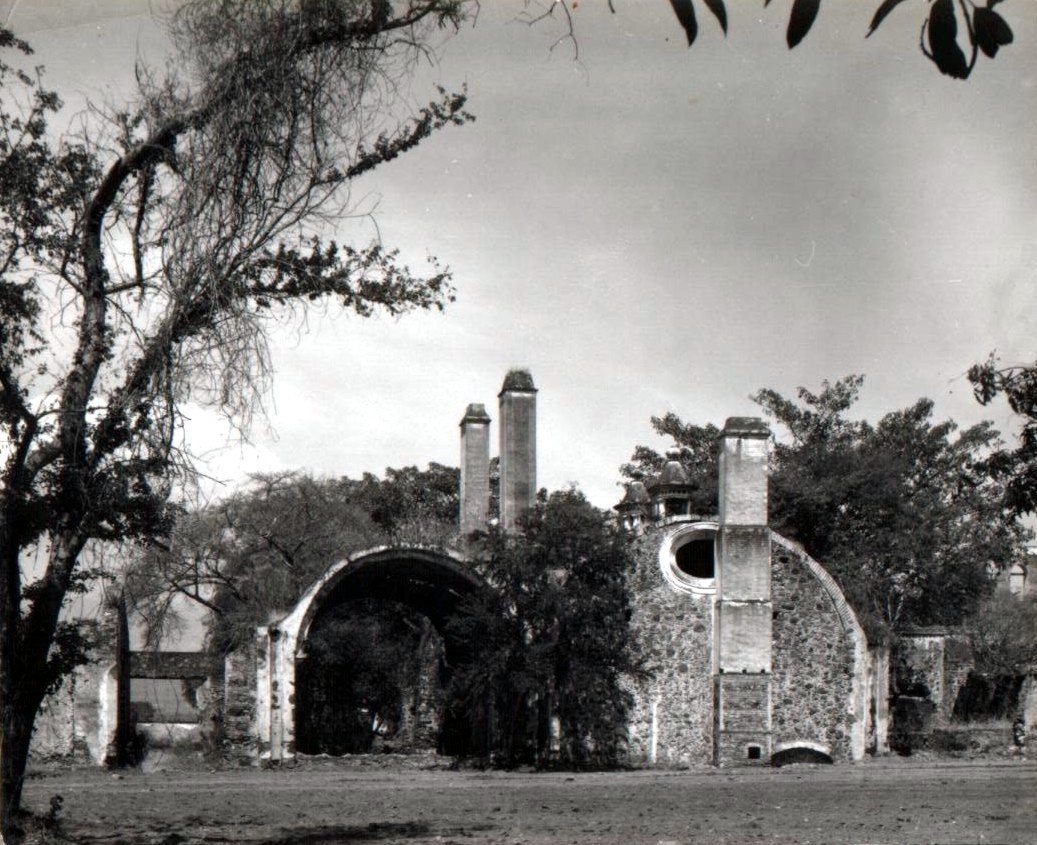
The estate covers about 25 hectares at an elevation of approximately 1,325 metres. Its buildings were designed to resemble medieval European fortifications, reportedly because builders experienced in hacienda construction were scarce. The complex combined residences, production buildings, machinery, and workers as an economic unit that also exercised judicial authority. A two-level main house had either a central courtyard or a front garden. Its upper rooms provided bedrooms and other accommodation for owners and guests, as well as living rooms and storage. The lower level included a kitchen, spaces for trade or production, workshops, stables, corrals, and a prison. The wider complex also included a chapel, associated with the owner’s social and economic standing.
Sugar-processing buildings and equipment
The sugar works used two waterwheels facing one another to crush cane. Wooden channels carried the juice to a boiler room, while a large press extracted juice from the crushed cane. Furnaces three to four metres high heated five or six boilers; the last pan brought the syrup to the consistency required for crystallization. Workers then transferred it to the purging house and poured it into perforated clay molds lined with banana leaf. Molasses drained through the molds and was poured over the sugar loaves to whiten them. The crystallized sugar was dried in an open sun-drying area. These connected stages formed the processing system that turned cut cane into finished sugar.
Waterworks and cultivated grounds
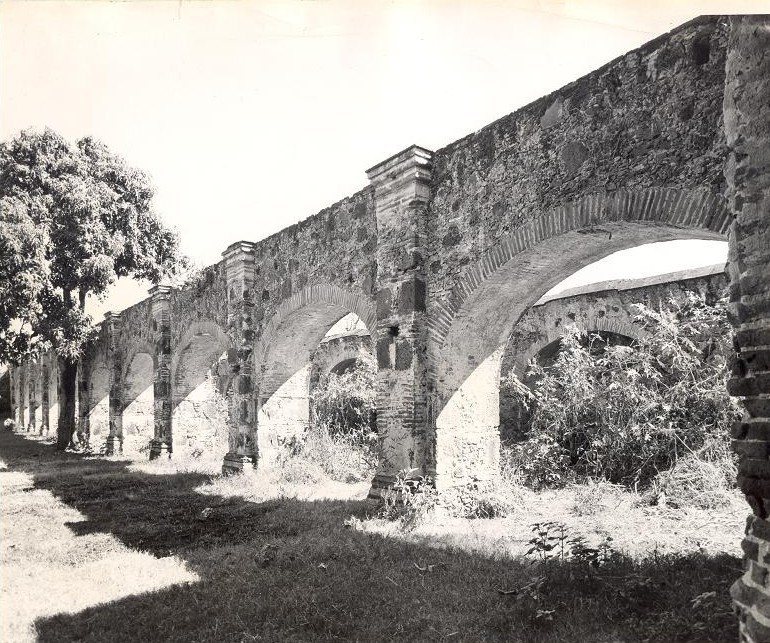
An aqueduct built in the early nineteenth century brought water from nearby sources to a waterwheel at the refinery. The waterworks associated with Xalmile included a dam, an irrigation channel, and a separate aqueduct carrying water from the Tecuaque ravine. The estate’s cultivated grounds included orchards and streams. During her 1841 visit, Calderón de la Barca described about 3,000 orange trees, other fruit trees, numerous streams, and flowering plants on the property.