Giant Castle: A Prehistoric Hillfort in Czechia
Site at a Glance
- Popularity
- Medium
- Country
- Czechia
- Primary era
- Iron Age
- Eras represented
- Iron Age
- Civilizations
- Celtic
- Site type
- Military
- Remains
- Fort
On this page6 sections
History
Giant Castle is a prehistoric hillfort in the Šumava, or Bohemian Forest, near Popelná in Czechia. Its construction is generally dated to the seventh–fifth centuries BC and associated with the Hallstatt and La Tène periods, successive stages of Iron Age Europe commonly linked with Celtic communities. The site is considered an important trace of Celtic settlement in Bohemia, although its builders, occupants, and exact purpose remain uncertain.
Later activity and archaeological study
The limited amount of everyday material recovered, including pottery and animal remains, has supported the view that the hillfort was not permanently inhabited. A sacred or ritual purpose has been proposed, as has the possibility of human sacrifice, but both ideas remain hypotheses. A role in gold extraction or exchange has also been suggested. Gold mining took place in the surrounding region near Kašperské Hory and Sušice.
Gold mining that began in the thirteenth century may have accelerated the fort’s deterioration. Stones were taken from its walls, and digging for gold disturbed the foundations. Local stories instead credit giants with building the fort from rocks and boulders. Other tales say that people from Popelná made a bridge over the Losenice from giants’ bones, supposedly as long as three metres. In another story, a poor tailor thrown from the fort by giants survived and found gold beneath a boulder they had hurled after him.
Archaeologists identified fortifications and signs of prehistoric activity on Valy’s northeastern slope in 1926. A later investigation brought together archaeologists and geologists from the National Museum and the Institute of Rock Structure and Mechanics of the Academy of Sciences in Prague. The site was added to the Czech state register of cultural monuments in 1963.
Remains
Setting and layout
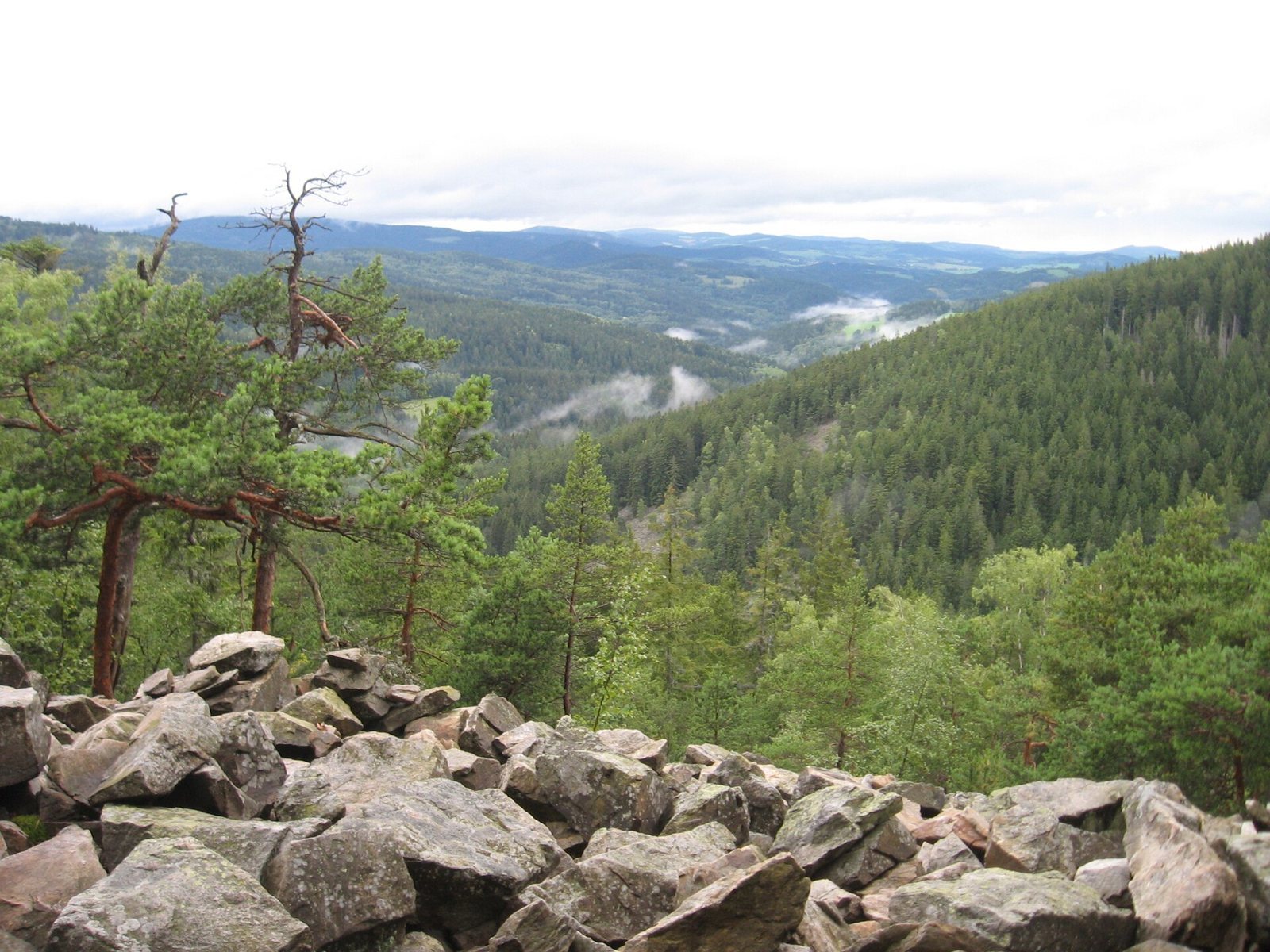
The hillfort occupies a steep rocky spur on Valy, whose summit rises to 1,010 metres. The fortified area lies lower, at about 950–980 metres, on a ridge with its long axis running north–south. It extends roughly 370 by 80 metres and covers 2.6 hectares, divided between a 1.9-hectare outer forecourt and a 0.7-hectare inner enclosure. The Losenice stream curves around the northern and eastern sides of the spur, while the southern side provides the more accessible approach. Scree and spruce forest surround the site, and snow commonly remains from October to May. Giant Castle is described as the highest hillfort in Czechia and the highest prehistoric hillfort in Bohemia.
Defenses and stonework
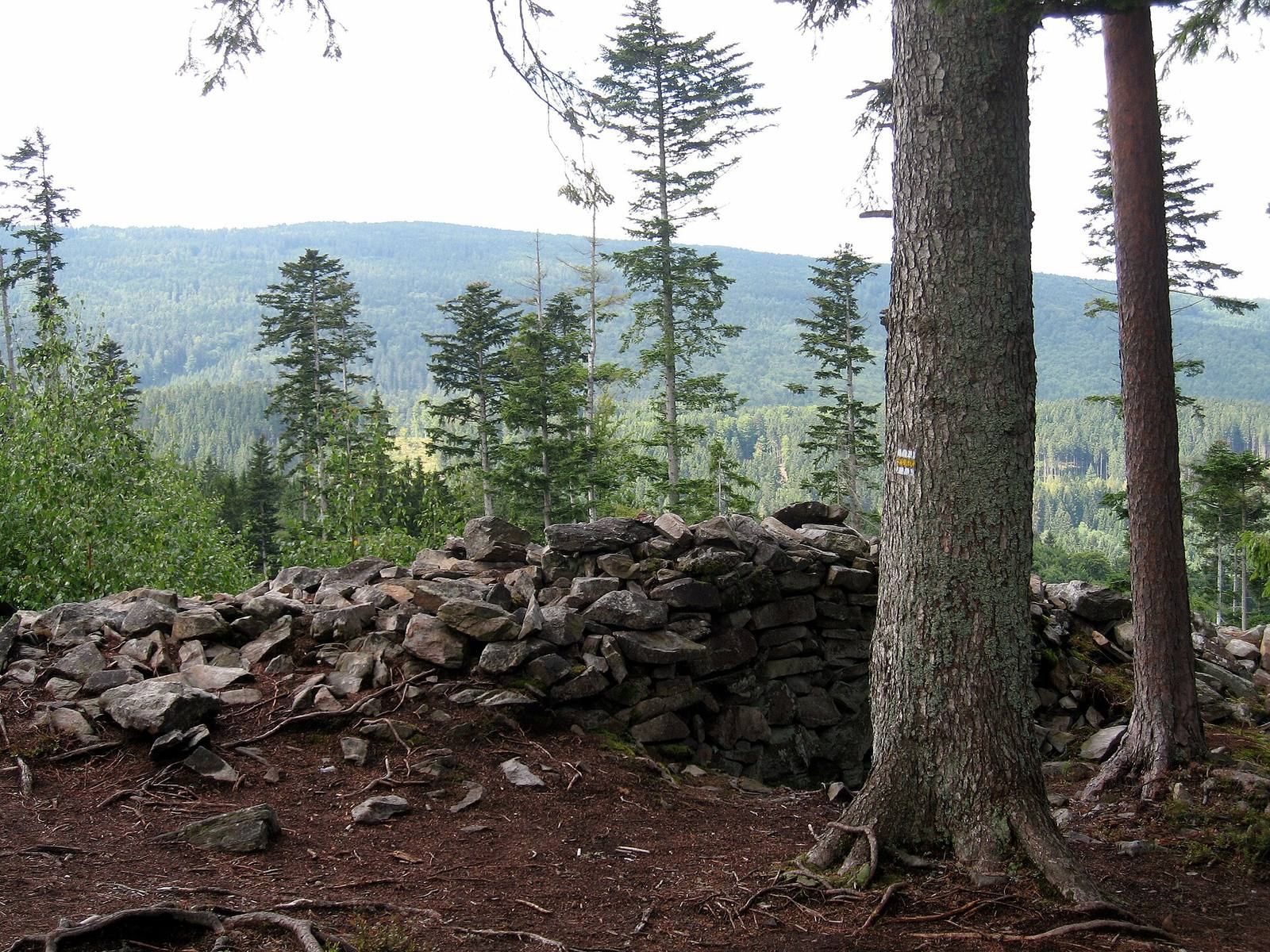
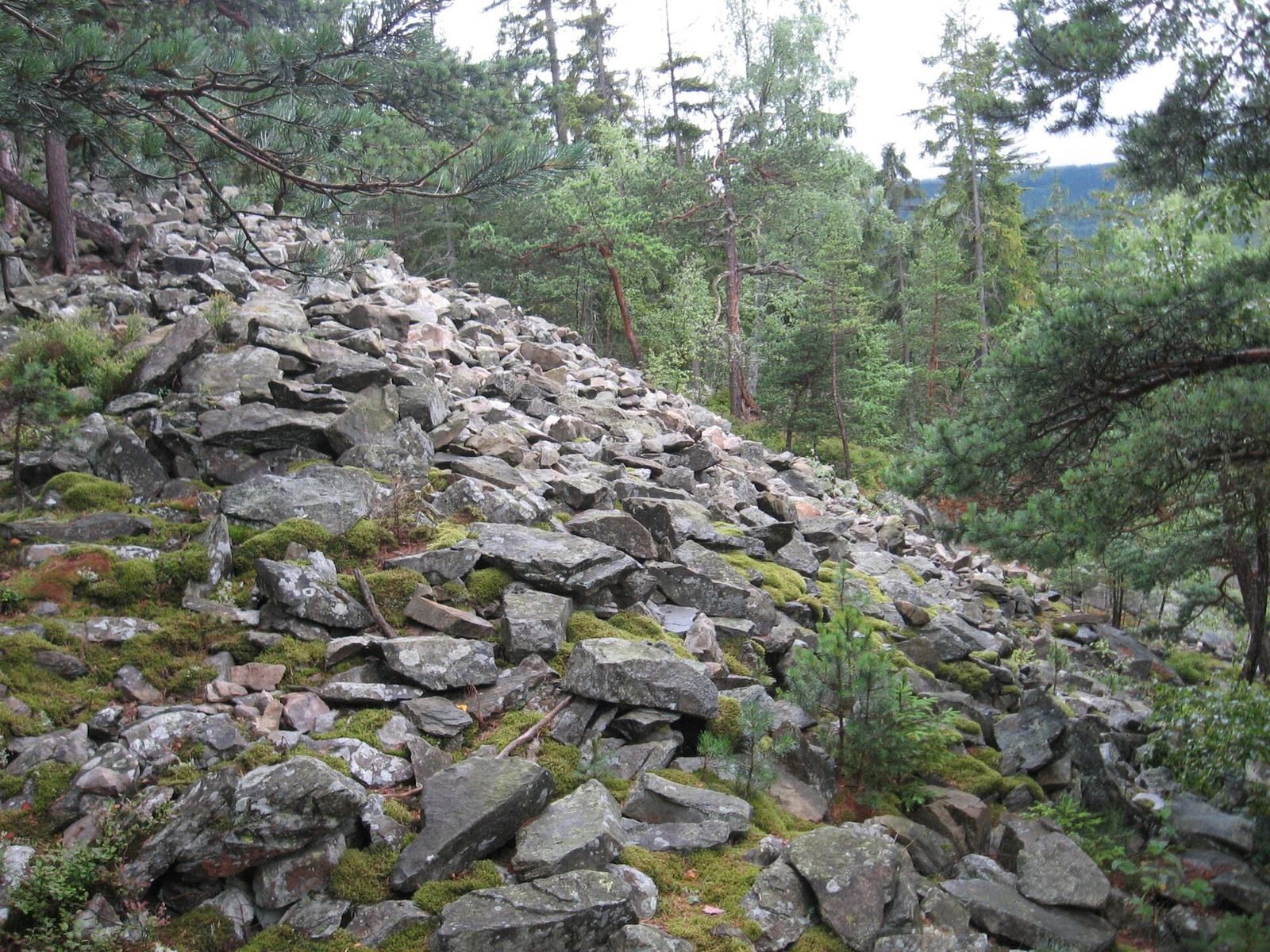
Visible ramparts, defensive earthworks or walls, mark both the outer boundary and the inner enclosure. The more accessible southern approach was defended by the forecourt and a raised rocky outcrop on its southern side, probably used as a lookout. At the northern end of the ridge, steep slopes and a double stone rampart protected the acropolis, the fortified inner area. The builders made use of natural rock faces and stone gathered from nearby scree. Each rampart had two carefully fitted outer stone walls, with smaller stones and rubble packed between them; the structures were about 3–4 metres wide and 3–5 metres high. Some incorporated blocks reach 5 metres in height. A wooden structure may have stood above the walls. A section of the original outer wall survives in place alongside earthwork and masonry remains, and is described as among the oldest structures still standing in the Czech lands.
Archaeological finds
Finds include Celtic coins dated to the second–first centuries BC and other material associated with Celtic culture. The coins have been cited in support of a possible connection with gold extraction and trade. Finds from the hillfort are displayed at the museum in Kašperské Hory.