Church of St. Dunstan, Mayfield: An Anglican Parish Church
Site at a Glance
- Popularity
- Medium
- Country
- United Kingdom
- Primary era
- Early Modern
- Eras represented
- Medieval, Early Modern, Modern
- Civilizations
- British, English, Norman
- Site type
- Religious
- Remains
- Church
On this page17 sections
History
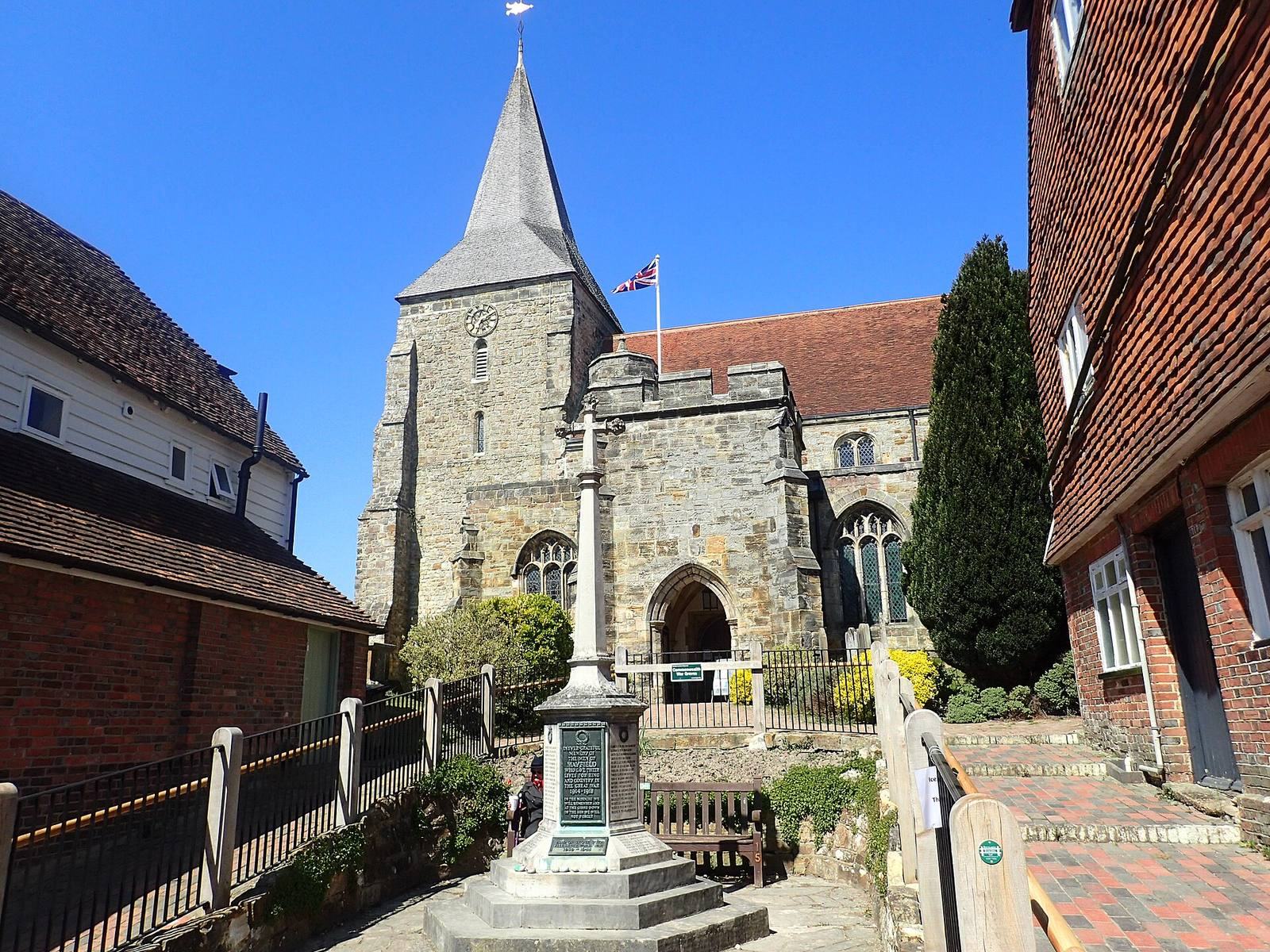
The Church of St. Dunstan, Mayfield, is an Anglican parish church in the United Kingdom, founded in 960 by St Dunstan, an Anglo-Saxon churchman who was then Archbishop of Canterbury. Its earliest building is believed to have been timber; the Normans rebuilt the church in stone in the 12th century. The church remains within the Church of England tradition and belongs to the Diocese of Chichester, a bishop’s administrative district serving Sussex.
Foundation and rebuilding
A fire in 1389 nearly destroyed the church. The congregation probably worshipped in the private chapel at the nearby Archiepiscopal Palace while the church was rebuilt between 1410 and 1420.
Changes and worship
During Henry VIII’s reign (1509 to 1547), the nave roof was raised and a clerestory, a high row of windows in a church wall, was added. Lightning damaged the building in 1621. Thomas Punnett installed a clock in 1657. By 1731, the west-end gallery was associated with skilled psalm singing, continuing the church’s longstanding Anglican musical tradition.
The Parvise Room, a room above the church porch, served as a cloakroom for the girls’ school held in the church during the 19th century. The Browne of Canterbury organ was bought second-hand by subscription in 1864 and enlarged in 1900. A new organ by J. W. Walker replaced it in 1997. The church’s east end was reordered in 2016.
Restoration and the music festival
Cracks in the tower walls during the 1970s led to a restriction on ringing all the bells together. The tower was restored fourteen years later, and the bells were retuned at the Whitechapel Bell Foundry.
The Mayfield Festival of Music and the Arts began in 1970, founded by the church’s director of music, Kenneth Pont, with vicar Canon Donald Carter as its guiding spirit. It started as a fundraiser for a proposed church hall, which was never built, but continued as a biennial festival. Most concerts take place in the church or at the Old Palace.
In 2018, the festival held a competition for a cantata about St Dunstan, intended for its 50th anniversary in 2020. The winning work by Nicholas O’Neill premiered at the opening concert in 2022 after a delay. It included a Mass setting by Andrew Benians, Evening Canticles by Pont, a libretto by Jeremy Summerly, and a prologue based on plainchant, unaccompanied liturgical singing, attributed to St Dunstan.
Remains
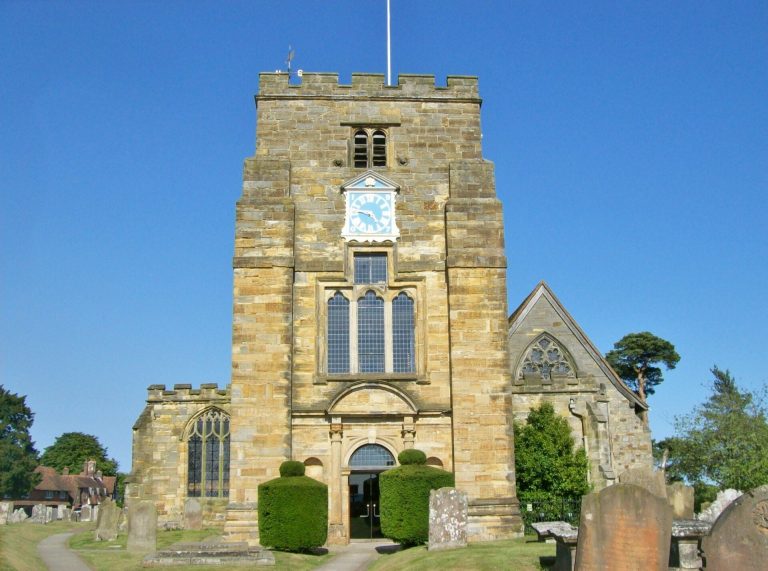
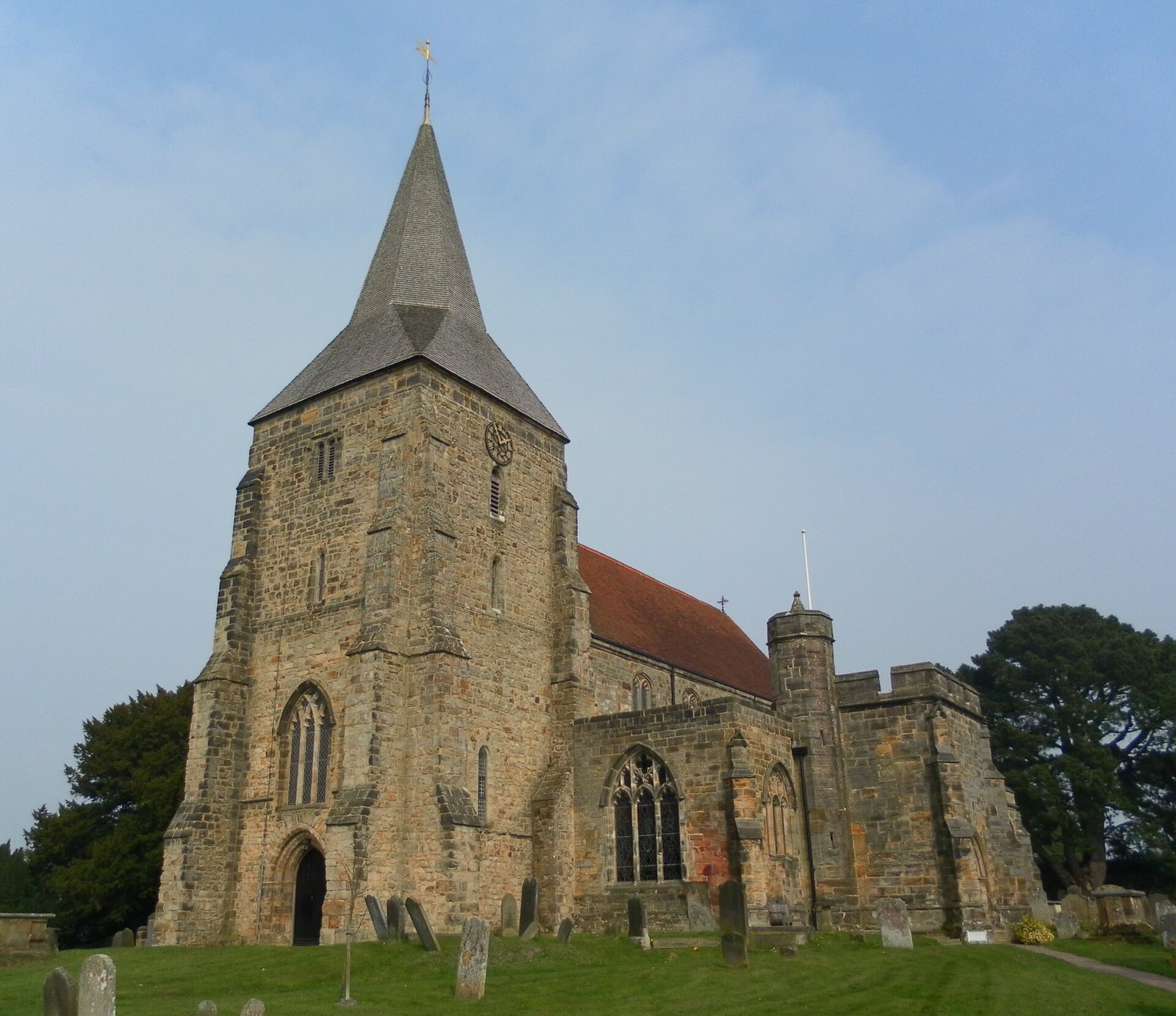
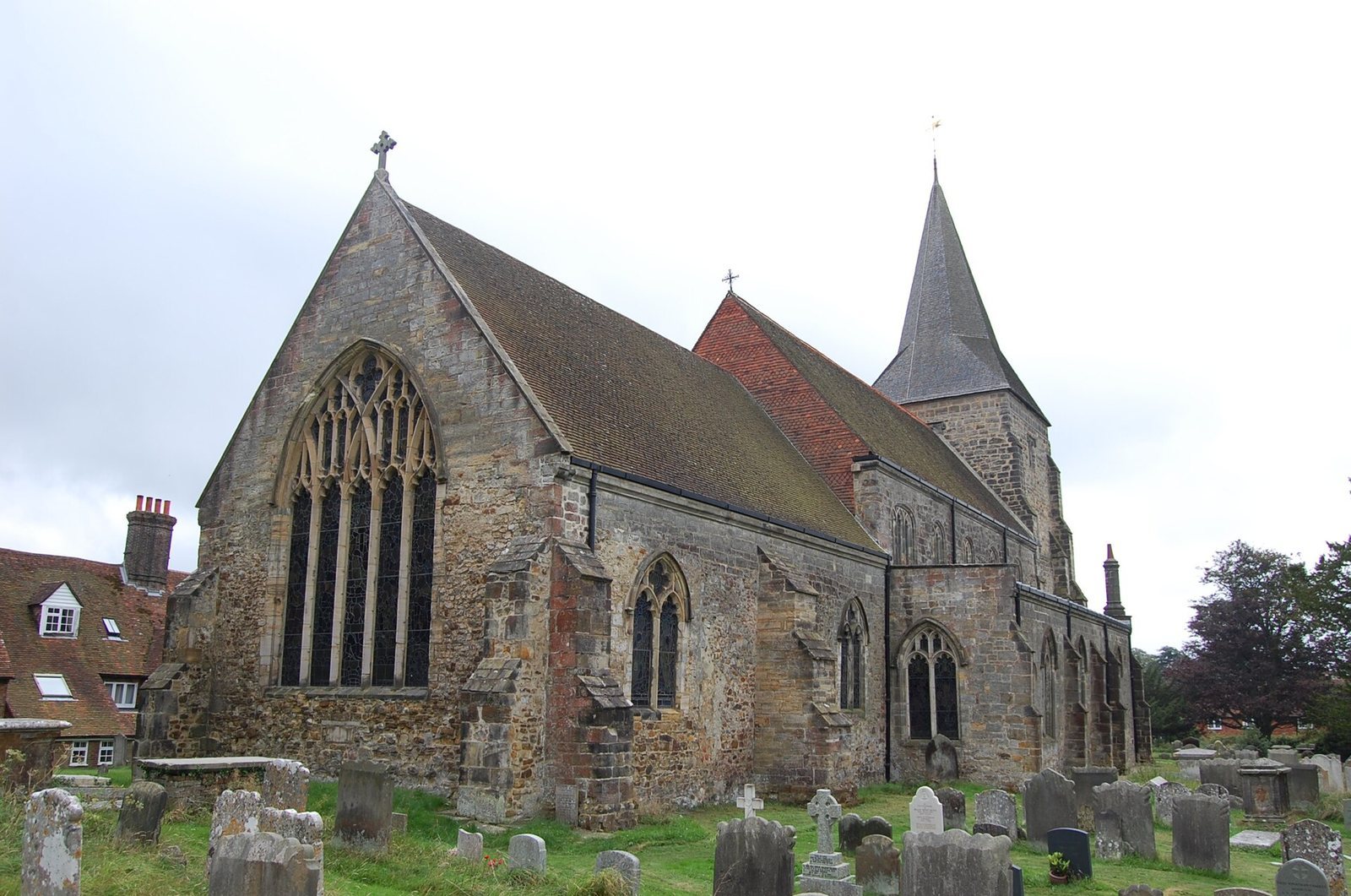
The church’s fabric combines Norman and Gothic work with later changes, and most of its parts are mainly 17th-century in date. Its 13th-century tower is the oldest part. The surviving structure includes the nave, north aisle, south porch, and chancel.
Medieval fabric and porch
Tower and early fabric
The tower contains a small domestic area as well as the bells and clock. Other early surviving features include a tall, narrow pointed window in the west wall and the base of the north aisle.
South Porch and Parvise Room
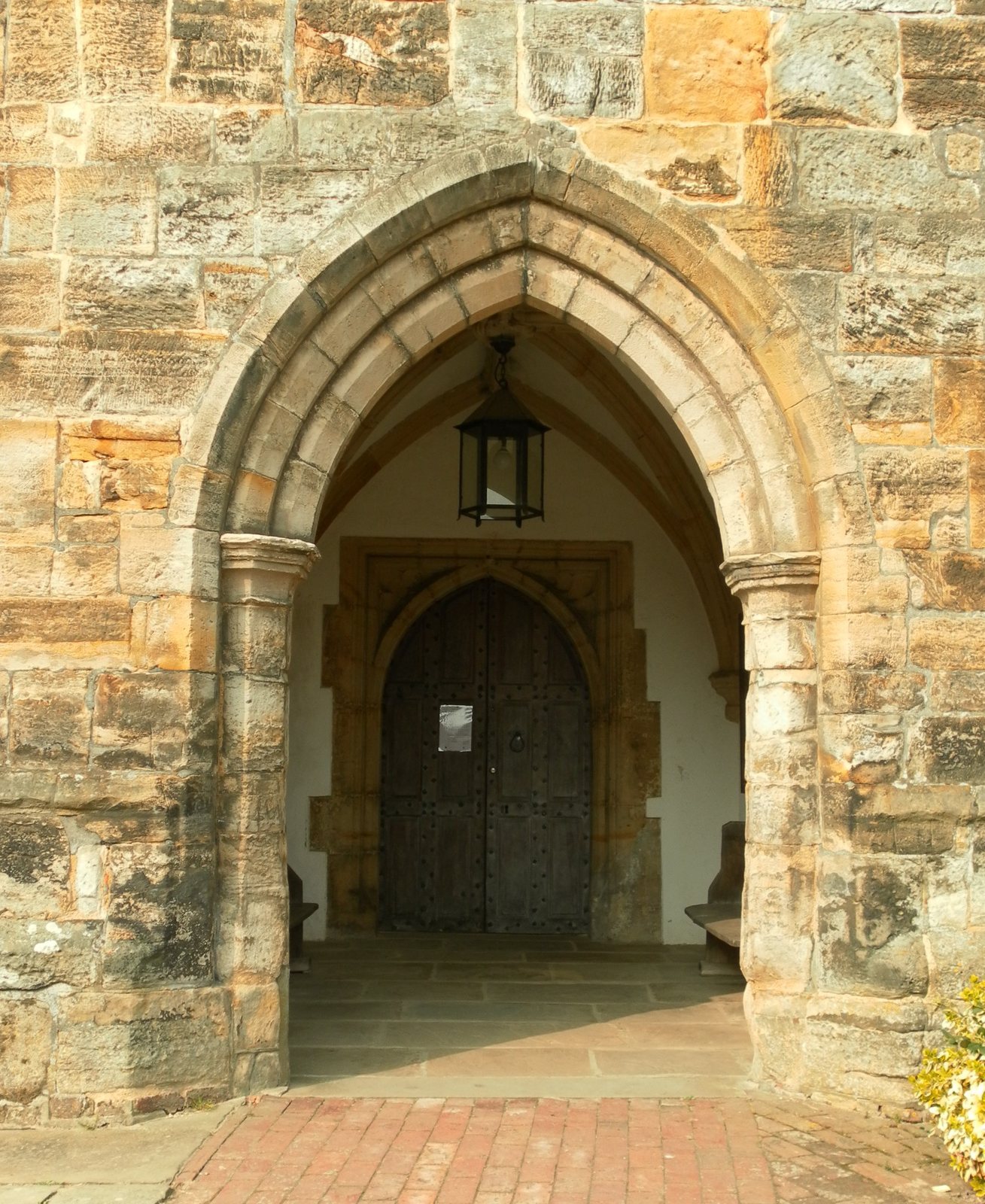
In the South Porch, moulded corbels, or projecting supports, carry a ribbed vault divided into four sections. A winding staircase turns around a central post and leads to the Parvise Room above. The room may have been an oratory for a chantry priest, who served a foundation for prayers or masses for the dead, or a room for a sacristan, who cares for church furnishings and ritual objects.
Interior fittings and memorials
Font, pulpit, and choir furnishings
The octagonal font dates to 1666 and bears the initials of vicar Robert Peck. The 17th-century pulpit has carved strapwork in the Jacobean style, an English design associated with the reign of James I and the early 17th century. Some choir stalls dating from the 16th century were repaired in the early 20th century by the Mayfield School of Carving. The school also made the Lady Chapel screen, whose linenfold carving imitates the folds of fabric. The replacement choir stalls are movable and made of oak.
Iron slabs and family memorials
Four tomb slabs made of Sussex iron are in the nave, and two cast-iron slabs are set into its floor. The best-preserved slabs commemorate Thomas Sands, a London wine cooper, and his grandson, also named Thomas Sands. The slabs provide evidence of the area’s iron industry. Many memorials commemorate members of the Baker and Kirby families, local ironmaster families. Georgina Weldon is buried in the Dalrymple family vault.
Windows and altar furnishings
East window and stained glass
The east window is in the Perpendicular style, a late medieval English Gothic style marked by strong vertical lines. It contains glass from Munich, donated by the Treherne family in 1869. A tradition says that a pope admired the east-facing window as a gateway between eastern and western cultures. Most of the church’s windows date from the late 19th or early 20th century; nine were made by Mayer & Co of Munich and London. Some show biblical scenes.
Reredos
Walter Gale, the village schoolmaster, carved a reredos, a decorative structure behind an altar, in 1750. It was replaced in 1894.
Bells and organs
Bells
The oldest bell was cast by Thomas Giles in 1602. Other bell founders associated with the church’s bells include Brian Eldredge, Richard Phelps, John Waylett, and John Taylor.
Organs
The former Browne organ stood in the South Chancel. It had 13 stops, controls that select groups of pipes, and a Gothic-fronted case. It was more compact than the instrument that replaced it.
The Walker organ has three manuals, or keyboards, approximately 29 stops, and more than 1,800 pipes. David Graebe designed its carved case, and Andrew Pennells of Walker oversaw its installation. Much of the pipework came from Carl Giesecke GmbH in Germany, and the instrument’s sound design and voicing were developed in consultation with the builder. Later changes by organ consultant Paul Hale replaced some stops, refined the Swell division, an enclosed section whose volume can be regulated, and enlarged its mixture ranks, which sound several pitches from each key, with new pipes made by Shires Pipework Company of Leeds. The organ also has a cymbelstern, a rotating star-shaped device that rings small bells, and serves both worship and recital music. The church is in good repair and receives daily maintenance.