Horselunges Manor: A Late-Medieval Manor House in East Sussex
Site at a Glance
- Popularity
- High
- Country
- United Kingdom
- Primary era
- Medieval
- Eras represented
- Medieval, Early Modern
- Civilizations
- British, English
- Site type
- Domestic
- Remains
- Manor House
On this page8 sections
History
Horselunges Manor is a late-15th-century manor house in Hellingly, East Sussex, United Kingdom, built by John Devenish. His family owned it for several generations. The name may derive from Hurst-longue, meaning “entrance into the wood.”
Late medieval and Tudor history
In 1541, Thomas Fiennes, an English peer who held the hereditary title Baron Dacre, and his men were involved in a poaching incident near the manor. A servant was killed, and Fiennes was hanged for the crime.
Restoration and later ownership
The manor was restored in 1925 and received Grade I listing in 1952, England’s highest listed-building grade, for buildings of exceptional interest.
In the early 1970s, Peter Grant, manager of the English rock band Led Zeppelin, bought the manor from Barbara Doxat and renovated it. The house featured in The Song Remains the Same, a film about the band. Grant also proposed making the manor the base of Swan Song Records, the band’s record label. He sold the property in 1988, and it is now a private residence.
Remains
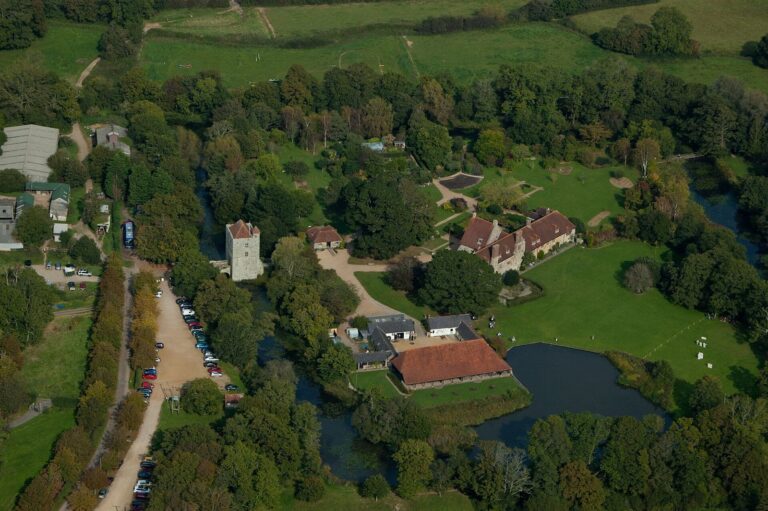
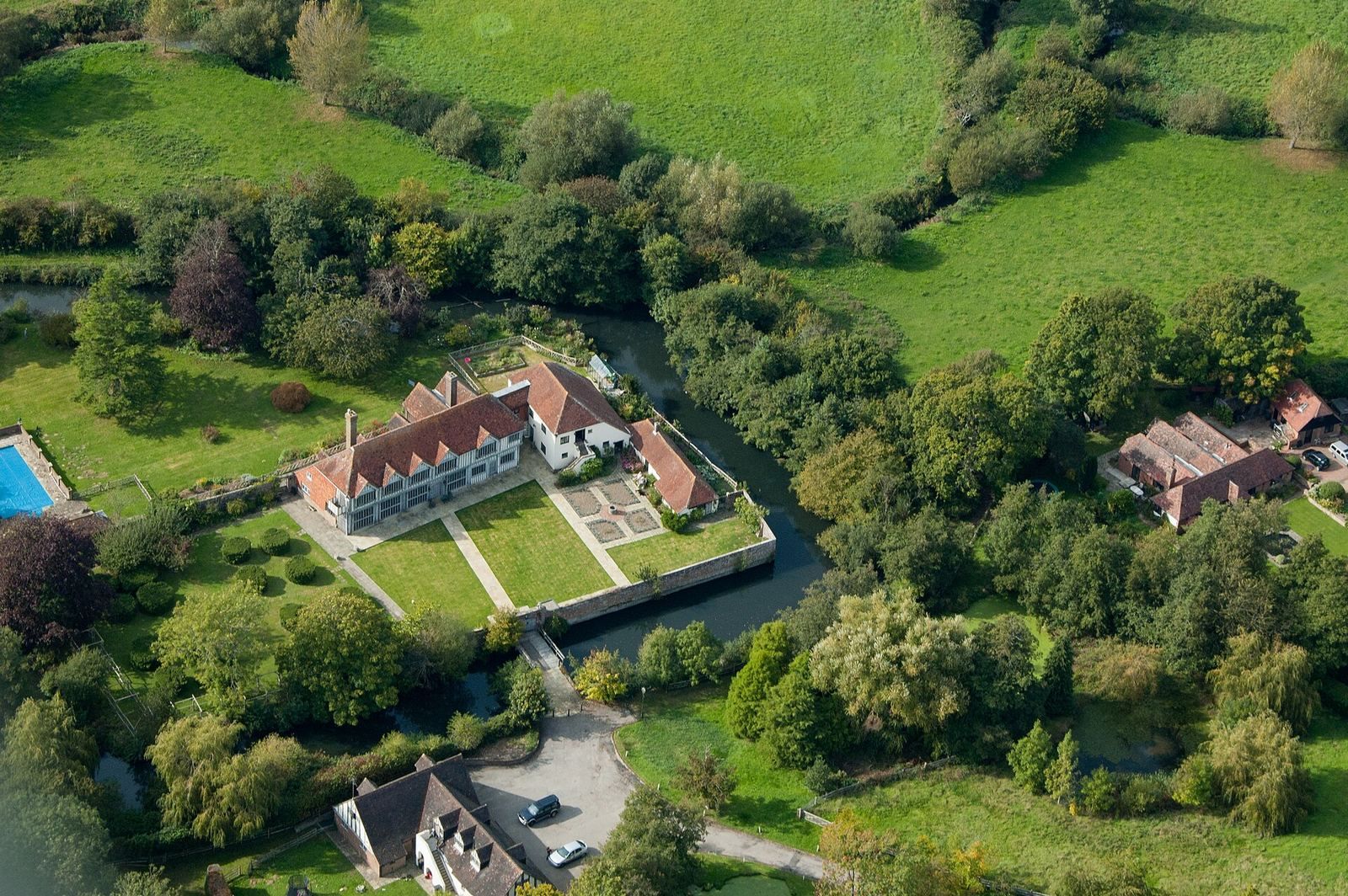
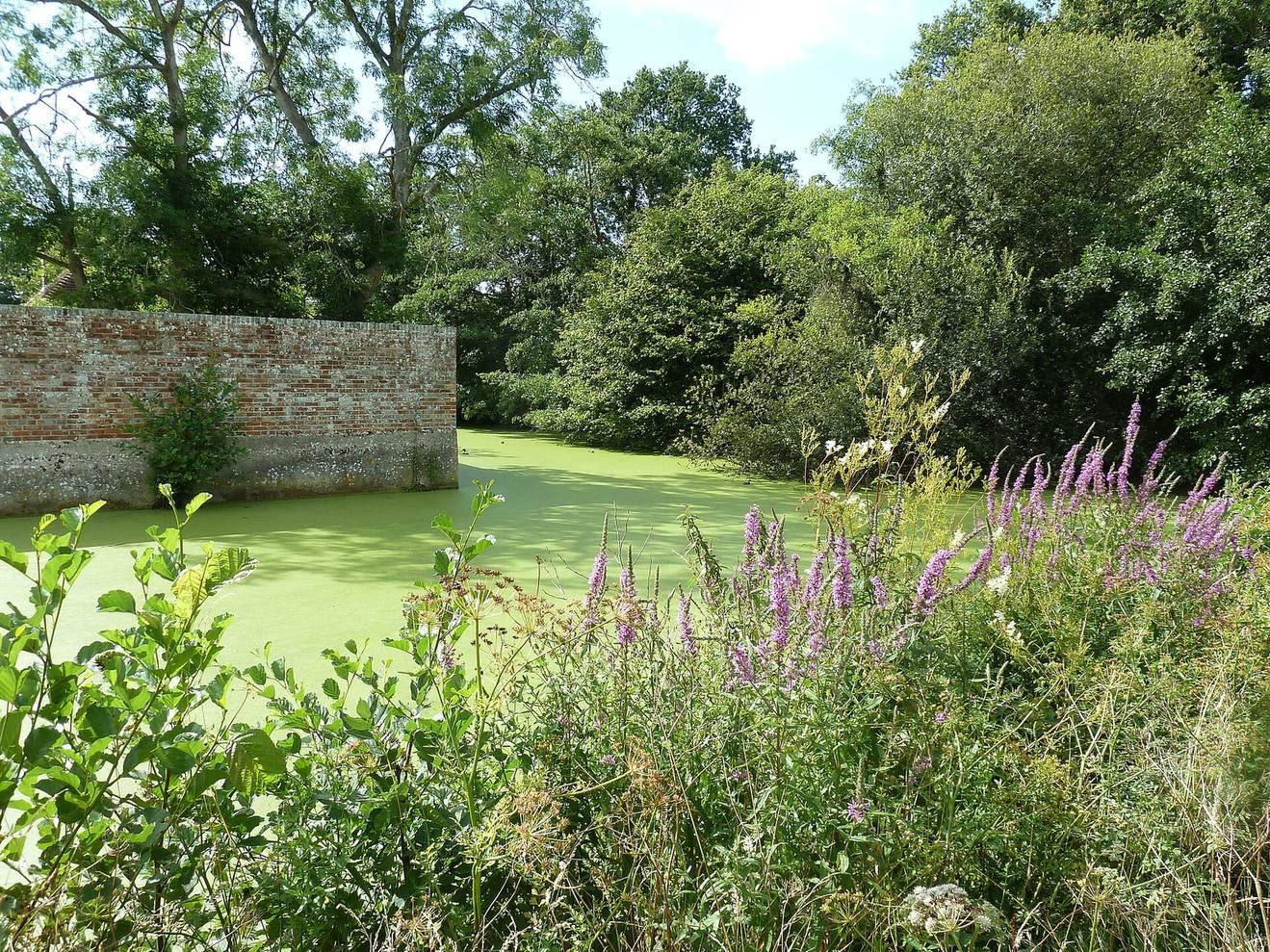
The timber-built, two-storey house is surrounded by a moat. The manor occupies a stated 1.5 acres (0.61 hectares), within an estate that includes 86 acres (35 hectares) of farmland. It stands about 300 metres from the parish church and two miles from Hailsham.
House and associated buildings
The manor house
The house may have formed part of a quadrangle, with one side of that possible arrangement surviving. Its halls have no side passages. Alterations in the 16th century may have removed the original hall, and a staircase was added.
Stable and chapel
An 18th-century stable of red brick stands beside the house. A chantry chapel, a chapel associated with prayers or masses for the dead, is attached to the main building.
Gardens
A walled garden occupies the western side of the estate. A remnant of a topiary garden created in the 20th century also survives.