King’s Grave of Seddin: A Late Bronze Age Burial Mound
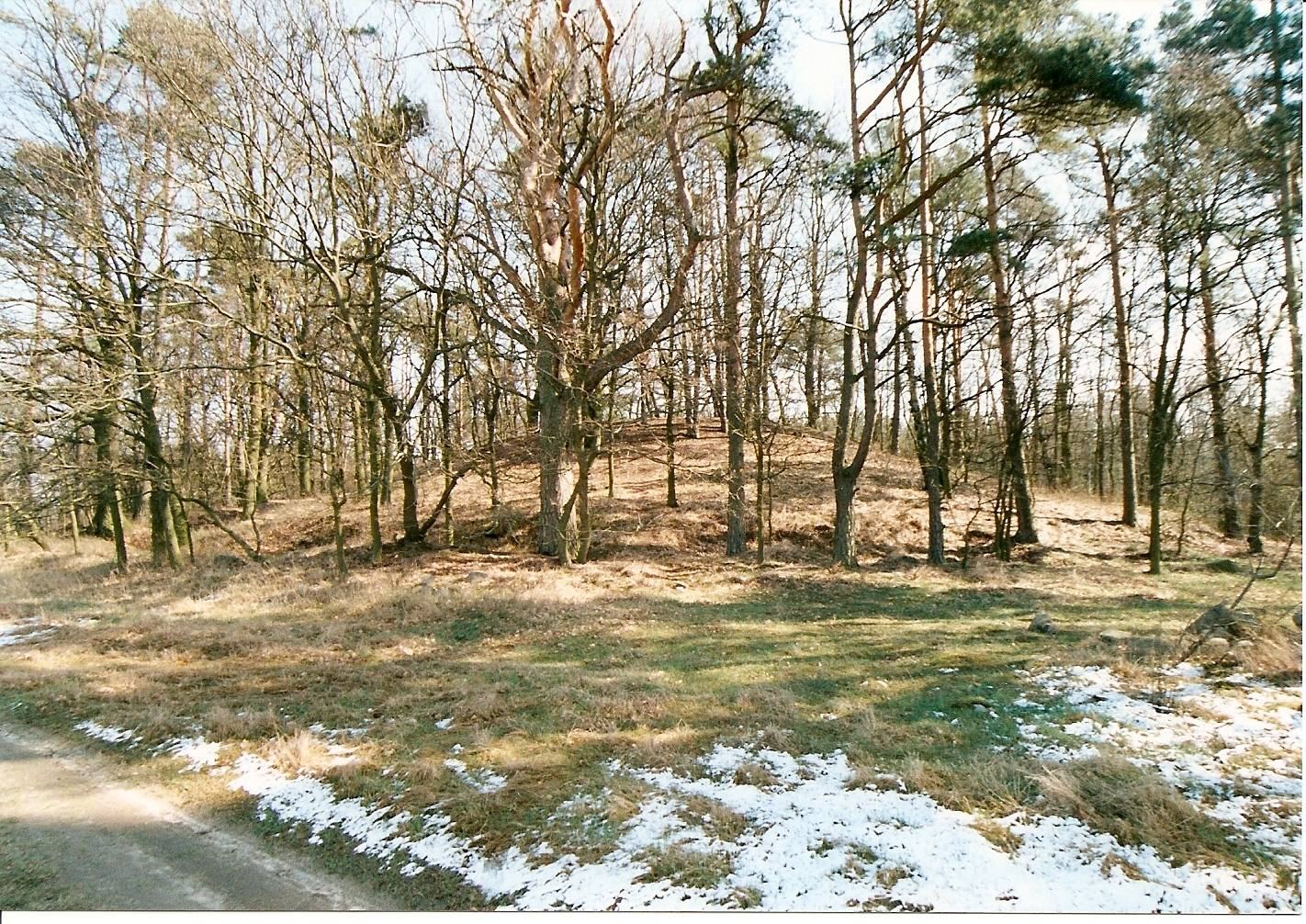
Site at a Glance
- Popularity
- High
- Country
- Germany
- Primary era
- Bronze Age
- Eras represented
- Bronze Age
- Civilizations
- Unclassified
- Site type
- Burial
- Remains
- Burial Mound
On this page12 sections
History
The King’s Grave of Seddin is a burial mound in Germany, dating to around 800 BC in the Late Bronze Age. It belongs to Stage HA B, or Period V, one of the chronological divisions used for the Late Bronze Age. Its scale and grave goods gave it importance beyond the surrounding region.
Late Bronze Age setting
The mound is part of the Seddin group of large burials. Other mounds in the group, dating to Periods III–VI, contained rich offerings such as swords, metal vessels, wagon parts, and horse harness fittings. Nineteenth-century road construction destroyed those mounds. Comparably furnished burials are known from Funen and Dithmarschen.
The grave assemblage indicates that the principal person buried here held high social standing. Some objects point to connections farther south, especially with central Italy. A proposed interpretation of the bronze amphora’s decoration as calendar symbolism remains under discussion. If accepted, it could suggest that the buried person’s authority had a sacred or religious dimension.
Discovery in 1899
Two workers broke into the previously undisturbed burial chamber while quarrying stone in 1899. On 20 September, Ernst Friedel, director of Berlin’s Märkisches Museum, examined the mound with museum and archaeological colleagues. After a long-serving museum caretaker entered the chamber, the group secured the finds and made an initial examination. The objects were taken to the Märkisches Museum that year.
Renewed research and preservation
Archaeological interest revived around 2000. Four long trenches near the mound revealed settlement remains in 2002, followed by further excavations in 2003 and 2004. From 2015, investigations took place almost annually under prehistoric archaeologist Immo Heske of the University of Göttingen.
An archaeological protection area of 5,661 hectares was established around the mound in 2016, the first of its kind in Brandenburg. Some of the metal grave goods were lost during the Second World War. Surviving originals, accompanied by copies, returned to permanent display in 2002 and moved to Berlin’s Neues Museum in 2019. Replicas are displayed in museums in Perleberg, Havelberg, and Brandenburg.
Large-scale work on the surrounding settlement began in 2023 in a project led by Heske and Brandenburg state archaeologist Franz Schopper, with support from the German Research Foundation. The work uncovered a large Bronze Age building, whose possible roles included storage, shelter, living space, and formal representation. Researchers have suggested its central room may have hosted celebrations; Schopper has raised the possibility that it served as an assembly hall for a ruler.
Excavations in 2024 uncovered a densely built settlement, and additional houses found in 2025 extended the known area of occupation. Pottery from the 2025 work dates to the eleventh and tenth centuries BC, before the mound was built. Its abundance suggests that pottery was made locally in the Prignitz.
Remains
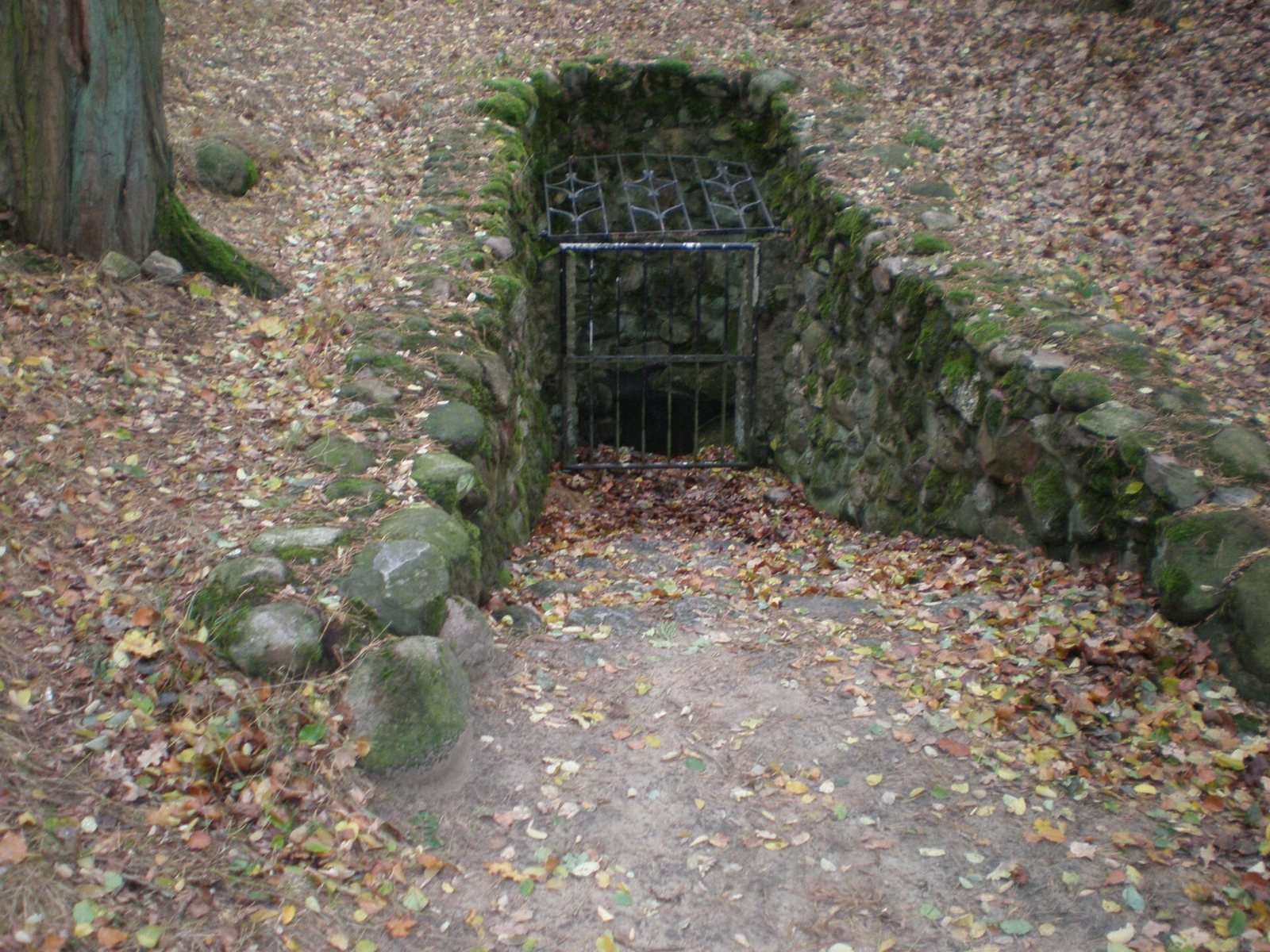
The mound stands southwest of Seddin at the edge of the Stepenitz valley, which drains toward the Elbe. It is part of a wider landscape of Bronze Age remains, including a long line of heated pits to the north, a large building to the west, and settlement structures extending northward and farther afield. The mound contains a stone burial chamber, while the surrounding remains include both ground-cut pits and buildings supported by posts.
The mound and associated features
Mound and chamber
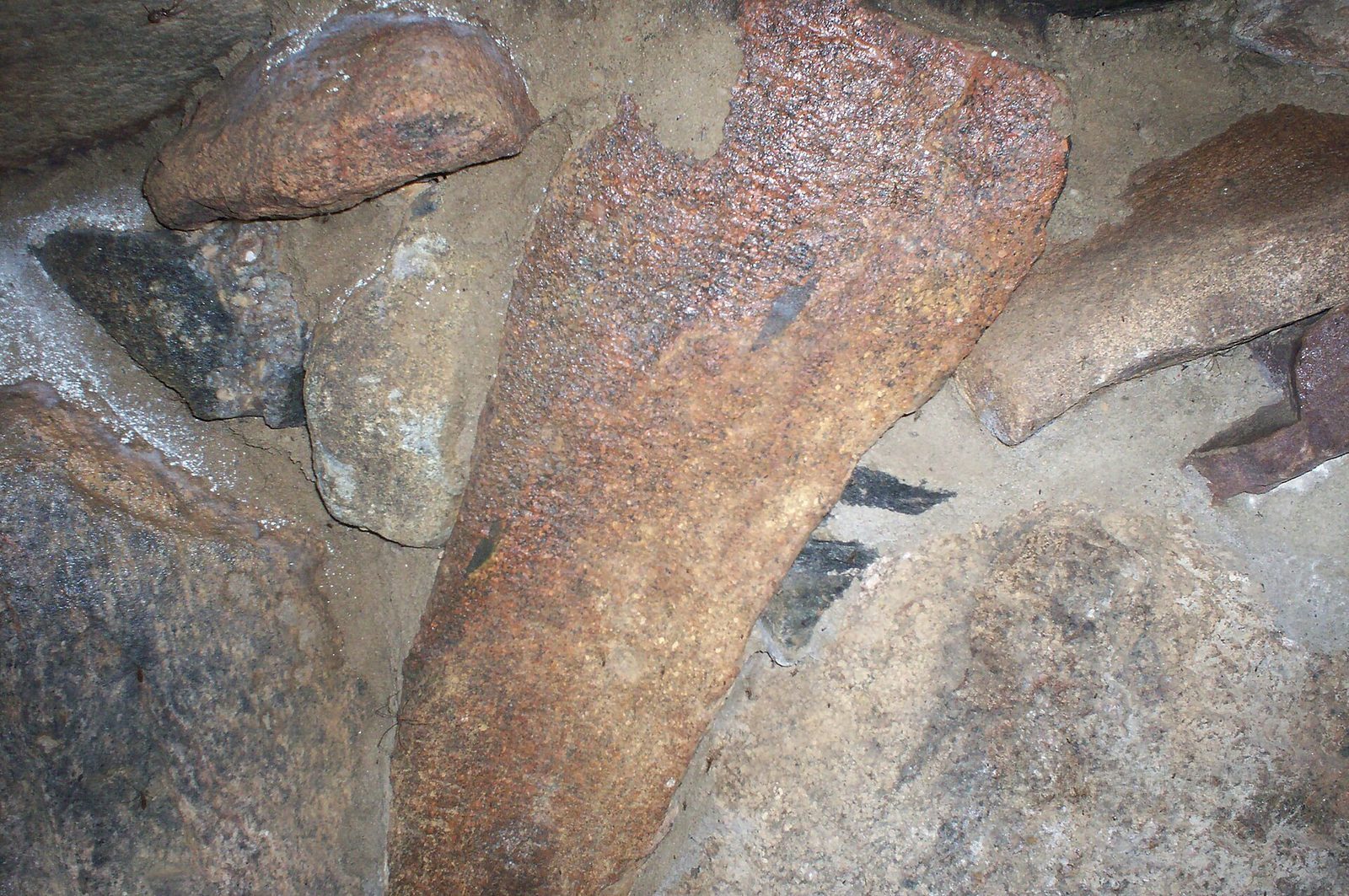
The mound measures about 63.8 metres across and 10 metres high. Its chamber sits off-centre and is formed from nine large erratic boulders, stones carried from their original geological setting, commonly by glacial movement. The walls were coated with clay and painted red. A false vault, made by laying stones in courses that project inward, formed the roof. Beneath the mound was a 15–20-centimetre layer of sand flecked with charcoal. The sand appears to be the natural ground surface after its topsoil had been removed; the charcoal came from poplar, willow, and oak. A radiocarbon measurement, which estimates age from radioactive carbon in organic material, gave an initial date of 829 BC. The charcoal may relate to a dedication ceremony or a funeral pyre.
Cremations and grave goods
Three cremation burials were found in the chamber. The principal burial was placed in a clay vessel whose lid was held by clay pegs. Inside it, a bronze-sheet amphora held the cremated remains, probably wrapped in marten fur. Other grave goods included a sword, an axe and chisel with sockets for their handles, spiral rings, razors with stylized imagery, bronze-sheet vessels, a knob with a projecting stem, a leaf-shaped point, a comb, a ring-handled knife, spiral-wire hair rings, and two iron needles.
Line of heated pits
About 53 metres north of the mound, heat-affected pits form a line almost 300 metres long, aligned roughly east to west. They average 1.85 metres apart, but the line is not straight, with the clearest variations in its central and western stretches. These irregularities leave open whether the pits were made at different times or by different groups. The feature may have been a ritual installation or a place for ceremonial fires. Radiocarbon dates from charcoal were 904 and 1001 BC. Despite the difference between these results, the line is dated to around 900 BC, shortly before or possibly contemporary with the mound.
Settlement buildings
Large post-built building
The building uncovered in 2023 was supported by posts set into the ground and dates to around 1000 BC. It measured 10 metres wide and 31 metres long, and was estimated to have stood about seven metres high. It has been described as the largest building of its period yet discovered in northern Europe. Its two outer walls were made of fieldstones, unlike the usual local construction in wood and clay. The interior included a central hearth, a living area, and a space for formal representation. The central room may have been used for ceremonies.
Settlement houses and pottery
Houses excavated in 2024 were about seven metres wide and 17 metres long. Their construction and dates link them with the larger building, and additional houses were exposed in 2025. Pottery recovered in 2025 included large storage vessels as well as many smaller, finely made and decorated dishes, bowls, and handled pots.