Old Sarum Castle: A Medieval Fortress and Royal Administrative Centre
Site at a Glance
- Popularity
- Medium
- Country
- United Kingdom
- Primary era
- Medieval
- Eras represented
- Iron Age, Medieval
- Civilizations
- English, Norman
- Site type
- Military
- Remains
- Castle
On this page9 sections
History
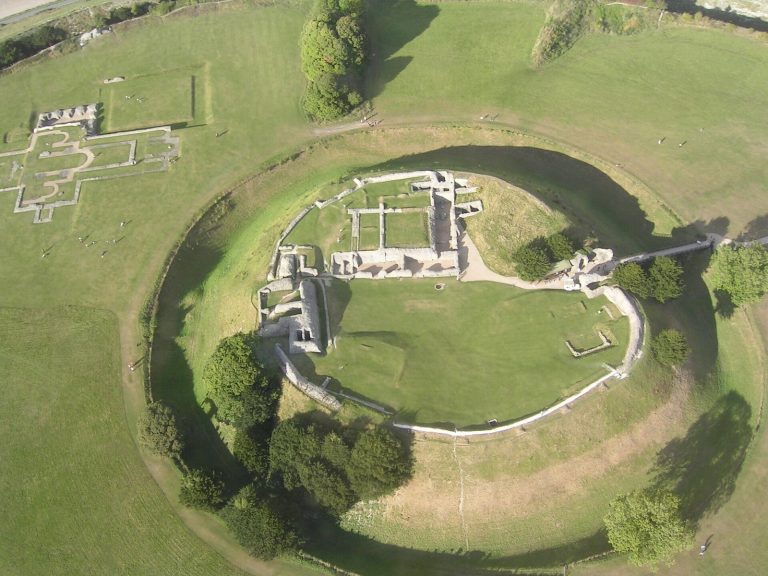
Old Sarum Castle is an 11th-century motte-and-bailey fortress, a castle built around a raised mound and an enclosed courtyard, in the United Kingdom. William the Conqueror built it in 1069. The castle was formerly called Seresberi Castle and stood within Sorviodunum, an Iron Age hillfort dating to about 400 BC, from a period when iron became widely used for tools and weapons.
Foundation and royal administration
Around 1100, Bishop Roger of Salisbury added a courtyard. In the 1130s, he began work on a royal palace. Roger and members of his extended family directed royal administration and the exchequer, the institution responsible for royal finances. Roger also administered the castle for the king until King Stephen arrested him. The castle then fell into disrepair, while a sheriff and castellan, an official responsible for a castle, continued to administer the area under royal authority.
Royal rebuilding and decline
In 1171, Henry II ordered a programme of improvements that continued until 1189. Eleanor of Aquitaine was held under house arrest at Old Sarum until that year, and her quarters were refurbished. Between about 1201 and 1215, buildings for the sheriff of Wiltshire were constructed.
By 1220, most of Old Sarum’s population had moved to Salisbury. The castle fell out of use and was in decay by 1240. Edward III ordered repairs and maintenance around 1350, but further planned work on the keep was not carried out, and the castle continued to deteriorate. Henry VIII sold the castle grounds in 1514.
Protection and present ownership
The castle and cathedral ruins were among 26 English sites protected under the Ancient Monuments Protection Act of 1882, the first British legislation of this kind. The protected area later extended to some suburban land west and southeast of the outer bailey. The castle became a Grade I listed structure in 1972, the highest category for buildings of special architectural or historic interest in England. English Heritage owns and administers the castle and cathedral ruins.
Remains
Fortifications and layout
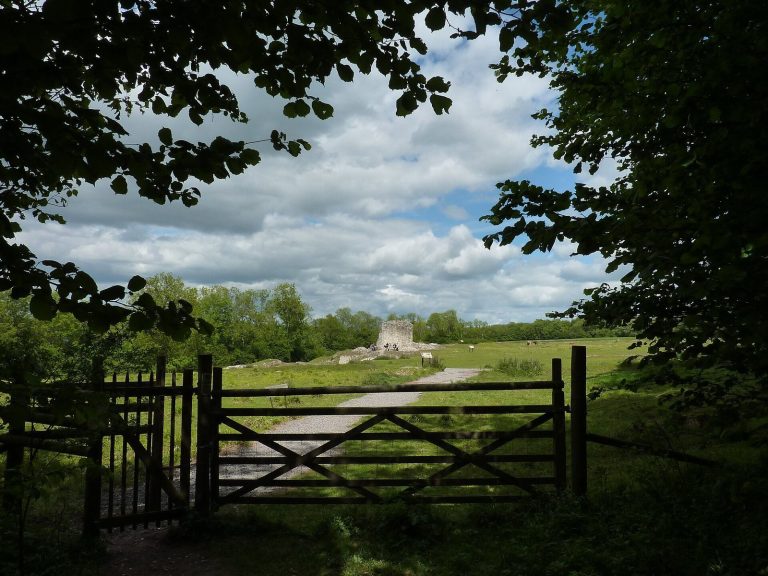
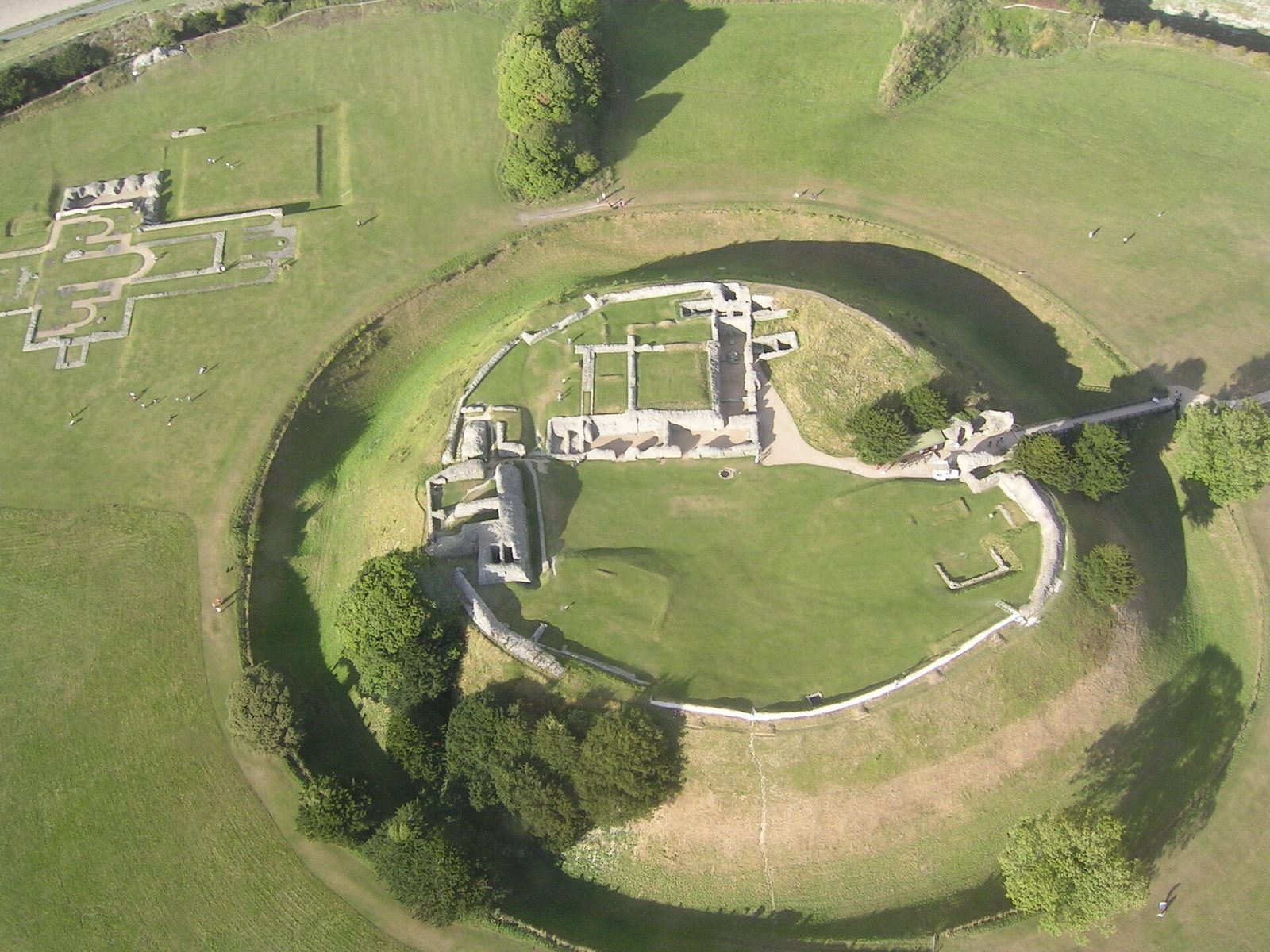
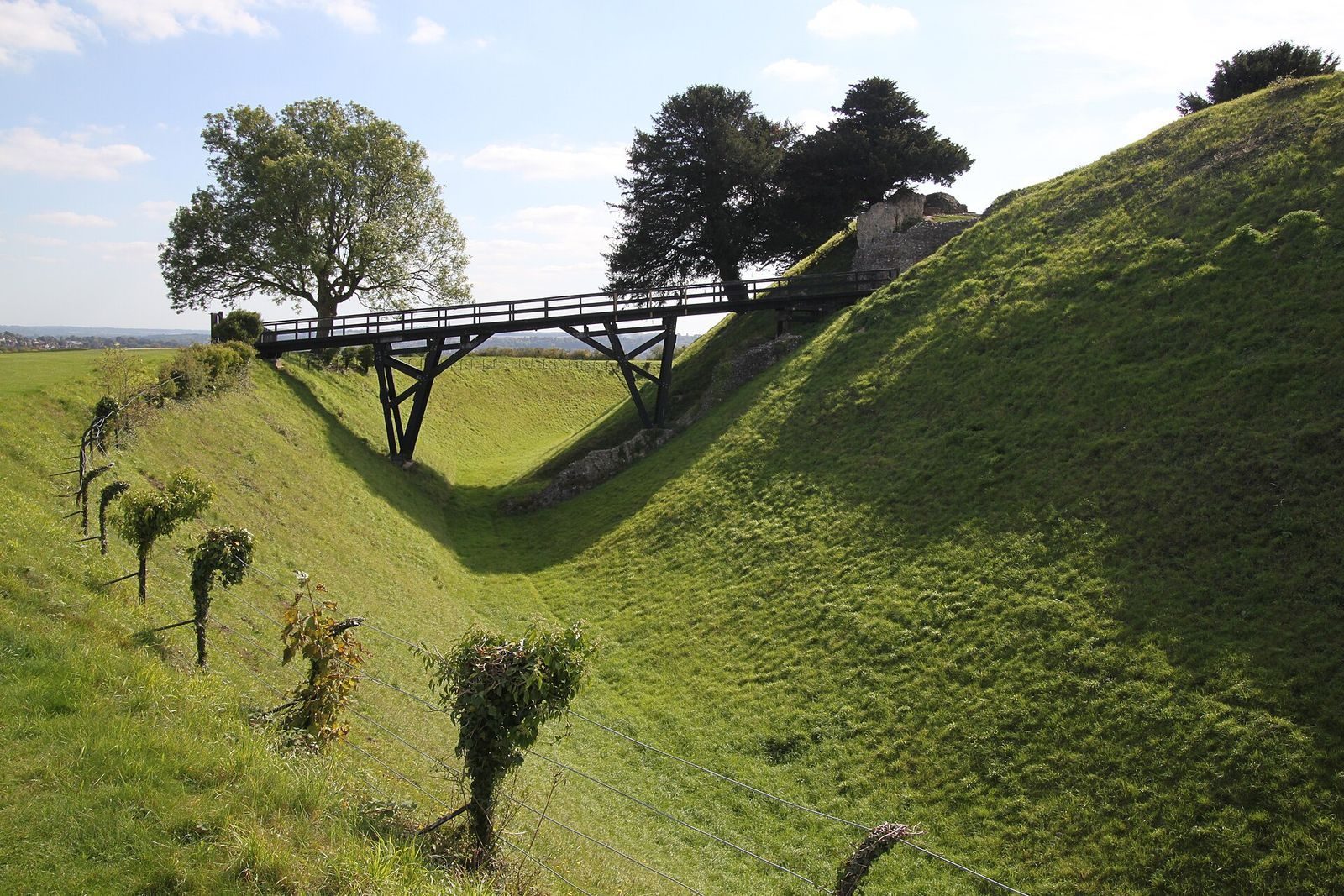
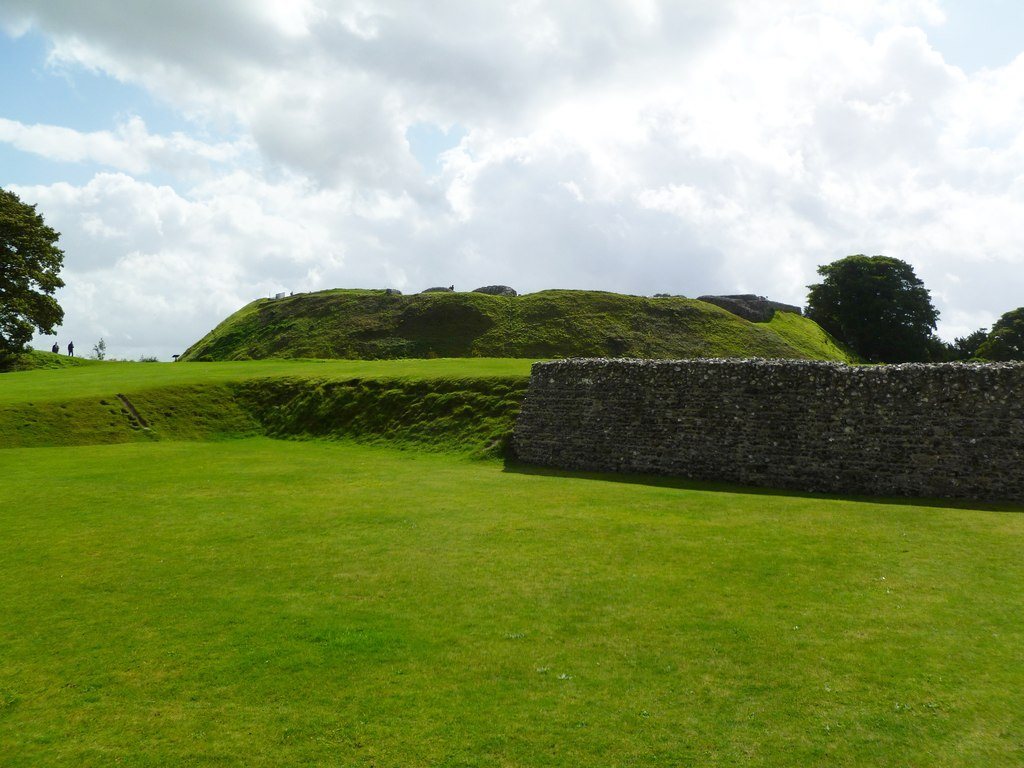
The site lies at an elevation of about 109 metres in predominantly agricultural, flat terrain, with Salisbury about 2.7 kilometres to the south. The castle’s layout joined a raised mound, or motte, with an enclosed courtyard, or bailey. First built in timber and later constructed in stone, the castle now survives in ruins, with its mound and foundations remaining. Its components included a gatehouse, a drawbridge, walls around the inner courtyard, and a keep, the castle’s principal fortified building. A treasury was located within the keep.
Palace and service buildings
Royal palace
The palace’s location is uncertain. It was long identified with a small building in the central bailey, but it may instead have been the larger complex found in the southeast part of the outer bailey. That complex measured about 170 by 65 metres and enclosed a large central courtyard. Its walls reached up to 3 metres thick. A room about 60 metres long was probably a great hall, and the complex appears to have included a large tower.
Sheriff’s buildings
The buildings constructed for the sheriff of Wiltshire comprised a hall, kitchen, and bakehouse. Together they served the county official responsible for administering royal authority in Wiltshire.