Maranga: A Pre-Inca Urban and Ceremonial Center in Peru
Site at a Glance
- Popularity
- Medium
- Country
- Peru
- Primary era
- Medieval
- Eras represented
- Classical, Medieval
- Civilizations
- Inca
- Site type
- Settlement
- Remains
- City
On this page19 sections
History
Maranga is a pre-Inca urban and ceremonial center in Peru’s lower Rímac Valley, established near the beginning of the Common Era. It became a focal settlement during the Lima cultural phase and later served as a political and ceremonial center, a place of worship, a food-storage center, and a producer of luxury goods. Its waterworks supported the expansion of farming in the valley.
Lima-period development
From about AD 100 to 650, Maranga was a principal center of the Lima culture in the lower valley. Settlement continued into the Middle Horizon, an Andean archaeological period that began around AD 650.
Excavations at Huaca San Marcos, one of the monumental structures known as huacas, indicate that Lima culture persisted there well into the Middle Horizon. The site did not come under the rule of the Wari, another Andean society.
Ichma rule and Inca incorporation
From about AD 900, Maranga became the capital of a local chiefdom under the authority of the Ichma polity, a regional Andean power. The Ichma phase lasted until about 1470. During this period, the settlement spread southward, and its buildings and urban arrangement changed.
In the middle to later part of the 15th century, the Incas brought Maranga and the Ichma polity into their empire, the Tahuantinsuyo. They altered the site’s architecture for political purposes and constructed a group of buildings now called the Inca Sector. Inca rule continued until 1532.
Abandonment and modern history
After the Spanish arrived, Maranga’s residents were displaced and the settlement was abandoned around 1535. Spanish influence on the site was brief.
The complex was called Huática until the early 20th century, and Huatinamarca was also used for a time. Huática is the name of an irrigation canal east of the complex, dating to the 8th century; the name was later judged incorrect for Maranga. In the 17th century, Bernabé Cobo referred to the ruins as Huadca, a name possibly linked to huaca. Ernst W. Middendorf instead proposed a connection to guatan, a name Oviedo used for an oracle deity revered in the Rímac Valley. Middendorf associated the word with wind and suggested that an image of the deity might have stood in one of Maranga’s buildings. Maranga has been interpreted as either a place of mortars or a place where snakes exist, and the complex has also been called the city of mud.
Travelers including E. George Squier, Thomas J. Hutchinson, and Middendorf described the ruins and made plans or photographs in the late 19th century. Hutchinson wrote about Maranga as Huatica in 1873. In the 1880s, Middendorf distinguished northern and southern building groups. Scientific excavation began in the early 20th century: Max Uhle worked at the summit of Huaca San Marcos in 1903, while Jacinto Jijón y Caamaño and Alfred L. Kroeber excavated at several structures in 1925.
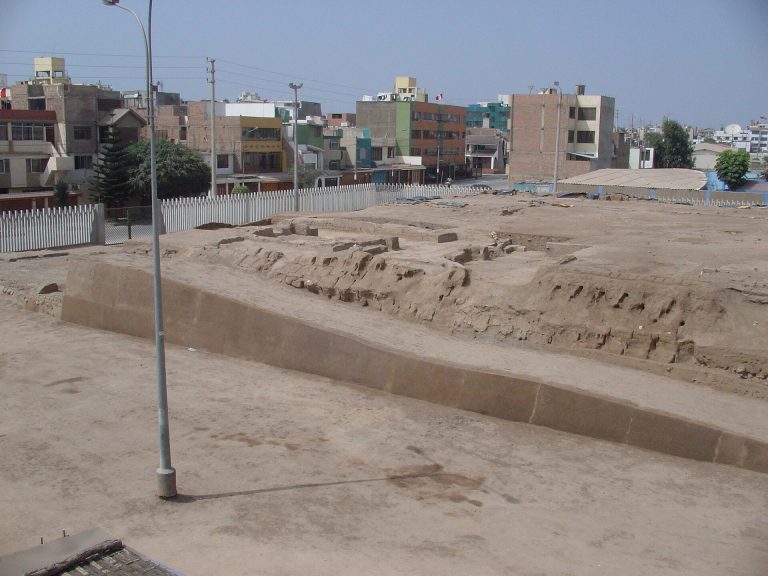
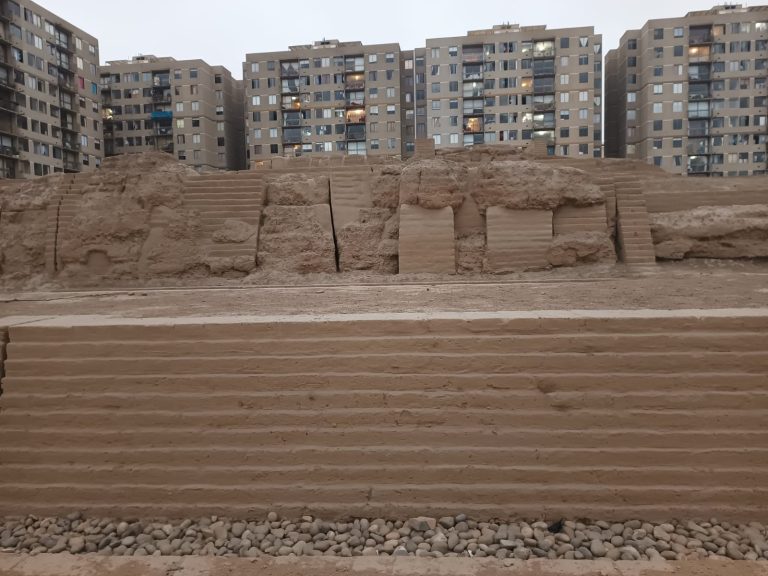
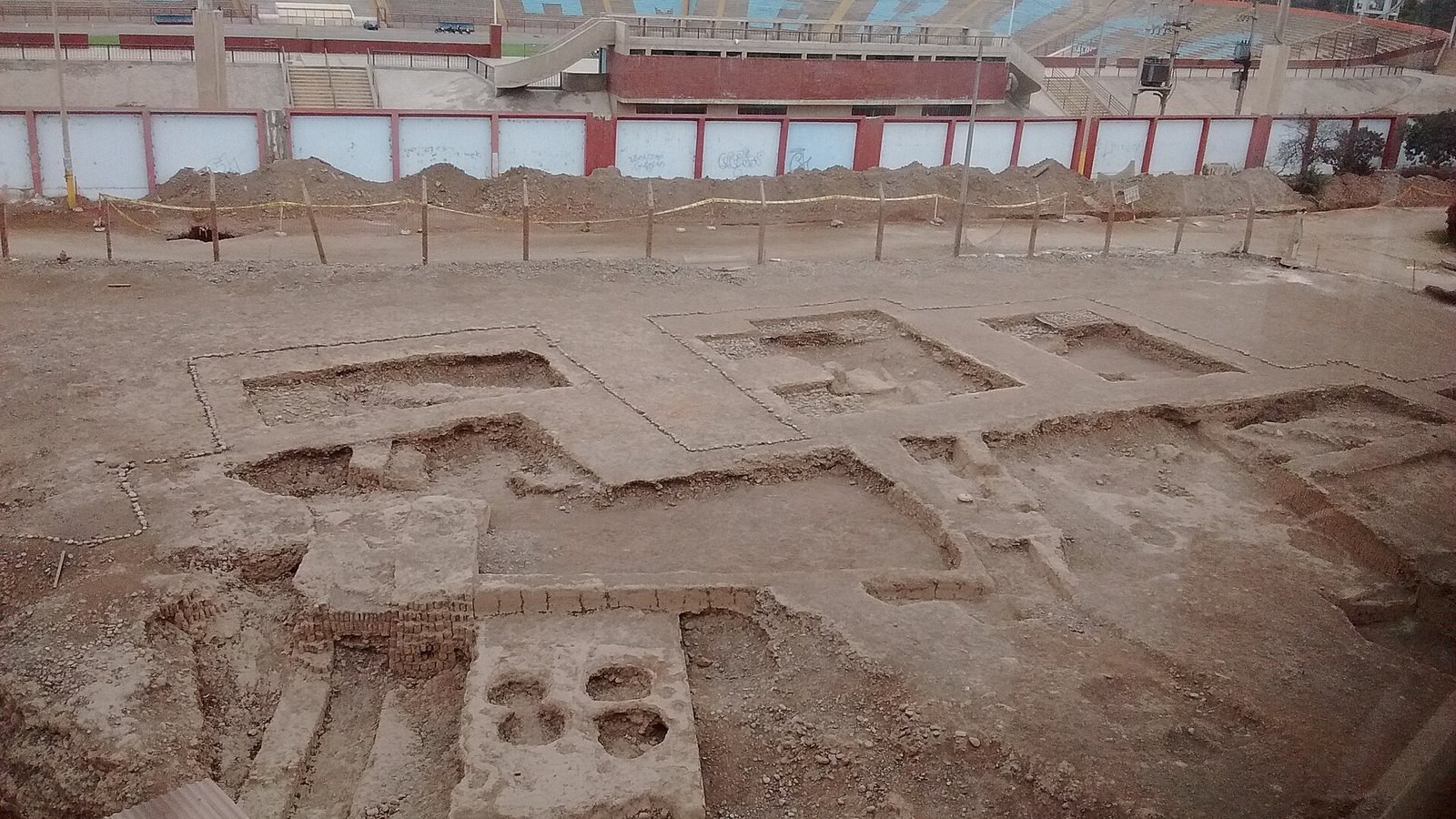
Road construction damaged Huaca San Marcos in 1924. Huaca Concha’s upper structure was destroyed in 1941 for a stadium, and stadium remodeling caused further serious harm in 1993 and 1994. Urban growth and development have also damaged the complex and remain a threat. More recent work has focused on research, conservation, and enhancing the heritage value of the monuments, many of which lie within Parque de las Leyendas. Maranga is designated Cultural Heritage of the Nation in Peru.
Remains
Site plan and building methods
Layout and districts
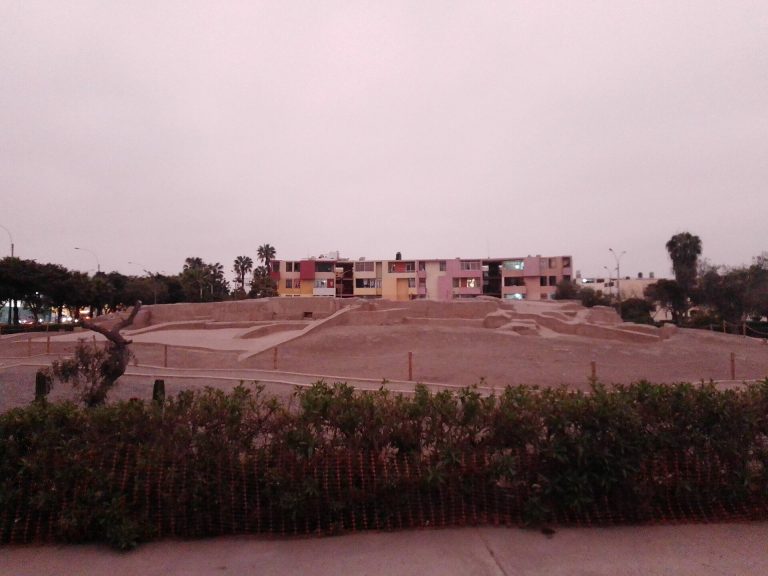
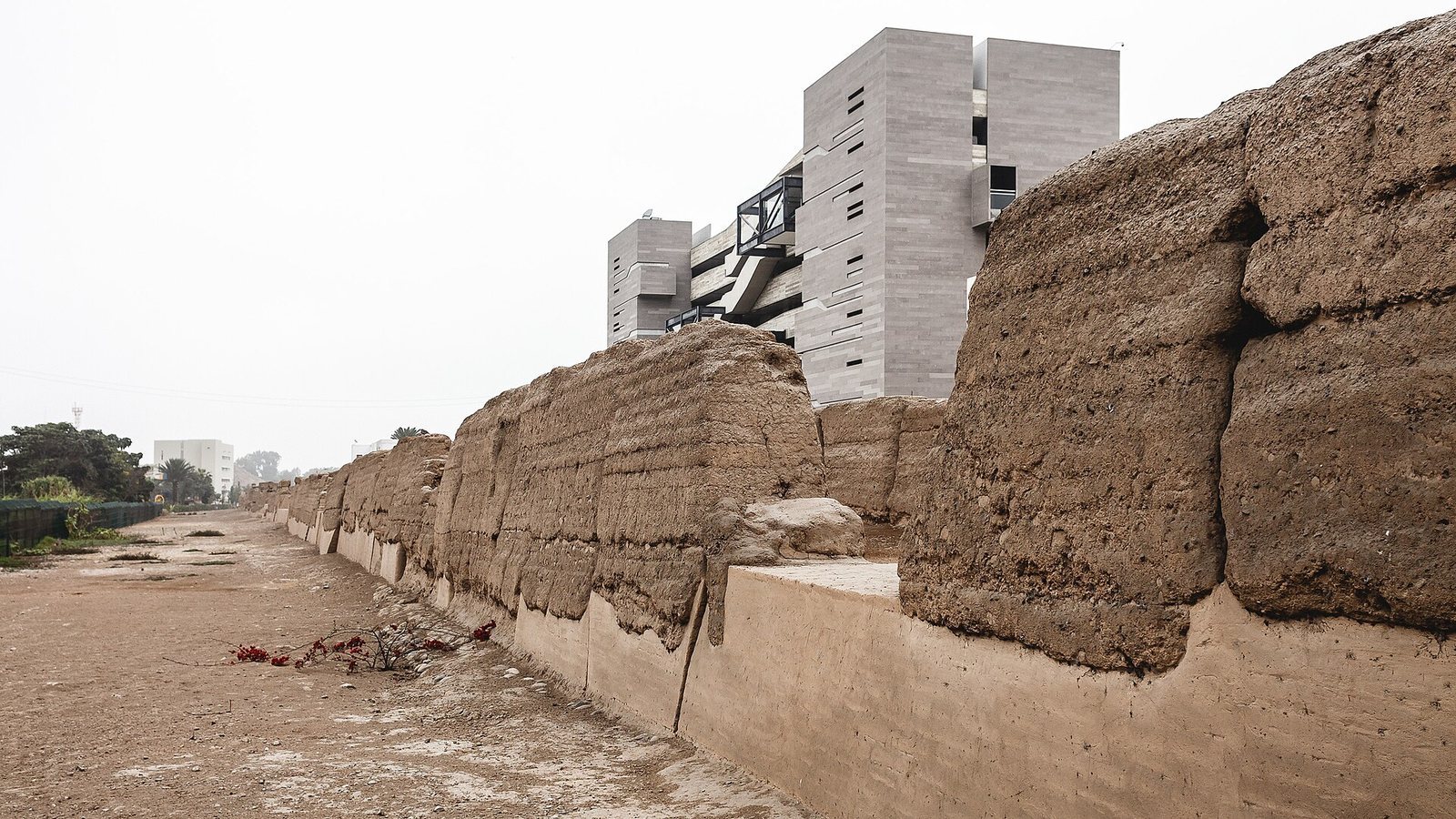
The complex occupies the left bank of the Rímac River in the lower valley, near the Pacific coast, across about four million square metres. It contains 14 major pyramids and at least 50 smaller buildings, with some structures reaching about 32 metres in height. Its southern urban area included a walled enclosure with pyramids, courtyards, and residences; the Inca Sector occupied its western side. East of the enclosure stood a group of ten pyramids, including Huaca Tres Palos. Other pyramids, among them Huaca Cruz Blanca, Huaca San Miguel, Huaca Casa Rosada, and Huaca La Cruz, were in an unwalled area outside it. Fields and irrigation canals once extended around the settlement.
Pyramid forms and materials
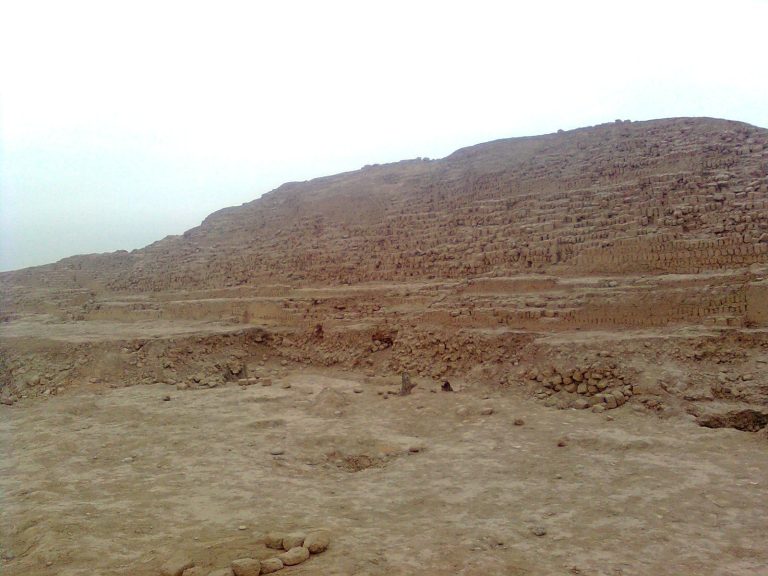
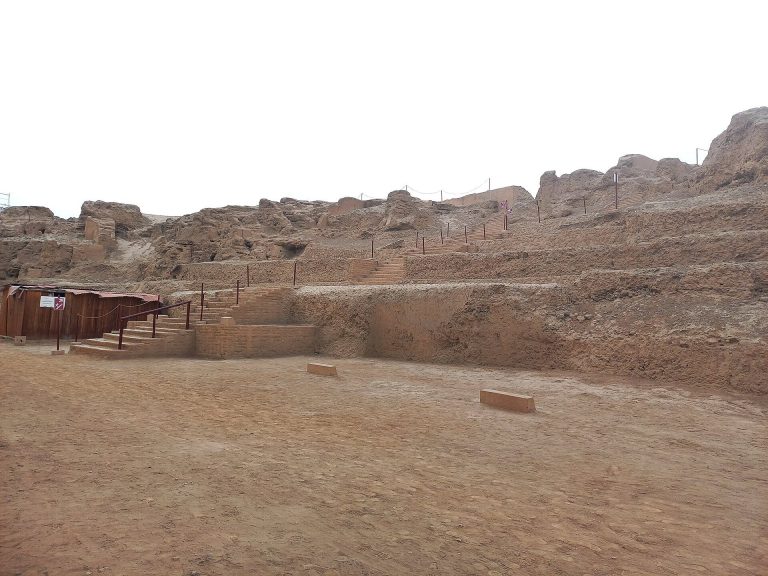
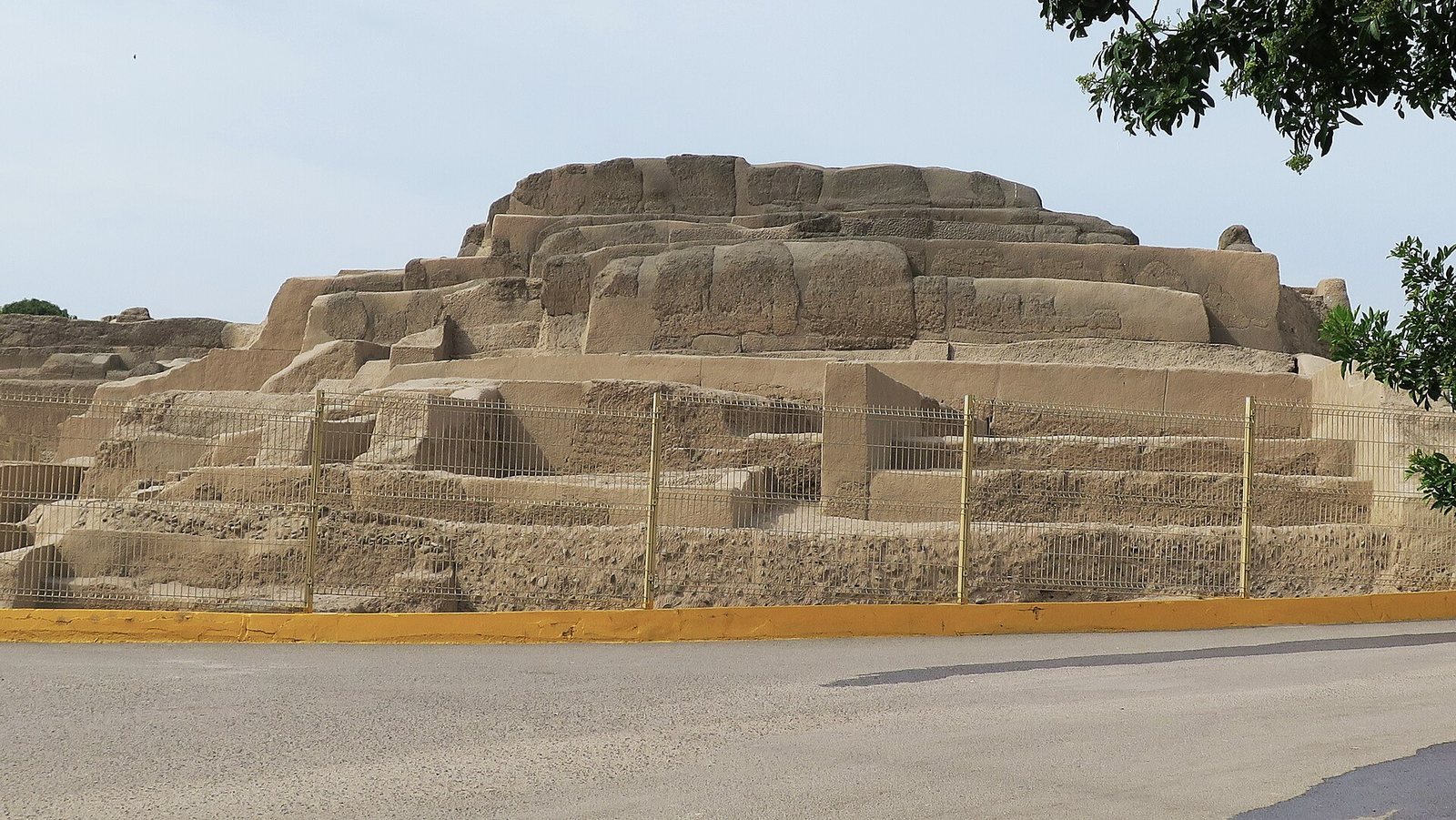
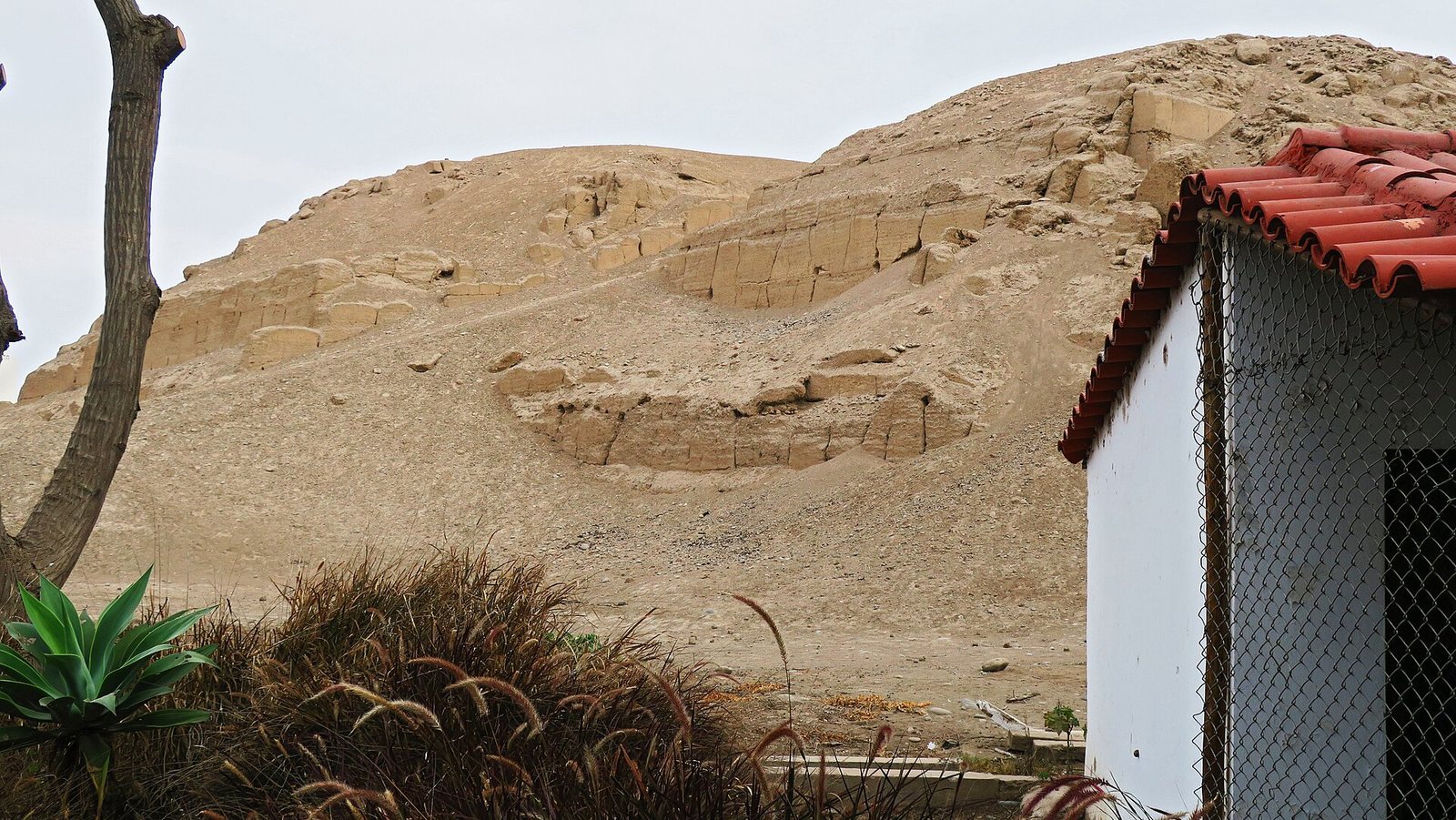
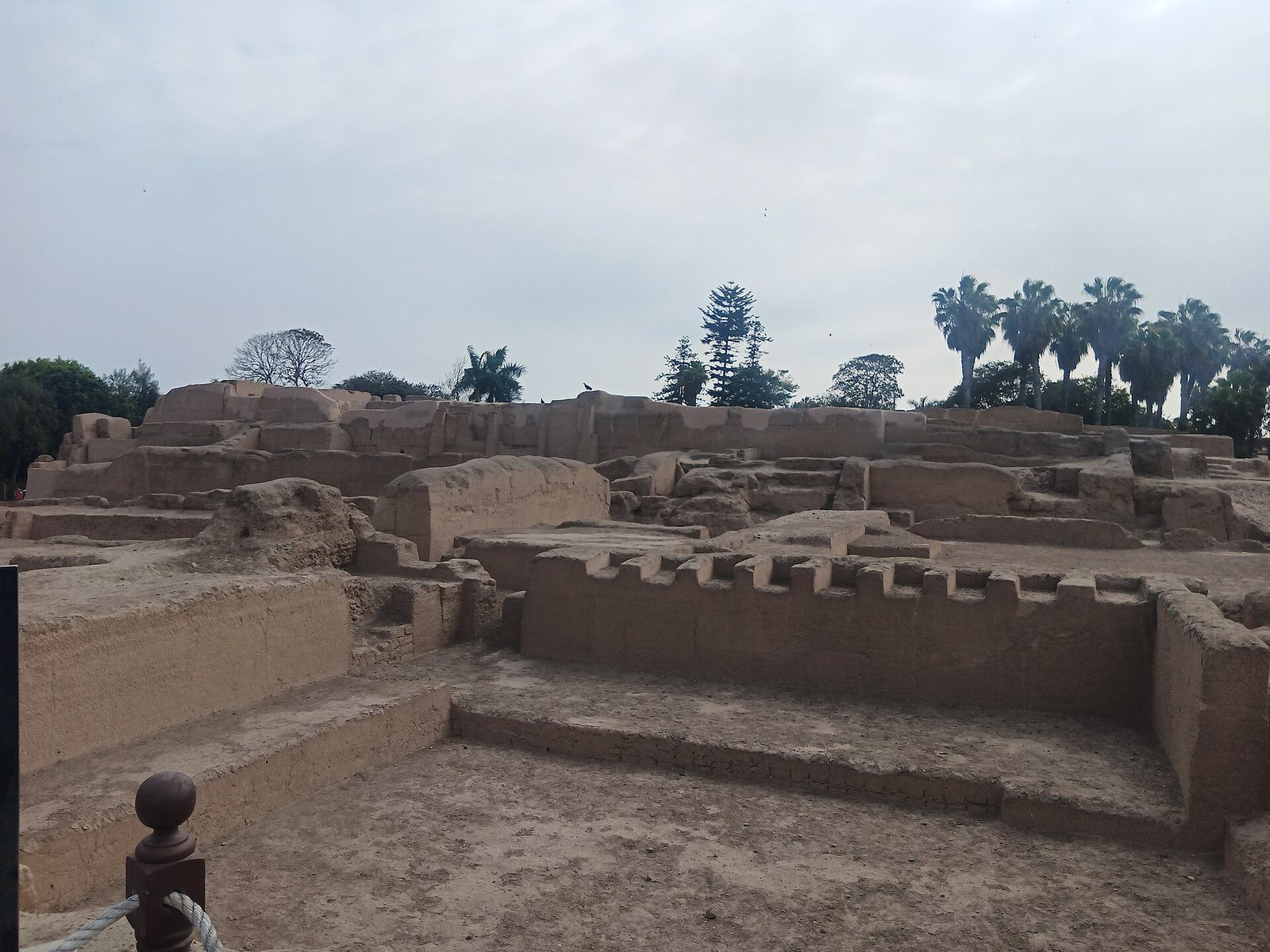
Maranga’s pyramids are built as stacked platforms of adobe, and some can resemble natural hills. Ramps and stairways provided access. Builders used small, hand-shaped rectangular adobe blocks, larger earthen blocks, rammed earth (soil compacted in place), and stonework. In some walls, the small blocks were laid in aligned courses resembling books set along shelves. The northern buildings chiefly represent the Lima phase and use small adobe units; the southern group reflects Ichma construction with larger earthen blocks, a tradition that continued into the Inca period.
Major pyramids
Huaca San Marcos
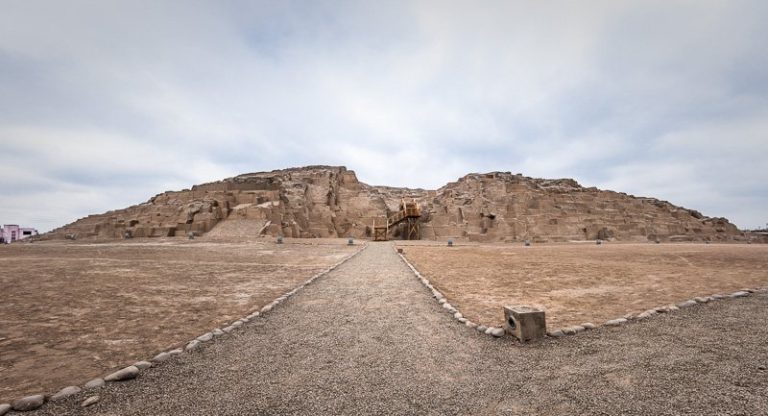
Formerly called Huaca Aramburú, Huaca San Marcos is the complex’s largest pyramid and stands within the main campus of the National University of San Marcos. It measures about 300 metres long, 120 metres wide, and 30 metres high. Five platforms rise one above another, with buildings set upon them. The small-adobe retaining walls were plastered and painted yellow. Red pottery with painted designs, textiles, and bundles containing human remains were found along the pyramid’s sides. A small platform attached to its southern side was cut through by a road, which separated it from the smaller Huaca Montículo 22; that structure retained the name Aramburú.
Huaca Concha
Opposite Huaca San Marcos, Huaca Concha consists of at least three stacked platforms. It is about 284 metres long and 26 metres high, with a width of 181 metres on the south and 102 metres on the north. The pyramid survives in a damaged state following the loss of its upper structure and later harm to the remains.
Huaca Middendorf and Huaca Potosí Alto
Huaca Middendorf is a large mound divided into two sections, A and B. Huaca Potosí Alto is identified as one of the pyramids belonging to the Lima phase.
Other pyramids and structures
Huaca Tres Palos
Huaca Tres Palos, also known as Pando or Campana, is a rectangular pyramid formed by four platforms rising from east to west. Its summit plaza contained 96 square pits, each with a tree trunk standing at its center. The arrangement served as an observatory: shadows cast by the Sun and Moon were used to make calendars.
Huaca San Miguel
Huaca San Miguel is a large stepped structure built of rammed earth. It served as a food storehouse in the closing part of the Late Intermediate Period, an Andean archaeological era, and the beginning of the Inca period.
Huaca Cruz Blanca
Huaca Cruz Blanca comprises a pyramid and an administrative area containing buildings.
Huaca Huantinamarca
Huaca Huantinamarca is a monumental, flat-topped pyramid with a complex arrangement of courtyards, rooms, and corridors built in different phases. Its base consists of mud walls made using continuous rammed-earth construction. The structure was built, remodeled, and reshaped over time.
Huaca Casa Rosada
The name Huaca Casa Rosada comes from a pink building from Peru’s Republican period that once stood on its summit. The huaca itself is a roughly square raised platform about 36 metres across and 3 to 4 metres high. It was made from rammed earth and large adobe blocks and has access ramps.
Huaca La Palma
Huaca La Palma lies within the walled area. An Inca palace was built on its summit, with decorative bands bearing stepped-cross motifs; traces of the designs remain visible.
.