Huaca Huantinamarca: An Ichma Ceremonial and Mortuary Monument in Lima
Site at a Glance
- Rating
- 4.2
- Popularity
- Low
- Country
- Peru
- Primary era
- Medieval
- Eras represented
- Medieval, Early Modern
- Civilizations
- Inca
- Site type
- Religious
- Remains
- Sanctuary
On this page11 sections
History
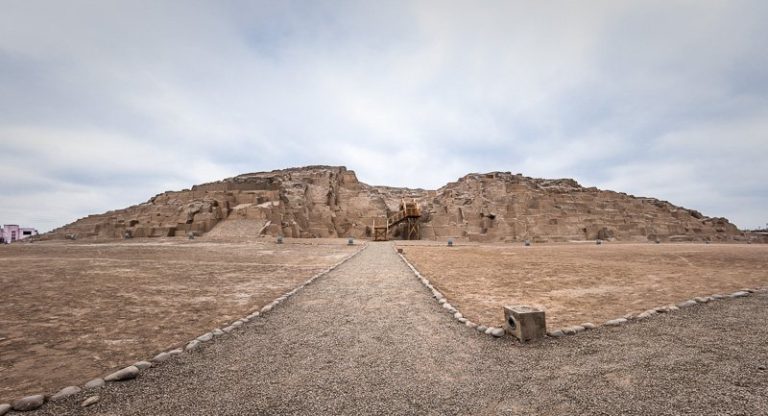
Huaca Huantinamarca is an Ichma archaeological monument in San Miguel, Lima, Peru. It formed part of the Maranga archaeological complex on the periphery of the lower Rímac valley and acquired its final form during the Late Horizon, the last major pre-Columbian period in the central Andes, dated here to AD 1476–1532, when the Inca state expanded along the central coast. The site served religious, productive, communal, and funerary purposes, and was probably a principal center for a community involved in preparing and consuming maize chicha, a fermented drink used in Andean social and ritual life.
Name and Maranga Context
Two explanations have been proposed for the name Huantinamarca. One connects the site with canals linking it to Maranga and with the Huatica irrigation channel. Ernst Middendorf associated Maranga with a valley oracle called “Huaca” or “Guatan,” while Julio César Tello used “Huatika Marka” for the Maranga complex. A second interpretation derives the name from Quechua and Aymara terms recorded by Fray Diego Gonzáles Holguín and Ludovico Bertonio, translating it as “the town of people who suffer from warts.”
The Ichma were a pre-Inca society of the central Peruvian coast, and their settlements and ceremonial centers included Maranga. Huantinamarca passed through at least two major construction phases before reaching its final pre-Columbian form. Within the wider complex, it was associated with the collection, transformation, and consumption of maize chicha for celebrations and rituals linked to the agricultural calendar. Its functions also included public gathering, productive activity, religious worship, and burial.
Colonial and Republican Transformations
After the pre-Columbian period, the structure was converted into a mausoleum. During the colonial period, it was adapted to help control water in existing irrigation systems. Its elevated position also provided a point from which nearby crops and the maritime horizon could be observed, allowing possible pirate incursions to be detected.
In the nineteenth and twentieth centuries, people continued ritual activity around the huaca, including “payments to the earth,” offerings made to honor or seek protection from sacred forces associated with the land. These practices reflected shamanistic beliefs that archaeological sites retained magical and sacred power. The site also became a republican cemetery and a ruin within the rural landscape shaped by haciendas.
Urban Change and Conservation
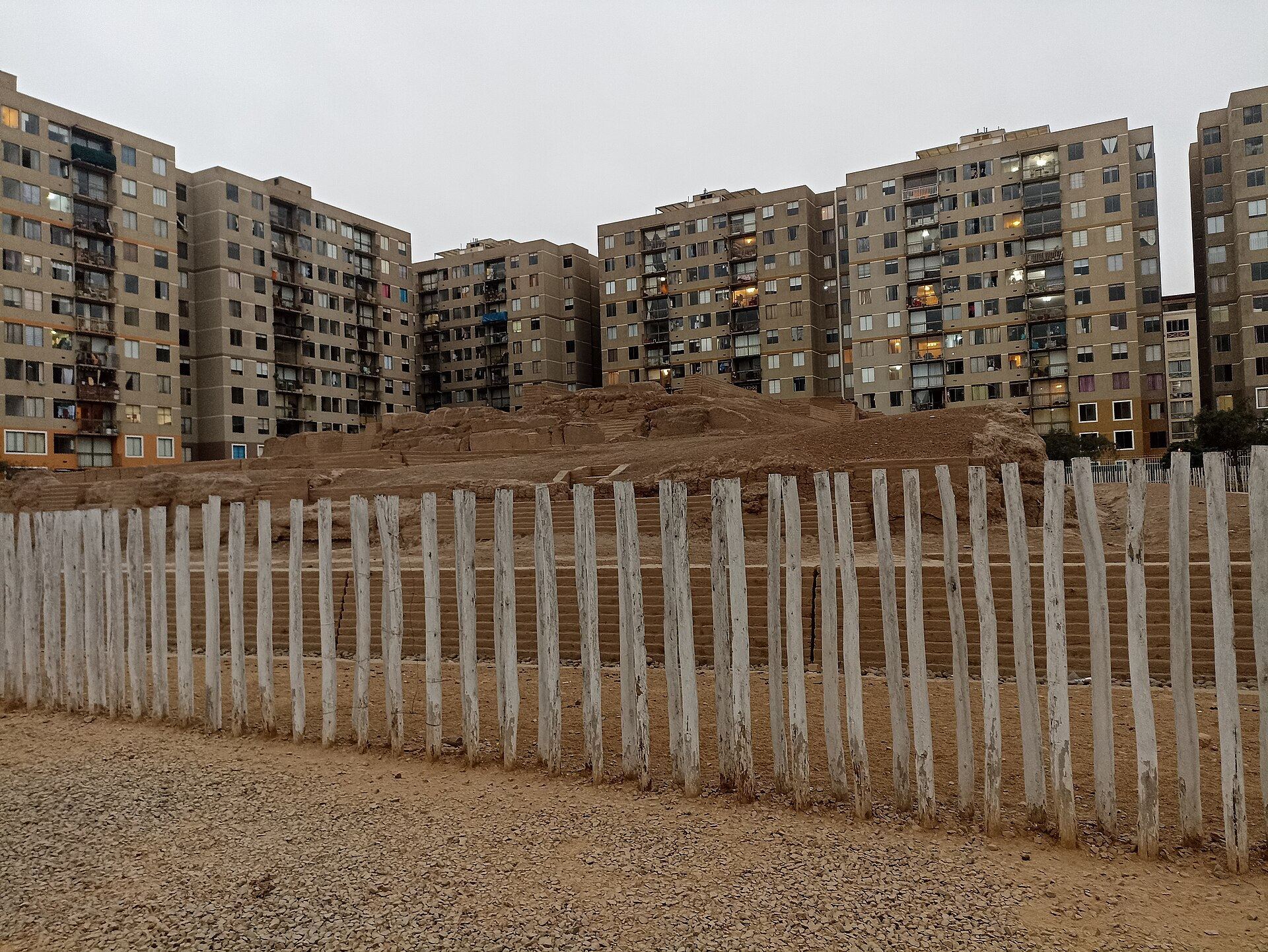
Twentieth-century urban development in San Miguel brought residential, commercial, and institutional acquisition of land around Huantinamarca. From the 1960s, the site formed part of the property used by the Pacific Commercial Fair and later became a venue for the Home Fair, including concerts and other performances. This use helped prevent its destruction during late twentieth-century urban expansion, although the huaca was later abandoned and deteriorated.
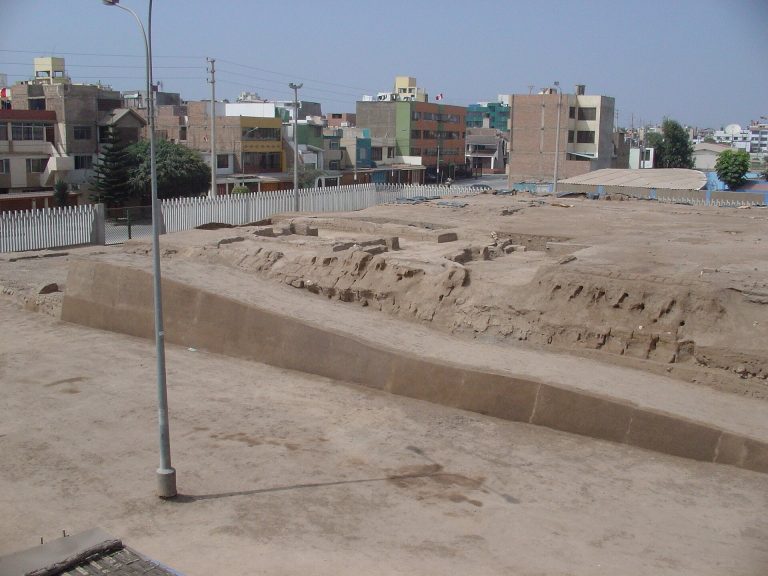
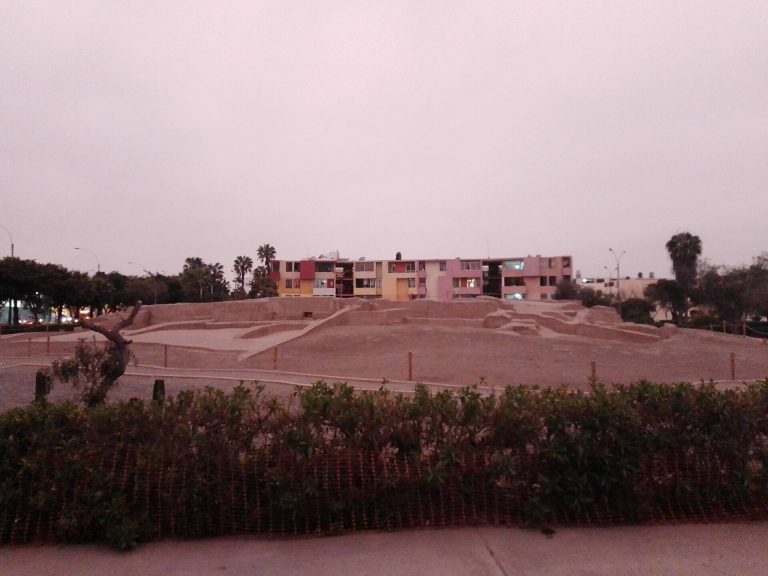
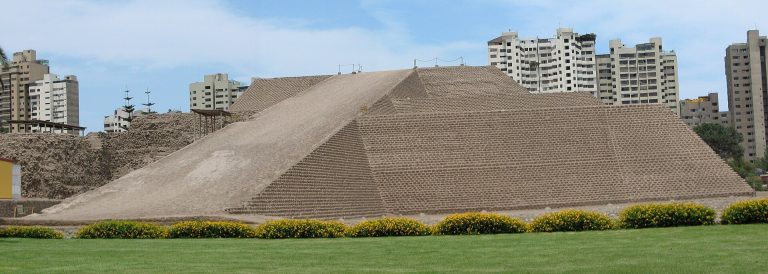
Changing public and official attitudes toward the preservation of pre-Columbian sites eventually led to its recovery. Huaca Huantinamarca was declared Cultural Patrimony of the Nation on March 27, 2002, under National Directorial Resolution No. 233 of Peru’s National Institute of Culture. Construction of the Parques de la Huaca condominium began in May 2009, and the monument became the central feature of the residential complex. A research, conservation, and restoration project carried out in 2009–2010 examined its construction phases and archaeological remains. Archaeologists, architects, landscape specialists, and restorers shaped the present setting with references to local textile imagery, vegetation, and the monument’s visibility. Municipal management and the surrounding community have continued to support its conservation as part of a collective cultural identity.
Remains
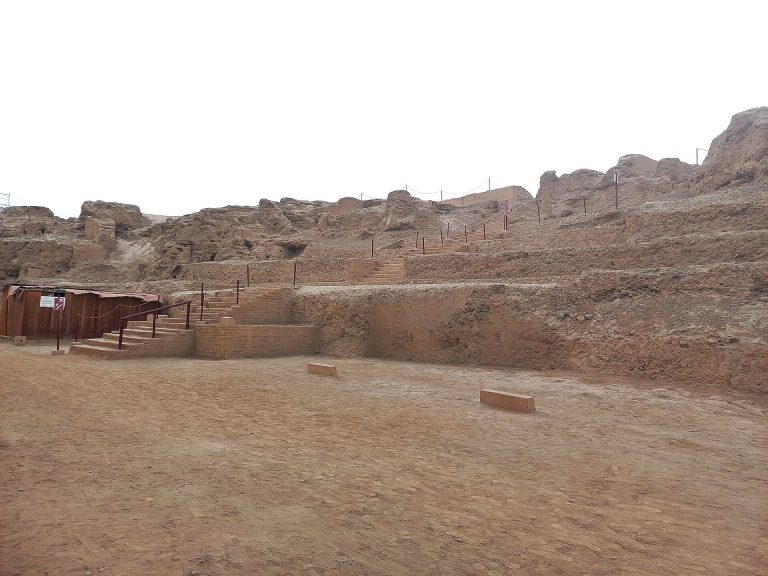
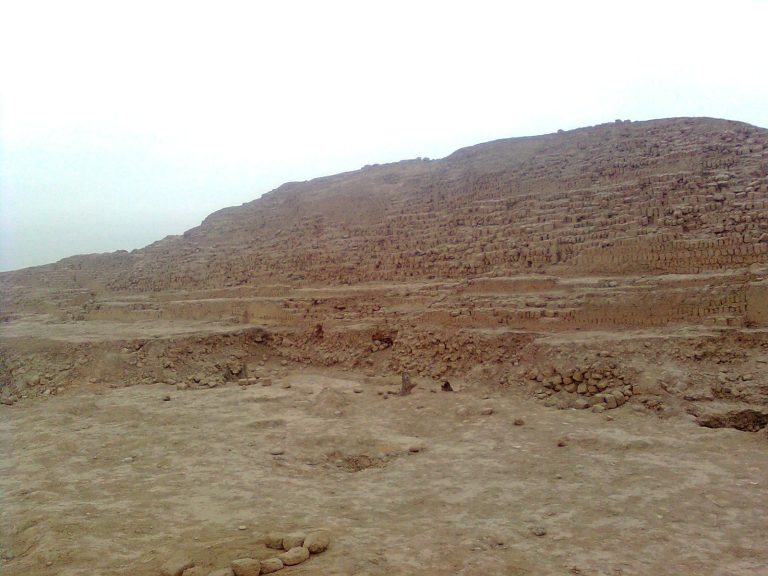
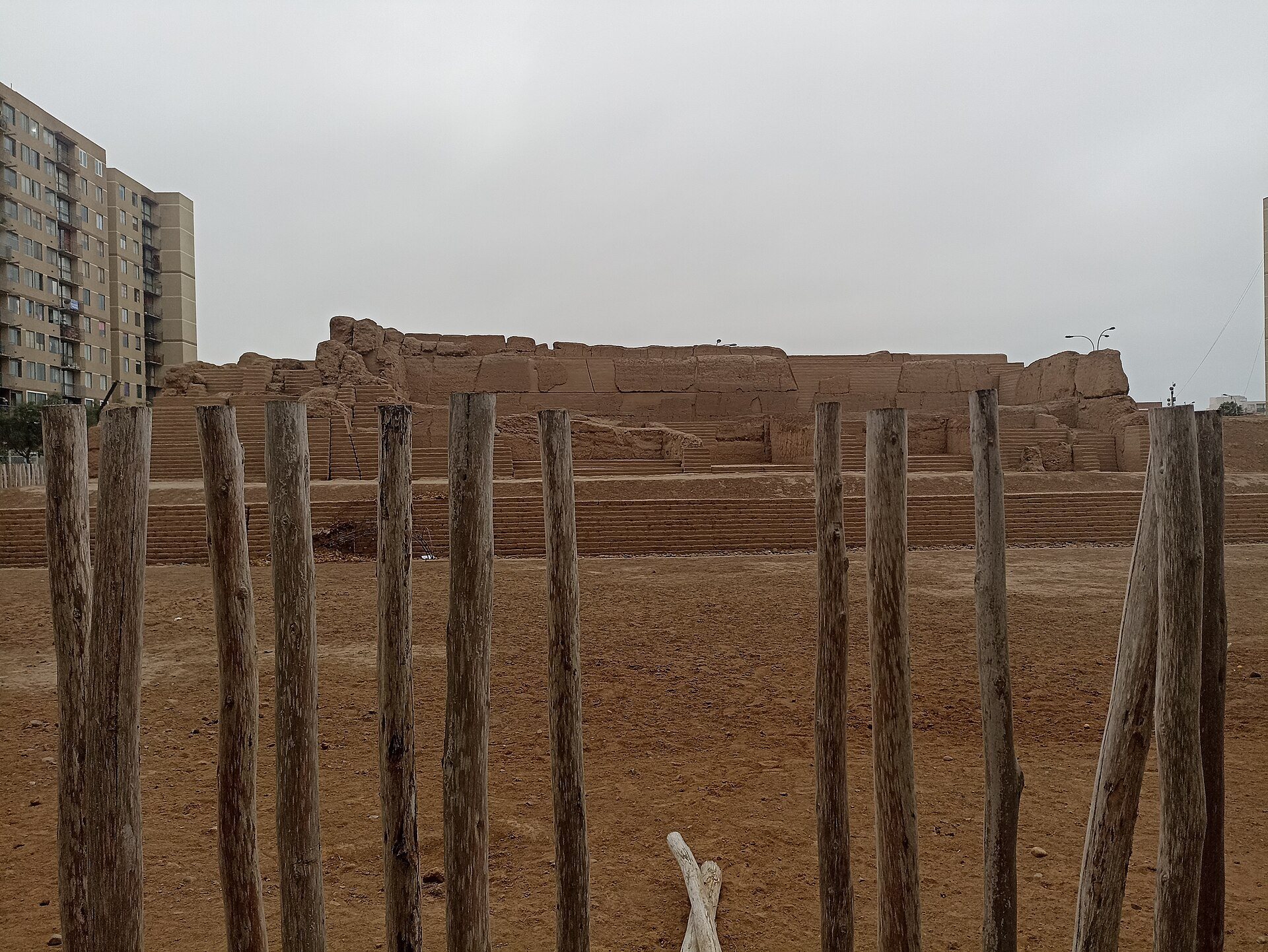
Huaca Huantinamarca is a monumental truncated pyramid occupying approximately 1,500 square meters and standing on an area of about 3,652 square meters. It rises to approximately 50 meters above sea level in the lower Rímac valley. Multiple patios, enclosures, and corridors occupy the monument, and their arrangement reflects construction during different periods. The structure is incorporated into a public park within the Parques de la Huaca condominium, while the monument remains the complex’s central physical feature.
Construction Phases
Early Rammed-Earth Walls
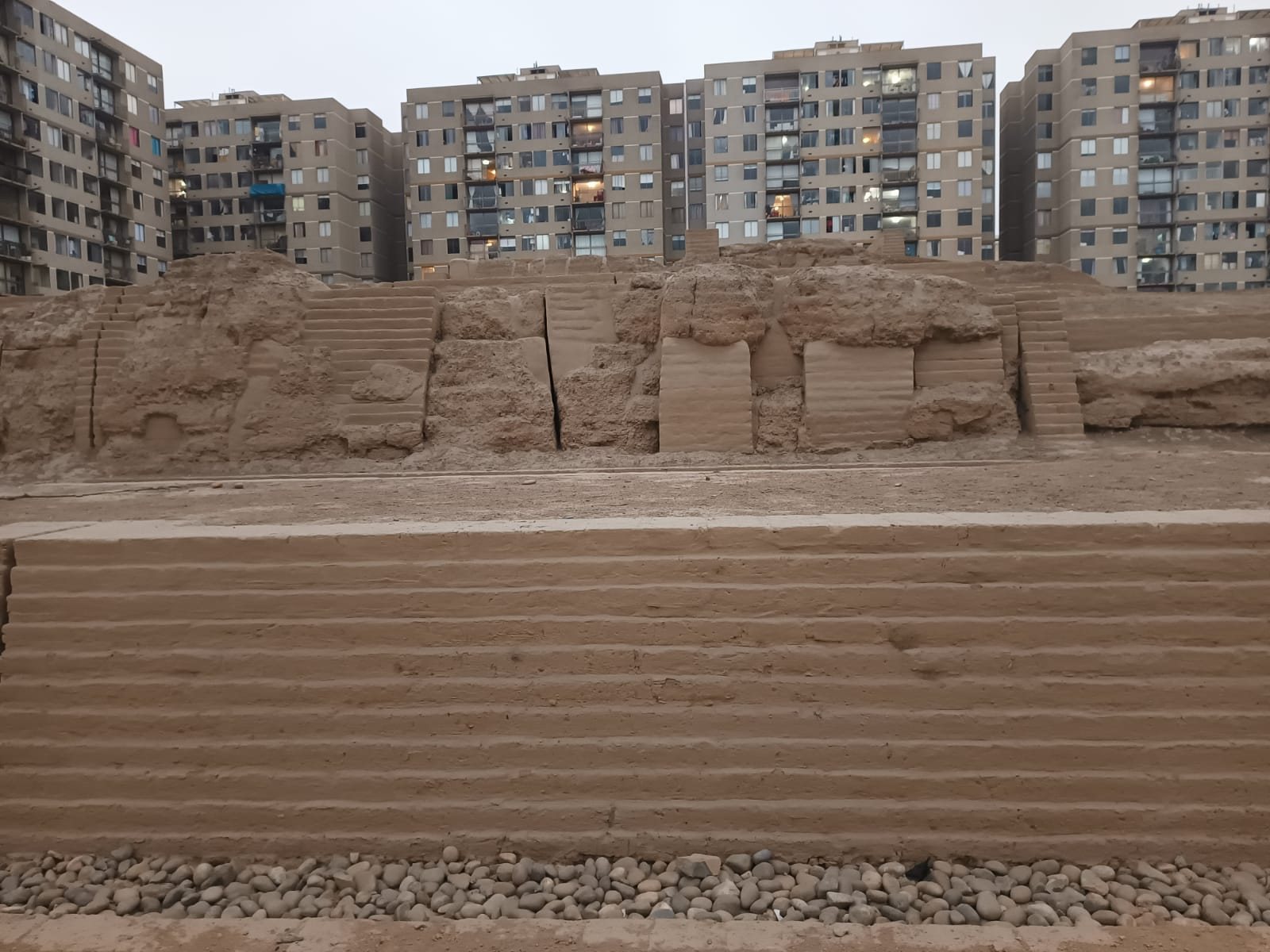
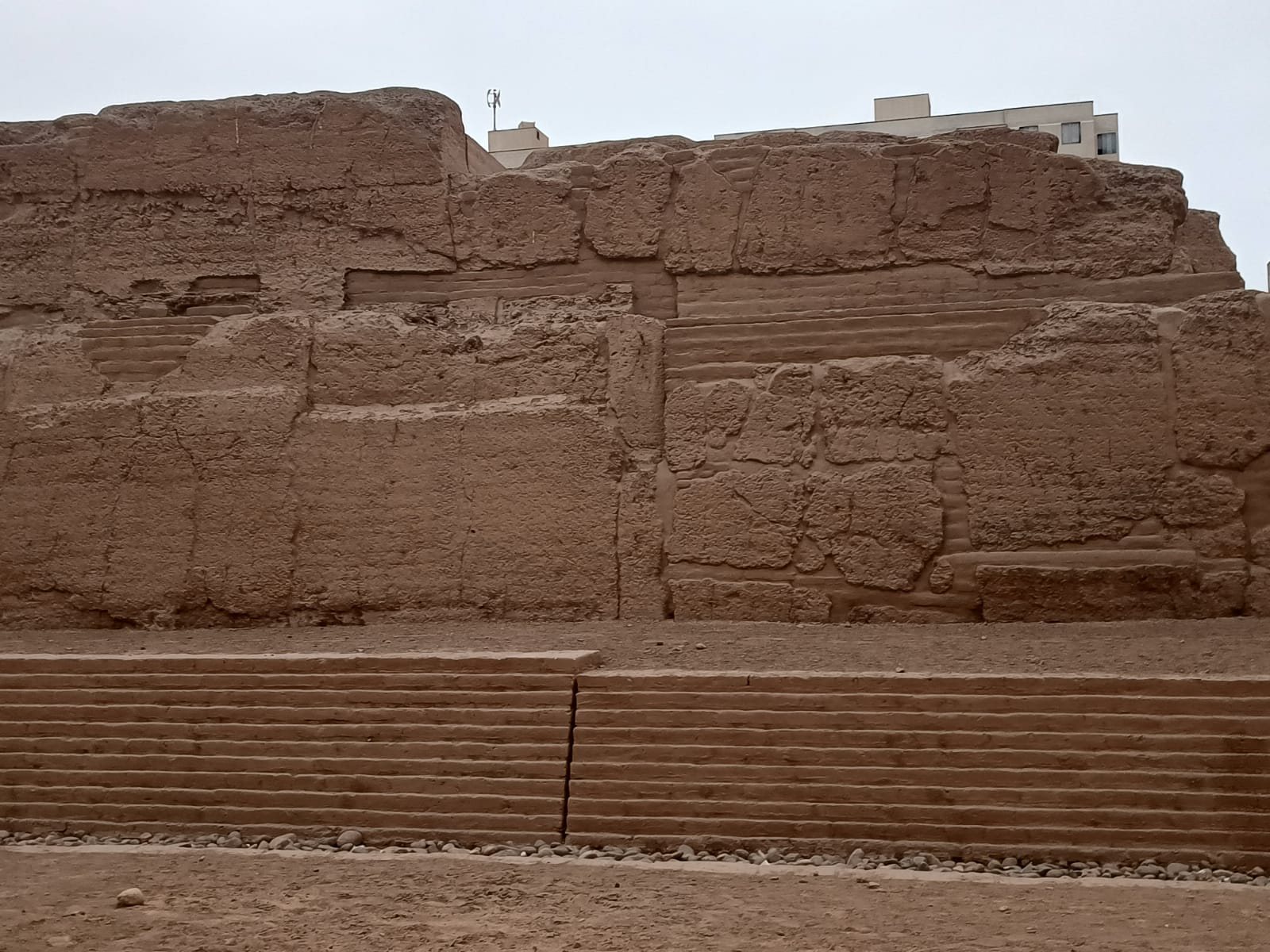
The monument’s fabric consists of mud walls made through continuous rammed-earth construction, a method that forms walls by compacting earth within temporary formwork. During the first major phase, builders created walls of different dimensions, including examples approximately 40 and 80 centimeters thick. Their surfaces were smoothed by hand, and preserved finger and hand marks remain visible in the material.
Later Block Construction
The second major phase introduced structurally more stable walls built from regularly dimensioned blocks. One surviving section has a trapezoidal profile, measuring approximately 3.5 meters across at its base and 1.2 meters at the top. Its original coating has been lost, leaving the construction method visible.
Burials and Archaeological Finds
Tombs and Ceramics
Excavations in 2010 uncovered 25 tombs containing approximately 100 human bodies, together with hundreds of ceramic vessels and textiles. Ceramic fragments, vessels, and funerary offerings indicate Late Ichma activity at the site. Other pottery reflects Chancay and Chimú influence, while additional fragments and colonial majolica belong broadly to the sixteenth and seventeenth centuries.
Southwestern Camp
Investigations identified a camp in the southwestern part of the platform. Its finds included type A polychrome Panama-style ceramics, including plates, cups, bowls, and pots, as well as a leather shoe, a glass bead, and a playing card. Funerary context 22 contained an individual with sharp wounds on the left arm, adding evidence of the varied activities and human experiences represented within the monument.