Dairizuka Kofun: A Fifth-Century Burial Mound in Japan
Site at a Glance
- Popularity
- Medium
- Country
- Japan
- Primary era
- Classical
- Eras represented
- Classical
- Civilizations
- Yamato
- Site type
- Burial
- Remains
- Burial Mound
On this page10 sections
History
Dairizuka Kofun is a fifth-century Japanese kofun, or monumental burial mound, in the Koito River estuary lowland of central Bōsō Peninsula, Japan. Its date is inferred from its grave goods, placing it in the Kofun period, an era of Japanese history associated with such mounds.
Regional setting and traditions
Dairizuka belongs to a regional group of 47 burial mounds, including 29 domed, seven square, and 11 keyhole-shaped examples. They were built from the middle of the fifth century through the seventh century. The Koito River corridor connected Bōsō with Miura Peninsula and, farther on, the Kansai region and the Yamato court, an early Japanese royal government centered in Yamato.
The area was associated with the ancient local polity of Sue. A chronicle names a kuni no miyatsuko, a local ruler appointed within the Yamato political order, as Sue’s ruler. Dairizuka has been proposed as that ruler’s tomb. Tradition also places the mound on a route linked to Yamato Takeru, a legendary figure associated with campaigns in eastern Japan for the Yamato court. Another local tradition identifies the tomb as that of a woman featured in a poem by Takahashi no Mushimaro, a Nara-period court poet, in the Man’yōshū, an early Japanese poetry anthology.
Investigation and protection
Tokyo Imperial University excavated the mound in 1906. A researcher from Hongo High School carried out another investigation in 1964. Japan designated Dairizuka a National Historic Site in 2002, and the protected area was extended in 2009.
Remains
Mound and surface features
Form and setting
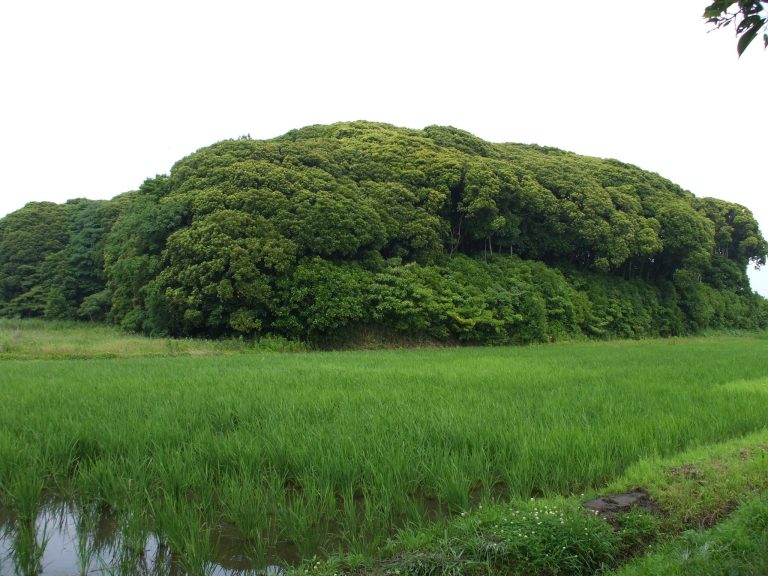
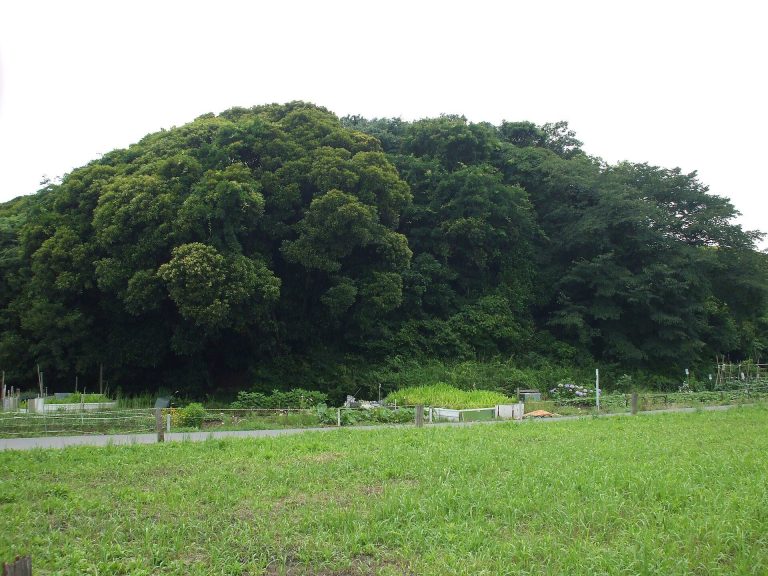
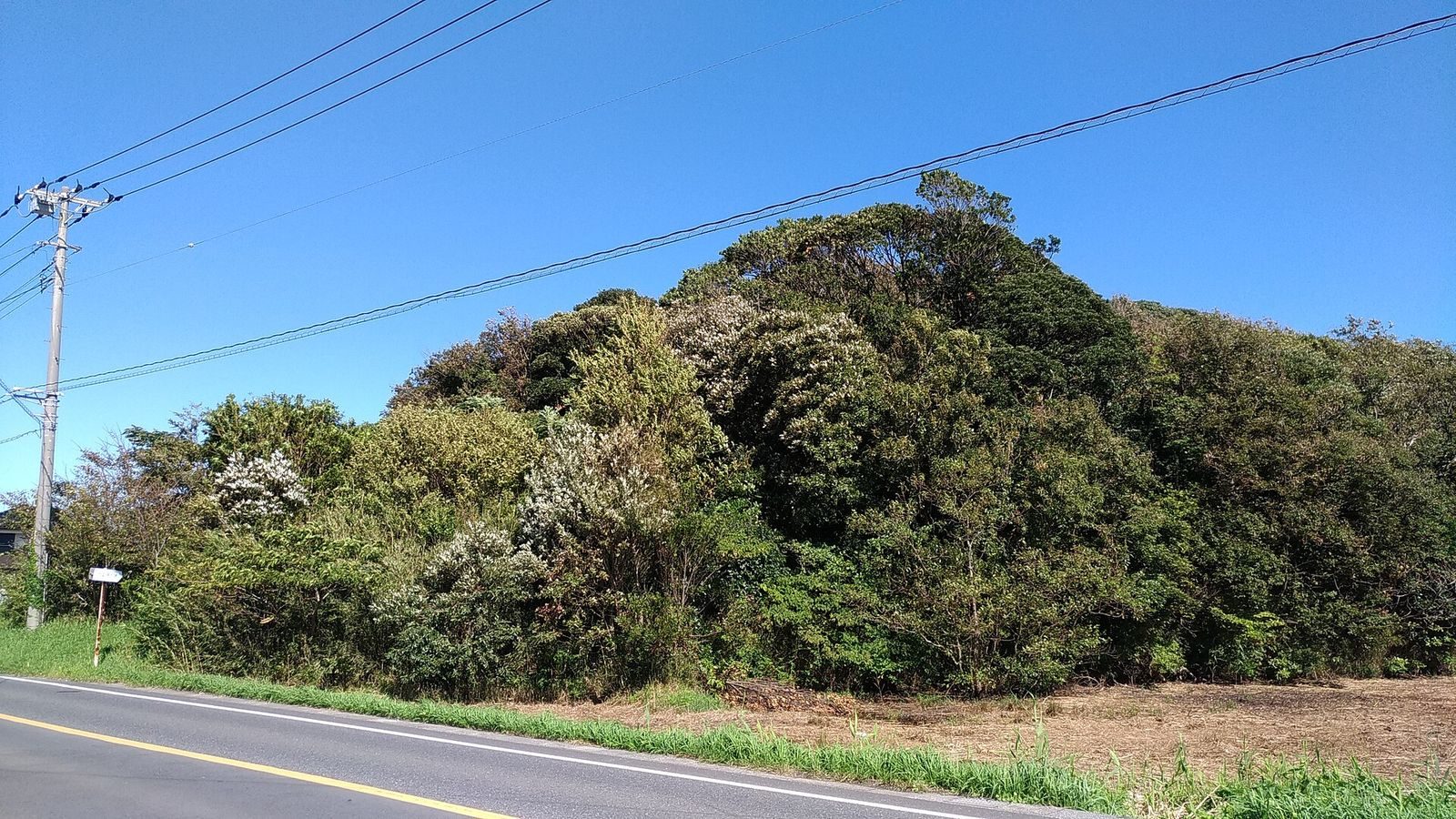
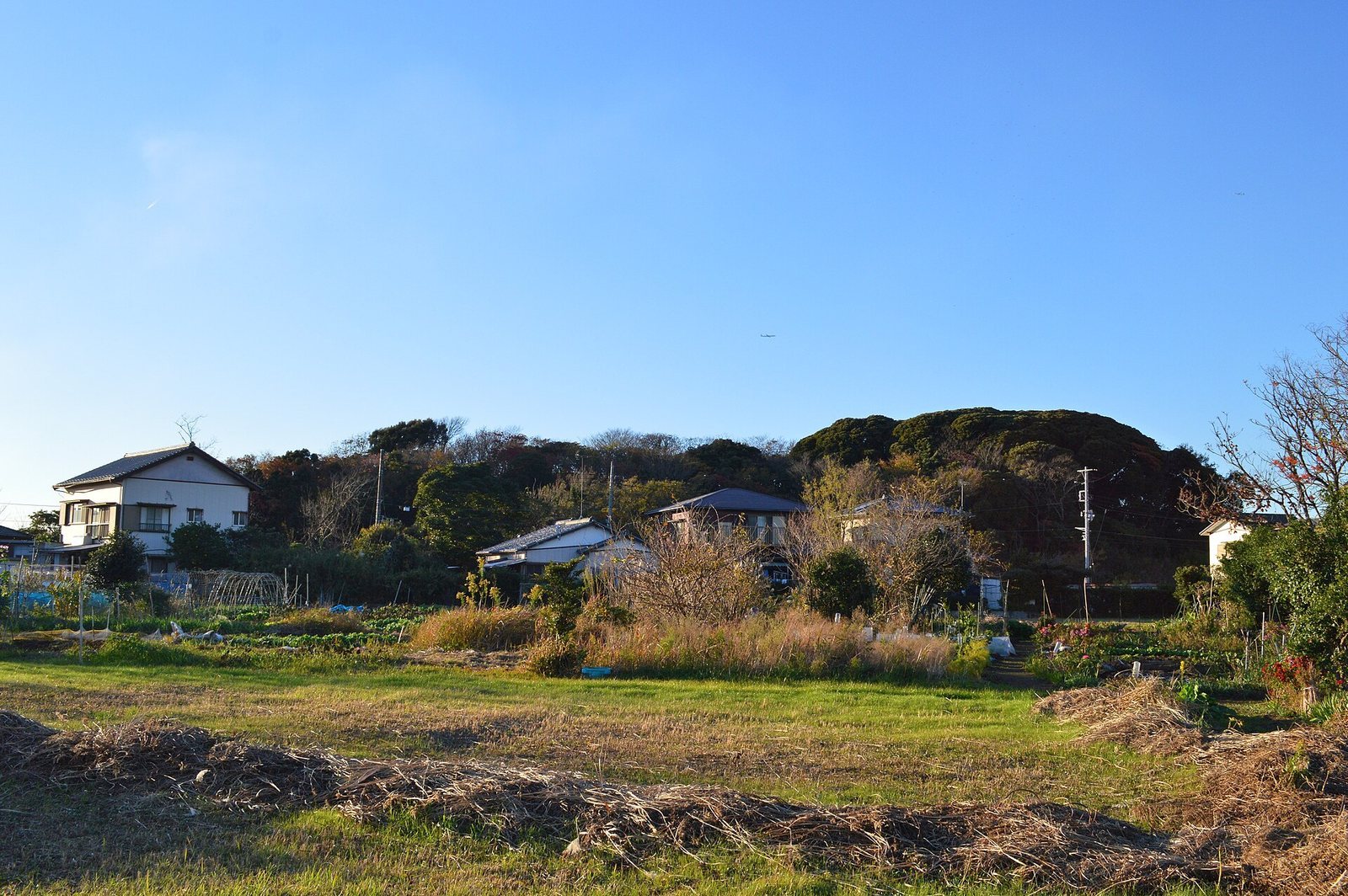
The mound stands on the lowland of the Koito River estuary, where the river flows into Tokyo Bay. It has a square front and circular rear, forming a two-tier structure about 144 metres long. Dairizuka is the largest mound in its group and in Chiba Prefecture, and the largest keyhole-shaped mound in southern Kantō.
Moat and surface features
A moat originally surrounded the mound, whose surface was covered with fukiishi, stones laid over a burial mound. Three tiers of cylindrical haniwa, clay cylinders and figures placed around burial mounds, encircled it. Morning-glory-shaped examples are also recorded; house-shaped and human-shaped figures are thought to have stood there as well.
Burial chambers and finds
Stone chambers
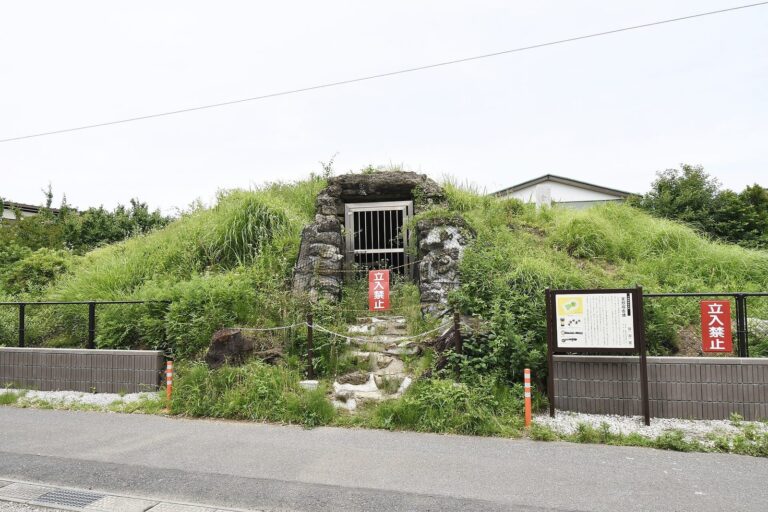
Two horizontal-entry stone chambers lie in the circular rear section, aligned with the mound’s main axis. Both are of the no-sleeve type, meaning their entrances lack lateral extensions. The eastern chamber is 5.75 metres long and 0.75 to 0.88 metres wide; the western chamber measures 7.55 metres long and one metre wide. The eastern chamber held the remains of two people. One set, on its north side, was laid on the back with the arms bent across the chest.
Grave goods and related finds
Objects recovered from the chambers include iron swords, a dagger, a long sword, a spear, a sickle, a rod, an axe, three chopsticks, an iron glove, and a bronze mirror 13 centimetres across. Other finds include gilt-bronze quiver fittings and a whistling arrowhead made from deer bone, designed to make a sound when fired. An identical set of quiver fittings came from a tomb in Fukuoka Prefecture; other examples are known from tombs in Mimana, a name used in Japanese historical writing for a region in the southern Korean Peninsula. The excavated objects are displayed at the National Museum of Japanese History in Sakura, Chiba.