Palazzo Guinigi: A Medieval Palace in Lucca
Site at a Glance
- Rating
- 4.5
- Popularity
- Medium
- Country
- Italy
- Primary era
- Medieval
- Eras represented
- Medieval, Early Modern
- Civilizations
- Republic of Lucca
- Site type
- Domestic
- Remains
- Palace
On this page6 sections
History
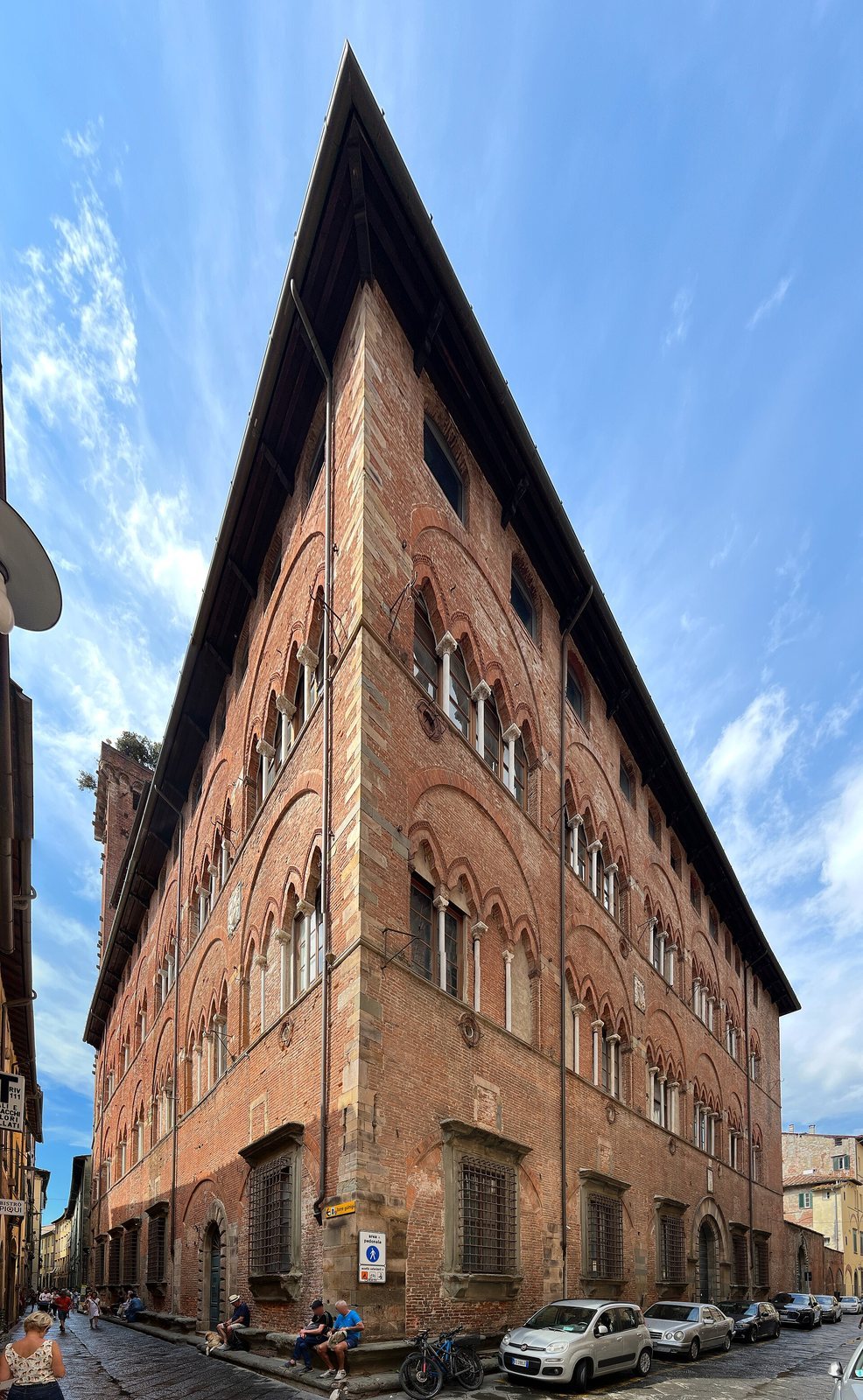
Palazzo Guinigi is a medieval palace in Lucca, Italy, built for the wealthy Guinigi merchant and banking family in the fourteenth century. The family developed it by joining earlier buildings, creating a residence shaped by Luccan Romanesque-Gothic architecture, which combines features of both styles.
The Guinigi family and Paolo’s rule
The family’s influence grew among Lucca’s leading families and reached its height in 1400, when Paolo Guinigi became lord of the city. A lord was a personal ruler of a city, rather than a king or emperor. Ilaria del Carretto, the best-known of Paolo’s four wives, lived in the palace for several years. Paolo’s rule ended in 1430, when Lucca’s republican government was restored.
Decline and municipal restoration
After Paolo’s removal, the palace deteriorated and was divided into smaller spaces for different purposes. In more recent times, it served as the Fire Brigade’s headquarters. The last member of the Guinigi family donated the palace and its tower to the City of Lucca. Near the end of the twentieth century, the municipality began substantial but unfinished interior restoration, concentrating particularly on the upper floors, and designated the building for museum use. It also hosted exhibitions and institutional events for a period.
Remains
Palace architecture
Set between Via Sant’Andrea and Via Guinigi, the red-brick palace is the mature form of a late fourteenth- to early fifteenth-century reworking of the Luccan Romanesque-Gothic residence. Stone pillars support its arcades. The ground-floor arcades, initially open, were closed in the sixteenth century and fitted with barred windows. Above them are broad windows divided into three or four sections. In the entrance atrium, the Guinigi family coat of arms survives beside the monumental staircase.
Tower and earlier buildings
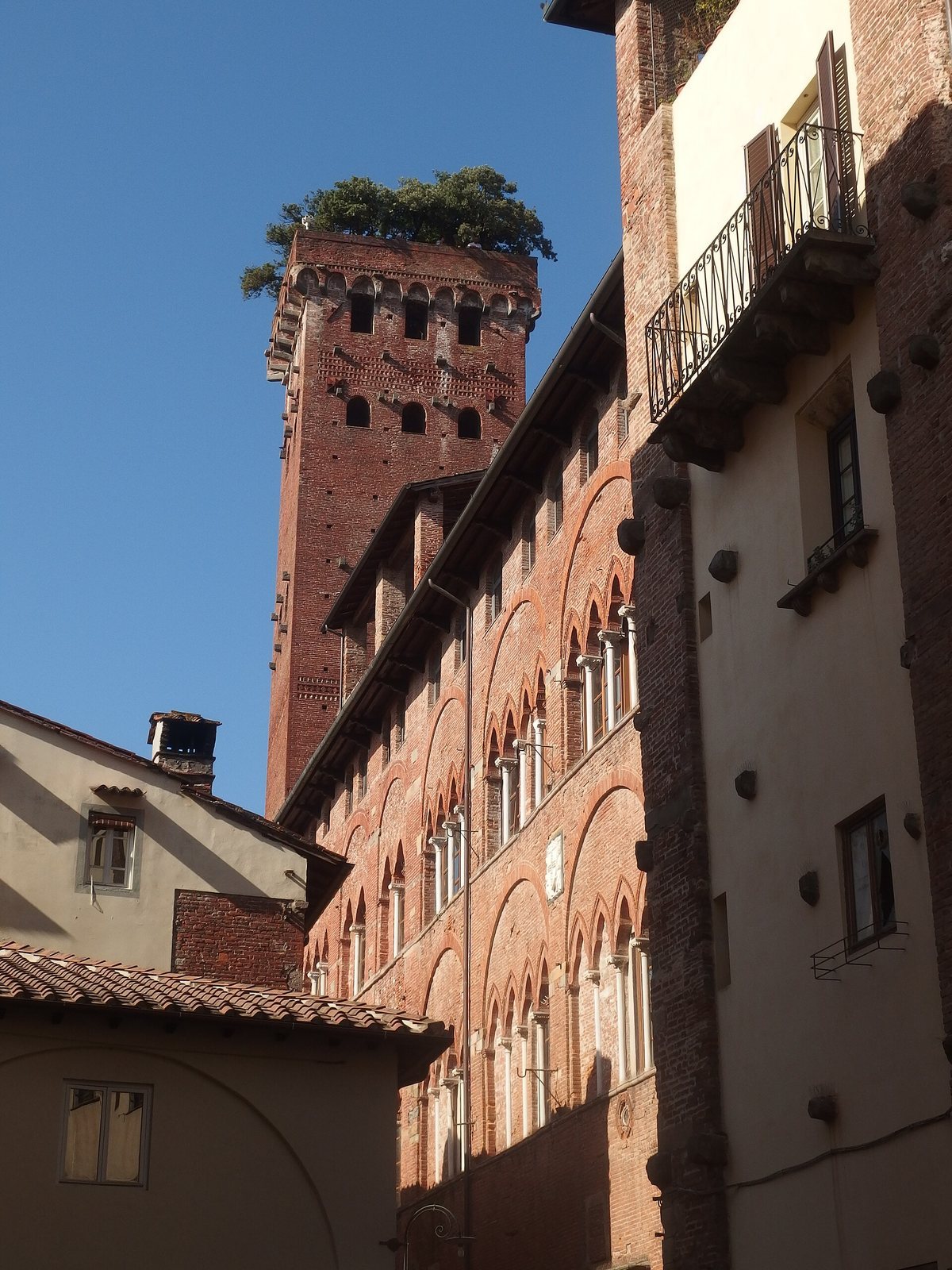
The palace incorporates older structures, including a tower crowned with trees. This tower appears to be the oldest part of the complex and is a distinctive feature associated with Lucca’s identity.