Mondragón Palace: A Historic Residence and Municipal Museum in Ronda, Spain
Site at a Glance
- Rating
- 4.2
- Popularity
- High
- Country
- Spain
- Primary era
- Early Modern
- Eras represented
- Medieval, Early Modern
- Civilizations
- Crown of Castile, Spanish
- Site type
- Domestic
- Remains
- Palace
On this page12 sections
History
Mondragón Palace is a historic residence in Ronda, Spain, with Andalusi origins and a 14th-century date. Its architectural forms include Mudéjar, a style associated with Islamic traditions in Christian-ruled Iberia, as well as Renaissance, Gothic, and Baroque elements.
Andalusi and Nasrid rule
A legend links the palace to the kings of the Taifa of Ronda, an independent Muslim-ruled principality in medieval Iberia. In the 14th century, it served as the residence of Abd al Malik, a Marinid king. The Marinids were a Muslim dynasty that ruled Morocco, and Abd al Malik was the son of Sultan Abu al-Hasan ‘Ali.
After Abd al Malik’s death, Ronda came under the Kingdom of Granada, ruled by the Nasrids. The palace then became the residence of a Nasrid governor, an official who administered territory for the dynasty. Hamed el Zegrí was the last governor to occupy it in this role.
Castilian rule and municipal museum
On 24 May 1485, the Catholic Monarchs, Isabella I of Castile and Ferdinand II of Aragon, conquered Ronda and stayed at the palace while in the city. It later passed to Captain Melchor de Mondragón, the military officer whose name the palace bears. The property subsequently belonged to Fernando de Valenzuela, Marquis of Villasierra, giving rise to its other name, the Palace of the Marquis of Villasierra.
Ronda’s city council bought the palace in 1975 to convert it into a museum. Work by the Ronda Workshop School during the 1980s and 1990s established its first exhibition rooms. The building now houses the Municipal Museum of Ronda.
Remains
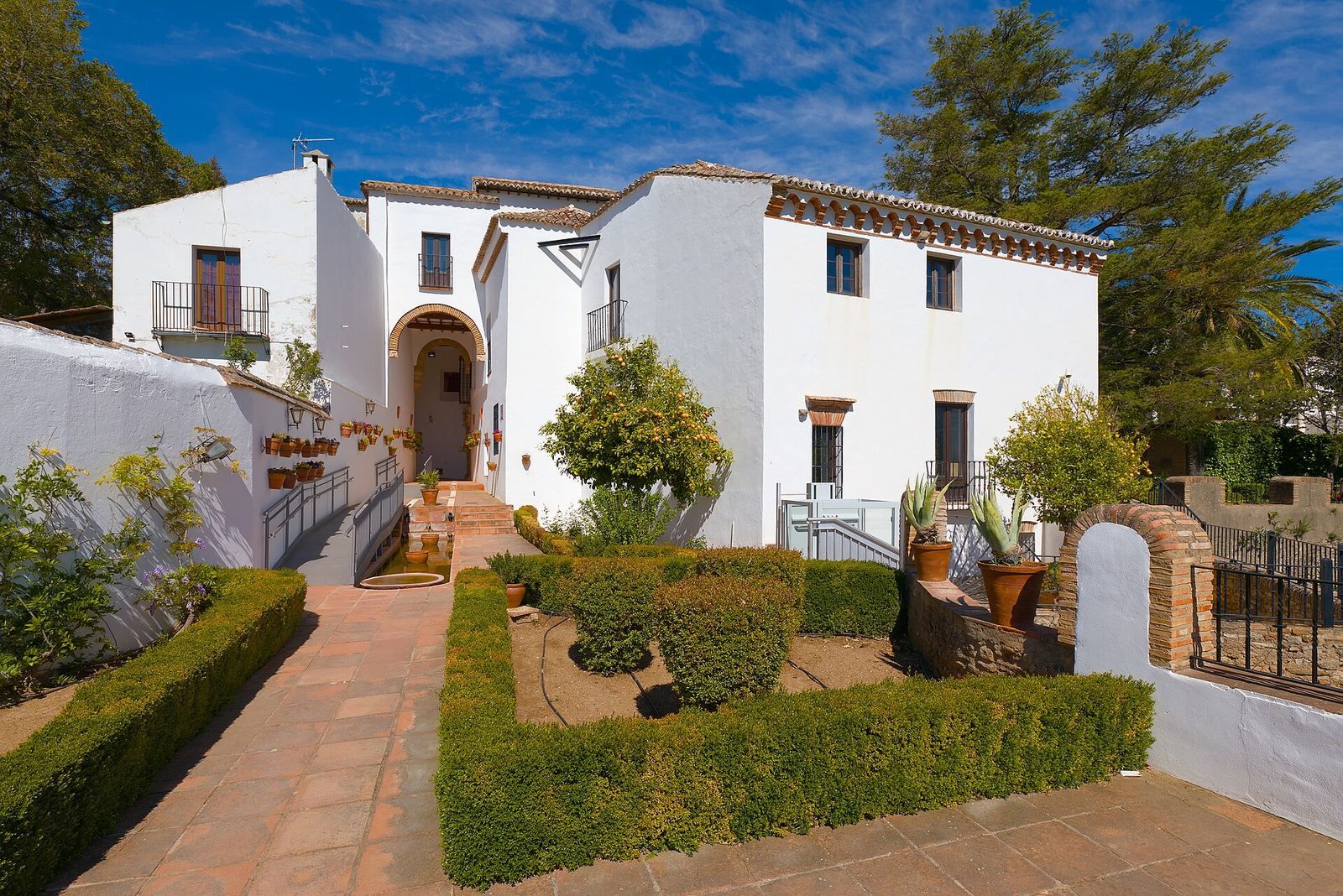
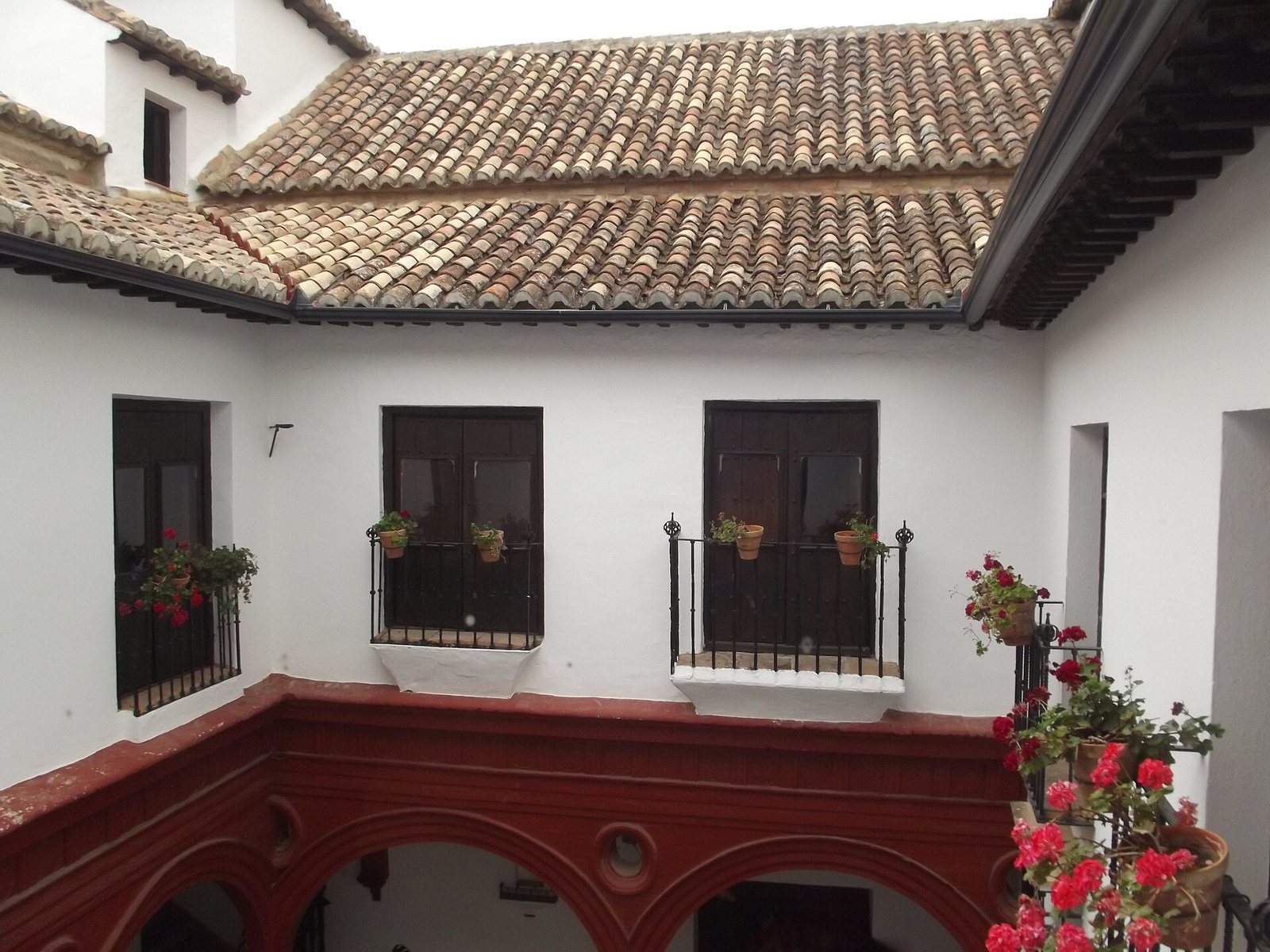
The palace combines work from several architectural periods and is arranged around three courtyards, with a noble hall among its principal interior spaces. Its surviving fabric includes traces of its Muslim period alongside later additions to the exterior and interior.
Earlier remains and facade
Muslim-period remains
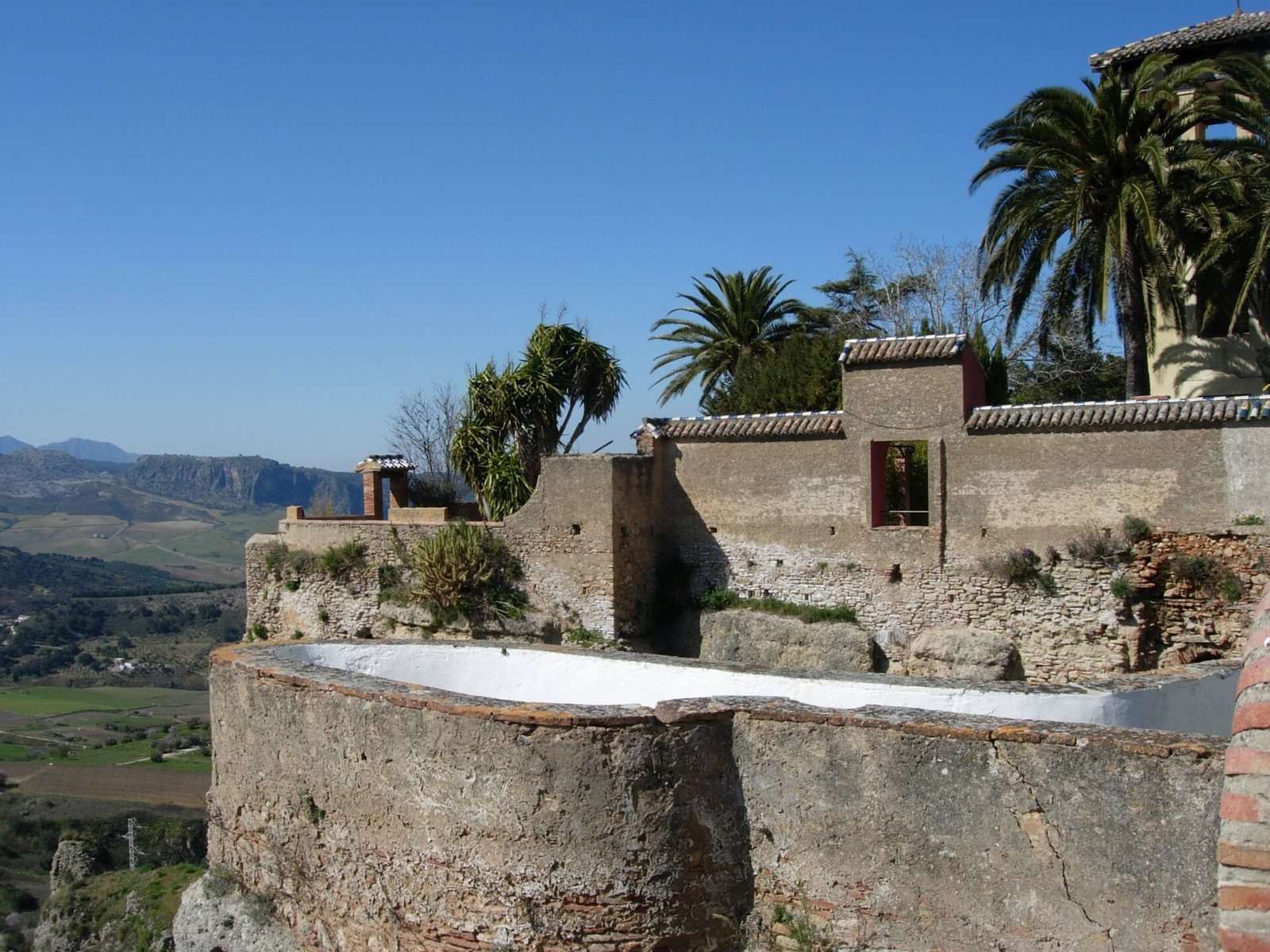
The palace’s surviving remains from its Muslim period include its ground plan, foundations, and underground passages. The passages connected the garden with the former fortified palace, or alcázar.
Facade
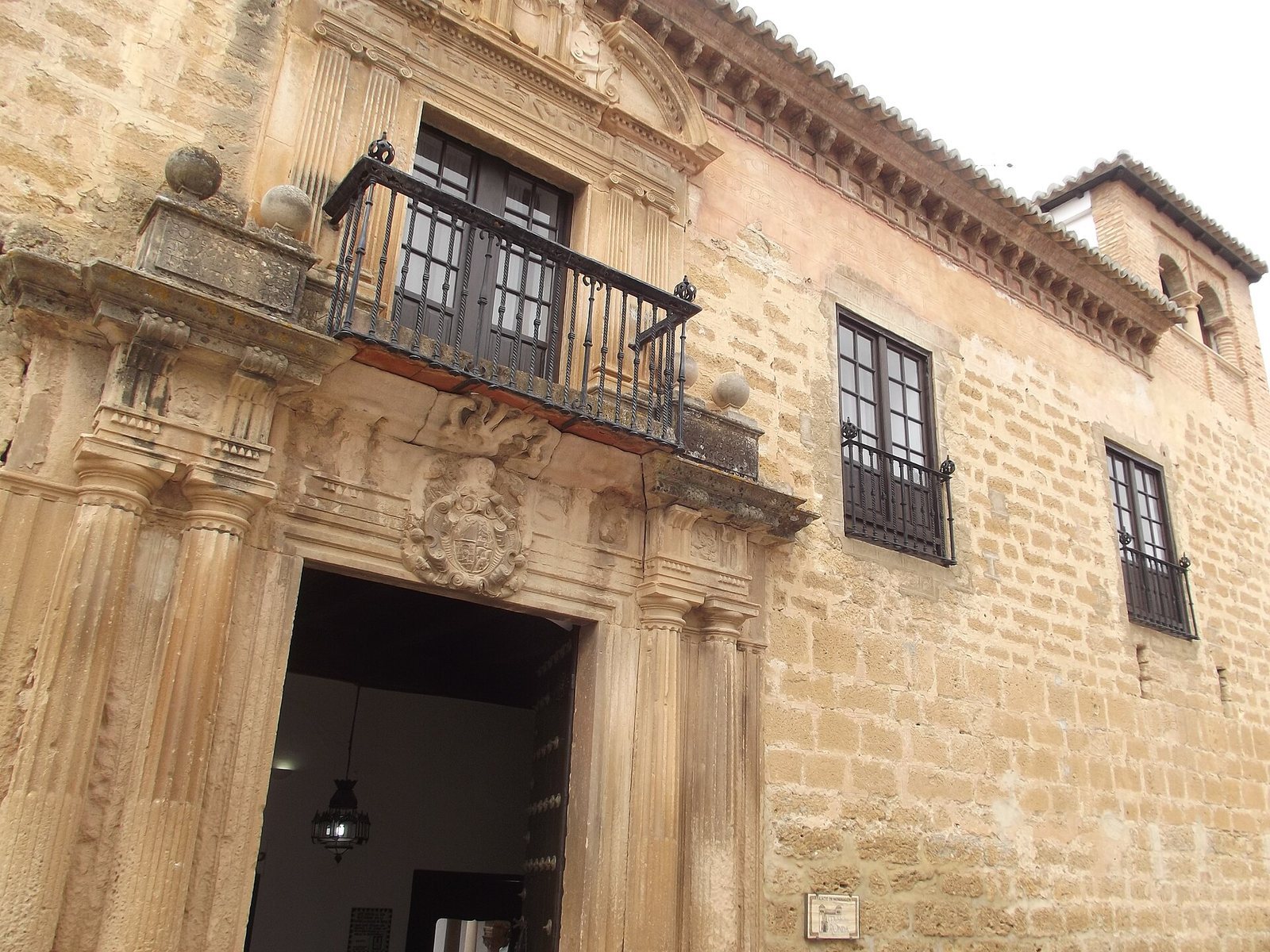
The facade dates to the early 16th century. Two square brick towers mark its corners, each capped by a hipped roof. An 18th-century Baroque intervention used carefully cut stone blocks and included a columned entrance portal. Captain Melchor de Mondragón’s coat of arms appears on the portal.
Courtyards and interior
Well Courtyard
The entrance courtyard, also called the Well Courtyard, dates to the 18th century. Galleries with semicircular arches run along two of its end walls.
Mudéjar Courtyard
Dating to the 16th century, the Mudéjar Courtyard brings together Gothic, Renaissance, and Mudéjar forms. A horseshoe arch and Mudéjar door lead from the courtyard to the garden.
Late Gothic courtyard
The third courtyard is Late Gothic in style.
Noble hall
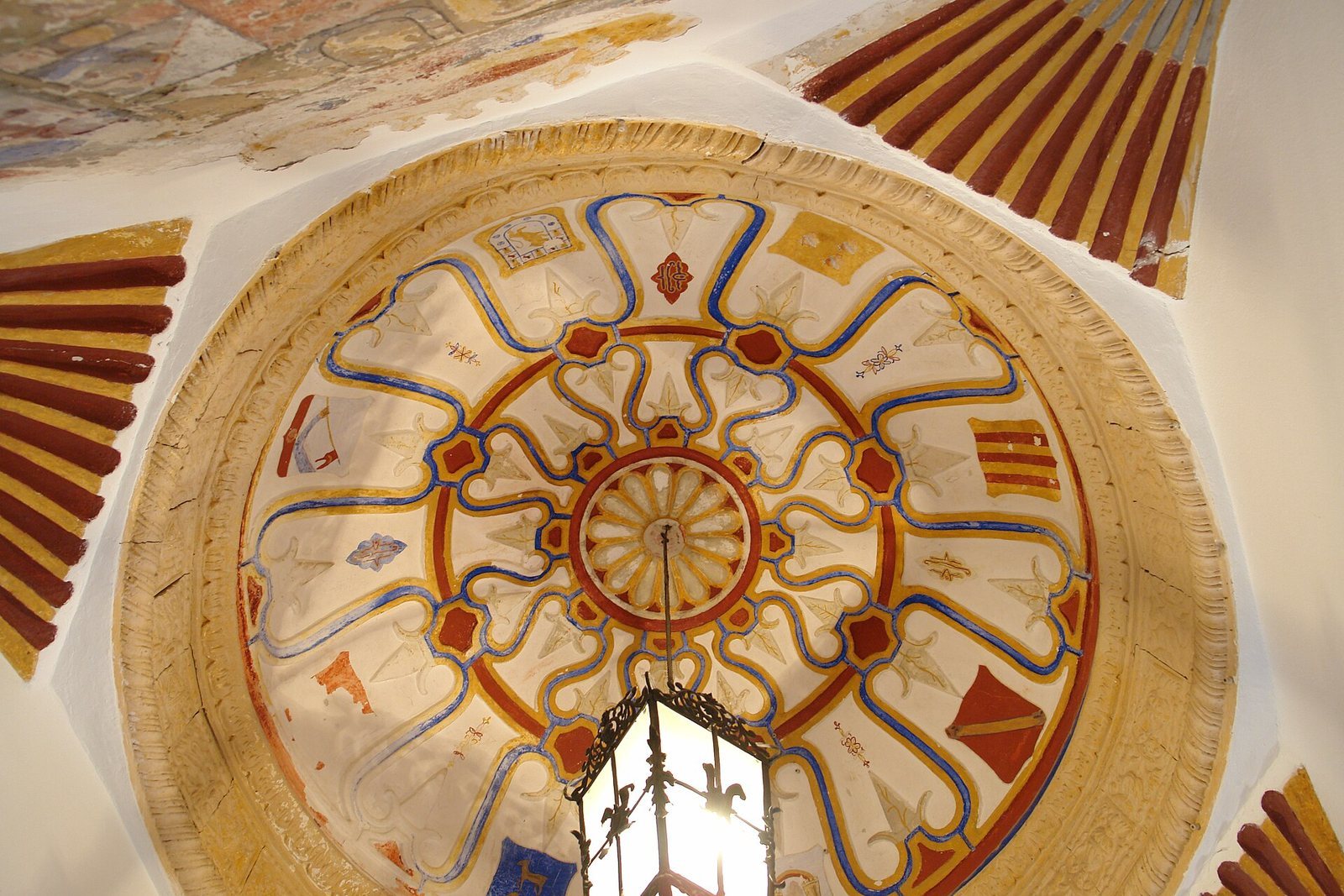
The noble hall’s principal feature is a Mudéjar ceiling with recessed panels.