Boistissandeau Castle: A Historic Residence in Vendée
Site at a Glance
- Rating
- 4.4
- Popularity
- Medium
- Country
- France
- Primary era
- Early Modern
- Eras represented
- Early Modern
- Civilizations
- French
- Site type
- Domestic
- Remains
- Castle
On this page9 sections
History
Boistissandeau Castle was built in 1578 in Les Herbiers, Vendée, France. Its history includes visits by a prominent French scientist, a deadly episode during the French Revolution, and later use by a religious congregation and as a care facility.
Scientific visits and revolutionary violence
During the eighteenth century, the scientist and naturalist René-Antoine Ferchault de Réaumur frequently visited the castle, staying with its owner, Jean-Baptiste-Laurent d’Hillerin (1704–1779), who was also a prominent scientific figure.
On 31 January 1794, during the Terror in Vendée, a period of revolutionary violence in the region, five hussars, or light-cavalry soldiers, killed Marie-Agathe d’Hillerin (1714–1794) and her daughters Henriette (1738–1794) and Agathe (1741–1794). Marie-Agathe was dragged down the entrance staircase and killed with sabres. Her daughters tried to escape and were shot.
Religious and later uses
The Brothers of Saint Gabriel, a Catholic religious congregation, are identified as the castle’s first owners and later lived there. In 1942 the building became a novitiate, a place where people entering a religious order train. It became a retirement home in 1970.
The Vendée Department acquired the castle in June 2003. It now provides accommodation for people with disabilities and their families, as well as retired people. Parts of the property were listed as historic monuments in France on 23 January 1958.
Remains
Castle and grounds
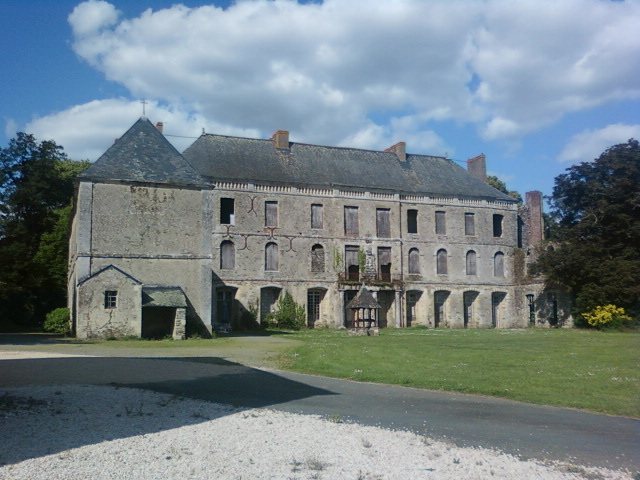
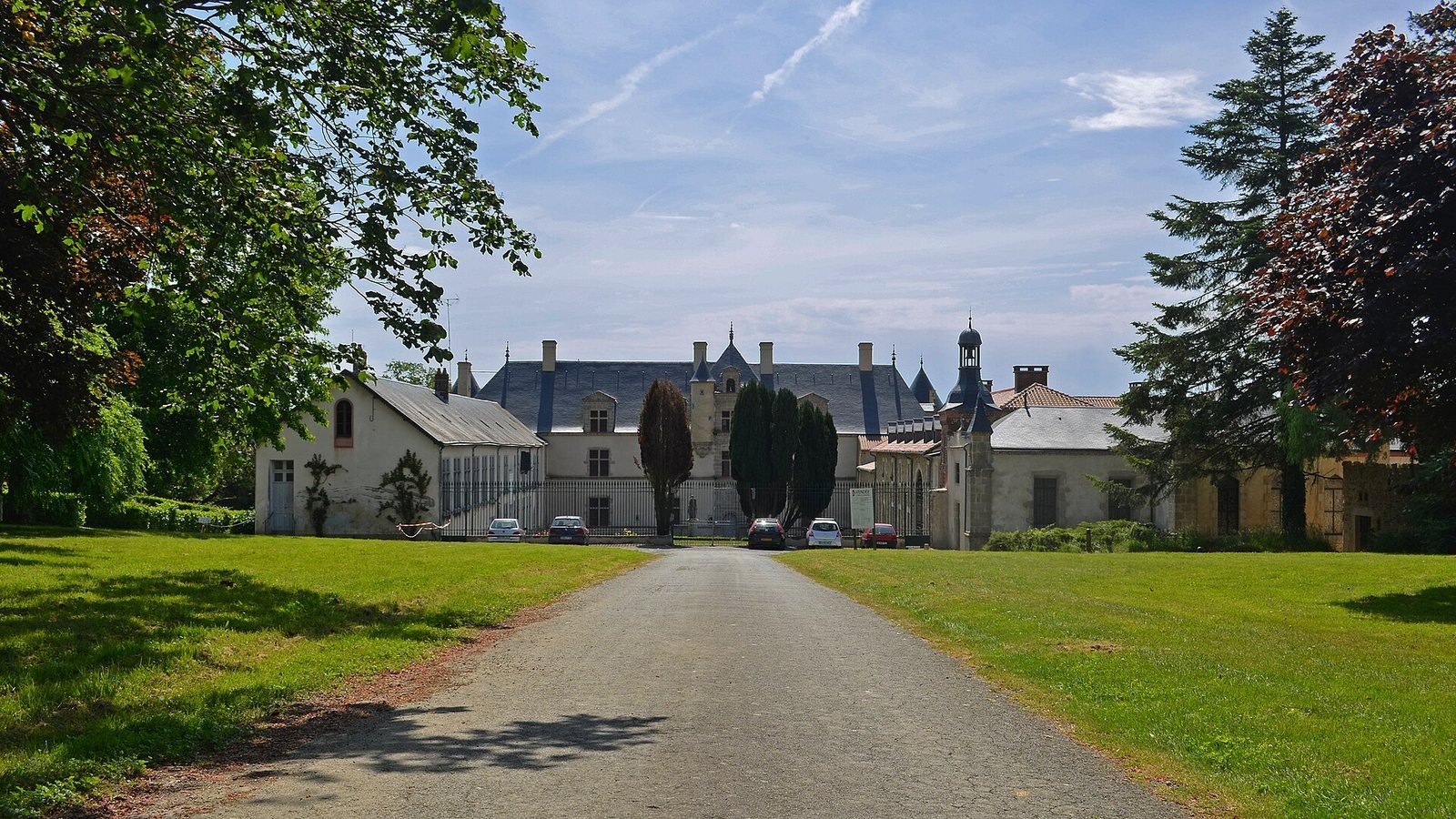
The surviving features include the castle’s façades and roofs, a turret above the façade, a Renaissance fireplace, ornamental gardens, and traces at the entrance and chapel door.
Façade and turret
A large turret of pink brick rises above the façade. It has a steep, conical roof, the form that gives this type of turret its pepper-pot name.
Entrance and chapel door
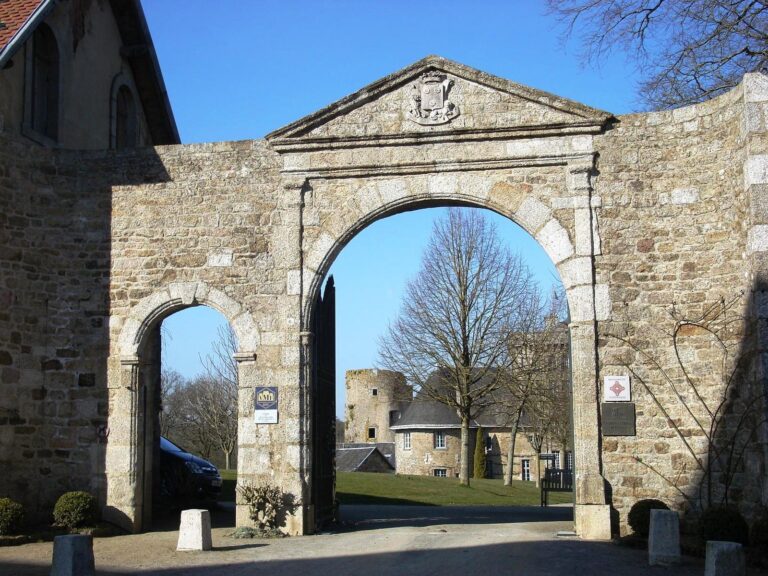
A mounting block associated with the 1794 killings remains visible. The shooting places were near the main entrance and opposite the chapel door, which still bears bullet marks.
Fireplace and gardens
The castle includes a Renaissance fireplace, and ornamental gardens form part of the grounds.
Condition
Much of the building has been renovated, but further work is needed, particularly in the left wing.