Ottoburg: A Late Gothic Residential Tower in Innsbruck, Austria
Site at a Glance
- Popularity
- Medium
- Country
- Austria
- Primary era
- Medieval
- Eras represented
- Medieval, Early Modern, Modern
- Civilizations
- Habsburg, Habsburg Austria, Holy Roman Empire
- Site type
- Domestic
- Remains
- Elite Residence
On this page5 sections
History
Ottoburg is a late Gothic residential tower at the entrance to Innsbruck’s Old Town in Austria, first recorded in 1476. The building was remodeled in 1494–1495. In 1497, Maximilian I, a Habsburg ruler who later became Holy Roman Emperor, granted the tower to Rudolf of Anhalt-Bernburg, a German prince of the House of Ascania. After Rudolf’s death in 1510, it passed to civic owners. The building was extended in 1542.
Names and later use
By 1565 or 1568, the tower was called Eepurg or öd Burg, meaning “empty castle.” The name Öttburg appears in 1628. By the late eighteenth century, the name Ottoburg had become associated with Duke Otto II of Andechs, a medieval duke of the House of Andechs. He was once regarded as Innsbruck’s founder and was believed to have lived in his “Ottoburg.” A third upper storey was added in 1775, and in 1913 the building was adapted for use as a restaurant.
Remains
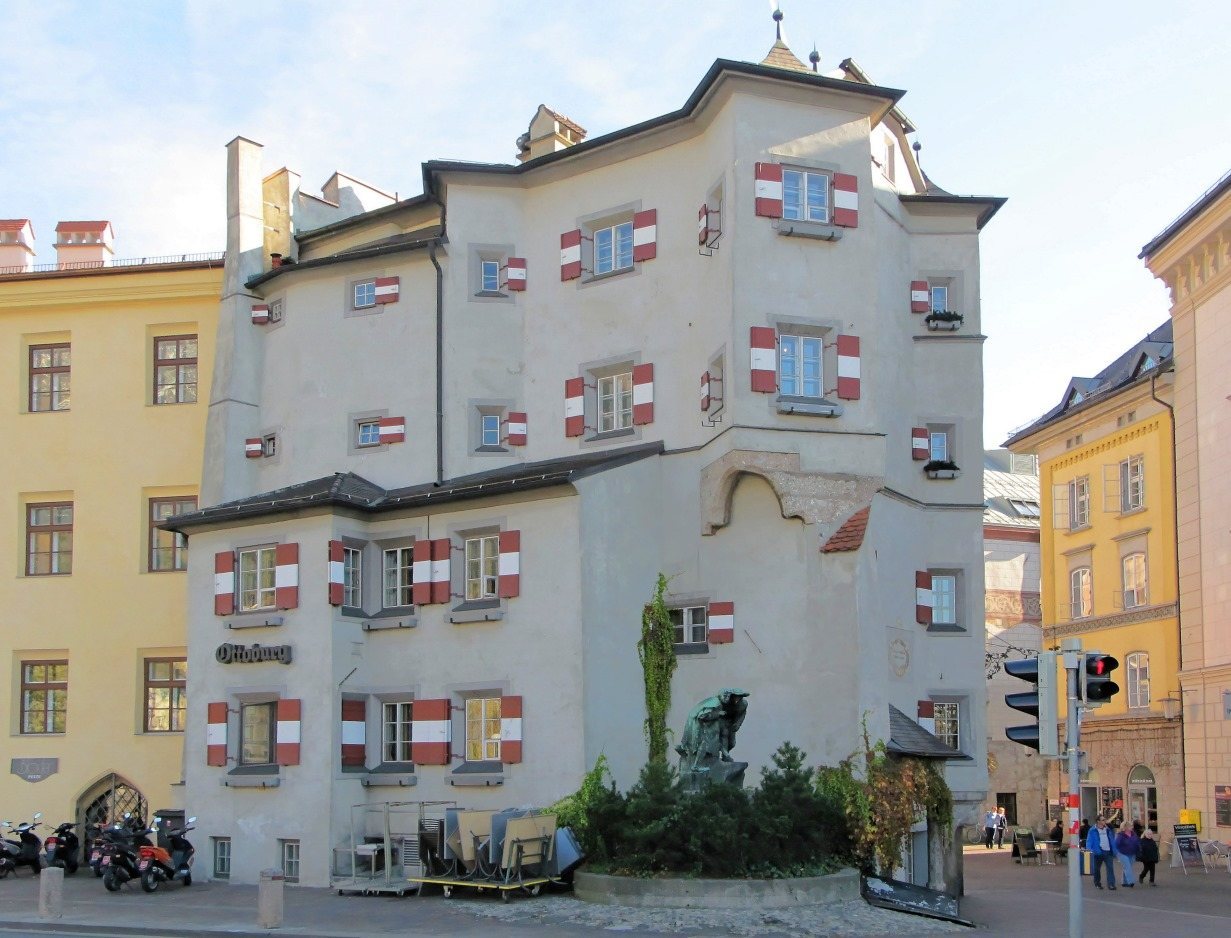
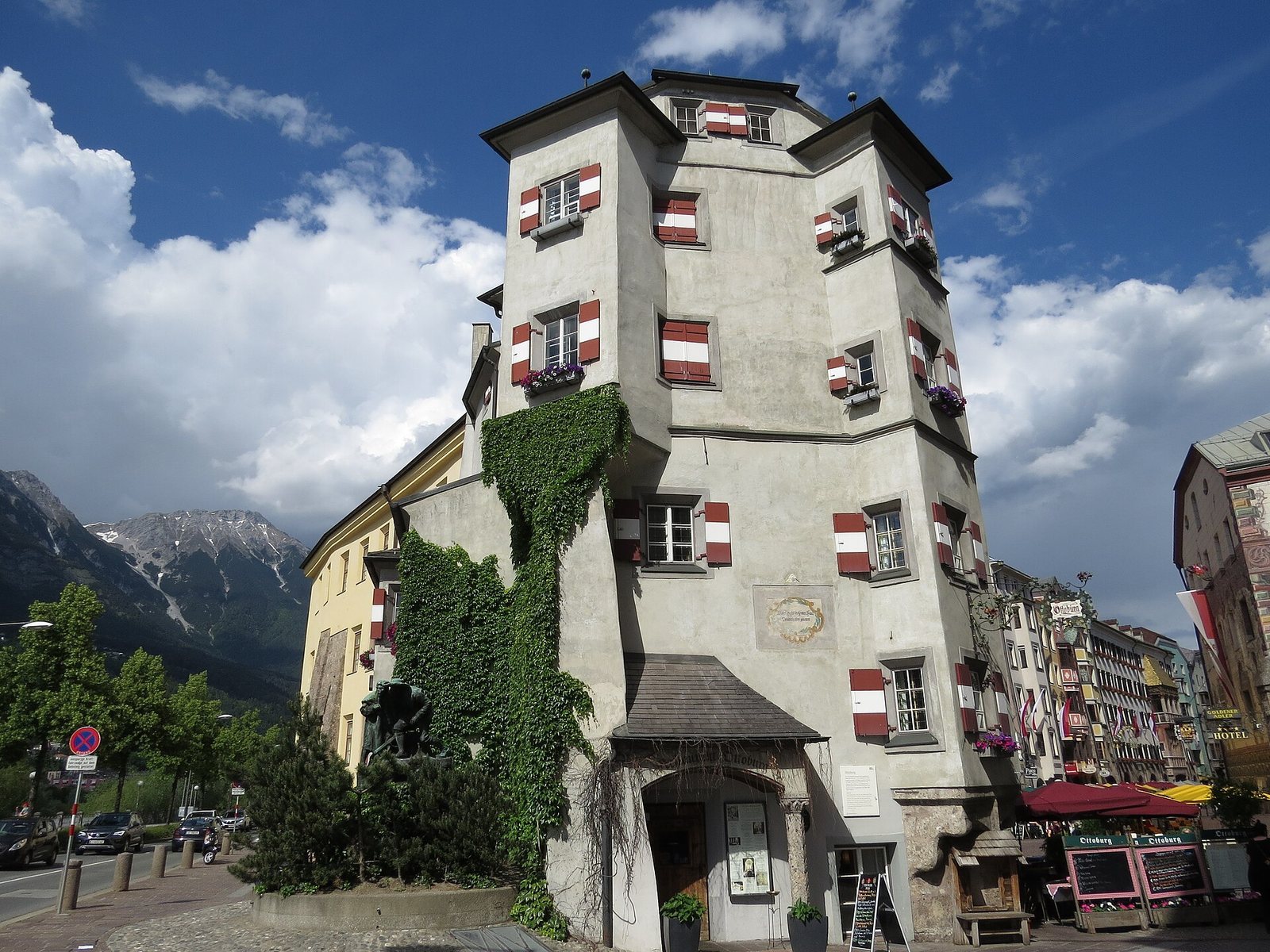
The polygonal tower stands four to five storeys high at a corner above the city wall. It adjoined the Inn Gate, which was demolished in 1790.
Tower exterior
The facade combines projecting and recessed sections and has 90 wooden shutters painted red, white, and red. Projections on the side facing the Inn and along Herzog-Friedrich-Straße date from the nineteenth and twentieth centuries. A gabled roof tops the tower.
Interior vaults
The interior has been extensively renewed, while some Gothic cross vaults, formed by intersecting vaulted sections, and star vaults, whose ribs form star patterns, survive.