Castle Korb: A Medieval Tower and Historic Residence in South Tyrol
Site at a Glance
- Popularity
- Medium
- Country
- Italy
- Primary era
- Medieval
- Eras represented
- Medieval, Modern
- Civilizations
- Austrian Empire, Habsburg, Holy Roman Empire, Italian
- Site type
- Domestic
- Remains
- Castle
On this page9 sections
History
Origins and noble ownership
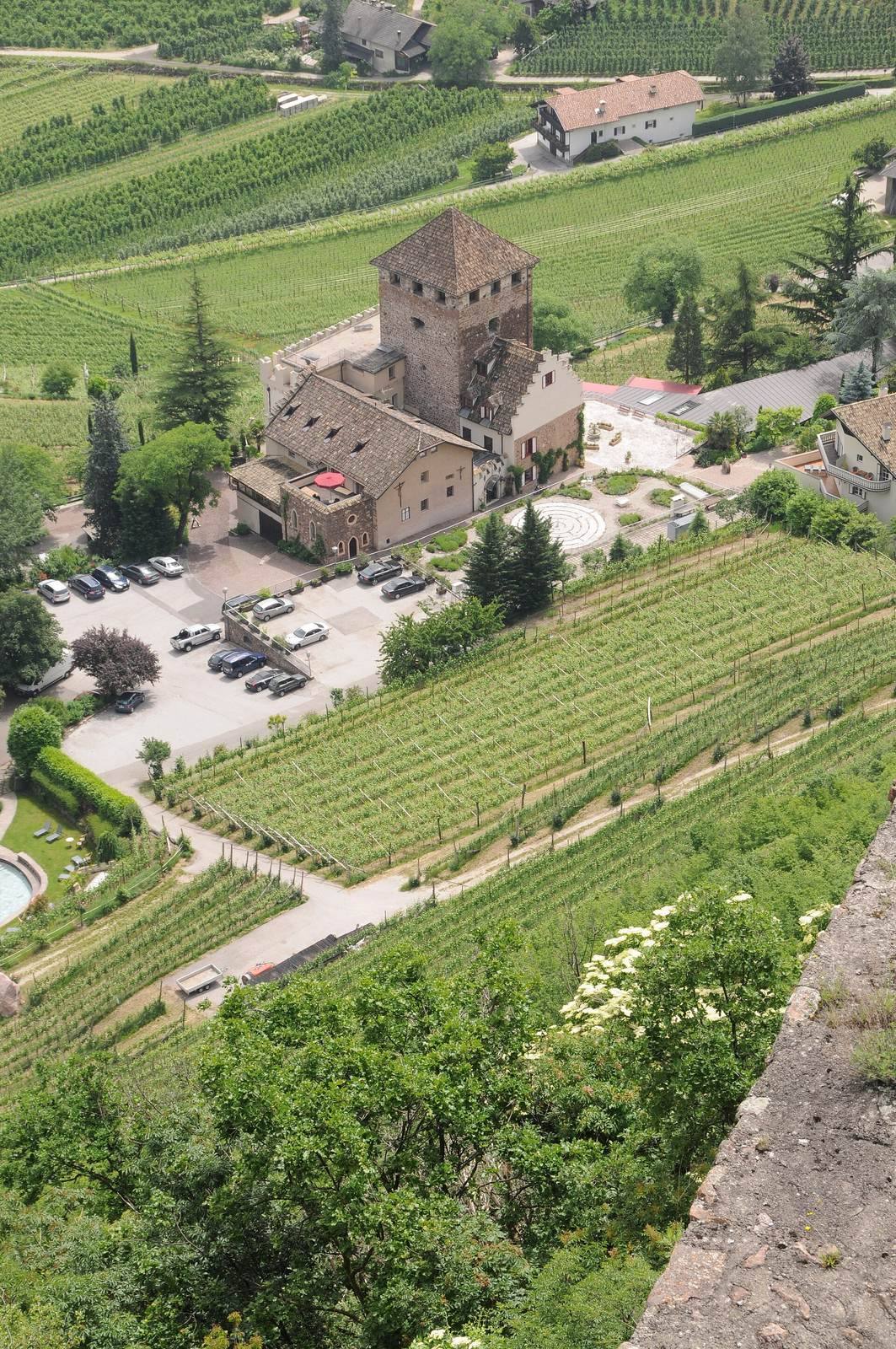
Castle Korb, above the hamlet of Missian in Eppan, South Tyrol, Italy, began as a square residential tower built before 1236 by the Lords of Korb. They served the Counts of Eppan as ministeriales, medieval service nobles who held positions and sometimes land from more powerful lords. A charter issued by Bolzano’s Holy Spirit Hospital refers to “Korb of Eppan” in 1314.
From the fourteenth century, successive Tyrolean noble families held the castle as a fief, property granted in return for service or other obligations. The Feigensteiners held it before the Vintlers, who acquired it in 1399. The Gfellers followed roughly fifty years later, then the Fuchs von Fuchsberg family, and the Fiegers by 1637. Ownership changed repeatedly before Johann Putzer von Reibegg acquired the property in the 1830s.
Confiscation and residential conversion
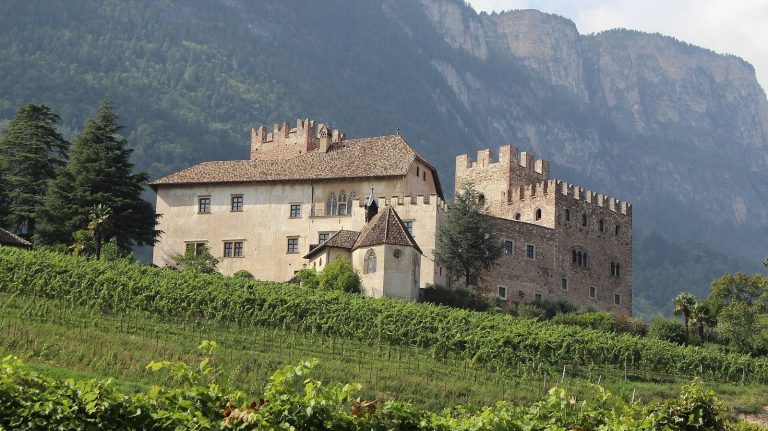
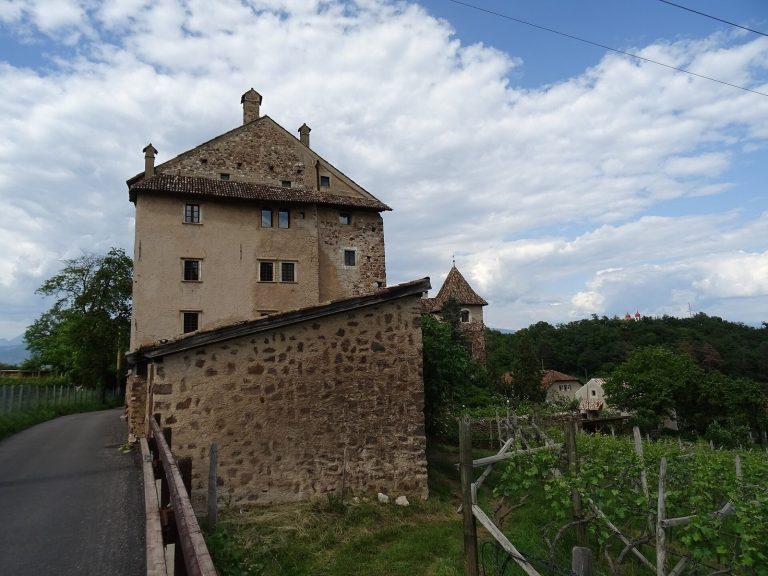
In 1802, the princely chamber, the territorial ruler’s office responsible for property and revenues, confiscated the castle while it lay in ruins. Bolzano merchant Johann Putzer von Reibegg later commissioned its conversion into a residence in a romantic castle style.
The Teßmann family acquired the estate in 1877. Friedrich Teßmann, a historian of Tyrol, was born at the castle and later lived there. The Dr. Friedrich Teßmann State Library in Bolzano was named in his honor.
Twentieth-century uses
The Dellago family made Castle Korb its family seat in 1918 and cultivated wine and fruit on the estate. After the First World War, the property also took on a hotel use, which continues alongside its restaurant use. A bunker beside the castle was built during the rule of Benito Mussolini, Italy’s fascist dictator, as part of the Alpine Wall, a system of defenses along the country’s northern frontier. Fritz Dellago later bought the bunker.
Remains
Tower and residence
Medieval residential tower
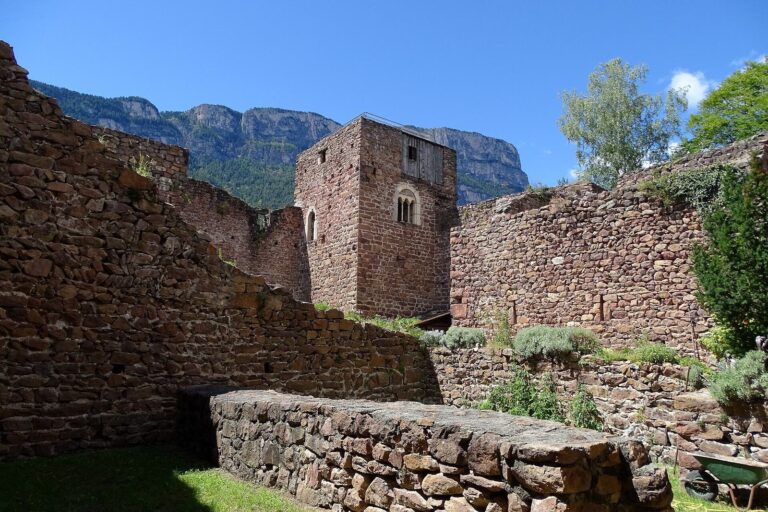
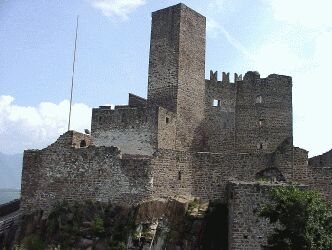
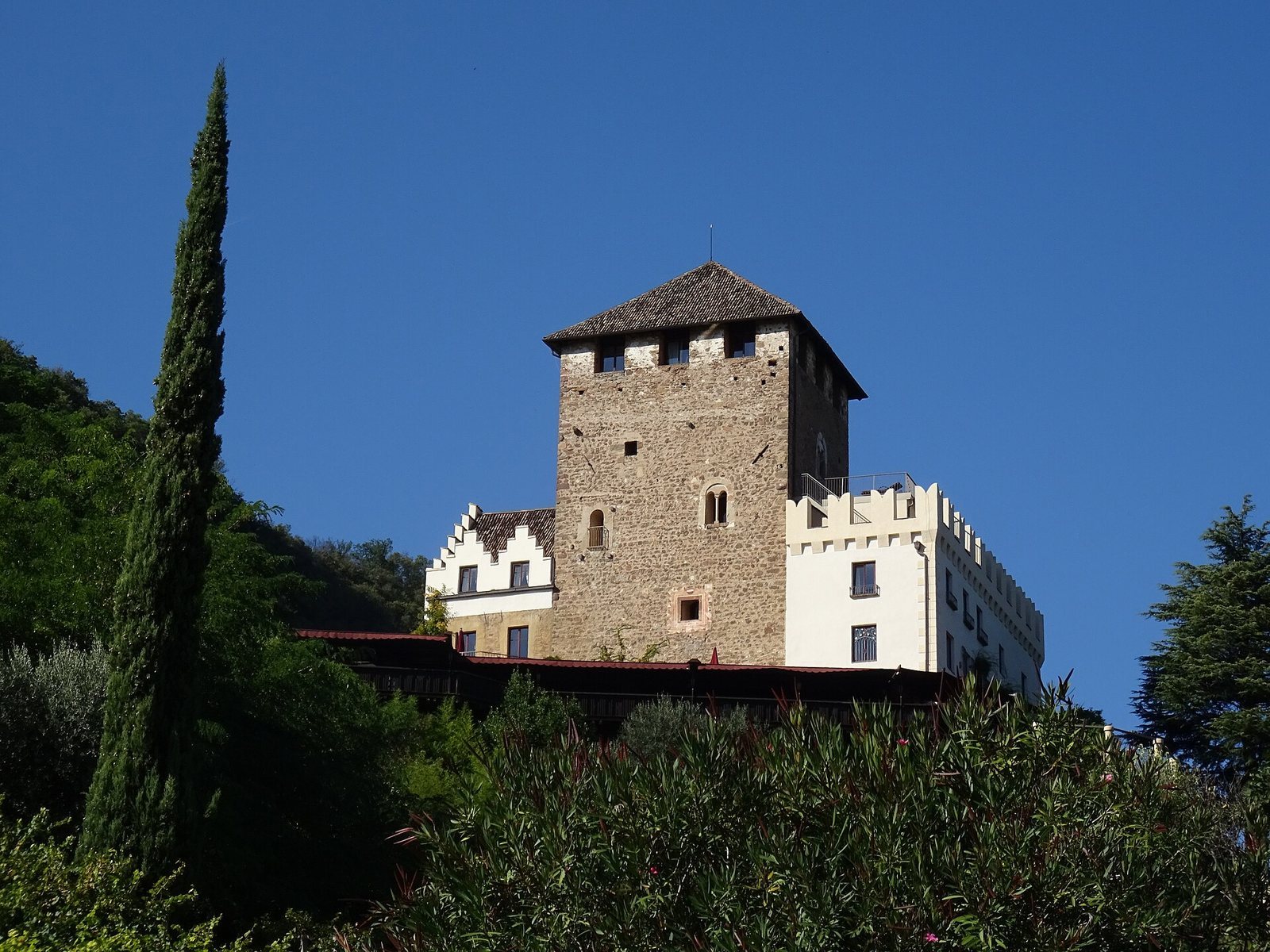
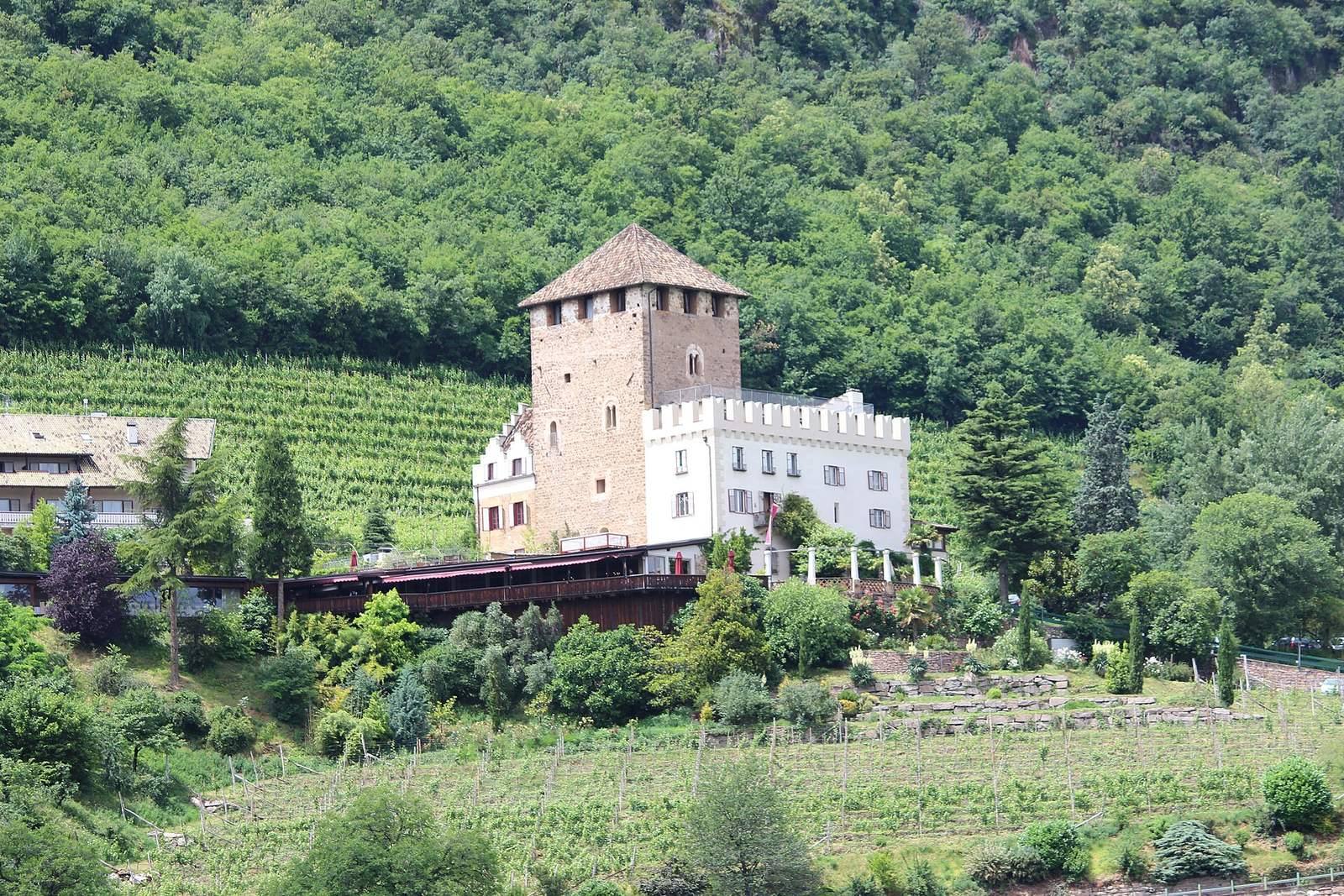
The square tower is the oldest part of the castle. It has a pyramidal roof and notched battlements at the top. Paired Romanesque windows, in a medieval style associated with rounded arches and substantial masonry, are set into its sides.
Nineteenth-century additions
The nineteenth-century conversion gave the residence decorative notched battlements and added a chapel.
Adjacent bunker
The bunker stands immediately beside the castle and is structure 45 of the Bolzano South defensive barrier. It has been adapted as a wine cellar and also serves as a venue for events and art exhibitions.