Doune of Invernochty: A Norman Earthwork Castle in Scotland
Site at a Glance
- Rating
- 4.6
- Popularity
- Very Low
- Country
- United Kingdom
- Primary era
- Medieval
- Eras represented
- Medieval
- Civilizations
- Kingdom of Scotland
- Site type
- Military
- Remains
- Castle
On this page6 sections
History
Pictish centre and medieval lordship
Doune of Invernochty is a castle site in Aberdeenshire, Scotland, United Kingdom, built in the later 12th or early 13th century, probably by a mormaer of Mar, a high-ranking Scottish provincial ruler comparable to an earl. It served as a stronghold of the Mormaers of Mar and stood at a place that had been a Pictish power centre before Anglo-Norman expansion into Scotland. The Picts were a people of northern Scotland in the early medieval period, while the Anglo-Normans brought feudal customs and institutions into the kingdom.
The castle’s construction followed reforms under King David I, known as the Davidian Revolution, which introduced Norman feudalism into Scotland. Earl Morggán or his successor Gille Críst may have been responsible for building it. The site’s name has been interpreted as meaning “fort at the confluence of the Nochty.” Duns, or fortified settlements, may have drawn missionaries who came to the region with Kentigern, also known as Mungo, a Christian saint associated with early medieval Scotland. Churches were established at important Pictish settlements.
Church and later uses
A church on the mound served as the parish church until at least the 17th century. The water system was drained in 1823. During the Second World War, an observation post was built on the Doune.
Remains
Mound and water defences
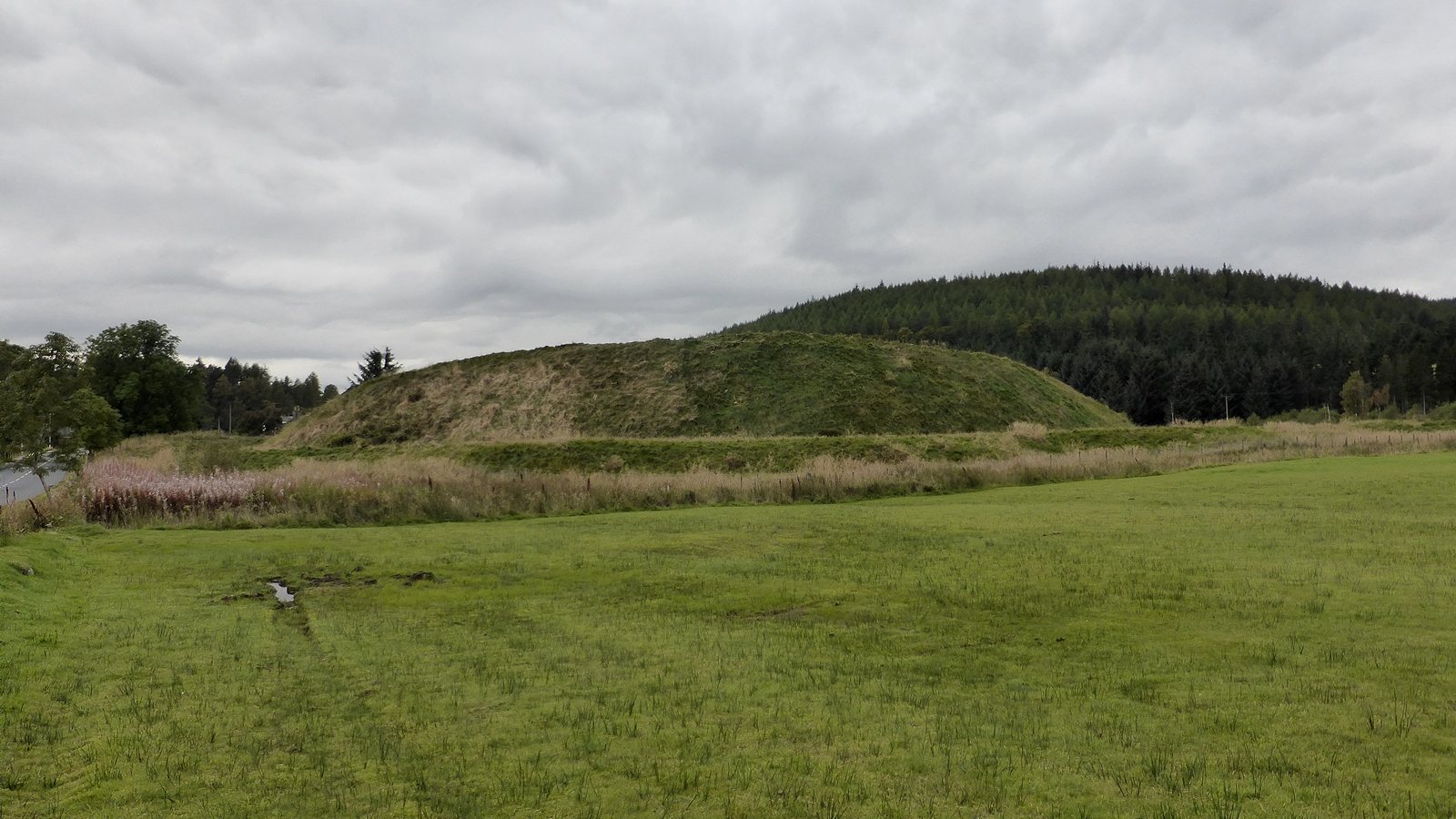
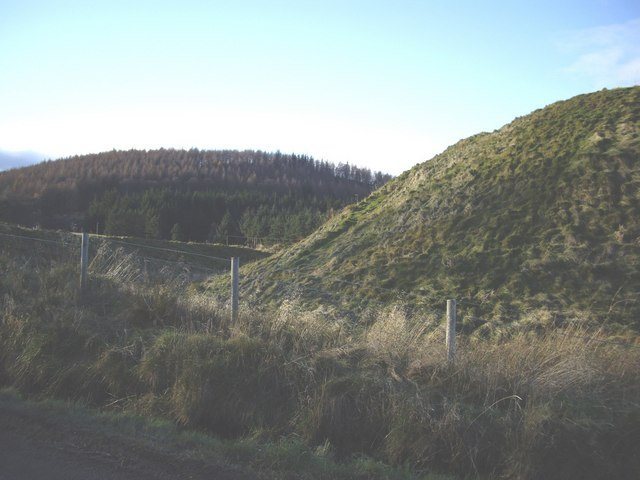
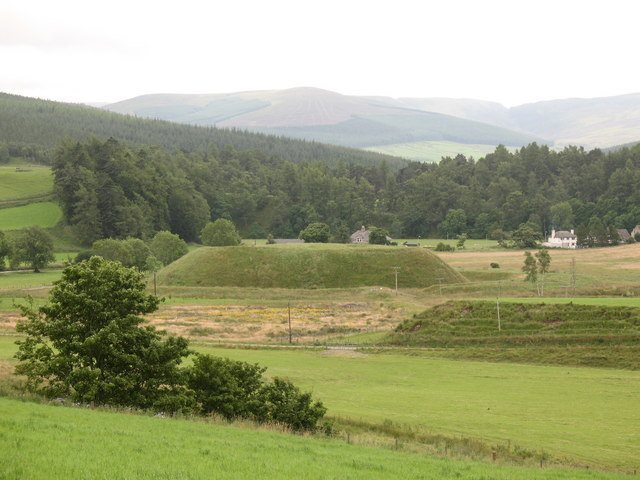
The site survives chiefly as earthworks near the meeting of the River Don and the Water of Nochty, within the Cairngorms National Park. Its central motte, a raised earthwork mound used as a castle’s main defended platform, was formed by extensively reshaping a natural moraine mound. The oval mound rises about 12 metres from the base of its ditch to the summit platform, which measures approximately 80 by 40 metres. A ditch and bank encircle it, while a larger system of banks, ditches, dams and sluices extends around the site. The sluices could direct water from a nearby lake into the ditch; parts of this system survive.
The Royal Commission on the Ancient and Historical Monuments of Scotland, the body responsible for recording and assessing historic monuments, has described Doune of Invernochty as one of Scotland’s finest Norman earthwork castles. It has also called it apparently the only motte in the country with Norman stonework on its summit.
Summit structures
Traces on the summit include a curtain wall about two metres thick and the foundations of a large rectangular building, probably a medieval church. These remains preserve evidence of stone construction within the earthwork stronghold.