Nepomuk Monastery: A Cistercian Abbey in Bohemia
Site at a Glance
- Popularity
- Medium
- Country
- Czechia
- Primary era
- Medieval
- Eras represented
- Medieval
- Civilizations
- Holy Roman Empire, Kingdom of Bohemia
- Site type
- Religious
- Remains
- Monastery
On this page11 sections
History
Nepomuk Monastery was a Cistercian abbey in Klášter, Czechia, about two kilometres north of Nepomuk, founded around 1144–1145 by monks from Ebrach. It became the fourth Cistercian abbey in Bohemia and, within its branch of the order, the most important Czech monastery. The Cistercians were a monastic order that developed from the abbey of Cîteaux in France.
Foundation and growth
The founder and precise foundation date are unknown. Duke Vladislav II may have helped establish the abbey, but another possibility is an unnamed member of the Přemyslid dynasty, perhaps Henry, a king’s brother. The foundation was probably not a royal act. Nepomuk was a daughter house of Ebrach, within the lineage of Morimond; only those two houses stood between it and Cîteaux. About a century later, Zlatá Koruna attained comparable standing within the Czech Cistercian community.
The monastery belonged to the Diocese of České Budějovice, the territorial church jurisdiction overseen by its bishop, and was dedicated to the Virgin Mary. Its monks established Žďár as a daughter house in 1252. Svaté Pole may also have been a daughter foundation, perhaps around 1157, although its affiliation is uncertain; Hradiště has been proposed in connection with that question. The abbey’s named leaders include Abbot Konrad in 1177, Hermannus in 1188, and Berchtold in 1252. Robert, later bishop of Olomouc, is recorded as prior in 1199.
Wealth and decline
Nepomuk prospered in the thirteenth century and became one of the wealthiest monasteries in Bohemia. At its height, its holdings covered roughly 80 villages, the towns of Blovice, Nepomuk, and Plánice, and ten farmsteads. This territory extended from the area around Starý Plzenec along the Úslava valley toward Klatovy. Gold and silver were mined in the region during the thirteenth and fourteenth centuries, and some mines may have belonged directly to the abbey.
The monastery’s finances began to weaken under John of Luxembourg, improved briefly under Charles IV, and deteriorated again under Wenceslaus IV. A plague in 1380 killed 30 monks and 13 lay brothers at the abbey. By the early fifteenth century, financial problems were joined by failures to observe Cistercian rules. In 1418, the abbey owed 12,000 florins; a proposed pledge of property for 3,000 florins may not have gone ahead.
Destruction and survival
As tensions in Bohemia rose, the abbey’s archive was transferred to Ebrach in 1418, followed soon afterward by some of the community. In the second half of 1419, Hussite leader Nicholas of Hus took nearby Zelená Hora, but the Catholic lord Bohuslav of Švamberk soon drove him out. The Hussites were a religious and political movement in Bohemia, and the conflicts fought against them became known as the Hussite Wars. On 25 April 1420, Hussite forces captured and burned the abbey. The destruction of its buildings did not immediately bring the monastery’s institutional life to an end.
Sigismund, king of Bohemia and Holy Roman Emperor, pledged the abbey’s property to Bohuslav and Hynek Krušina of Švamberk on condition that they support the abbot and eight other monks. The estate of Zelená Hora later developed from the monastery’s lands. Most of the surviving monks apparently remained at Ebrach, while a smaller community continued at Pomuk into the sixteenth century.
Dissolution and the former site
The monastery ended in 1558, when lands previously pledged to the House of Sternberg passed definitively to that Bohemian noble family. Jan of Tismice is nevertheless recorded as abbot in 1562, and by 1571 the site was described as deserted. On Rudolf II’s order, the archive was returned to Bohemia in 1581, but it then disappeared in circumstances linked to Selbard of Plauen, an official of the Lower Austrian Chamber. Its loss may have been deliberate, to extinguish the monastery’s property claims. The archive may have contained 15 papal bulls, 17 Bohemian documents, 196 Latin documents, and three books. The village of Klášter grew on the former monastery site and had 46 dwellings by 1789.
Remains
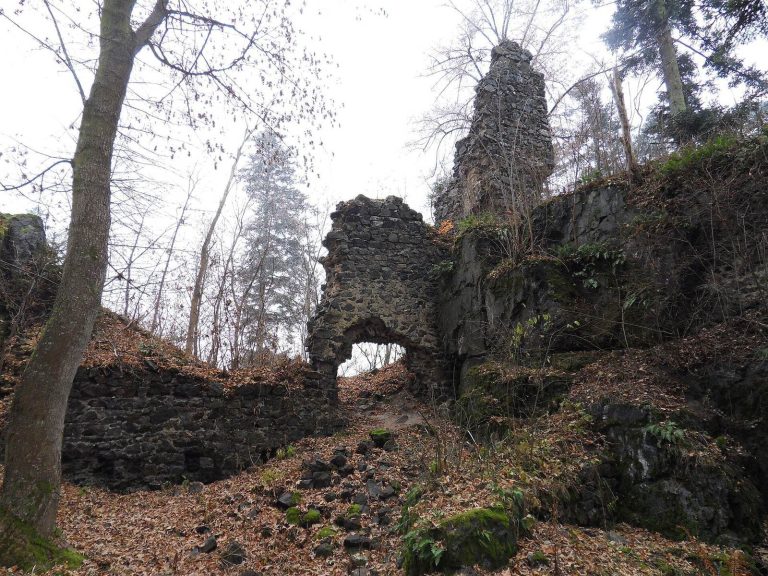
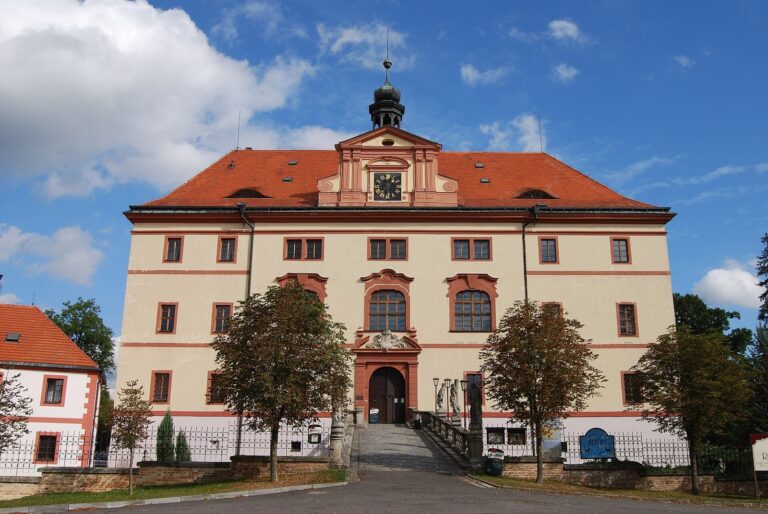
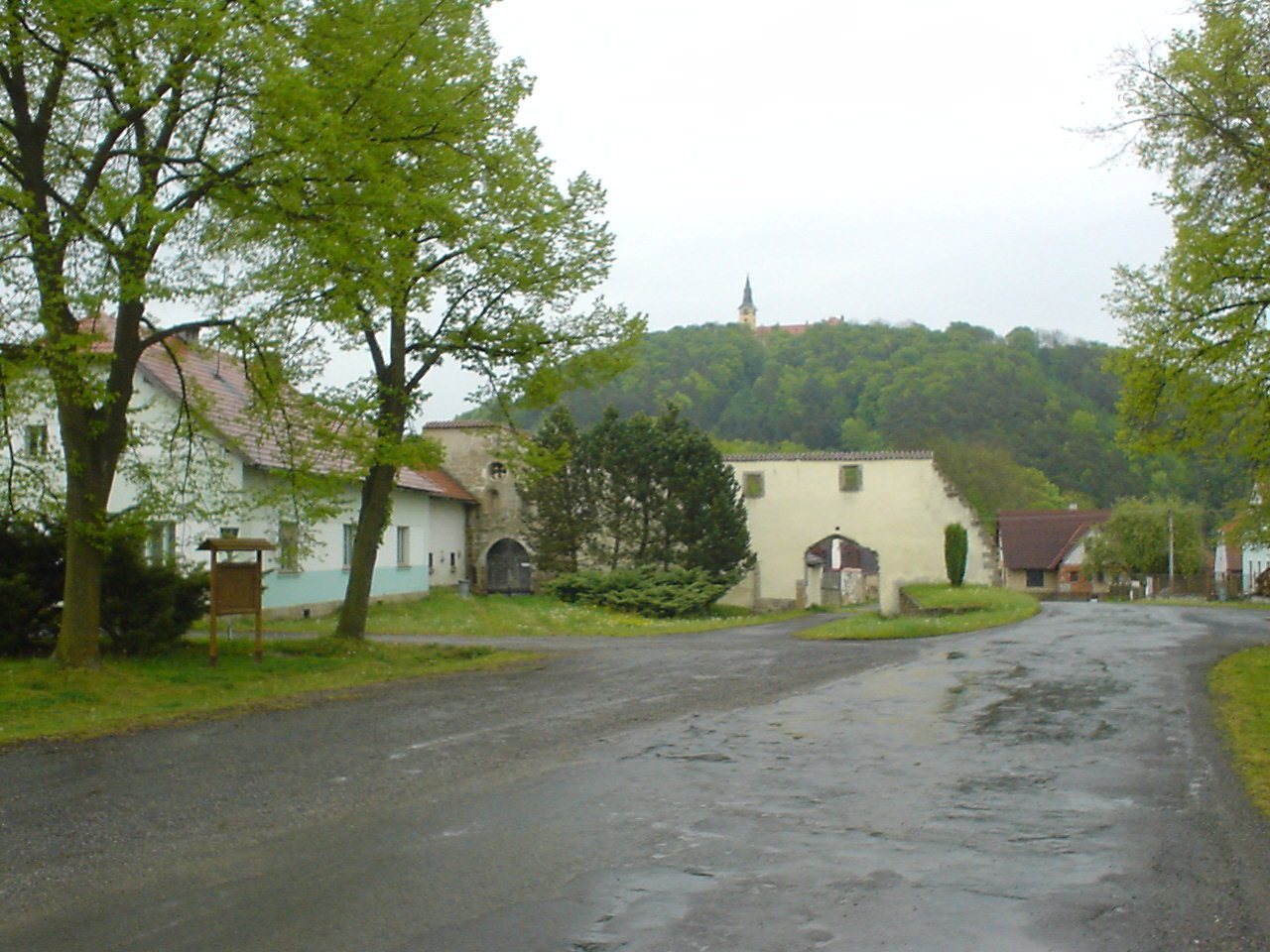
The monastery stood on the left bank of the Úslava River, at the foot of Zelená hora, which rises to about 535 metres. The former site is now within Klášter. Its original arrangement can no longer be made out, but pieces of the complex and decorative architectural elements survive within village buildings.
Surviving buildings and fragments
Walls and portal
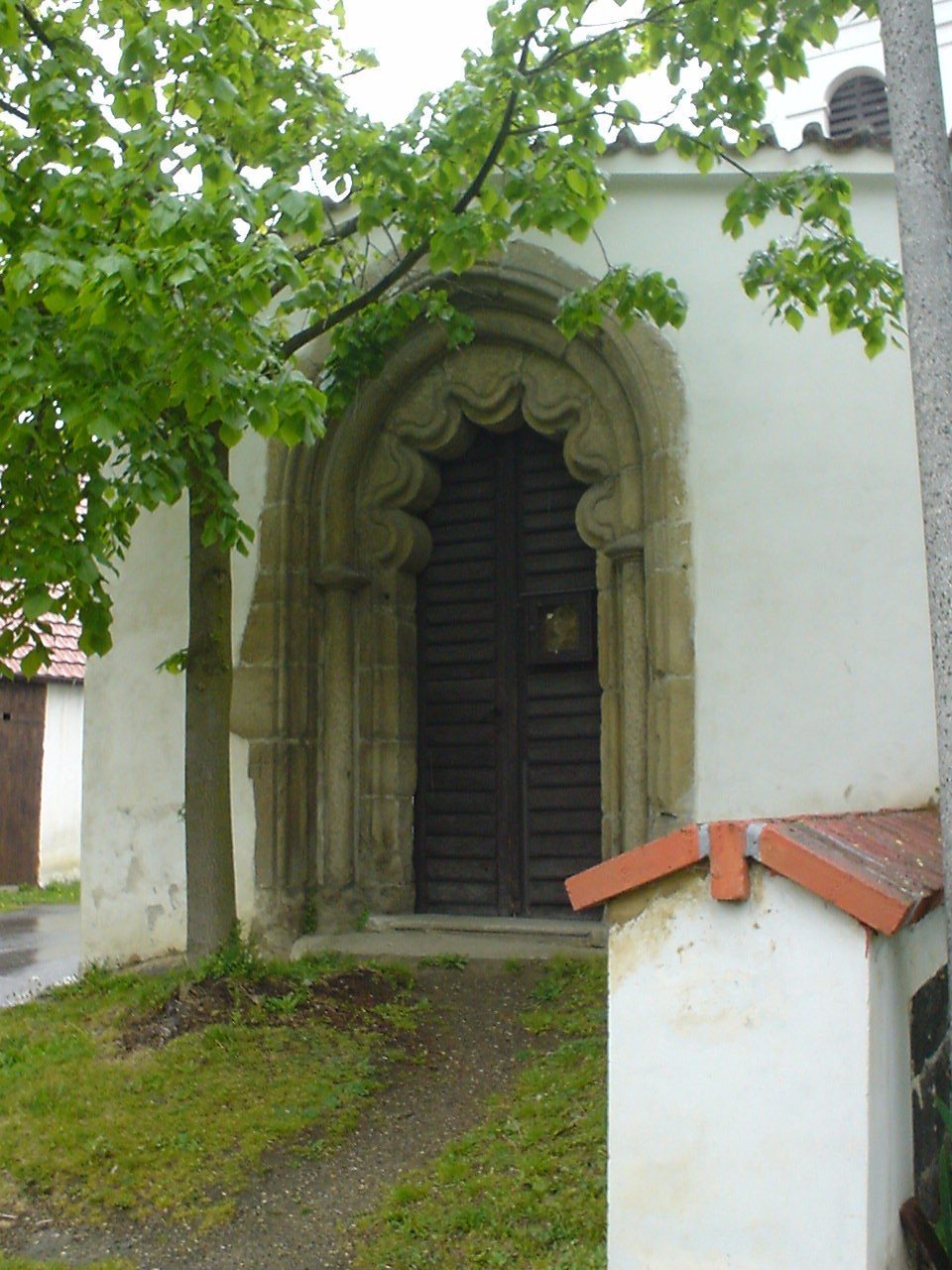
A Romanesque façade, from a medieval style commonly marked by rounded arches, survives among the village’s incorporated remains. Near house No. 39, a two-storey section of carefully squared stonework has a passage; it may have belonged to an abbot’s residence, guesthouse, or hospital. The wall lies near the southern approach road where it crosses the Úslava. Beside it, a one-storey fragment with several surviving windows stands near the present southern edge of the cemetery wall. This remnant probably comes from a building dating to around the second quarter of the thirteenth century. A rare early Gothic portal in the Czech lands is associated with the remains and probably dates to about 1230. Its decoration includes a curved band of small arches, known as a Lombard arch-frieze.
Monastery mill and enclosure
House No. 2, in the southern part of the village beside the Úslava, retains a Romanesque core and has been identified as the monastery mill. A Gothic bridge and further wall remains survive in the mill area, along with sections of the monastery’s enclosure walls.
Church of St Margaret
The ruined Church of St Margaret was mentioned in 1665. Its altar area, or presbytery, was probably polygonal.
Architectural fragments
Architectural pieces from the former monastery are held in museums in Nepomuk and Blovice.