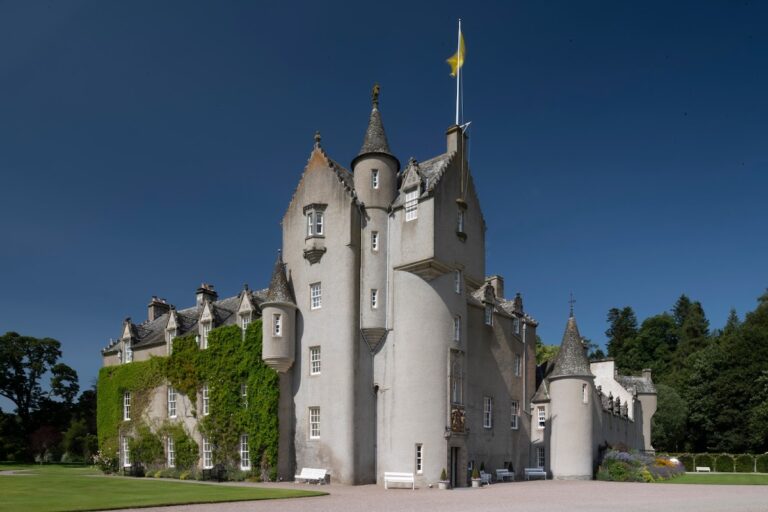
Scalan: A Catholic Seminary in the Braes of Glenlivet
Site at a Glance
- Rating
- 4.7
- Popularity
- Low
- Country
- United Kingdom
- Primary era
- Early Modern
- External website
- Open
- Eras represented
- Early Modern, Modern
- Civilizations
- British
- Site type
- Religious
On this page7 sections
History
Scalan is a former Roman Catholic seminary in the Braes of Glenlivet near Ballindalloch in Scotland, within the United Kingdom. Bishop James Gordon began the institution in 1716; for much of the eighteenth century, it was Scotland’s only centre for training Catholic priests and helped preserve the faith in the north.
Religious restrictions and a hidden seminary
The Scottish Reformation of 1560 established Protestantism in Scotland, and practising Roman Catholicism became punishable. Catholic communities often kept their religious activities concealed. The Gordon family, a Scottish noble clan with influence in rural Morayshire, remained Catholic; its leaders held titles including Earl and Marquess of Huntly and Duke of Gordon at different times. Scalan’s remote setting suited the need for secrecy, and an inconspicuous farmhouse was adapted for the seminary.
Training, attacks, and rebuilding
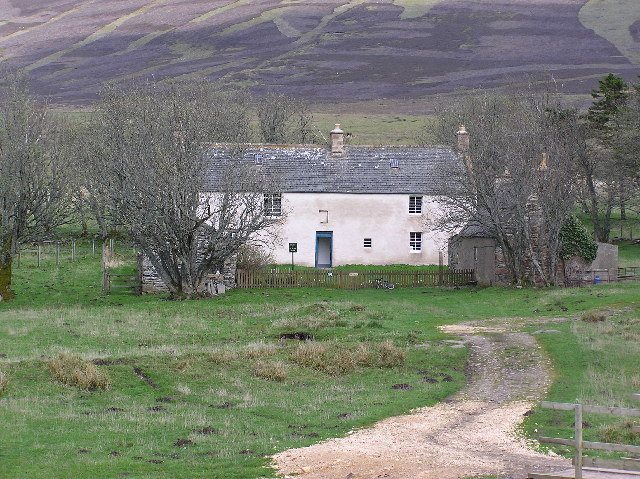
From 1717 until the seminary closed in 1799, around a hundred priests trained at Scalan. Its residents repeatedly had to evade government troops, and Hanoverian soldiers attacked and burned the college on several occasions. After the Battle of Culloden in 1746, a decisive defeat of the Jacobite forces, troops under William Augustus, Duke of Cumberland, burned the college. The community rebuilt it. The present college building was erected in 1767, with an exterior made to resemble a contemporary farmhouse to hide its purpose.
Closure and later use
In 1799, Scalan’s last head, Paul MacPherson, initiated construction of the nearby Church of Our Lady of Perpetual Succour. That year the seminary moved to Aquhorthies in Aberdeenshire, where it had larger premises and more accommodation. Blairs College succeeded it about three decades later and continued operating into the 1980s. After the move, the former college was used as a farm, with further outbuildings added, and the building was restored in 1990.
Among those associated with Scalan as students or teachers were the Scottish theologian Alexander Geddes, his brother Bishop John Geddes, and George James Gordon. Gordon studied at the college and taught there for many years as a non-Jesuit. He was known as a “heather priest,” a term associated with Catholic priests serving remote Highland communities. The name Scalan comes from the Gaelic word sgàlan, referring to turf-roofed shelters found in the Braes of Glenlivet. Scalan was listed in Category B in 1972 and raised to Category A, Scotland’s highest listed-building grade, in 1987; North Mill has a separate Category A listing.
Remains
The college
The college stands in an isolated part of the Braes of Glenlivet, about eight kilometres east of Tomintoul, and remains largely hidden from view until approached closely. Its two-storey form has a plain main façade with four bays. Later additions created a U-shaped plan. The walls are built of rubble stone and covered with roughcast, while the gabled roof is clad in locally quarried slate and has chimneys along its ridge.
North Mill
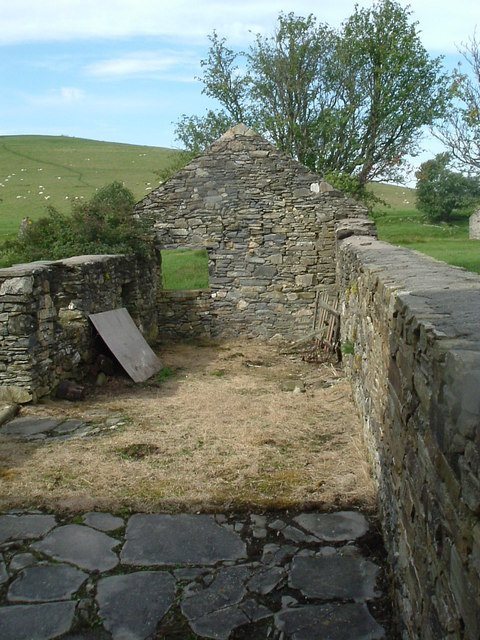
North Mill is an L-shaped rubble-stone watermill. The present building dates to the second half of the nineteenth century, though an earlier mill may have stood on the site. Its threshing machine predates the building and dates to the late eighteenth or early nineteenth century. The mill’s wooden waterwheel has a cast-iron framework and measures 3.7 metres in diameter. A wooden channel carries water from Crombie Water to the wheel, which is breastshot, meaning water reaches it around the middle. Its paddles are set at an angle of 40 to 45 degrees.