Ommerstein Castle: A Neoclassical Estate in Belgium
Site at a Glance
- Rating
- 4.5
- Popularity
- Low
- Country
- Belgium
- Primary era
- Early Modern
- Eras represented
- Medieval, Early Modern
- Civilizations
- Holy Roman Empire, Prince-Bishopric of Liège
- Site type
- Domestic
- Remains
- Castle
On this page6 sections
History
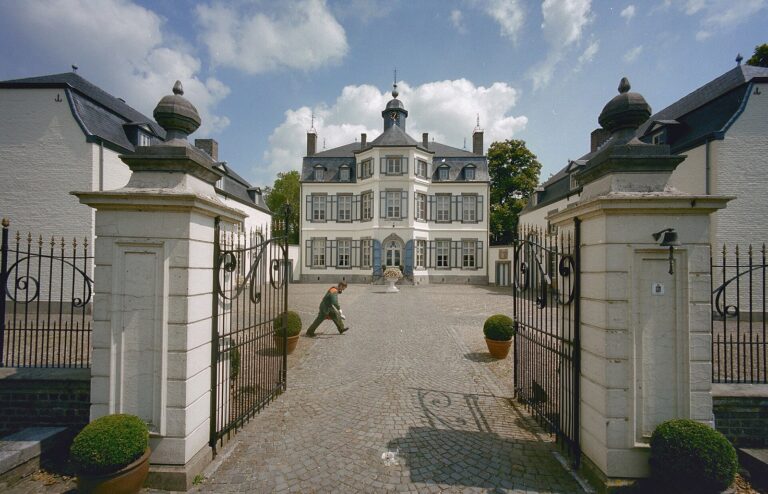
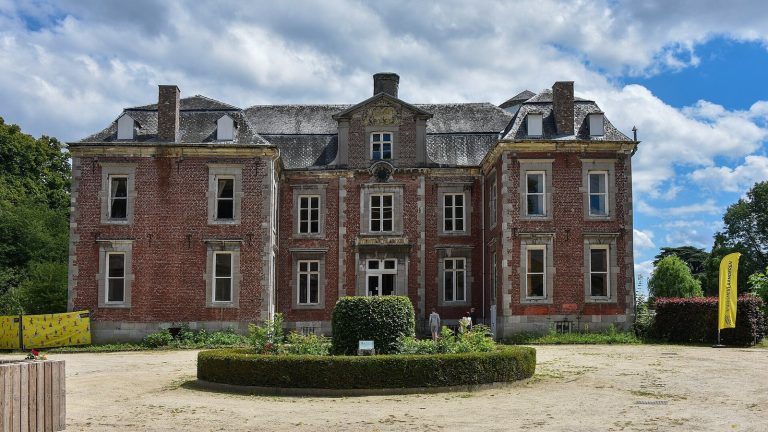
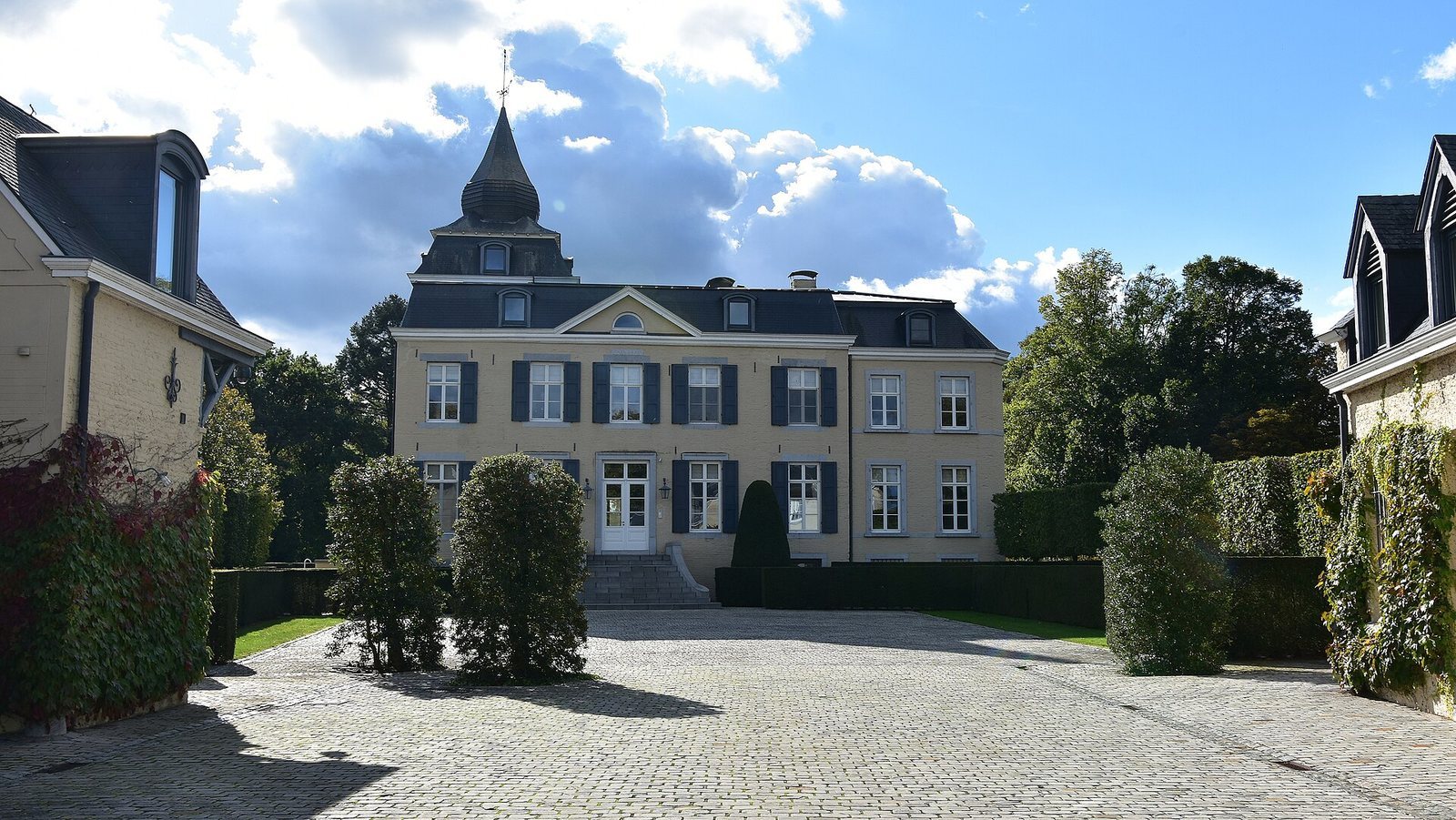
Ommerstein Castle is a historic estate in Rotem, within Dilsen-Stokkem, Belgium. Its history reaches back to the thirteenth century, while most of the present building dates from the eighteenth century and follows Neoclassical design, drawing on ancient Greek and Roman forms.
Kesselhof and Kriekenbeek
During the fourteenth and fifteenth centuries, the estate was known as Kesselhof, a name associated with the van Kessel family. Jan van Kessel is first linked to it in 1380. After Catharina van Kessel married Arnold van Kriekenbeek, the estate was called Kriekenbeek from 1428.
The estate under later owners
By the middle of the seventeenth century, Elisabeth van Goldstein described herself as lady of Ommerstein and Rothem. In 1793, the French sold the estate to M. Smeets, a lawyer from Maastricht. His daughter Maria Anna married Baron Louis de Schiervel in 1813, and they made their home at the castle.
Schiervel served as mayor of Rotem, a member of the National Congress, the constituent assembly involved in establishing Belgium’s early political institutions, president of the Senate, and governor of East Flanders and Limburg. He died at the castle in 1866. The avenue where the castle stands bears his name.
The estate later passed to Éléonore de Lenarts, Schiervel’s adopted niece. She married Charles Moreau de Bellaing, an agronomist who served as mayor of Rotem and sat on the Limburg provincial council. The current owner is entrepreneur Jos Vaessen.
Remains
Castle building
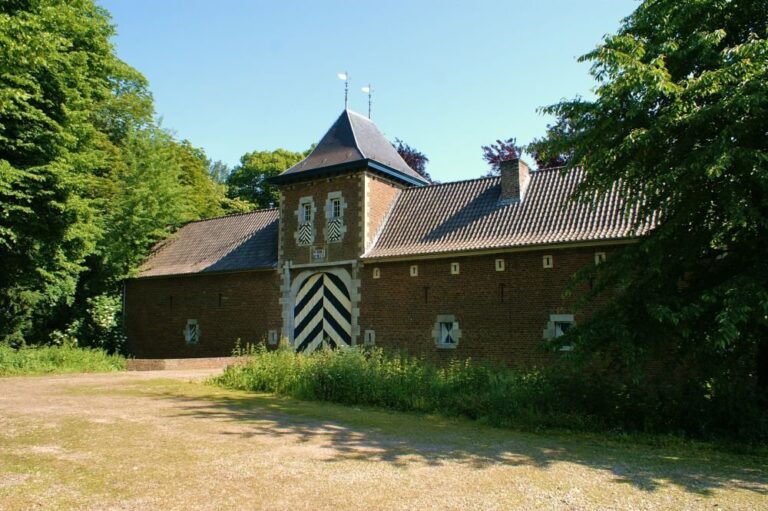
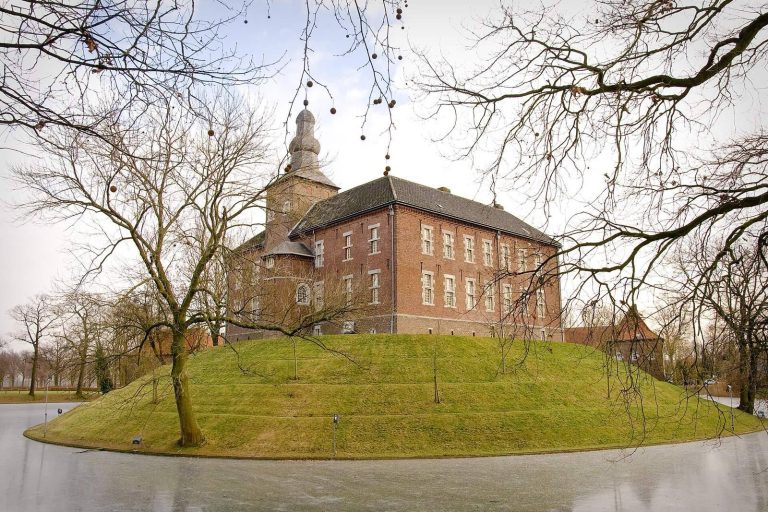
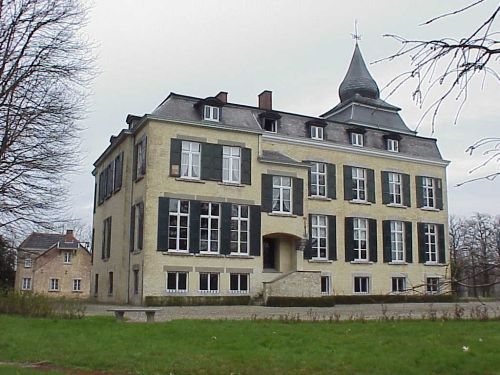
The castle stands near an old branch of the Meuse River. Its central section, dating to the eighteenth century, was enlarged later, and an older donjon, the castle’s principal fortified tower, survives.
Park and ponds
The surrounding park contains several ponds, giant sequoias, and cedars of Lebanon. One of the cedars is believed to be the thickest in Belgium.