Caracciolo di Santobuono Palace: A Noble Residence in Naples
Site at a Glance
- Popularity
- Medium
- Country
- Italy
- Primary era
- Early Modern
- Eras represented
- Early Modern
- Civilizations
- Habsburg, Habsburg Spain, Kingdom of Naples, Spanish
- Site type
- Domestic
- Remains
- Elite Residence
On this page5 sections
History
Castle and sixteenth-century palace
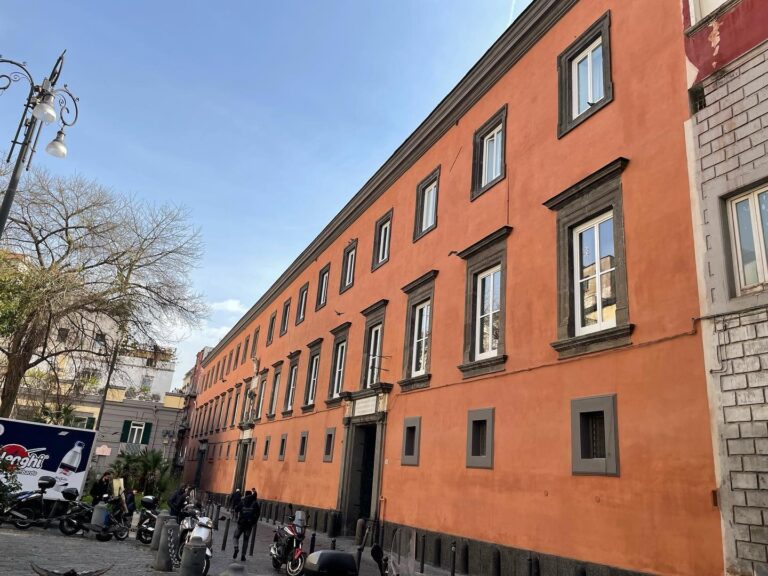
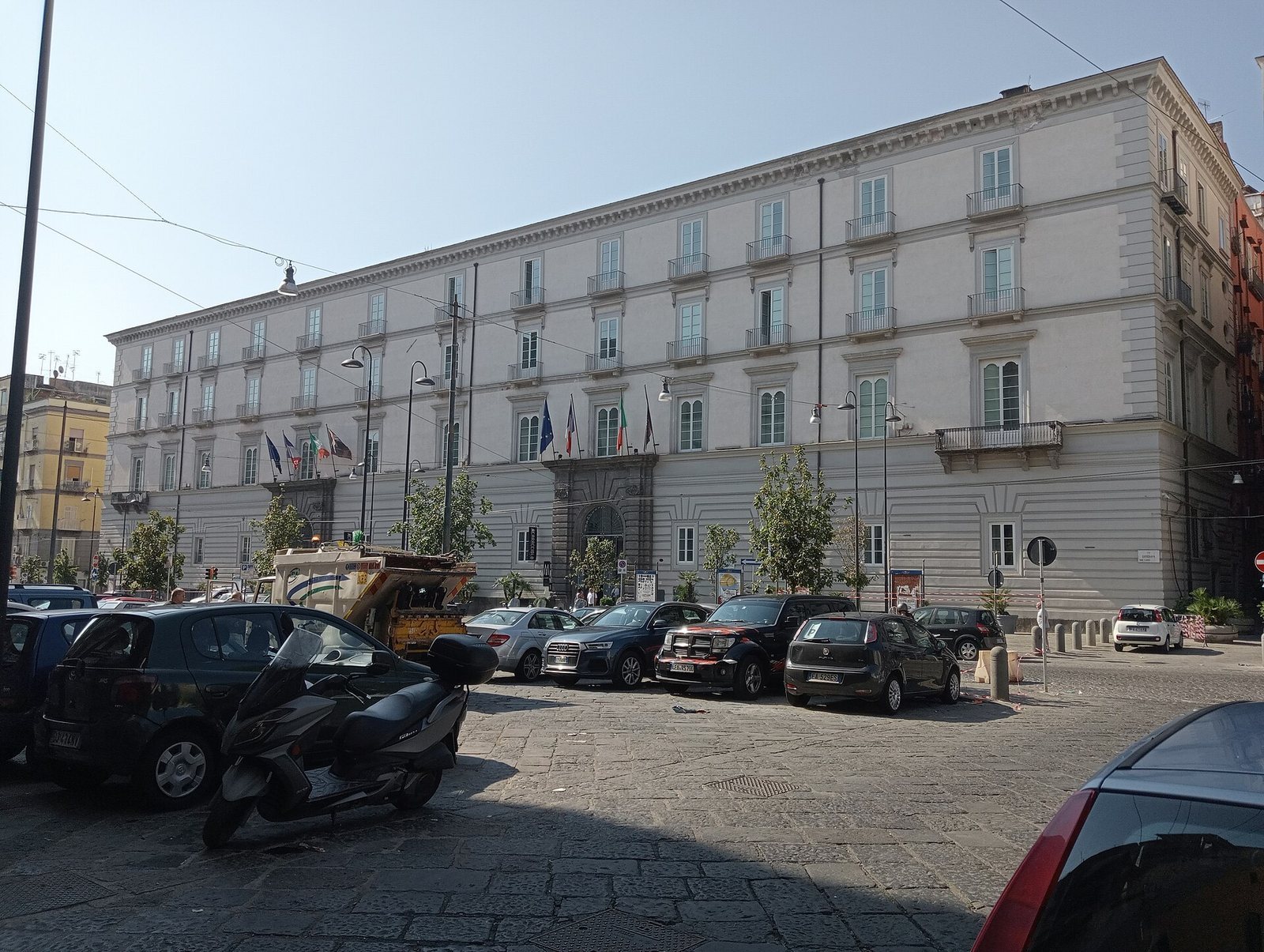
Caracciolo di Santobuono Palace is a noble residence in Naples’s San Lorenzo district, Italy, built by the princes of the Caracciolo di Santobuono family in 1584. An urban castle had previously occupied the site. In the early fourteenth century, King Robert of Anjou granted that castle to Landolfo Caracciolo, a member of the Neapolitan noble family. The palace’s position near a gate serving the episcopal district gave it a defensive role in the city.
Seventeenth and eighteenth centuries
During the 1647 revolt led by Masaniello, which established a short-lived republican government in Naples, Henri II, Duke of Guise, used the palace as both his residence and headquarters. It was later pillaged and became the duke’s fief. A restoration in 1692 was accompanied by the addition of a notable painting gallery. In the early eighteenth century the Duke of Elbeuf, a French nobleman associated with early excavations at Herculaneum and Pompeii, stayed at the palace. In 1799, it hosted General Jean-Étienne Championnet, a French Revolutionary commander.
Abandonment and later use
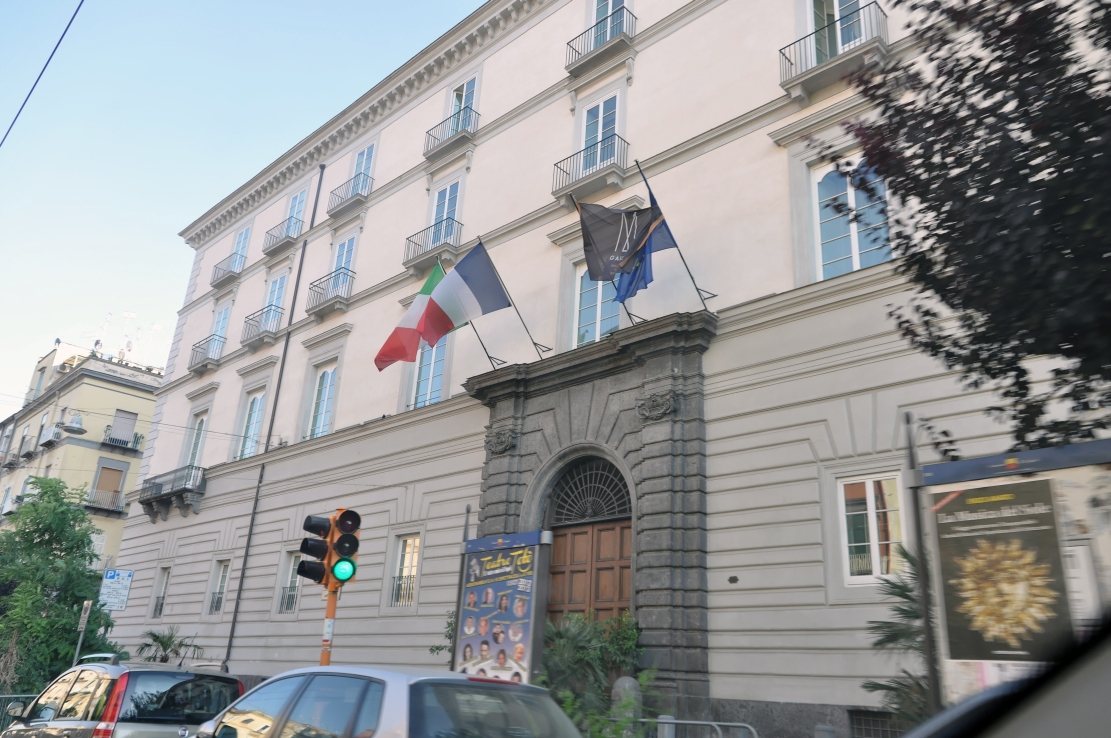
The property was completely abandoned in 1815 and briefly accommodated police headquarters offices. By 2026, it housed a hotel.
Remains
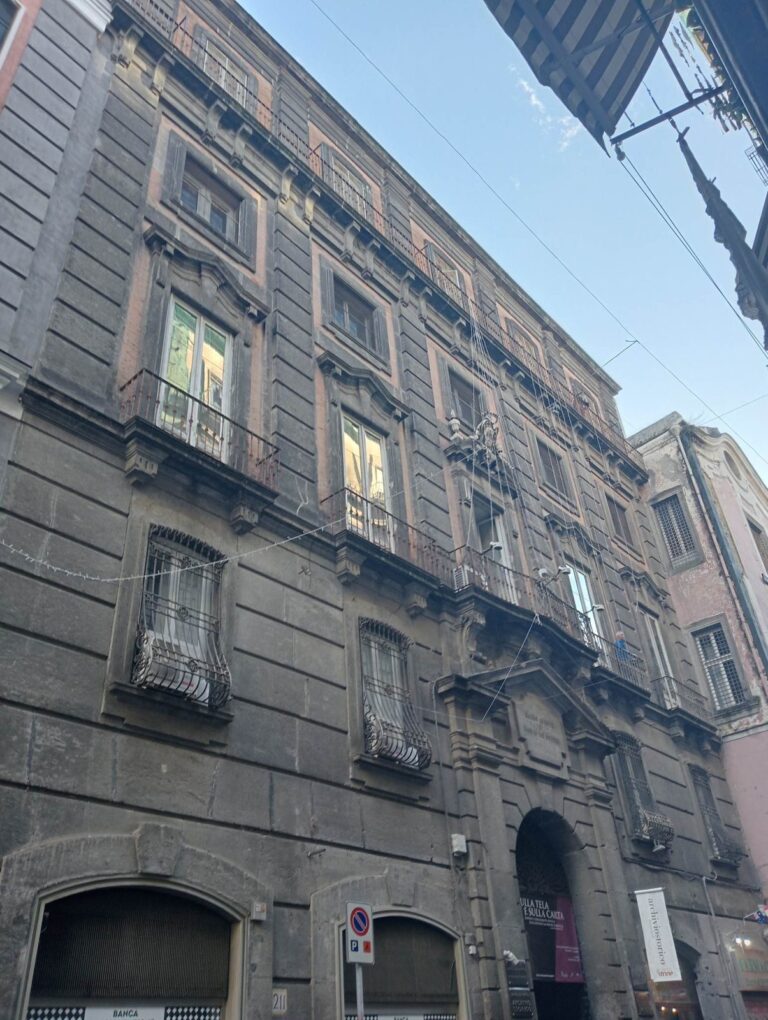
The four-storey palace is reached through two very tall portals, which lead to a porticoed courtyard and a second courtyard, now an open-air garden. Pillars of piperno, a volcanic stone used for building in the Naples region, form part of the portico. The courtyard complex includes a sixteenth-century cloister. On the principal floor, traces of a frescoed ceiling survive.