Schönhausen I Castle: A Bismarck Manor House in Germany
Site at a Glance
- Popularity
- High
- Country
- Germany
- Primary era
- Early Modern
- Eras represented
- Early Modern
- Civilizations
- Holy Roman Empire, Margraviate of Brandenburg
- Site type
- Domestic
- Remains
- Manor House
On this page7 sections
History
Schönhausen I Castle was a manor house in Schönhausen (Elbe), Germany, whose principal building was erected around 1700. The estate became a home of the Bismarck family, and Schönhausen is known as the birthplace of the Prussian statesman Otto von Bismarck, the first chancellor of the German Empire.
Estate origins and Bismarck ownership
The estate’s early history was connected with land held as a bishop’s table estate under the Havelberg Cathedral Chapter, the clergy body associated with the cathedral and its property. Income from a bishop’s table estate supported the bishop’s household. The Möllenbeck estate grew from peasant holdings into a fief alongside the Bardeleben estate. Members of both noble families lived partly in Schönhausen.
The Bismarcks acquired the Bardeleben estate on 7 December 1562 and added Möllenbeck on 1 March 1563, bringing the holdings together as a new manor. Before the present house was built, Friedrich von Bismarck (died 1589) represented the family locally and held lordship over Schönhausen and Crevese, later extending it to Briest. His successor, Ludolf IV von Bismarck (1541–1590), fought in the French Huguenot Wars in 1569, a series of conflicts between Protestant Huguenots and Catholic authorities. He is regarded as the founder of the Bismarck-Schönhausen family line.
Later generations and the estate in the twentieth century
Later Bismarck descendants, including August senior (died 1670) and August junior, a district-level administrative official, managed the estate. August Friedrich von Bismarck acquired further properties in Pomerania. His heir, Karl Alexander von Bismarck-Schönhausen (1727–1797), was a cavalry officer. Karl Alexander’s elder son, Alexander von Bismarck (1763–1820), held shares in Schönhausen, while his younger son, Karl Wilhelm Ferdinand von Bismarck (1771–1845), managed Schönhausen I and the family’s Pomeranian estates.
Hannah Leopoldine Alice, Countess von Bismarck-Schönhausen (1893–1971), and her brother Otto, Prince of Bismarck (1897–1975), were also born in Schönhausen. Otto later owned the Schönhausen I and II estates. In the 1920s, Schönhausen I covered 211 hectares, including the outlying estate at Schönhauser Damm, and was run by an administrator. Marguerite Malvine, Countess von Hoyos (1871–1945), widow of Herbert von Bismarck, lived in Schönhausen.
Dispossession and demolition
The Bismarck family was dispossessed in 1945. In 1958, East German authorities demolished the castle with explosives.
Remains
Manor house and surviving wing
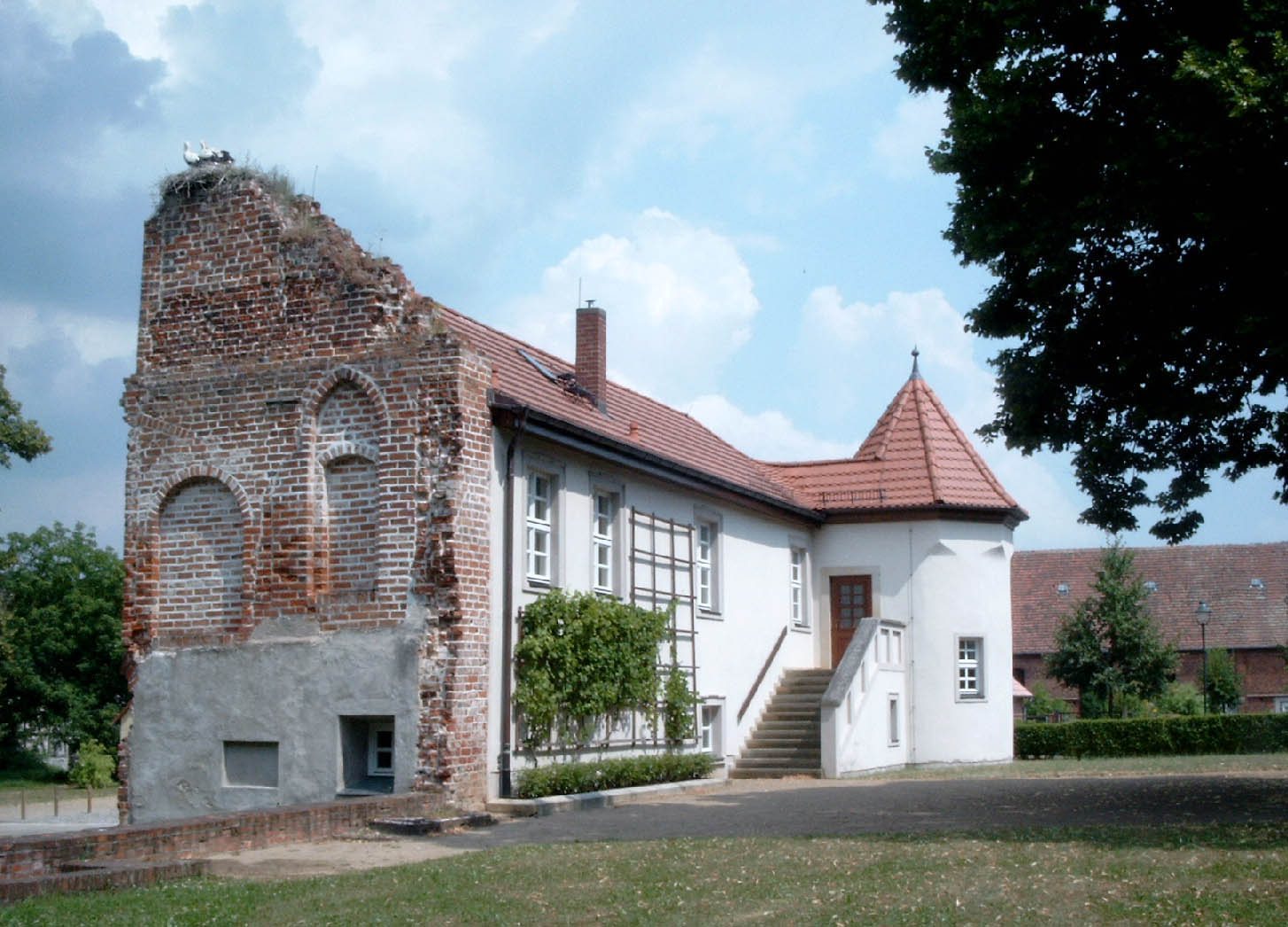
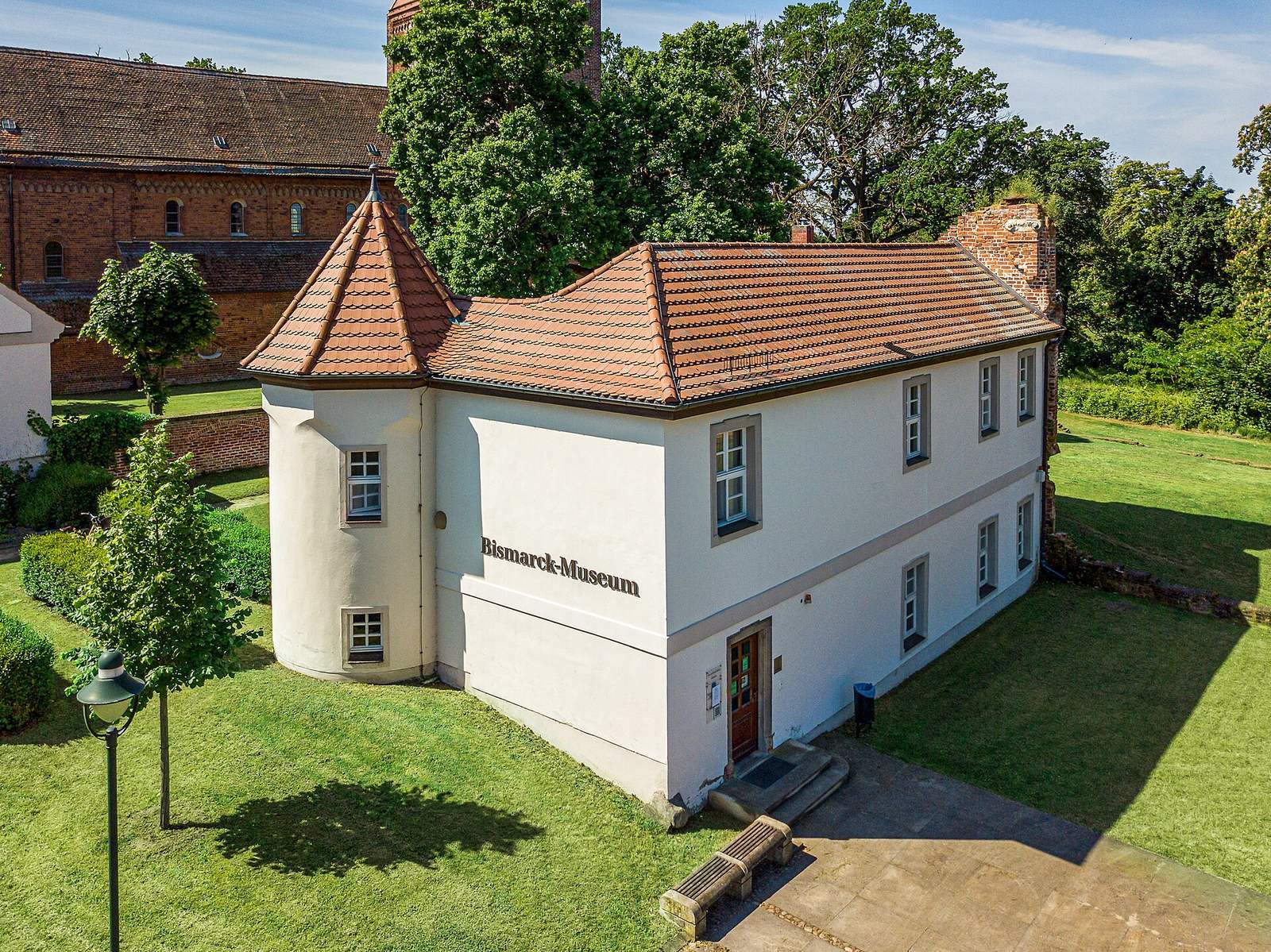
The principal house stood in the northwest of Schönhausen (Elbe) and was designated Castle I. One side wing survived the demolition and has served as the Bismarck Museum since 1998.
Roof and park
The former castle roof had three chimneys. Local tradition linked them to the three hairs often given to Bismarck in caricatures. The Baroque Bismarck Park, laid out in an elaborate European style popular in the seventeenth and eighteenth centuries, borders the former castle.