Palazzo Giustinian Lolin: A 17th-Century Palace on Venice’s Grand Canal
Site at a Glance
- Rating
- 4.9
- Popularity
- Low
- Country
- Italy
- Primary era
- Early Modern
- Eras represented
- Medieval, Early Modern
- Civilizations
- Venetian
- Site type
- Domestic
- Remains
- Elite Residence
On this page7 sections
History
Palazzo Giustinian Lolin is a 17th-century palace on the Grand Canal in Venice, Italy, built for the Giustinian Lolin family.
The 14th-century predecessor and 17th-century palace
A 14th-century building preceded the palace, and its foundations support the later structure. In the 17th century, Venetian architect Baldassare Longhena transformed the earlier Gothic building. The palace was an early work by Longhena, a leading Venetian architect of his time.
In 1624, Giovanni Lolin left the palace to his nephew Giovanni Giustiniano, who adopted the Lolin surname.
19th-century residents
The palace passed through several families during the 19th century. Its owners included Maria Taglioni, a celebrated ballet dancer. Taglioni and Marie-Louise of Austria, Duchess of Parma, both lived there.
The Levi family and later uses
Ugo and Olga Levi later acquired the palace, where a cultural salon drew visitors including the Italian poet and writer Gabriele D’Annunzio. In 1962, the couple founded the Fondazione Ugo e Olga Levi for musicological research and study. The foundation owns the palace and has its headquarters there.
Since 2010, the palace’s main part has served as the representative office of Permasteelisa, a company specializing in metal façade design. The building also houses a small hotel.
Remains
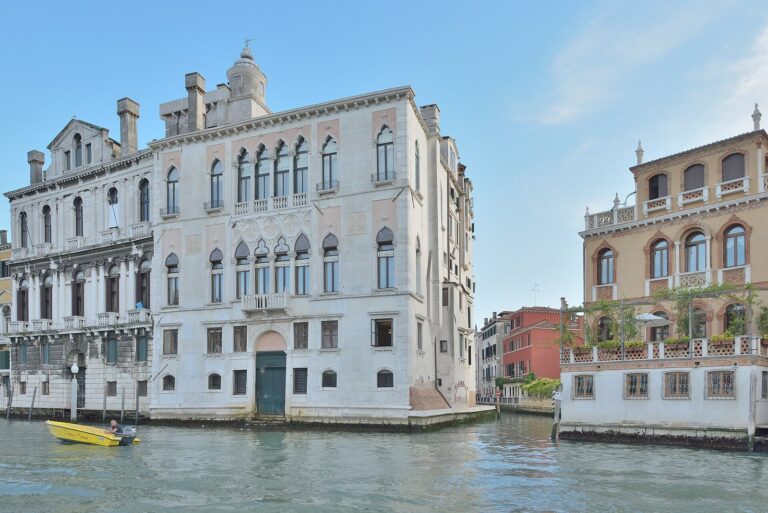
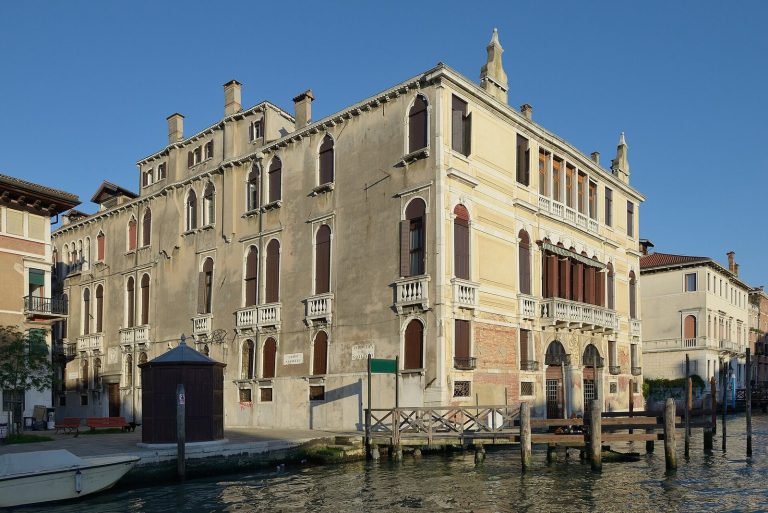
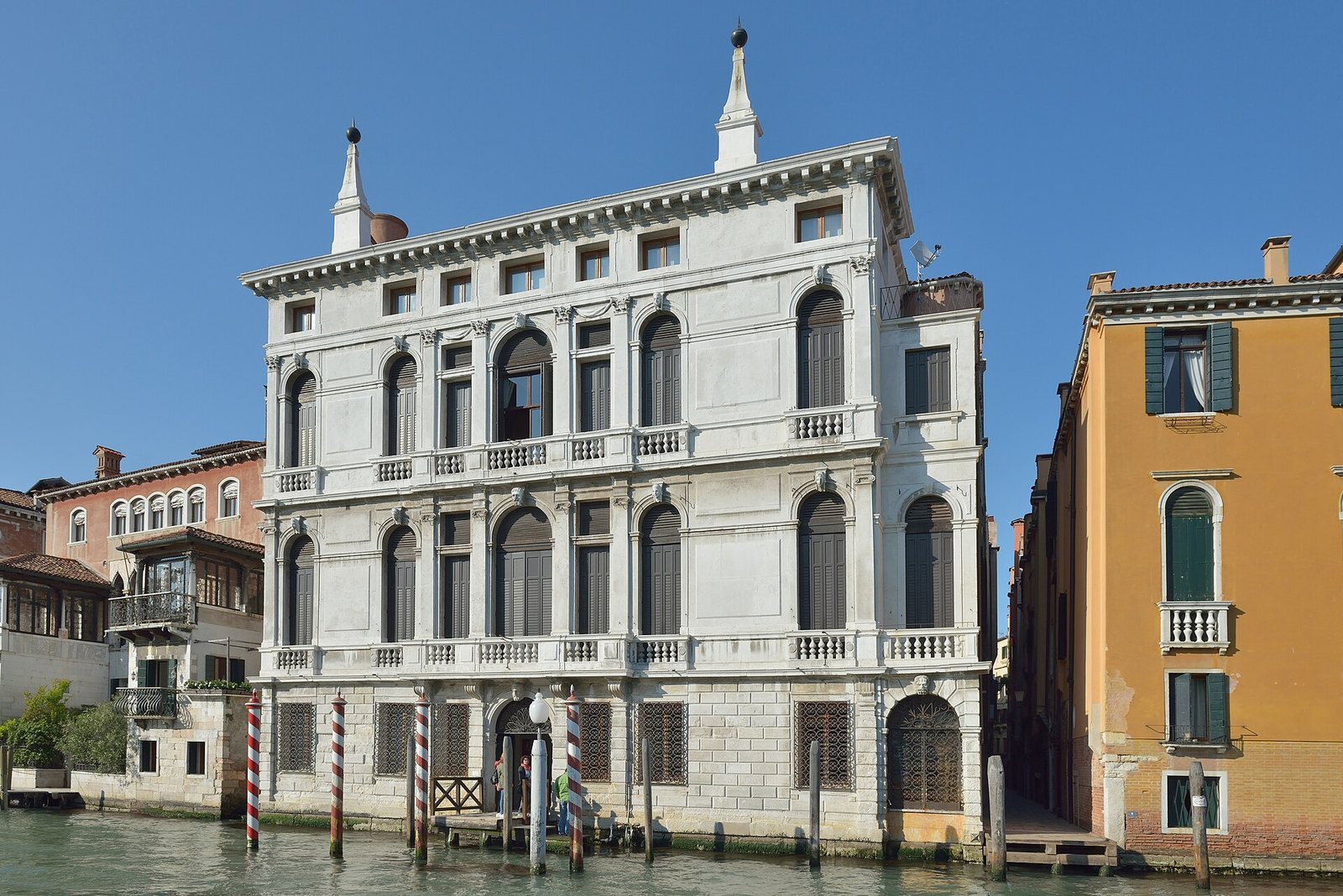
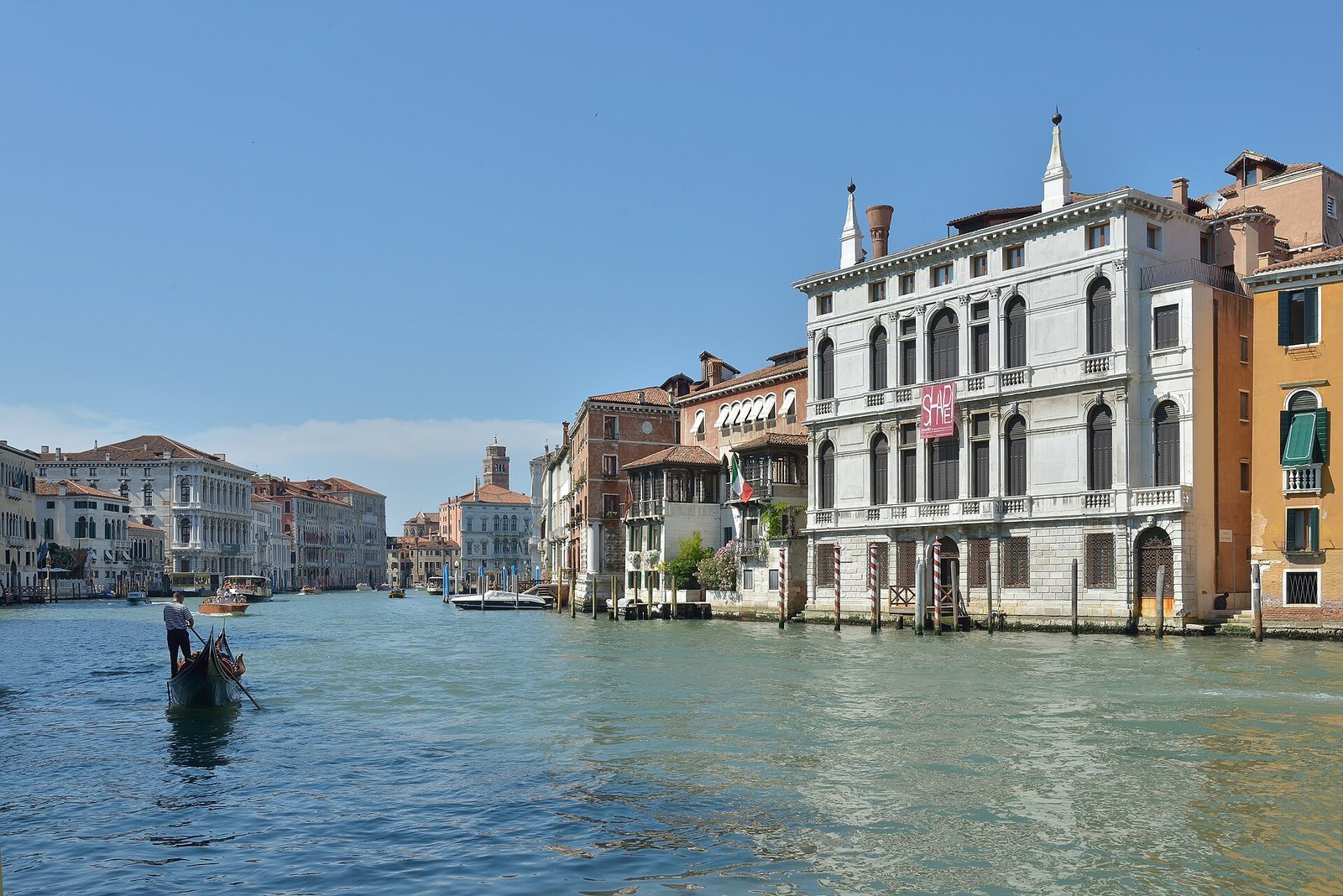
The palace stands on the Grand Canal in Venice’s San Marco district, near Campo Santo Stefano and the Accademia Bridge, beside Palazzo Falier Canossa. Its complex consists of two buildings joined by two wings around an inner courtyard with a fountain. The symmetrical, classically designed façade is faced with Istrian stone, a limestone quarried in Istria.
Canal-facing façade
A centrally positioned Serliana, an opening with a central arch flanked by two narrower openings, marks each of the two principal floors. The lower opening uses the Ionic order, a classical column style, and the upper the Corinthian order, another. At ground level, a portal facing the canal aligns with them. The principal windows have round arches, central mask ornaments, and balustrades. Their vertically elongated proportions carry a feature associated with the earlier Gothic building. A low intermediate floor lies beneath the attic, with a dentilled cornice, a row of small tooth-like blocks, above it. Two obelisk-shaped pinnacles rise from the roof.
Paintings
Four paintings by the French artist Jean Raoux are displayed in the central hall: The Parnassus, The Judgment of Paris, The Landing of Cleopatra, and Bacchus and Ariadne. Paintings remaining in the palace after a 1974 auction included a portrait of a young man and a portrait of Angelo Levi, both attributed to the Venetian painter Giacomo Favretto, as well as a lagoon landscape attributed to the Istrian painter Pietro Fragiacomo.