Elgin Castle: A Medieval Royal Fortress in Scotland
Site at a Glance
- Popularity
- Medium
- Country
- United Kingdom
- Primary era
- Medieval
- Eras represented
- Medieval
- Civilizations
- Kingdom of Scotland
- Site type
- Military
- Remains
- Castle
On this page8 sections
History
Foundation and royal use
Elgin Castle is a 12th-century motte-and-bailey fortification on a hill in Elgin, United Kingdom, probably established by David I of Scotland. A motte-and-bailey castle paired a raised defensive mound with an enclosed courtyard. The fortification began as a stronghold and developed into a royal fortress. David I had made Elgin a royal burgh in 1136, a Scottish town granted royal status and privileges. The castle’s first known documentary mention is dated 25 December 1160, during the reign of Malcolm IV.
Capture and destruction
Edward I of England captured Elgin Castle in 1296 and stayed there. When he returned in 1303, damage from fighting prevented him from lodging at the fortress. The Scots burned it that year. In 1308, Robert I of Scotland destroyed the castle after two unsuccessful attempts to capture it. It was never rebuilt. The site was probably sacked during the Douglas rebellion of 1450, a Scottish revolt associated with the powerful Douglas family, and was in ruins by the 15th century.
Later history
By the middle of the 16th century, the hill was known as Chapel Hill or Lady Hill. Excavations in 1972 and 1973 investigated the castle’s outer limits, whether the hill was natural or built up, and evidence of its earliest occupation. Elgin Castle is a Scheduled Monument in Scotland, a site protected under Scottish law for its national archaeological or historic importance.
Remains
Defences and excavated ground
The castle occupied a hill about 27 metres above sea level. Its northern outer defences included an earth rampart with a stone base and an outer timber facing or palisade. A second rampart, possibly faced with stone, may have stood at the southern end. Pits and a stone structure lay between the ramparts. Numerous iron nails recovered from the palisade trench may relate to the earliest defensive phase, but they do not provide a reliable date.
Surviving structures
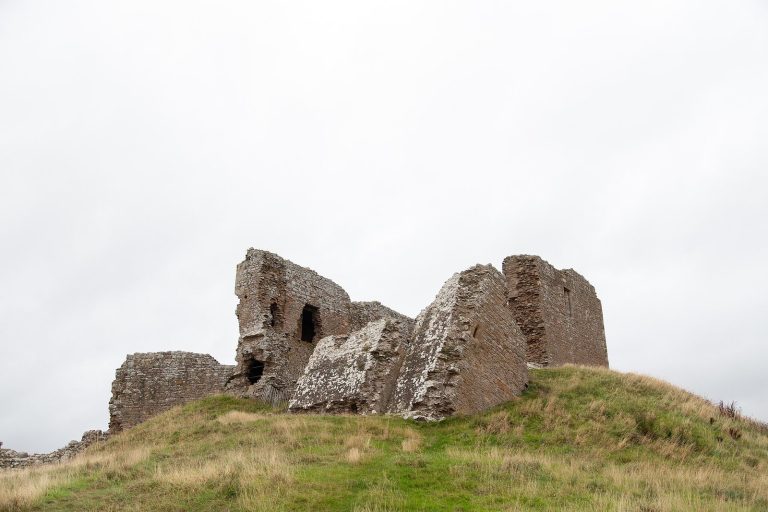
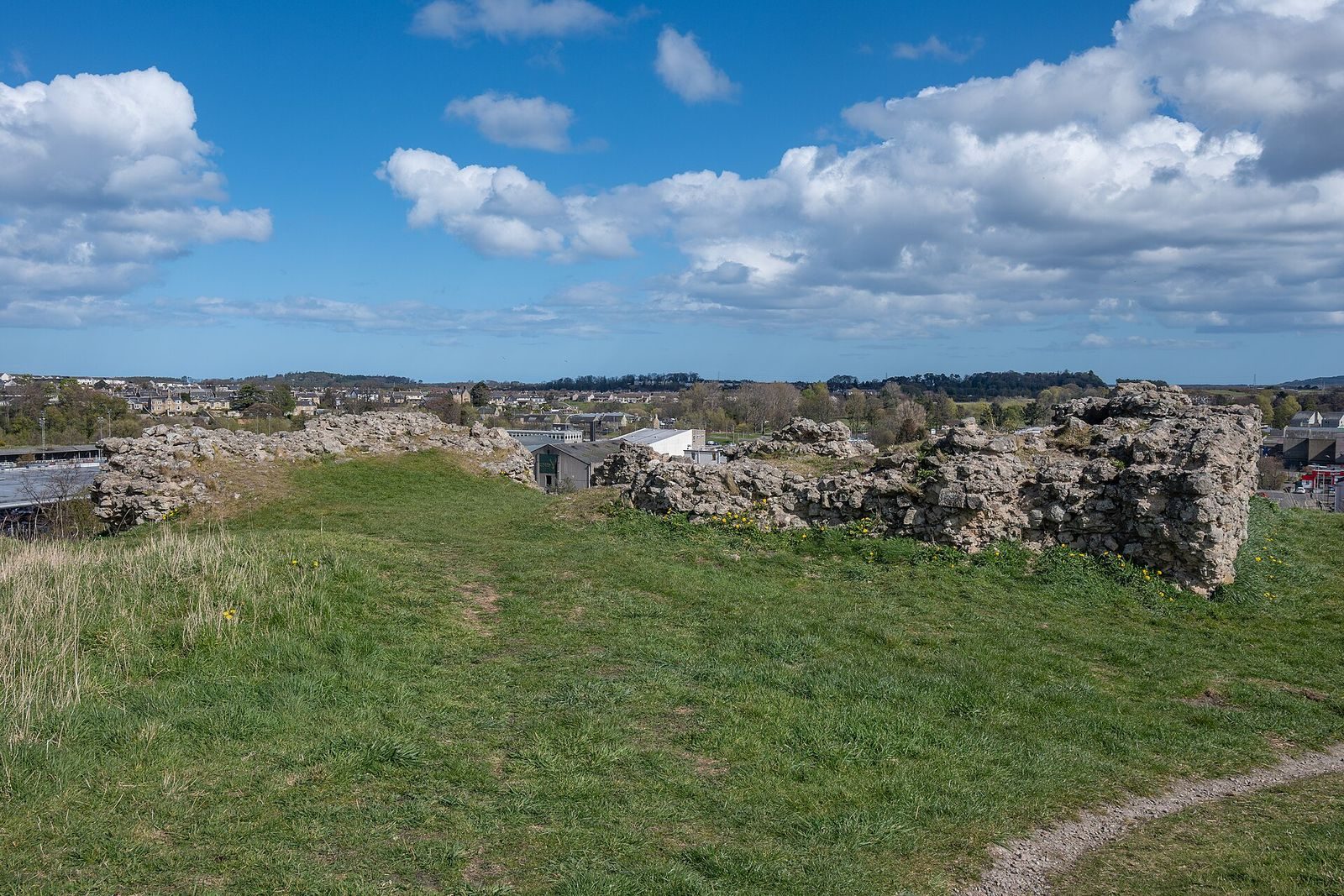
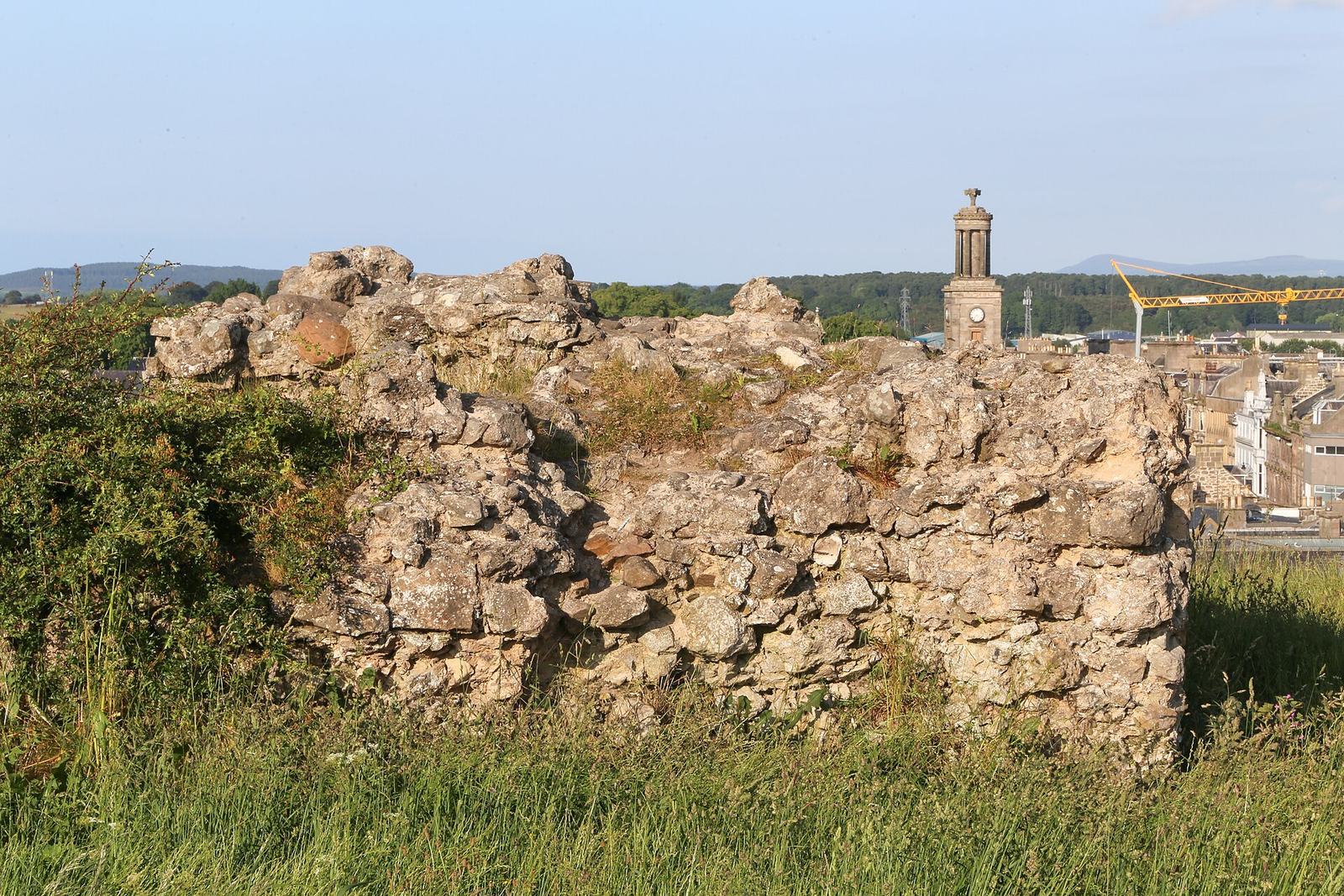
At the eastern end of Lady Hill, traces of a rectangular structure measure about 20 by 10 metres. Its walls are about 2.5 metres thick, and the highest surviving section, at the north end, reaches 2.6 metres. The date of the surviving masonry cannot be established. Walls at the northeast corner may be the foundations of a tower. A chapel is also among the castle’s surviving remains.
Hilltop alterations and the cross fragment
Depressions and channels on the excavated hilltop may result from material being removed for a monument to the Duke of Gordon and an observatory, both situated on the summit. The observatory was later demolished. A fragment of a cross that originally came from the castle is held at Elgin Museum.