Palazzo Loredan in Campo Santo Stefano: A Renaissance Palace and Scholarly Headquarters in Venice

Site at a Glance
- Rating
- 4.3
- Popularity
- Very Low
- Country
- Italy
- Primary era
- Early Modern
- Eras represented
- Early Modern, Modern
- Civilizations
- Habsburg, Venetian
- Site type
- Domestic
- Remains
- Elite Residence
On this page15 sections
History
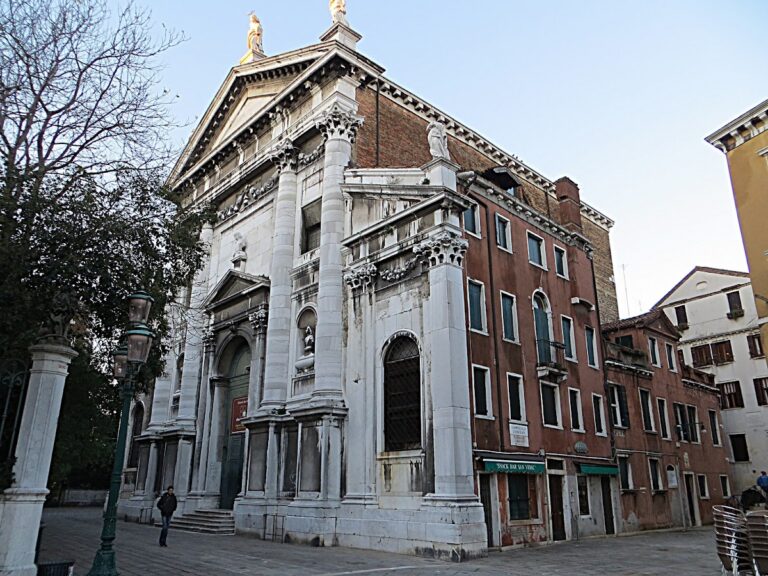
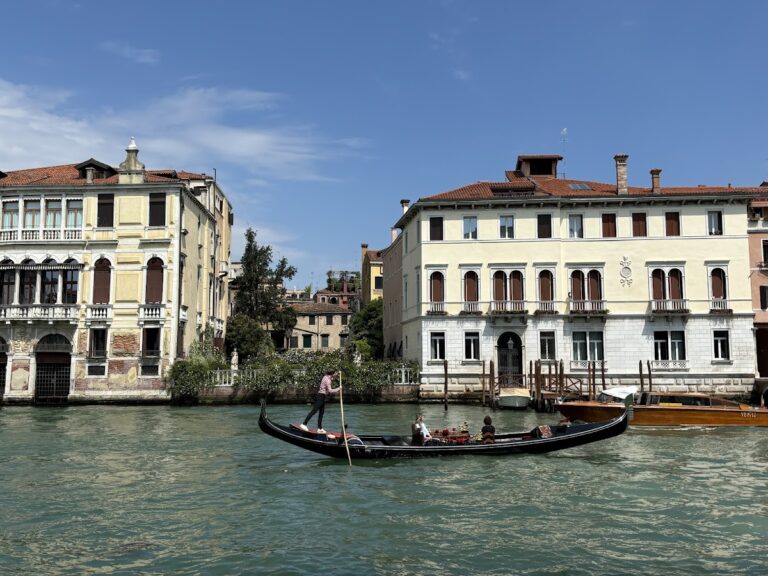
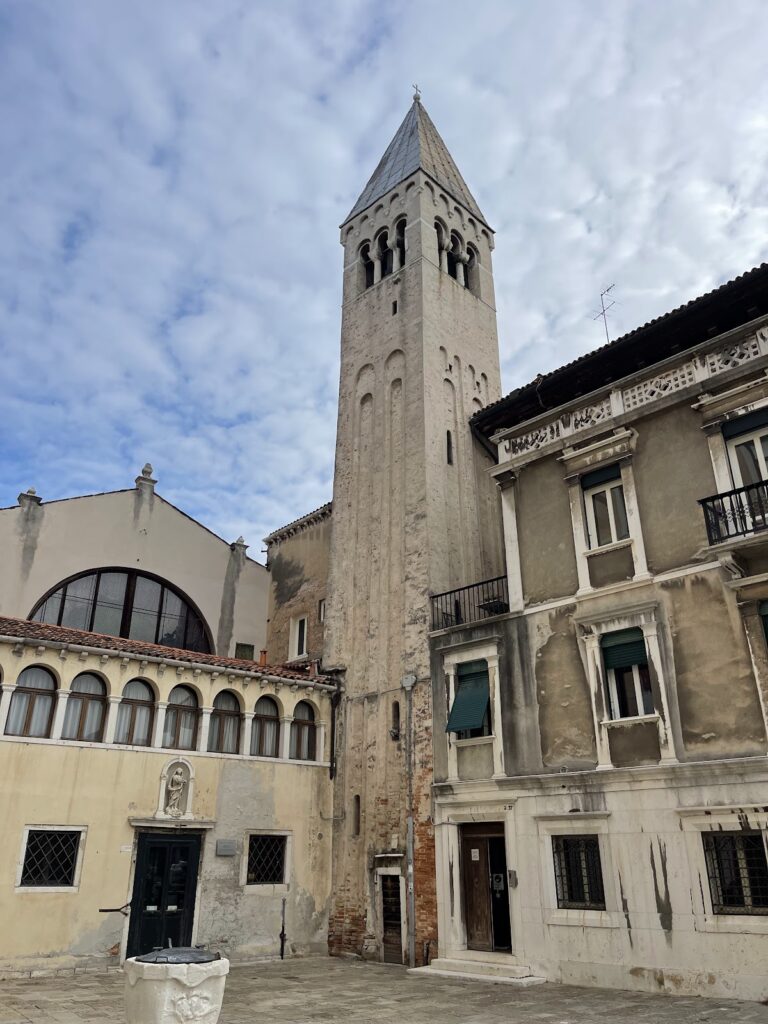
Palazzo Loredan in Campo Santo Stefano is a historic palace in Venice, Italy, beside the church of Santo Stefano in the San Marco district. The Loredan family transformed adjacent Gothic houses into a single Renaissance residence after acquiring them in 1536, creating a patrician palace that later served governmental, administrative, and scholarly purposes.
From Gothic houses to a Loredan residence
Before 1536, the site was occupied by adjoining Gothic houses owned by the Mocenigo family. After purchasing them, the Loredans commissioned Antonio Abbondi, also known as Scarpagnino, to restore and unite the buildings. This work produced a single residence while retaining elements of the earlier complex. The palace faces Campo Santo Stefano, while the Rio de San Vidal runs behind it.
In 1752, Francesco Loredan’s election as doge, the elected head of the Republic of Venice, led to the decoration of a room on the piano nobile, the principal reception floor of an Italian palace. Frescoes, painted architectural decoration, and ornamental stucco were added to mark the occasion.
Government offices and changing ownership
Following the fall of the Venetian Republic in 1797, the Loredan family sold the palace. The last Loredan heir transferred it to a businessman between 1802 and 1805. The Regio Demanio, the state administration responsible for public property, acquired the building in 1813. It then became the seat of the Ministry of War, its military tribunal, and the governor’s residence.
The palace also suffered damage during this period. In 1814, Prussian troops attempted to destroy Giovanni Carlo Bevilacqua’s fresco Allegoria napoleonica. The work survived and was restored in 2009.
From 1855 to 1862, Palazzo Loredan housed the provincial public-works administration. The south wing was substantially altered for offices, including the insertion of a mezzanine, an intermediate partial floor, within the piano nobile.
The Istituto Veneto and the Panteon Veneto
In 1888, the palace was assigned to the Istituto Veneto di Scienze, Lettere ed Arti, a Venetian scholarly institution devoted to the sciences, letters, and arts. The institute moved into the building in 1891, after extensive restoration and refurnishing. Palazzo Loredan remains its headquarters.
The institute’s presence is closely associated with the Panteon Veneto, a commemorative collection of busts and medallions honoring notable figures connected with Venetian civic and cultural history. Conceived in 1847 in connection with the Ninth Congress of Italian Scientists, the project brought together portraits of political, scientific, artistic, military, and literary figures who had lived for a long time in the Veneto, from antiquity through the eighteenth century. It was completed in 1931 with the addition of Carlo Gozzi’s bust.
The collection was removed from the Doge’s Palace in 1955 and transferred to Ca’ Pesaro before being installed in Palazzo Loredan in 1989. Its subjects include Paolo Sarpi, Agnello Partecipazio, Melchiorre Cesarotti, Giovanni I Corner, Vettor Pisani, Marco Foscarini, Enrico Dandolo, Andrea Contarini, Giambattista Galliccioli, Giovanni Arduini, Lazzaro Moro, Marino Faliero, Paolo Renier, Andrea Gritti, Aldo Manuzio, Ugo Foscolo, Apostolo Zeno, Caterina Cornaro, Dante Alighieri, Giustina Renier Michiel, Vincenzo Scamozzi, Niccolò Tommaseo, Carlo Gozzi, Paolo Veronese, Tiziano Vecellio, Andrea Palladio, Carlo Alberto of Savoy, Giovanni Bellini, Giambattista Tiepolo, Jacopo Robusti, Benedetto Marcello, Sebastiano Caboto, Giambattista Spolverini, Marco Polo, Paolo Erizzo, Angelo Emo, Giovanni Caboto, Brandolino VI Brandolini, Lazzaro Mocenigo, Angelo Minich, Bernardino Zendrini, Galileo Galilei, Paolo Paruta, Andrea Dandolo, Titus Livius, Leonardo Loredan, Fra Mauro Camaldolese, Carlo Goldoni, Cassandra Fedele, Francesco Paiola, Nicolò Zeno, Carlo Zen, Jacopo Morelli, Sebastiano Venier, Luigi Carrer, Pietro II Orseolo, Pietro Bembo, Daniele Manin, Gasparino Barzizza, Samuele Romanin, and Antonio Canova.
Remains
Palace façades and entrance
Palazzo Loredan has four floors and retains the complex form of its earlier buildings within a Renaissance palace. Its long front along Campo Santo Stefano is relatively restrained, while the shorter façade facing the church is more richly decorated. The building’s two principal elevations preserve different aspects of its development from Gothic houses to a unified patrician residence.
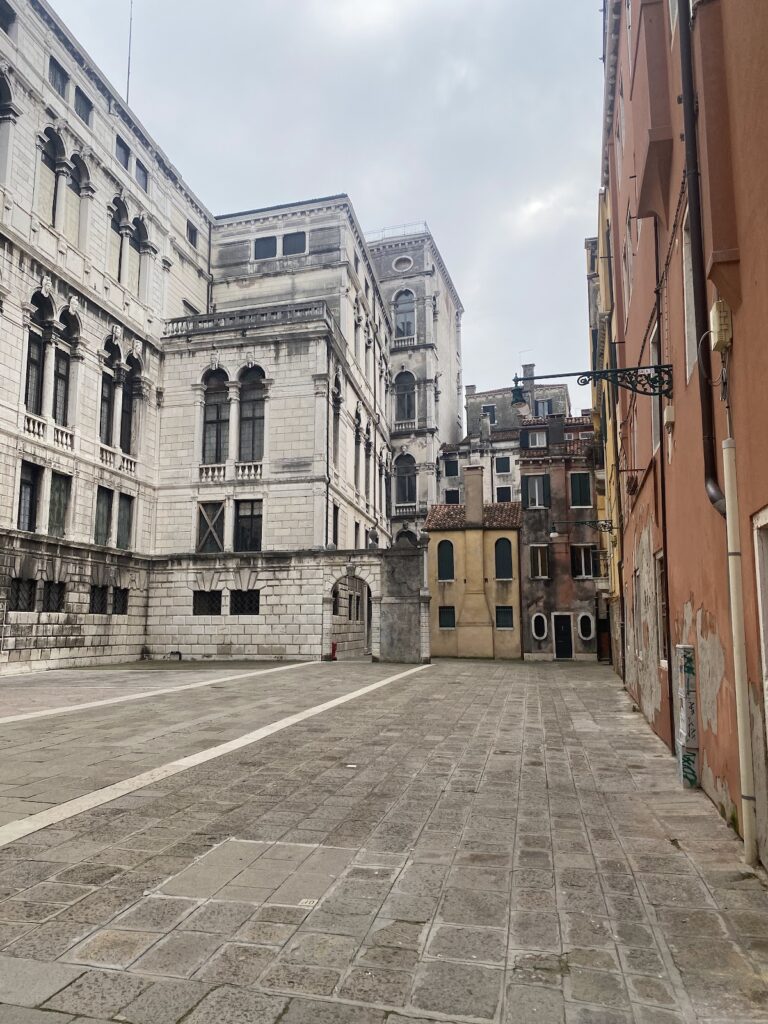
Campo Santo Stefano façade
The long façade contains a multiple-arched window formed by eight windows and nine Ionic columns. The side facing Campiello Loredan retains indications of the earlier Gothic arrangement. An exterior scheme produced during a restoration around 1500 included a fresco extending along the long front. Giuseppe Porta, known as Salviati, painted scenes inspired by Tuscan-Roman Mannerism and Roman history, including Lucretia, Cloelia, Porsenna, and Gaius Mucius Scaevola. Mucius Scaevola was presented as the mythical ancestor of the Loredan family.
Santo Stefano façade
The façade facing Santo Stefano is a monumental stone front whose design recalls the longer side of the palace. It is attributed to Giovanni Gerolamo Grapiglia and provides the building with its more elaborately decorated exterior elevation.
Entrance hall and staircase
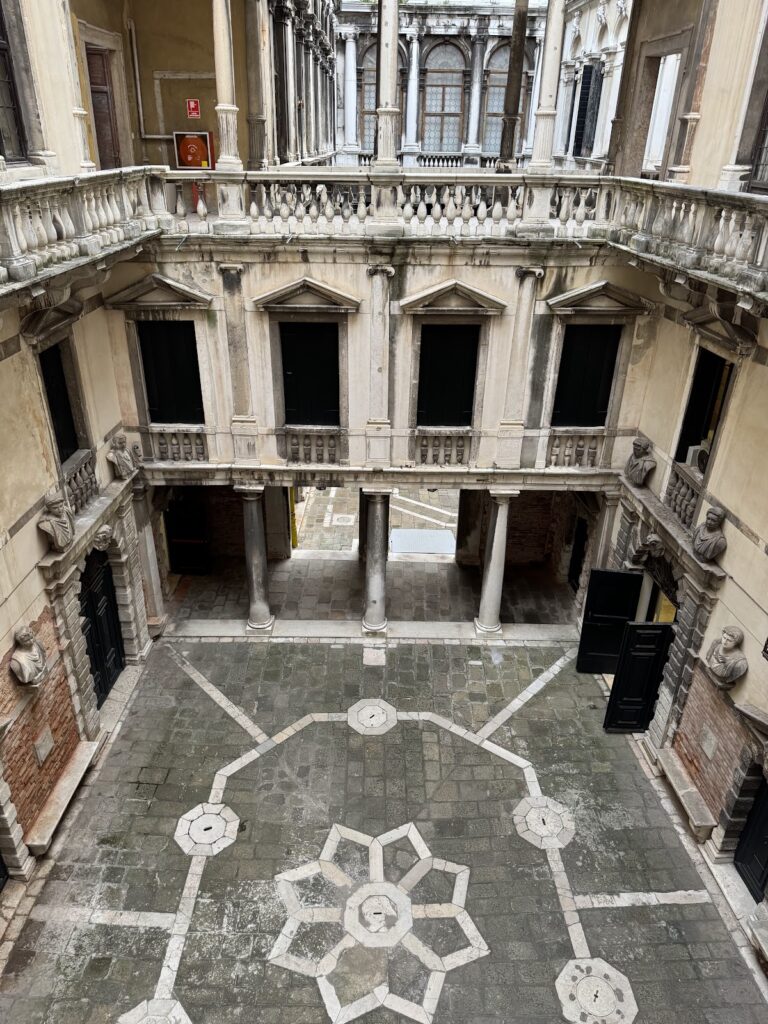
The large entrance hall incorporates features from the houses that previously stood on the site. Its Gothic column capitals were probably reused from those earlier buildings, and a well-head bearing the Mocenigo coat of arms remains inside. To create the hall and its double staircase leading to the piano nobile, the external portico between two former buildings was closed by a wall. Antonio Abbondi executed the monumental staircase, whose design recalls the Scala dei Giganti in the Doge’s Palace.
Decorated interiors
Room decorated for Francesco Loredan
The room decorated in 1752 contains frescoes attributed to Giuseppe Angeli, painted architectural illusionism attributed to Francesco Zanchi, and ornamental stucco attributed to Giuseppe Ferrari. The decoration belongs to the setting created after Francesco Loredan’s election as doge.
Mezzanine paintings
A room in the mezzanine has a ceiling with four paintings dating from around 1600. They are attributed to Jacopo Palma the Younger and Antonio Vassilacchi and depict scenes from the Old Testament. The paintings were probably moved to the room from other parts of the palace around 1800.
Allegoria napoleonica
Giovanni Carlo Bevilacqua’s fresco Allegoria napoleonica bears the effects of the 1814 attempt by Prussian troops to destroy it. Its restoration in 2009 preserved the damaged work within the palace’s sequence of historic interiors.
Panteon Veneto
The atrium houses the Panteon Veneto’s busts and medallions. Examples include Daniele Manin by Emilio Marsili, made in 1898; Leonardo Loredan by Luigi Borro, 1860–1861; Lazzaro Mocenigo by Luigi Borro, 1874–1875; Marco Polo by Augusto Gamba, 1862–1863; Paolo Erizzo by Domenico Passerini, 1859–1861; Tintoretto and Tiziano Vecellio by Antonio Bianchi, both made in 1858; Giustina Renier Michiel by Pietro Zandomeneghi, 1866–1868; Caterina Cornaro by Augusto Sanavio, 1912; and Ugo Foscolo by Marco Pasato, 1861. The collection’s makers also include Angelo Cameroni, Pietro Lorandini, Romano Petrelli, Angelo Giordani, Luigi Minisini, Giuseppe Bernardis, Pietro Bearzi, Francesco Bosa, Luigi Borro, Gaetano Zennaro, Augusto Sanavio, Pietro Zandomeneghi, Mario Salvini, Antonio De Bei, Augusto Benvenuti, Eugenio Pedon, Luigi Ferrari, Lorenzo Moretti Larese, Giuseppe Poli, Augusto Gamba, Domenico Passerini, Giuseppe Soranzo, Emilio Marsili, and Carlo Lorenzetti.
Luigi Luzzatti room
The palace also contains a room dedicated to Luigi Luzzatti, established on the centenary of his appointment as president of the Council of Ministers. Donations from the Banca Popolare di Verona, which Luzzatti had presided over, supported its creation. The room presents photographs, documents, personal belongings, furnishings, sculptures, medals, plaques, honors, and his parliamentary seat, together with an oil portrait by Dieudonné Jacobs, a bronze bust, and the desk and armchair from Luzzatti’s home in Rome.