Baumgarten Castle in Mautern: A Late-Baroque Residence
Site at a Glance
- Rating
- 4.1
- Popularity
- Low
- Country
- Austria
- Primary era
- Early Modern
- Eras represented
- Early Modern, Modern
- Civilizations
- Austria-Hungary, Habsburg, Habsburg Austria, Holy Roman Empire
- Site type
- Domestic
- Remains
- Castle
On this page9 sections
History
From medieval grant to castle
Around 1100, Gozwin, a free nobleman, gave the territory of present-day Baumgarten to Göttweig Abbey, a Benedictine monastery. The castle itself came later. In 1751, the lordship passed to Franz Josef Giegl, who had the present residence built in 1756.
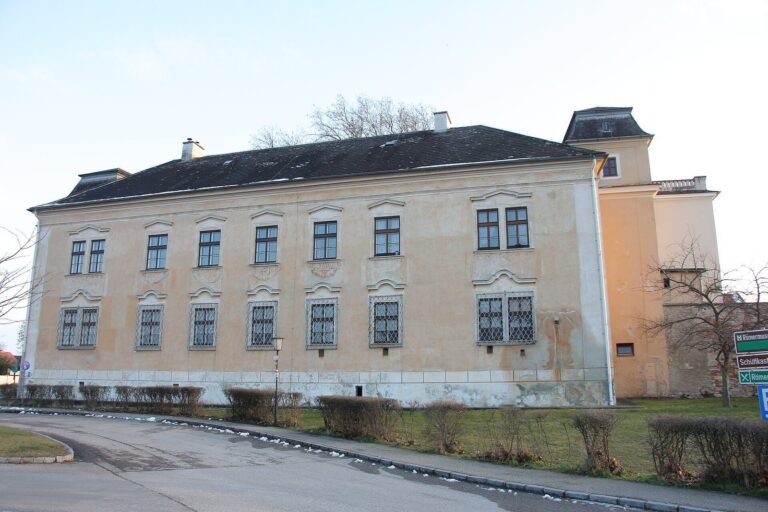
Baumgarten Castle, in Mautern an der Donau, Austria, is a late-Baroque residence. Baroque architecture is known for elaborate forms and ornament. The castle was built during the period when Giegl held the lordship of Baumgarten.
Refashioning and later residents
Factory owner Carl Faltis bought the castle in 1911 and commissioned its refashioning and refurnishing in Baroque style. Much of its present appearance took shape between 1911 and 1922. Faltis’s daughter later brought the castle into her marriage to Max Hussarek von Heinlein, then Minister of Education. The Austrian writer and historian Egon Caesar Conte Corti also lived there.
Remains
Castle and grounds
Main complex
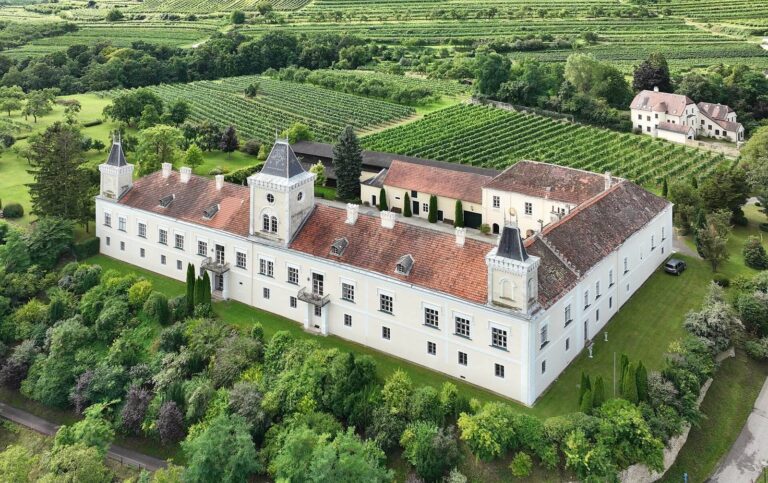
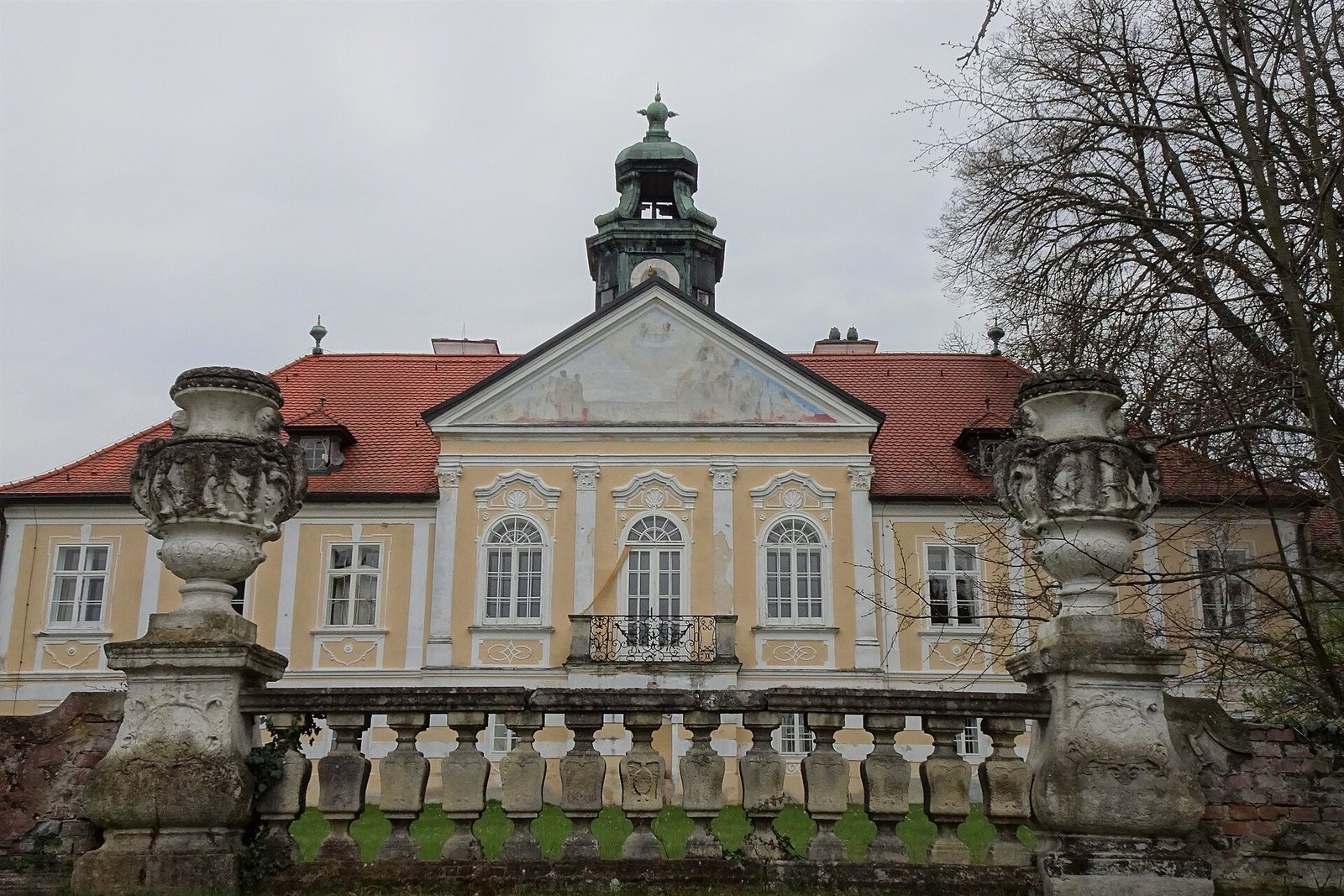
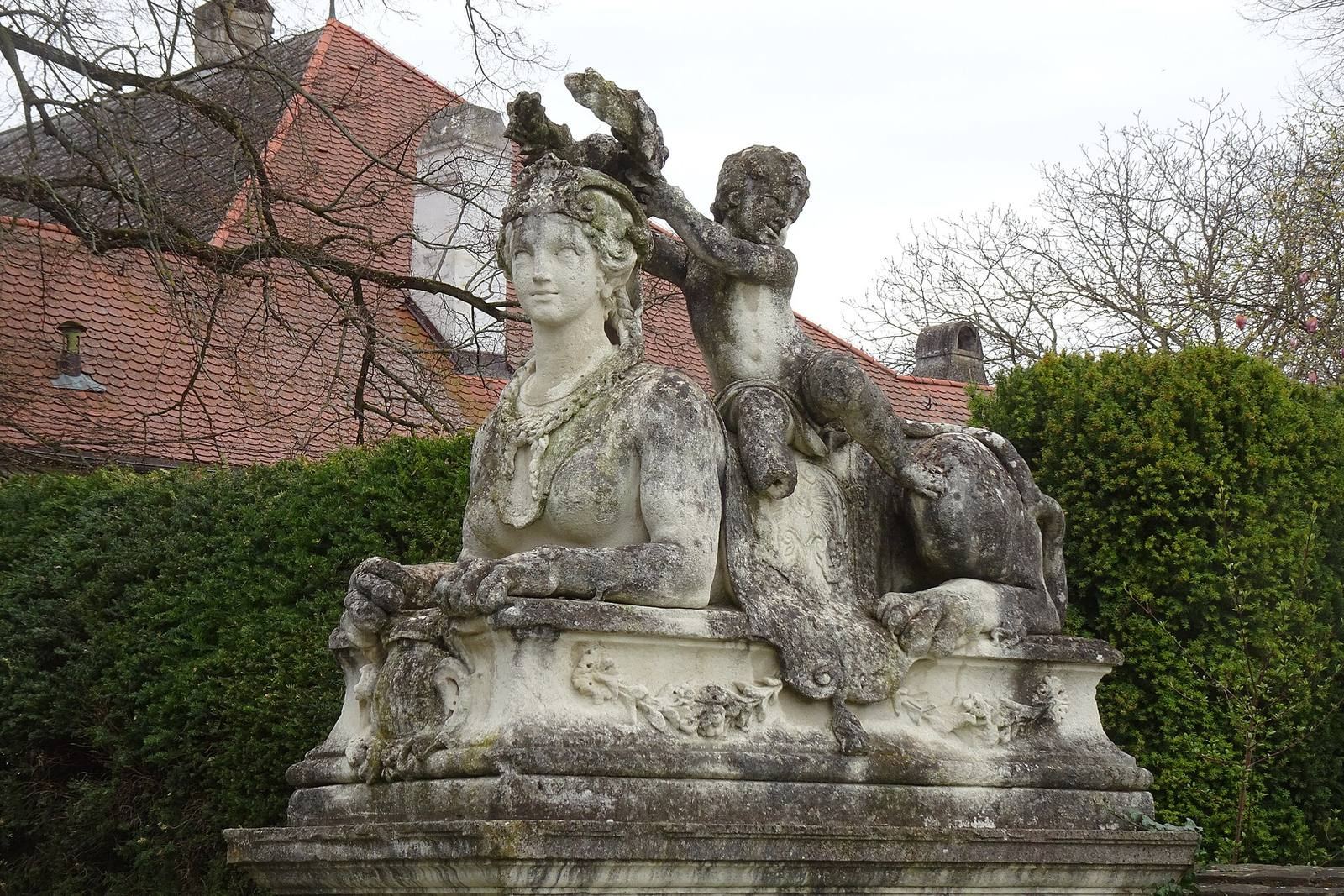
Set on elevated ground above Mautern, the late-Baroque castle is a multi-wing complex arranged around two courtyards, which are enclosed by a unified façade. The principal façade faces the Danube. Its Rococo detailing, a later and more intricate style than Baroque, includes pilasters, shallow column-like projections against a wall. On the west side, a low, flattened basket-handle arch forms a portal decorated with a large coat of arms and opening onto the service courtyard. Two monumental sphinxes flank the northern approach. Sculpted around 1730 by Franz Leopold Farmacher, they originally stood in front of Thürnthal Castle.
Interior rooms
The ballroom has a ceiling fresco, a painting made on wet plaster, dated 1758. It depicts the Triumph of Apollo, the Greco-Roman deity associated with music and the arts, alongside an allegory of the arts and sciences. Several other rooms have flat ceilings with stucco-framed panels dating from the early twentieth century.
Terrace garden
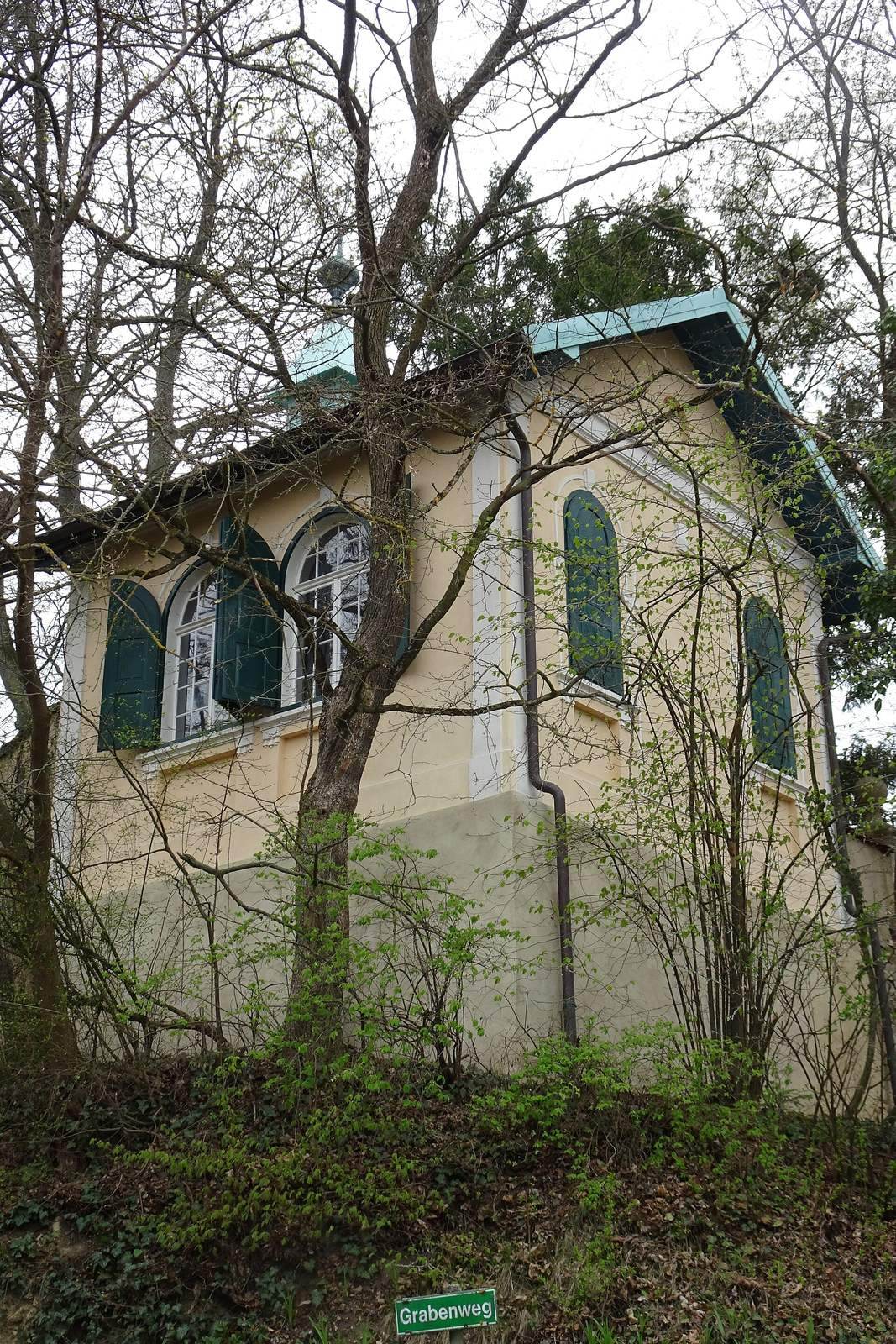
East of the main building, a large terrace holds a garden laid out in Neo-Baroque style, a later revival of Baroque design, around the time of the 1911–1922 remodelling. Its decorations include Baroque sculptures, vases, benches, and fountains that Faltis acquired from several castles, including Schloss Hof and Thürnthal. A pavilion with a mansard roof, whose lower slopes are steeper than its upper slopes, also stands in the garden.
Cellar
Behind the castle is a large cellar dating to the eighteenth century. Its plan is cross-shaped.