Forte del Varignano: A Quarantine Station and Naval Base in Italy
Site at a Glance
- Popularity
- High
- Country
- Italy
- Primary era
- Early Modern
- Eras represented
- Early Modern, Modern
- Civilizations
- Genoese, Italian
- Site type
- Military
- Remains
- Fort
On this page9 sections
History
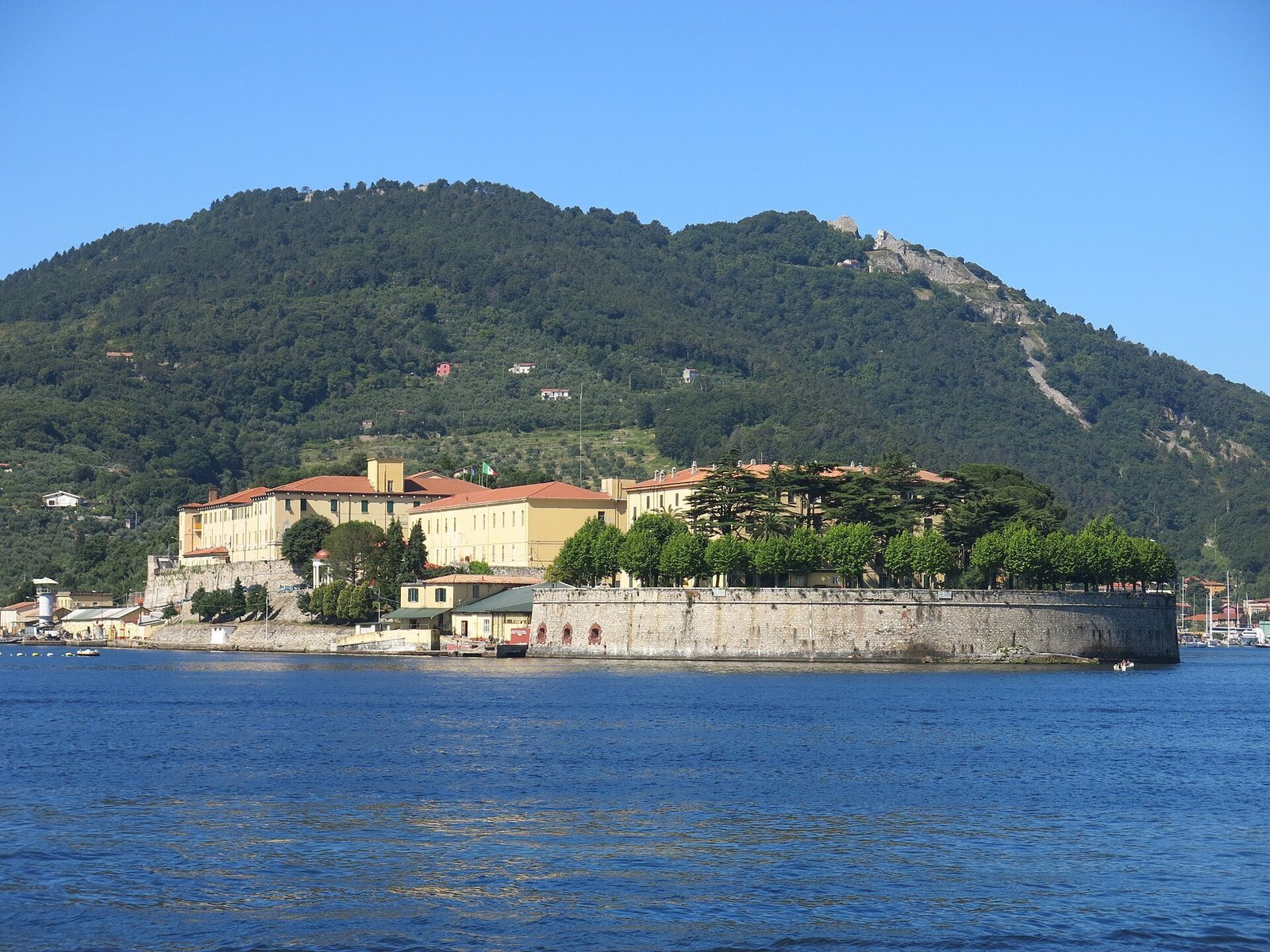
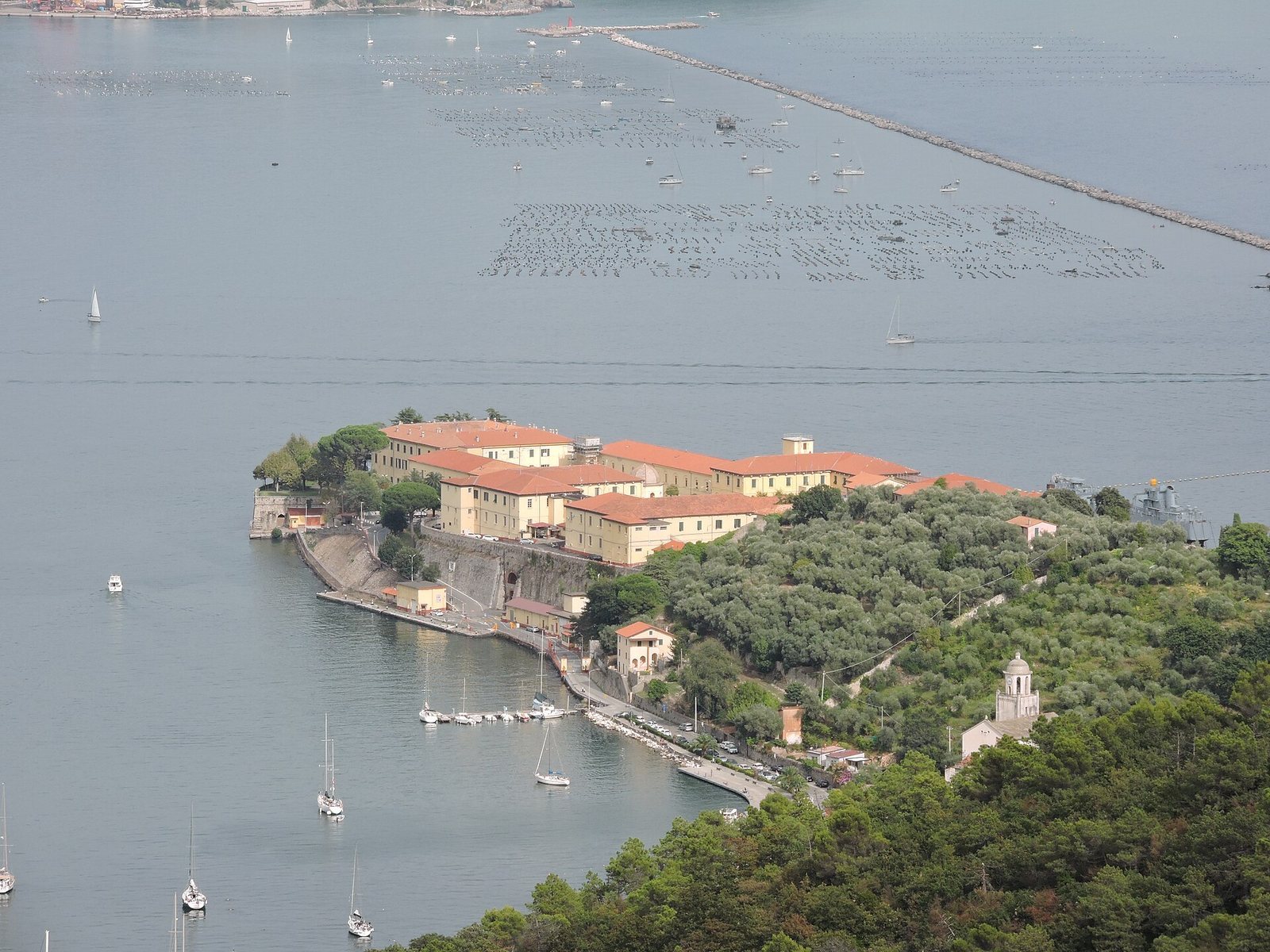
Forte del Varignano is a military complex on the Varignano promontory at Le Grazie, in the municipality of Porto Venere, Italy. It began as a quarantine station planned by the Republic of Genoa, a maritime state centered on the city, and later served as a coastal fort, military hospital and prison, and naval base.
Quarantine station and military conversion
In 1656, Genoa’s Magistrate of Health, the public authority responsible for quarantine, decided to establish a large health facility on the promontory. Building work began in 1724. The first structure served both as a quarantine hospital and as a warehouse for goods. Construction in the 1720s followed plague outbreaks in Marseille and Toulon. Genoa escaped the disease, but the outbreaks heightened concern there.
Varignano formed part of a longer Genoese effort to defend the Gulf of La Spezia, under way since the twelfth century. Porto Venere guarded the gulf’s western side, while Lerici and San Terenzo lay to the east. From 1569, nearby Fort Santa Maria and Fort San Terenzo also helped control the gulf.
Under Napoleonic rule, the quarantine site took on a military role. On 11 May 1808, it entered French Navy service as the headquarters and garrison of the Gulf military command. La Spezia had been declared a naval port that year, despite lacking the infrastructure required for one. A French naval arsenal near Le Grazie was considered under Santorre di Santa Rosa, a Piedmontese political figure and revolutionary. From 1861, an arsenal for the Italian Navy was built near La Spezia under military engineer Domenico Chiodo.
As political control changed, the site passed from Genoese rule to the Ligurian Republic, a short-lived state of the Napoleonic period, and French control, then to the Savoy states, the Kingdom of Sardinia, and the Kingdom of Italy. The complex later became an Italian Navy facility. Its former health station also developed into a military hospital and a military prison.
Expansion of the gulf defenses
After Genoa passed to the Kingdom of Sardinia, that kingdom rebuilt Fort Santa Maria. Following construction of the naval arsenal, Italy expanded the gulf’s defenses in the 1880s. Chiodo personally planned work on Varignano’s coastal battery, although the fort had a subordinate place in the enlarged defensive system. In 1888, the command of the outer defensive sector was established at Varignano, and the military hospital closed.
Giuseppe Garibaldi, the Italian nationalist and military leader, received medical care at Varignano in 1862 after the Aspromonte conflict and again in 1867 after the Battle of Mentana. Both clashes formed part of the struggle for Italian unification.
Naval training and COMSUBIN
In 1910, the Navy moved its diving school from Genoa to Varignano. Founded in 1849, the school became part of a wider group of Navy training institutions at the site. During the First World War, and especially during the Second World War, naval units trained there for underwater raids.
After the Second World War, Varignano became a principal base for the Navy’s special forces. From 1952, it served as the base of the naval raiders, continuing the tradition of personnel from the Navy’s assault-craft units, which used specialized vessels and underwater vehicles in attacks. Today the complex is the headquarters of COMSUBIN, the Italian Navy’s command for divers and raiders. Its barracks are named for Teseo Tesei, a major in the Naval Engineering Corps who received the Gold Medal for Military Valor.
Remains
The complex occupies a promontory on the southwestern side of the Gulf of La Spezia, near the gulf’s entrance. The point separates the inlets of Le Grazie and Varignano. The site’s fortification walls now form the boundary of the barracks complex, which was built and altered over time.
Coastal defenses
Varignano battery
A coastal battery was established beside the quarantine facility and was equipped with four guns. In the 1880s, three 57-millimetre guns at Varignano guarded the passage between the promontory and the newly built breakwater, which protected the gulf from the open sea.
Fort Santa Maria
The separate, older Fort Santa Maria stands on a neighbouring promontory a few hundred metres southeast of Varignano. Its Garibaldi Battery had six 321-millimetre guns. During the Second World War, the fort’s armament comprised six 152-millimetre guns and six 76-millimetre anti-aircraft guns. The military-restricted area extends to this promontory, and the name Varignano is sometimes used for both forts because Santa Maria belongs to the COMSUBIN base.
Punta Castagna position
Farther southeast, near Punta Castagna, a former coastal artillery position forms another part of the area’s defensive remains.